Economy
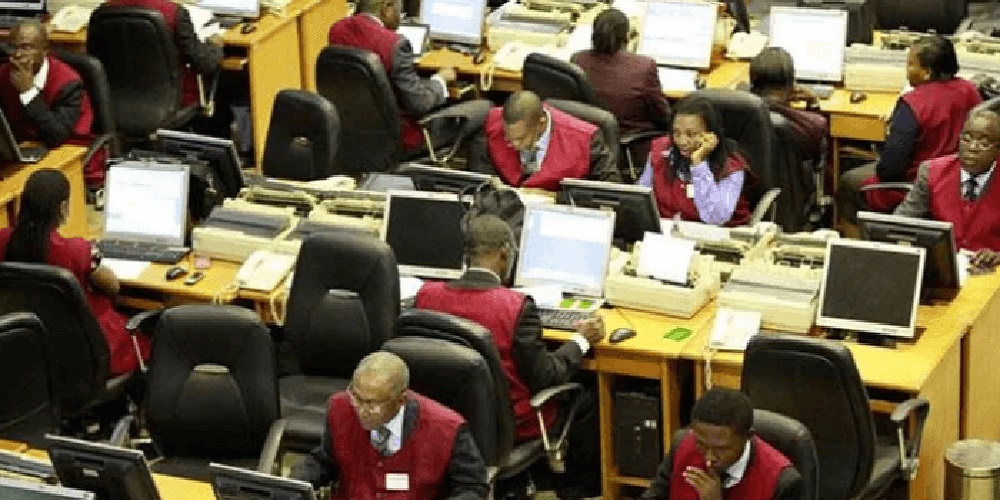
Nigeria’s Inflation hits15.38% in March
- /home/naijuinz/public_html/wp-content/plugins/mvp-social-buttons/mvp-social-buttons.php on line 27
https://naijablitznews.com/wp-content/uploads/2024/02/Nigerias-inflation.jpg&description=Nigeria’s Inflation hits15.38% in March', 'pinterestShare', 'width=750,height=350'); return false;" title="Pin This Post">
- Share
- Tweet /home/naijuinz/public_html/wp-content/plugins/mvp-social-buttons/mvp-social-buttons.php on line 72
https://naijablitznews.com/wp-content/uploads/2024/02/Nigerias-inflation.jpg&description=Nigeria’s Inflation hits15.38% in March', 'pinterestShare', 'width=750,height=350'); return false;" title="Pin This Post">
Nigeria’s headline inflation rate rose to 15.38% in March 2026, reflecting a modest increase from the 15.06% recorded in February.

This is according to the latest data from the National Bureau of Statistics (NBS).
The Consumer Price Index (CPI) increased to 135.4 in March 2026, reflecting a 5.4-point increase from the preceding month (130.0).
In March 2026, the headline inflation rate rose to 15.38%, up from 15.06% in February 2026 and stood 27.35% in the same month of the preceding year (March 2025).
Looking at the movement, the March 2026 headline inflation rate showed an increase of 0.32% compared to that recorded in February 2026.
However, on a month-on-month basis, the rate in March 2026 was 4.18%, which was 2.17% higher than the rate recorded in February 2026 (2.01%).

The percentage change in the average CPI for the twelve months ending March 2026 over the average for the previous twelve-month period was 20.05%, showing a 1.48% increase compared to 18.58% recorded in March 2025.
On a year-on-year basis, in March 2026, the Urban inflation rate was 14.64%. On a month-on-month basis, the Urban inflation rate was 3.16% in March 2026, up by 0.61% compared to February 2026 (2.55%).
The corresponding twelve-month average for the Urban inflation rate was 20.04% in March 2026. This was 0.06% points lower compared to the 20.10% reported in March 2025.
Rural inflation rate in March 2026 was 17.22% on a year-on-year basis.
On a month-on-month ba sis, the Rural inflation rate in March 2026 was 6.73%, up by 6.02% compared to February 2026 (0,71%).
The corresponding twelve-month average for the Rural inflation rate in March 2026 was 19.74%. This was 2.93% points higher compared to the 16.81% recorded in March 2025.
The food inflation rate in the month under review was 14.31% on a year-on-year basis and stood at 25.22% in the same month of the preceding year (March 2025).
However, on a month-on-month basis, food inflation rate in March 2026 was 4.17%, down 0.52 percentage points from February 2026 (4.69%).
The drop was attributed to the rate of change in the average prices of the following products: Yam, Ginger (Fresh), Cassava Tuber, Groundnuts (Shelled), Irish Potatoes, Avenger (Ogbono/Apon) – Dried Ungrinded, Toma toes (fresh), Cassava Flour sold loose, etc.
NBS said average annual rate of Food inflation for the twelve months ending March 2026 over the previous twelve-month average was 18.21%, which was 17.81% points lower compared with the average annual rate of change recorded in March 2025 (36.02%).
The “All items less farm produces and energy” or Core inflation, which excludes the prices of volatile agricultural produce and energy, stood at 16.21% in March 2026 on a year-on-year basis; a decline of 10.91% points when compared to the 27.12% recorded in March 2025.
On a month-on-month basis, the core inflation rate was 4.03% in March 2026, up by 3.14% points compared to Feb ruary 2026 (0.89%).
The average twelve-month annual inflation rate was 21.09% for the twelve months ending March 2026, which was 6.25% points lower than the 27.34% recorded in March 2025.
On a state level, headline inflation was highest in Bayelsa Year-on-Year with (27.37%), Sokoto (26.03%), and Bauchi (23.67%), while Osun (5.25%), Kano (9.85%), and Kaduna (10.38%) recorded the lowest rise.
On a Month-on-Month basis, however, March 2026 recorded the highest increases in Zamfara (10.77%), Bauchi (9.37%), and Sokoto (9.05%), while Lagos (1.54%), Akwa Ibom (1.80%), and Rivers (1.89%) recorded the lowest rise in the Month-on-Month inflation.
Food inflation was highest in Bayelsa (33.35%), Sokoto (28.02%), and Adamawa (21.67%), while Kano (4.29%), Oyo (4.86%), and Katsina (7.48%) recorded the slowest rise on a Year-on-Year basis.
On a Month-on-Month basis, however, March 2026 food inflation was highest in Sokoto (11.78%), Niger (8.59%), and Gombe (8.10%), while Katsina (0.09%), Ogun (0.77%), and Adamawa (1.30%) recorded the slowest rise in Food inflation on a Month-on-Month basis.

Economy
How to apply: FG opens access to 250,000 free business name registrations
The Federal Government has opened access to 250,000 free business name registrations for eligible entrepreneurs across Nigeria as part of efforts to support the growth and development of Micro, Small and Medium Enterprises (MSMEs).
The initiative, approved under the administration of President Bola Ahmed Tinubu, is designed to ease the cost of formalising small businesses and encourage more entrepreneurs to register their businesses.
Interested and eligible entrepreneurs have been advised to apply through the official SMEDAN portal at portal.smedan.gov.ng to become beneficiaries of the programme.
The registration is completely free, with the Corporate Affairs Commission (CAC) expected to process the business name registration without charging applicants.
The government also warned entrepreneurs to be wary of fraudsters who may attempt to exploit the programme.
Applicants have been advised not to pay anyone claiming to have the ability to fast-track or secure their registration, as no payment is required for the approved free registration.
Entrepreneurs seeking to benefit from the initiative are therefore encouraged to use only the official SMEDAN portal and avoid sharing payments or personal information with unauthorised agents.
Economy
Over 5,000 fibre cuts recorded in six months – NCC
The Nigerian Communications Commission (NCC) has disclosed that more than 5,000 fibre-optic cable cut incidents were recorded across the country in the first six months of 2026, with road construction, excavation and related civil works identified among the major causes.
The Executive Vice-Chairman of the NCC, Dr Aminu Maida, disclosed this on Tuesday at a stakeholders’ workshop on the protection of fibre-optic cables during road construction, excavation and other activities in Nigeria.
Maida said the high number of incidents required stronger collaboration between telecommunications operators, road contractors, government agencies, regulators and security institutions to prevent further damage to critical telecommunications infrastructure.
According to him, many of the incidents occurred because of inadequate coordination among stakeholders involved in road and other construction activities. He said the consequences of fibre cuts extended beyond the immediate physical damage to cables, stressing that they could disrupt essential services and affect millions of Nigerians.
The NCC boss recalled the nationwide telecommunications disruption in February 2024, when fibre cuts, including those caused by road construction, affected one of the major telecommunications operators. He said millions of subscribers were unable to make calls, send messages or access the internet for several hours, while subscribers who moved to alternative networks caused congestion on those networks.
According to him, the incident demonstrated how damage to one network could quickly have wider national consequences.
“In the first six months of this year alone, more than 5,000 fibre cut incidents were reported from road excavation, construction, and related civil work. A damaged fibre cable is therefore not simply a cost to an operator, it is a cost to Nigerians and to the wider economy.
“Those affected were not numbers in an incident report. They were parents, businesses, workers, and citizens cut off from people and services on which they depended on,” Maida said.
He stressed that preventing fibre cuts should be prioritised rather than waiting to repair damaged infrastructure after incidents had occurred.
Maida said telecommunications operators must provide accurate information on the location of their infrastructure and respond promptly when contacted before construction begins. He added that contractors must check for underground infrastructure before excavation and make adequate plans for its protection.
The NCC chief also urged regulators and security agencies to provide guidance and ensure accountability, stressing that coordination should form part of the design and execution of every relevant infrastructure project.
He said the commission remained committed to working with public and private stakeholders to make coordination a standard practice in road construction and other civil works.
Earlier, the Director of Critical National Assets and Infrastructure Protection in the Office of the National Security Adviser, AVM Effiong Ewa, said the protection of fibre-optic infrastructure was a shared national responsibility.
Ewa noted that telecommunications infrastructure had been designated as Critical National Information Infrastructure, warning that negligence or interference that exposed the assets to damage could constitute an offence under Nigeria’s legal framework.
He called for strict adherence to established protocols, guidelines and procedures during construction and maintenance activities.
Also speaking, the Permanent Secretary, Federal Ministry of Works, Mr Rafiu Adeladan, said the ministry recognised that road and telecommunications infrastructure often operated within the same physical space.
He said excavation, grading, reconstruction, utility relocation and other road activities could inadvertently damage vital fibre-optic infrastructure where adequate coordination and precautions were not in place.
Adeladan called for stronger mechanisms for coordination and information sharing before and during road construction activities. He said road contractors, consultants and relevant agencies should have access to accurate information on the location of telecommunications infrastructure before excavation begins.
On his part, the Permanent Secretary, Federal Ministry of Communications, Innovation and Digital Economy, Engr Nadungu Gagare, said protecting telecommunications infrastructure was not the responsibility of one institution, but required collaboration among government ministries, regulators, security agencies, construction companies, utility providers and other stakeholders.
Gagare said the Federal Government had established a tripartite standing committee on the protection of fibre-optic infrastructure to strengthen collaboration and promote a coordinated approach to infrastructure protection.
He said the committee would also promote compliance with established standards and right-of-way regulations, improve information sharing and support measures to prevent avoidable damage.
The workshop, organised by the Federal Ministry of Communications, Innovation and Digital Economy in collaboration with the Federal Ministry of Works, NCC, Office of the National Security Adviser and Nigeria Security and Civil Defence Corps, is aimed at developing practical measures to protect fibre-optic cables during road construction and other civil works.
Economy
NRS boss, Adedeji under fire over Nigerian economy comment
Nigerians have tackled the Executive Chairman of the Nigeria Revenue Service, Zacch Adedeji, over his recent comment about critics of economic reforms under President Bola Ahmed Tinubu.
DAILY POST reports that in a viral video, Adedeji questioned critics of Tinubu’s economic reforms about what they would have done differently.
“That is what I get worried about when I listen to some people about the economy and everything.
“Just ask them, what would they do differently? Mr President, I don’t want you to wonder. You have elevated the system from what they know and wonder,” Adedeji told President Tinubu.
Adedeji’s comment triggered reactions from Nigerians on X.
Reacting, a development professional and former Director-General of the Bureau of Public Service Reforms, Joe Abah, described Adedeji’s comment as insensitive.
“If true, this is a deeply insensitive statement.
“But to answer the question of what I would have done differently, I can just look at the UK’s Andy Burnham, who is trying to tackle the cost of living.
“In just 19 days, he has removed the 5 percent VAT on domestic electricity (it is 7.5 percent in Nigeria); capped bus fares at £2 per ride by reimbursing private sector operators for the difference in real costs; pledged a 20 percent cut in business rates for pubs and clubs (an important part of British social life); maintained and adjusted Universal Credit to favour the poorest and most vulnerable.
“So, I would have used the increasing tax revenue to tackle the cost of living. That is what I would have done differently at my own level. Hope that helps,” he said on X on Saturday.
Similarly, a lawyer known, Vena Ikem wrote on X: “He should ask himself what all the millions of dollars he is spending mean to the tax he is collecting even from poor people. If karma truly fulfils, this man will get his just deserts in the land of the living. This arrogance is from getting away with stealing tax money.”
Also, Adekunle Oderinde wrote on X: “The entire convoy of Zacch Adedeji is more expensive and longer than the convoy of UK Prime Minister, yet he is talking about suffering Nigerians complaining about the effects of the policies of his principal, President Tinubu, who drives an expensive and long convoy on scarce resources.”
-
News24 hours agoOsun Poll: Davido’s Father Alleges APC Spent N60bn on Vote Buying
-
News22 hours agoNigeria Eyes Manufacturing Boom as FG Moves to Maximise China’s Zero-Tariff Policy
-
News23 hours agoNigerian lands in Accra Court for attempting to rob three Ghanaian banks
-
News22 hours agoAregbesola hails Adeleke’s victory says “Osun people have given their verdict”
-
News22 hours agoEFCC V Osun: Gov Adeleke orders AG to withdraw case
-
News22 hours ago83 More Nigerians to Return from South Africa as FG Renews Fight Against Afrophobia
-
News20 hours agoAbuja Set for Global PR Summit as Nigeria Unveils Jollof Festival, Cultural Showcase
-
News9 hours ago(Analysis)Abuja Flooding Did Not Start Today: FCT Must Move Beyond Political Blame