Economy
NNPC signs MoU with Chinese firms to revive Warri, Port Harcourt refineries
- /home/naijuinz/public_html/wp-content/plugins/mvp-social-buttons/mvp-social-buttons.php on line 27
https://naijablitznews.com/wp-content/uploads/2026/05/dhtg.jpg&description=NNPC signs MoU with Chinese firms to revive Warri, Port Harcourt refineries', 'pinterestShare', 'width=750,height=350'); return false;" title="Pin This Post">
- Share
- Tweet /home/naijuinz/public_html/wp-content/plugins/mvp-social-buttons/mvp-social-buttons.php on line 72
https://naijablitznews.com/wp-content/uploads/2026/05/dhtg.jpg&description=NNPC signs MoU with Chinese firms to revive Warri, Port Harcourt refineries', 'pinterestShare', 'width=750,height=350'); return false;" title="Pin This Post">
Nigerian National Petroleum Company Limited (NNPC Ltd) has signed a memorandum of understanding (MoU) with two Chinese companies to support the restart and expansion of Nigeria’s Warri and Port Harcourt refineries, the state oil firm said.

The agreement was signed in Jiaxing City, China, with Sanjiang Chemical Company Limited and Xinganchen (Fuzhou) Industrial Park Operation and Management Co. Ltd under a proposed technical equity partnership framework, according to a statement issued by NNPC.
NNPC Group Chief Executive Officer Bashir Bayo Ojulari said the MoU followed more than six months of engagement between the parties.

“All parties recognise mutually beneficial opportunities for the development and long-term sustainable profitability of NNPC’s refining assets in Nigeria,” Ojulari said.
According to NNPC, the proposed framework covers the completion of outstanding work on the Port Harcourt and Warri refineries, as well as their operation and maintenance.
The company said the collaboration also includes plans to upgrade the facilities to produce cleaner petroleum products and expand their capacity, alongside efforts to increase petrochemical output and develop gas-based industrial projects linked to the refineries.
Ojulari said the agreement was part of ongoing efforts to identify technical equity partners to support the rehabilitation and long-term operation of the country’s refining assets.
“The MoU is a significant step on the journey towards identifying potential technical equity partners to restart and expand NNPC’s refineries,” he said.
NNPC added that the agreement reflects the parties’ intention to continue discussions, noting that any final deal would be subject to further negotiations and customary regulatory approvals.
The statement said the partnership could also involve the development of co-located industrial hubs to support downstream and gas-based activities.
Nigeria has for decades struggled with the performance of its state-owned refineries, which have operated below capacity, according to NNPC. The country depends heavily on imported refined petroleum products despite being one of Africa’s largest crude oil producers.
The Port Harcourt and Warri refineries are among key facilities undergoing rehabilitation as part of government efforts to restore domestic refining capacity, the company said.
NNPC said the planned collaboration forms part of its broader strategy to improve efficiency and support the operation of its refining assets.
Economy
OPEC+ approves fourth oil output increase since Hormuz closure
The Organisation of Petroleum Exporting Countries and its allies, also known as OPEC+, has approved the fourth oil output increase since the Hormuz closure crisis.
The decision followed renewed commitments by Saudi Arabia, Russia, Iraq, Kuwait, Kazakhstan, Algeria and Oman to support market stability.
In a statement issued at the weekend, OPEC stated: “The seven OPEC+ countries, which previously announced additional voluntary adjustments in April and November 2023, namely Saudi Arabia, Russia, Iraq, Kuwait, Kazakhstan, Algeria and Oman, met virtually on June 7, 2026, to review global market conditions and outlook.
“In their collective commitment to support oil market stability, the seven participating countries decided to implement a production adjustment of 188,000 barrels per day from the additional voluntary adjustments announced in April 2023.
“This adjustment will be implemented in July 2026. The additional voluntary adjustments announced in April 2023 may be returned in part or in full, subject to evolving market conditions and in a gradual manner.
“The countries will continue to closely monitor and assess market conditions and, in their continuous efforts to support market stability, reaffirmed the importance of adopting a cautious approach and retaining full flexibility to increase, pause or reverse the phase-out of the voluntary production adjustments, including reversing the previously implemented voluntary adjustments announced in November 2023.
“The seven OPEC+ countries also noted that this measure will provide an opportunity for the participating countries to accelerate their compensation.
“The seven countries reiterated their collective commitment to achieving full conformity with the Declaration of Cooperation, including the voluntary production adjustments, which will be monitored by the Joint Ministerial Monitoring Committee (JMMC).
“They also confirmed their intention to fully compensate for any overproduced volumes since January 2024. The compensation period will be extended until the end of December 2026.”
It added: “The seven OPEC+ countries will hold monthly meetings to review market conditions, conformity and compensation. The seven countries will meet on July 5, 2026.”
Economy
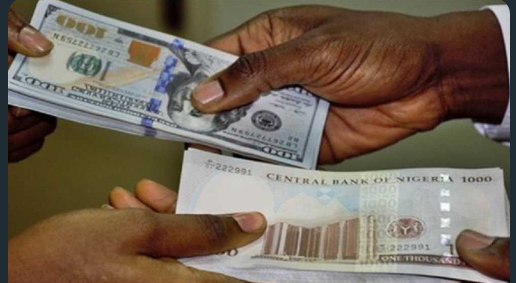
Naira depreciates to N1,397/$ in parallel market
The naira on Friday depreciated to N1,397 per dollar in the parallel market from N1,390 per dollar on Thursday.
Likewise, the naira depreciated to N1,365 per dollar in the Nigerian Foreign Exchange Market, NFEM.
Data from the Central Bank of Nigeria, CBN, showed that the indicative exchange rate for the market rose to N1,365 per dollar from N1,359.75 per dollar on Thursday, reflecting N5.25 depreciation for the naira.
Consequently, the margin between the parallel and official markets widened to N32 per dollar from N30.25 per dollar on Thursday.
The turnover in the interbank foreign exchange market recorded its fourth daily decline by 42.5 per cent to $73.6 million from $128.2 million on Thursday.
This week, the naira strengthened by N1 per dollar in the official market, with turnover in the interbank foreign exchange market climbing to N683.2 million, representing a 76.7 per cent rise compared to N386.54 million recorded the previous week.
However, the local currency weakened in the parallel by N2 against the greenback.
Economy
See Dollar to Naira exchange rate today, June 5, 2026
The Nigerian naira maintained a relatively stable performance against the United States dollar at both the official and parallel foreign exchange markets as traders monitored liquidity conditions and demand pressures.
Data from the Central Bank of Nigeria’s Nigerian Foreign Exchange Market (NFEM) showed the naira trading around ₦1,361 to the dollar, reflecting a largely steady trend compared to recent sessions. The most recent NFEM rate published by the apex bank stood at approximately ₦1,361.05/$, while trading during the week remained within the ₦1,359–₦1,365 range.
Market data from recent official trading sessions also indicated that the naira had strengthened modestly in early June, supported by improved foreign exchange supply and sustained interventions aimed at enhancing market liquidity.
At the parallel market, commonly referred to as the black market, the dollar traded at between ₦1,390 and ₦1,405 on Friday, depending on location and transaction size. Several market trackers reported buying rates around ₦1,380–₦1,395 and selling rates between ₦1,393 and ₦1,405 per dollar.
The gap between the official and parallel market rates remained relatively narrow compared with previous months, reflecting ongoing efforts to improve transparency and liquidity in the foreign exchange market.
Currency dealers said market participants continue to watch foreign portfolio inflows, crude oil earnings, and Central Bank policies, all of which remain key factors influencing the naira’s direction in the coming weeks.
As of June 5, 2026, the dollar exchanged at about ₦1,361 in the official NFEM market, while parallel market transactions ranged from approximately ₦1,390 to ₦1,405 per dollar.
-
News13 hours agoNECO to recruit 22,000 supervisors, cautions applicants against fake recruitment portals
-
News13 hours agoUmahi gives Abuja-Lokoja highway contractors 72 hours to mobilise
-
News13 hours agoOtti woos investors to Abia medical city, industrial park, others
-
News22 hours agoSEDC Defends Record Before Senate, Says Less Than 10% of N140bn Budget Released
-
News13 hours agoSenate Calls For Total Ban On Importation Of Textile Materials
-
News13 hours agoTinubu launches Ebola response task force, approves N10bn emergency fund
-
Opinion9 hours agoPolitical Tourists Can’t Derail PDP-Akpodiete Rejects Cheap Blackmail Over Archived Photo
-
News8 hours agoTinubu orders urgent diplomatic action to bring back 300 Nigerians jailed in Ethiopia after inmates die in custody