Economy
CBN warns non-interest banks over rising risks
- /home/naijuinz/public_html/wp-content/plugins/mvp-social-buttons/mvp-social-buttons.php on line 27
https://naijablitznews.com/wp-content/uploads/2024/02/CBN.jpg&description=CBN warns non-interest banks over rising risks', 'pinterestShare', 'width=750,height=350'); return false;" title="Pin This Post">
- Share
- Tweet /home/naijuinz/public_html/wp-content/plugins/mvp-social-buttons/mvp-social-buttons.php on line 72
https://naijablitznews.com/wp-content/uploads/2024/02/CBN.jpg&description=CBN warns non-interest banks over rising risks', 'pinterestShare', 'width=750,height=350'); return false;" title="Pin This Post">
The Central Bank of Nigeria has warned that growing risks in Nigeria’s non-interest banking sector could weaken public confidence and threaten financial stability if they are not properly managed.
The apex bank said the rapid growth, increasing sophistication and stronger connections within the banking industry have exposed Non-Interest Financial Institutions (NIFIs) to several challenges, including non-compliance with regulations, weak governance structures, operational weaknesses and emerging technology-related risks.
Speaking during the second Annual Interactive Session between the CBN Financial Regulation Advisory Council of Experts (FRACE) and the Advisory Committees of Experts (ACE) of Non-Interest Financial Institutions in Abuja, the Deputy Governor in charge of Financial System Stability, Mr. Philip Ikeazor, said the risks facing the sector require stronger oversight and improved governance.

Represented by the Director of the Financial Policy and Regulation Department, Dr. Rita Ijeoma Sike, Ikeazor said poor management of these risks could damage the credibility of the non-interest finance industry and reduce public trust in the system.
He explained that the creation of FRACE and the mandatory establishment of ACEs in all Non-Interest Financial Institutions were meant to build a stronger and more coordinated governance structure for the industry.
According to him, regular engagement between FRACE and ACE members is important to ensure that institutions clearly understand regulatory expectations and apply them properly.
“The objectives of today’s session include fostering the institutionalisation and effective operation of a robust Shariah governance system within Non-Interest Financial Institutions, and providing a structured platform for dialogue, knowledge-sharing, and collaboration,” he said.
Ikeazor said the CBN remains committed to strengthening Shariah governance, improving regulatory clarity and promoting effective risk management in the non-interest financial services sector in order to maintain financial stability and public confidence.
He noted that the current engagement builds on discussions from the inaugural session and reflects the CBN’s determination to sustain a sound and resilient non-interest banking system driven by good governance, compliance and prudent risk management.
The deputy governor added that Non-Interest Financial Institutions have become increasingly important to Nigeria’s financial system by providing ethical and Shariah-compliant financial services while supporting financial inclusion, financing for the real sector, Micro, Small and Medium Enterprises (MSMEs), and shared economic growth.
In his opening remarks, the Deputy Chairman of FRACE, Prof. Bashir Aliyu Umar, said the meeting was organised to strengthen governance in the non-interest finance industry and encourage constructive engagement between the CBN and advisory committees of the institutions.
He also praised the management of the CBN for reviving the interactive session which was first introduced in 2014.
Earlier, Dr. Rita Ijeoma Sike said the central bank remained focused on building a credible and properly governed non-interest financial services industry.
She said the increasing variety of products, institutions and financial service channels, especially the rise of Islamic fintech, has made continuous dialogue, strong regulation and quality advisory support more important.
The event featured technical presentations on Shariah non-compliance risks and the impact such risks could have on the non-interest financial services industry. Another presentation focused on Islamic fintech and its role in promoting financial inclusion.
Participants at the session also held discussions on practical challenges affecting the sector, including capacity building, the independence of advisory committees, risk management strategies and ways to improve governance and innovation within the industry.
In his closing remarks, Prof. Abdul-Razzaq Alaro commended participants for their contributions and thanked the CBN for organising the session.
He urged stakeholders to take practical steps towards implementing the resolutions reached during the engagement, saying the success of the meeting would depend on visible improvements across the non-interest financial sector.
FRACE serves as an advisory body that helps bridge the gap between conventional financial regulation and faith-based financial practices. The council supports consistency, investor confidence and proper regulation within Nigeria’s non-interest finance industry, while the ACEs carry out similar oversight responsibilities within individual institutions.
Economy
FG Can’t Account For ₦33.75 Billion Cash Transfers To Vulnerable Nigerians – Auditor-General
The Office of the Auditor-General for the Federation (OAuGF) has raised concerns over ₦33.75 billion transferred to more than 3.29 million households under the Federal Government’s social intervention programme, saying auditors could not obtain sufficient records to verify that the payments reached genuine beneficiaries.
According to Punch, the finding was contained in the Auditor-General for the Federation’s 2024 Annual Report on Non-Compliance/Internal Control Weaknesses in Ministries, Departments and Agencies of the Federal Government.
The audit, which examined transactions carried out by the National Cash Transfer Office in Abuja during the 2023 financial year, raised eight separate queries involving billions of naira and highlighted deficiencies in the agency’s financial controls.
According to the report, ₦33.751 billion was electronically transferred to 3,295,207 households and beneficiaries selected from the National Social Register and enrolled on the National Beneficiary Register across 35 states.
Auditors, however, said the documentation presented for examination was insufficient to establish the identities of those who actually received the money.
The report said payment vouchers accompanying the ₦33.75 billion transactions lacked complete beneficiary information.
More importantly, auditors said they were unable to examine the Remita statement needed to compare recipients of the transfers with names contained in the government’s beneficiary registers.
The report stated, “The paid vouchers for the payments above did not contain the full details of the beneficiaries.
“REMITA statement showing record of the beneficiaries paid as against those listed on the NSR and NBR was not presented for audit. This hindered the authentication of the payments and made it difficult to ascertain whether the beneficiaries who received the funds were genuine.
“All efforts to obtain access to the REMITA statement were obstructed and denied by NTCO accounts staff, thereby frustrating the audit process.”
Consequently, the audit flagged the possibility of payments being made to fictitious or otherwise ineligible beneficiaries, as well as the potential loss of government funds.
The Auditor-General recommended that the National Programme Manager appear before the relevant Public Accounts Committees of the National Assembly to account for the expenditure and produce evidence showing that the intended beneficiaries received the funds.
Where satisfactory evidence cannot be provided, the report recommended recovery of the affected amount and its remittance to the Treasury.
It added that the management of the NTCO did not respond to the audit query.
A separate finding questioned ₦36.744 billion paid through 215 vouchers in December 2023 without undergoing the required prepayment audit.
The transactions, which the report identified as SS, IDA and output-based payments, were processed before being examined by the Internal Audit Unit.
“None of the paid vouchers were pre-audited or checked by the Internal Audit as required by extant regulations,” the report stated.
Instead, internal auditors reviewed the transactions after the payments had already been completed.
The Auditor-General said the procedure exposed public funds to possible misapplication or diversion and recommended that officials account for the ₦36.74 billion before the National Assembly.
Auditors also queried 101 transactions worth ₦4.616 billion after the NTCO failed to provide the corresponding paid vouchers for examination.
The payments were made from the agency’s S&S/IDA Cash Book for various expenditures. Without the vouchers, auditors said they could not adequately scrutinise the spending, prompting another recommendation that the money be accounted for or recovered and returned to the Treasury.
Another issue involved funds released to states for the enrolment of beneficiaries without bank accounts. The report said 32 payments totalling about ₦3.09 billion were made for the exercise.
While documents relating to ₦2.74 billion disbursed to 34 states were presented, auditors said they could not account for the remaining ₦350.18 million.
Even for some of the expenditure presented for inspection, the audit found that the supporting vouchers did not sufficiently explain how the money was spent.
Documents such as beneficiary lists, attendance registers, photographs, enrolment reports and acknowledgements from recipients were also missing.
The Auditor-General recommended recovery of the ₦350.18 million if officials could not satisfactorily account for it.
The report also scrutinised ₦393.71 million reportedly returned by nine State Cash Transfer Units after planned enrolment exercises could not be conducted.
According to the NTCO, insecurity, disasters and other circumstances prevented the affected states from carrying out the exercises, leading to the unused funds being returned to the Treasury in 2023.
Auditors, however, said evidence confirming that the money reached the Consolidated Revenue Fund was not produced.
“No documents were presented by NCTO to confirm that the amount refunded… was credited into the CRF,” the report stated.
It said Remita inflow statements and relevant payment slips that could establish the refund were unavailable. The auditors also found no evidence showing that the affected enrolment exercises were subsequently conducted.
The Auditor-General raised another query over ₦280.42 million paid as mobilisation fees to Payment Service Providers contracted to operate platforms for transferring funds to beneficiaries.
The sum represented a 30 per cent advance payment, but auditors said it was released without an Advance Payment Guarantee.
Questions were also raised about the procurement process used to engage the companies.
According to the report, their files contained no records of pre-qualification, bidding or technical and financial evaluation to demonstrate compliance with procurement requirements.
The audit warned of the risk of paying for unexecuted jobs and recommended recovery of the N280.42m.
Auditors also discovered that goods worth ₦89.51 million purchased by the NTCO were not recorded in its store ledger.
The relevant payment vouchers lacked Store Receipt Vouchers and Store Issue Vouchers needed to track the movement of the items.
More significantly, the audit found that the agency’s store ledger had not been updated since 2020.
The final issue concerned ₦17.42 million spent on diesel through cash advances issued to members of staff.
Auditors faulted the arrangement, saying purchases exceeding the ₦200,000 procurement threshold should have gone through the appropriate contract process.
The report said the items purchased could not be physically sighted or traced to the stores.
It also estimated that the procurement approach denied the Federal Government about ₦2.18 million in Value Added Tax and Withholding Tax.
Across all eight findings, the Auditor-General said the management of the National Cash Transfer Office did not respond to the audit queries.
The report consequently called for explanations, supporting documentation and, where officials fail to satisfactorily account for the affected expenditure, recovery of the funds to the Federal Government’s Treasury.
Economy
Details Of What You Should Know About Dangote Refinery Shares, Price, IPO Date And How To Buy
Dangote Petroleum Refinery is set to enter Nigeria’s public equity market in a landmark ₦2.15 trillion initial public offering (IPO), giving investors direct exposure to the country’s biggest refining investment as it moves to raise fresh capital for expansion.
With the shares priced at ₦525 each and an implied valuation of about $47 billion, the offer ranks among the most closely watched capital-market transactions in Nigeria’s oil and gas industry.
The Securities and Exchange Commission (SEC) approved the IPO on September 4, 2026, paving the way for the offer to open on September 14 and for the refinery to secure a primary listing on the Nigerian Exchange (NGX).
Below are the key facts investors need to know:
Is Dangote Refinery Already Listed On The Stock Exchange?
No, not yet.
As of September 4, 2026, Dangote Petroleum Refinery shares are not yet freely trading on the Nigerian Exchange like shares of Dangote Cement or Dangote Sugar Refinery.
For example, Dangote Sugar Refinery Plc, which trades under the ticker DANGSUGAR, is a completely separate listed company involved in sugar production and refining.
Buying DANGSUGAR shares does not mean an investor owns shares directly in the Dangote Petroleum Refinery. The NGX identifies DANGSUGAR as a consumer-goods company that refines raw sugar into edible sugar.
Investors interested specifically in the petroleum refinery therefore need to wait for the refinery’s own public offering and listing.
When Will Dangote Refinery Shares Be Available?
Aliko Dangote said on September 3 that the refinery’s IPO would open within 10 to 12 days.
Reuters subsequently reported that the order book is expected to open on September 14, 2026, citing people with direct knowledge of the transaction.
This would allow investors to submit applications for shares before the stock eventually begins normal secondary-market trading on the Nigerian Exchange.
However, investors should pay close attention to the final SEC-approved offer documents for the exact opening date, closing date, minimum subscription and allotment arrangements.
How Much Will One Dangote Refinery Share Cost?
Current reports suggest a price of approximately ₦525 per share.
Reuters reported on September 4 that sources involved with the transaction said the refinery was considering a price range of approximately ₦500 to ₦595 per share, with ₦525 emerging as the likely offer price.
About 4.1 billion shares are expected to be offered.
At ₦525 each, the base offer would be worth roughly ₦2.15 trillion, although Reuters put the expected fundraising at around $1.5 billion based on prevailing exchange rates and deal assumptions.
A 15 per cent greenshoe option is also expected. A greenshoe provision means additional shares can be sold if demand is much stronger than initially expected.
Some of these detailed terms were reported by sources familiar with the transaction, while Dangote Refinery had not publicly commented on all of them when Reuters published its report.
Investors should therefore treat the final approved prospectus, rather than social-media flyers or unofficial investment platforms, as authoritative.
How Much Is Dangote Refinery Worth?
This is likely to become one of the biggest questions surrounding the IPO.
A private placement completed ahead of the public offering reportedly valued the refinery at around $40 billion. Reuters noted, however, that some analysts have questioned how that valuation compares with established international refining companies.
Africa Finance Corporation announced in August that it had led strategic investors in a $2.5 billion private placement in Dangote Petroleum Refinery and Petrochemicals.
A high valuation can reflect investors’ expectations about the refinery’s future earnings, strategic importance and expansion plans.
But it can also mean that investors are paying a substantial price today based partly on expected future growth.
The eventual IPO prospectus should provide investors with more detailed financial information with which to assess the company’s valuation.
Can Ordinary Nigerians Buy Dangote Refinery Shares?
The planned offering is specifically expected to include retail investors, meaning individual Nigerians should be able to participate rather than the offer being restricted exclusively to banks, pension funds and other institutional investors.
Dangote had said earlier in 2026 that Nigerians would be allowed to own shares directly in the refinery.
The precise process will become clearer when the approved prospectus is released.
Typically, investors participating in a Nigerian public offer would need appropriate capital-market identification and an account through which the shares can ultimately be held or traded.
Investors should use only channels and receiving agents specifically named in the official offer documentation.
Economy
See Black Market Dollar To Naira Exchange Rate Today 5th September 2026
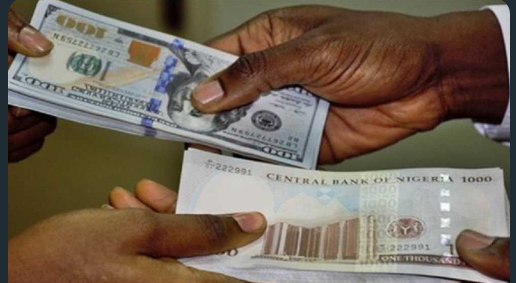
The Black Market Dollar-to-Naira Exchange Rate for 5th September 2026 Can Be Accessed Below.
NOTE: The exchange rate changes hourly. It depends on the volume of dollars available and the Demand. This means…you can buy or sell 1 dollar at a certain rate, and the price can change (high or low) within hours.
The official naira black market exchange rate in Nigeria today, including the Black Market rates, Bureau De Change (BDC), and CBN rates.
The exchange rate fluctuates hourly based on the supply and demand of dollars in the market.
What’s the dollar to naira black market today, 5th September 2026?
The exchange rate for a dollar to naira at Lagos Parallel Market (Black Market) players sell a dollar for ₦1405 and buy at ₦1410 on Saturday, 5th September, 2026, according to sources at Bureau De Change (BDC).
Please note that the Central Bank of Nigeria (CBN) does not recognize the parallel market (black market), as it has directed individuals who want to engage in Forex to approach their respective banks.
Dollar to Naira Black Market Rate Today
Dollar to Naira (USD to NGN) Black Market Exchange Rate Today
Selling Rate ₦1405
Buying Rate ₦1410
Dollar to Naira CBN Rate Today
Dollar to Naira (USD to NGN) CBN Rate Today
Highest Rate ₦1321
Lowest Rate ₦1326
-
News19 hours ago₦33.75bn cash transfer funds: Atiku promises to dig deep into missing money
-
Foreign20 hours agoDrug trafficking: Court sentences popular tv presenter, 11 others to death
-
News14 hours agoAwujale throne: Fusengbuwa ruling house insists it remains united, alleges sabotage
-
News20 hours agoHerbal tea businessman behind cocaine shipments to Saudi Arabia nabbed in Lagos (Photos)
-
News19 hours agoTotal darkness looming from today as parts of Abuja undergo maintenance -TCN
-
News18 hours agoThree casualties, 20 injured in Osun auto crash
-
News3 hours ago“I’ll Crash Petrol, Cooking Gas, And Jet Fuel To ₦200 In 12 Months!” – SDP’s Adewole Adebayo Drops 2027 Presidential Bombshell
-
News14 hours ago2027 Presidency: No Candidate, Including Peter Obi, Can Fix Nigeria — Datti