

News
ECOWAS Sets Out Sweeping Reform Plan To Steady Regional Bloc Amid Mounting Crises
- /home/naijuinz/public_html/wp-content/plugins/mvp-social-buttons/mvp-social-buttons.php on line 27
https://naijablitznews.com/wp-content/uploads/2026/05/EMPGY_CHAMBER-1024x554-2-1000x554.jpg&description=ECOWAS Sets Out Sweeping Reform Plan To Steady Regional Bloc Amid Mounting Crises', 'pinterestShare', 'width=750,height=350'); return false;" title="Pin This Post">
- Share
- Tweet /home/naijuinz/public_html/wp-content/plugins/mvp-social-buttons/mvp-social-buttons.php on line 72
https://naijablitznews.com/wp-content/uploads/2026/05/EMPGY_CHAMBER-1024x554-2-1000x554.jpg&description=ECOWAS Sets Out Sweeping Reform Plan To Steady Regional Bloc Amid Mounting Crises', 'pinterestShare', 'width=750,height=350'); return false;" title="Pin This Post">
By Gloria Ikibah
The Economic Community of West African States has introduced an extensive roadmap aimed at overhauling regional integration, as it seeks to rebuild confidence, restore cohesion and respond more effectively to growing political, economic and security pressures across West Africa.
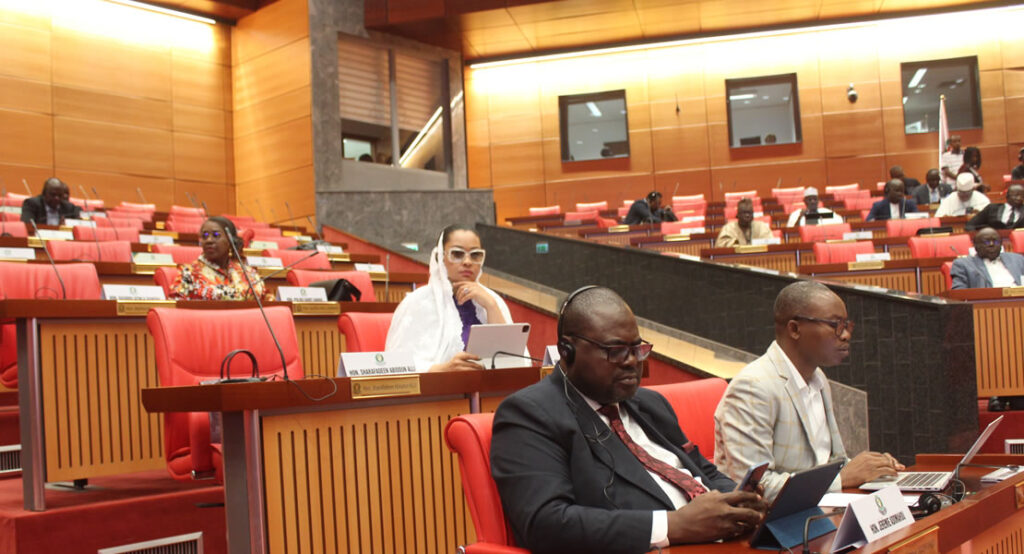
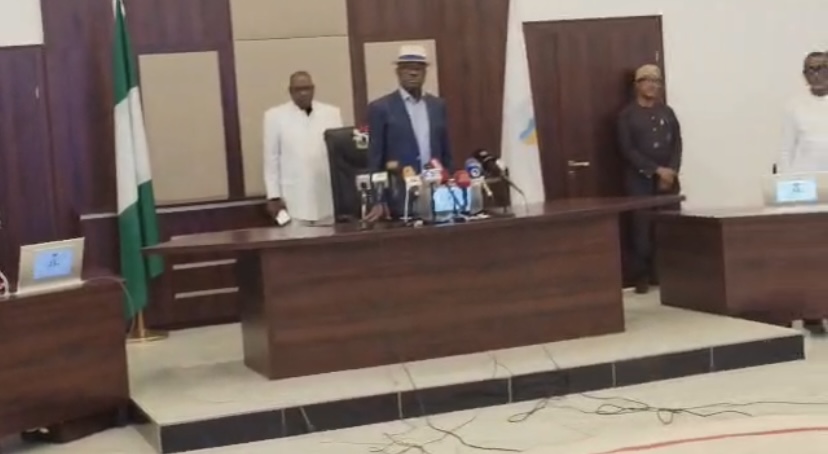
The proposal, unveiled during a session of the ECOWAS Parliament in Abuja on Tuesday, was presented by the organisation’s Commissioner for Political Affairs, Peace and Security, Ambassador Abdel-Fatau Musah. It outlines a broad reset of the bloc’s direction, with a renewed focus on making integration more inclusive and people-centred.

At the core of the initiative is the implementation of the ECOWAS Vision 2050 framework, alongside efforts to reposition the organisation at a time when it faces one of its most challenging periods since its establishment in 1975. Ongoing governance concerns, democratic backsliding and the rise of alternative alliances such as the Alliance of Sahel States, involving Burkina Faso, Mali and Niger, have all contributed to the strain.
The reform plan stems from a directive issued by regional leaders during their 65th Ordinary Session in Abuja in July 2024, which called for a dedicated summit to reassess the future of integration in West Africa.
Structured around six key pillars, the framework sets out priorities including economic transformation, peace and democratic governance, advances in science and technology, social inclusion, institutional reform and a clearer geopolitical strategy for the bloc.
On the economic front, the organisation is targeting a significant increase in intra-regional trade, with ambitions to deepen industrialisation, strengthen food security and introduce a single regional currency, the ECO, in the coming years.
Security and governance proposals emphasise stricter opposition to unconstitutional changes of government, alongside plans to reinforce regional peacekeeping capacity through a stronger standby force.
In the technology space, the roadmap envisions the creation of a unified digital market, while social measures include increasing women’s representation in leadership roles and embedding youth participation in governance structures.
Institutional reforms are also central to the plan, with proposals aimed at improving accountability, strengthening merit-based systems and achieving financial independence for ECOWAS institutions through enhanced revenue mechanisms.
A major feature of the document is its emphasis on “strategic autonomy,” positioning ECOWAS as a unified geopolitical actor capable of defending West Africa’s sovereignty in an increasingly multipolar world.
The proposal further outlines a framework for structured dialogue and confidence-building measures with the AES countries to prevent permanent fragmentation of the region.
To address ECOWAS’ longstanding implementation deficit, the Compact introduces a robust monitoring and evaluation system, including compliance scorecards for member states and an evidence-based approach to policy implementation.
Musah said the ultimate goal is to transform ECOWAS from an institution known for issuing declarations into one that delivers concrete public goods such as security, economic mobility and digital connectivity to citizens.
He noted that the draft Compact was developed through extensive consultations involving citizens across West Africa, civil society groups, the African diaspora, ECOWAS institutions and heads of state and government.
“The Compact for the Future of Regional Integration is a survival strategy for the region,” Musah said. “It seeks to rebuild trust between states and their peoples, ensuring that regional integration remains relevant, citizen-centred and capable of responding to 21st-century challenges.”
The presentation formed part of deliberations at the ongoing ECOWAS Parliament session, where lawmakers are examining the future of regional cooperation amid rising insecurity, democratic instability and economic pressures across West Africa.
News
Adeleke camp condemns release of APC Assembly candidate allegedly found with gun
The Imole Campaign Council has commended the Nigerian Navy for what it described as professionalism and neutrality in Osun State, while condemning the reported release of an All Progressives Congress House of Assembly candidate allegedly arrested with a gun.
In a statement issued on Friday by its spokesman, Pelumi Olajengbesi, the council said its attention had been drawn to “the arrest and subsequent controversial release of an All Progressives Congress member, Babatunde Festus Komolafe, who is also the APC House of Assembly candidate for Atakumosa East/West Local Government Area.”
According to the statement, Komolafe, popularly known as BFK, was apprehended by naval personnel in his hometown of Ifewara on Thursday.
The council alleged that “during a routine search conducted by men of the Nigerian Navy, the APC candidate was arrested alongside his supporters while travelling in a campaign vehicle reportedly belonging to the APC after a gun was allegedly discovered in the vehicle.”
It said the arrest had become public knowledge after a video of the suspects circulated widely on social media.
“The arrest is no secret, as a video showing the suspects has since gone viral and attracted public outrage,” the statement read.
The campaign council further claimed that the suspects were released shortly after their arrest due to pressure from senior APC figures.
“However, we gathered reliably that the arrested APC candidate and his co-perpetrators were immediately released following pressure from APC top goons,” it stated.
The statement added that “a news outlet even chronicled how the naval officer in charge was forced to release the suspects and asked to step aside.”
Despite its criticism of the release, the council praised the conduct of the armed forces during the ongoing governorship election campaigns.
“The Imole Campaign Council commends the men and officers of the Nigerian Armed Forces, especially the Nigerian Navy, for their neutrality and professionalism since the commencement of the governorship election campaigns,” the statement said.
It added, “The men and officers of the Nigerian Armed Forces have been proactive in arresting troublemakers regardless of party affiliation. Special salute to our gallant troops!”
The council, however, insisted that releasing a suspect allegedly found with an unauthorised firearm was dangerous.
“That said, the release of a suspect who was caught with an unauthorised gun is unacceptable. It sends the wrong signal to political criminals whose pastime is killing and maiming,” the statement declared.
The group linked the incident to what it described as the APC’s past conduct in Osun State.
“This is particularly alarming because of the APC’s antecedents in Osun. Just two weeks ago, the police launched an attack on military personnel to rescue five APC hoodlums, including the notorious APC thug, Asiri Eniba, arrested by the Nigerian Navy for shooting sporadically in Ile-Ife with pump-action guns,” it alleged.
The council called on the National Security Adviser, Nuhu Ribadu, to intervene.
“We call on the National Security Adviser, Nuhu Ribadu, to look into this grave injustice and punish the suspects,” the statement said.
It concluded, “No politician is above the law, and no political thug should be released to keep fomenting trouble.”
News
US missionary kidnapped in Niger released after nine months in captivity
An American Christian missionary, Kevin Rideout, has been released to U.S. officials after spending over nine months in captivity in Niger.
His organization, the Charlotte-based SIM International, confirmed on Friday that Rideout is in good health and will soon be reunited with his family.
“We are grateful to confirm that our good friend and brother in Christ, Kevin Rideout, has been released after over nine months in captivity,” SIM International Director Phil Bauman told CNN in a statement.
“Kevin is in good health in the care of US officials,” the statement said, adding Rideout will soon be reunited with his family.
Rideout was abducted on October 21, 2025, from outside his home in the capital city of Niamey by three unidentified men who fled toward the western Tillaberi region—an area known for active Islamist militant groups.
Following the incident, the U.S. Embassy in Niger heightened its security protocols and warned of elevated kidnapping threats across the country.
According to reports, Rideout is currently in FBI custody, though specific details regarding his release, his exact timeline, and the identity of his captors remain undisclosed.
Niger continues to grapple with intense violence and instability driven by militant groups affiliated with al-Qaeda and Islamic State forces operating along its borders.
News
Atiku hails US report on Tinubu’s fiscal policy, says ‘I’m vindicated “
Atiku Abubakar, presidential candidate of the African Democratic Congress (ADC) and former Vice President of Nigeria, on Friday commended recent report by the United States Department of State highlighting concerns over fiscal transparency in Nigeria, with specific reference to the federal government’s failure to disclose revenues and expenditures.
Stating that it vindicated his position for consistently calling out President Bola for its failure to uphold the basic standards of fiscal transparency, accountability, and disclosure required in a modern democracy.
The US report, had stated that: “The government made its enacted budget and end-of-year report widely and easily accessible to the public, including online, but did not publish its executive budget proposal within a reasonable period.
“…Budget documents did not provide a substantially complete picture of the government’s revenues and expenditures, or break down expenditures to support executive offices in the budget.”
Atiku, who said the report aligned with his concerns quoted the part, where it said: “Actual revenues and expenditures did not reasonably correspond to those in the enacted budget.”
The report also carpeted the Office of the Auditor-General, for did not meeting international standards of independence and did not publish substantive reports, adding that the Tinubu-led government did not meet the minimum requirements for fiscal transparency during the period under review.
Citing the failure to provide timely, detailed, and publicly accessible information on government revenues and expenditures, as well as the absence of credible audit trails, the former VP, said the observation was on all fours with his position over the years that Nigerians were being kept in the dark about how public resources are generated and spent.
Maintain that without full disclosure of how public funds were earned and spent, Nigeria could not attract investment, fight corruption, or build public trust, Atiku, added: “Transparency is not a slogan. It is the foundation of good governance.
This report confirms what we have been saying that Nigerians deserve to know where every kobo is coming from and where it is being spent. They are our resources and not the resources of President Bola Tinubu and his family and friends.”
While stressing the importance of fiscal transparency as a key benchmark for investors, donor agencies, and credit rating firms, he argued that since the Nigerian economy also relied heavily on foreign investment and multilateral support to fund infrastructure and social programmes, publishing detailed, timely data on revenue from oil, taxes, and borrowing, and on how that money was spent, remained critical to restoring confidence amid rising debt and inflation.
-
News24 hours agoOsun Gov Election: APM Candidate Withdraws, Backs Adeleke
-
News24 hours agoArmy Opens Application For Short Service Combatant Commission Course 50/2027
-
News24 hours agoOsun Election: Police Release DIG, CP and Emergency Contact Numbers
-
News24 hours agoShock as Politician Who Swore on Quran to Back Kwankwaso Defects to APC
-
Politics20 hours ago24hours to guber poll: Osun govt wants police investigate election threats
-
News24 hours agoOlowofela Mourns Death of OAU Dean, Professor Rafiu Salawu
-
Sports23 hours agoBarcelona seal €50m deal with PSG for Ferran Torres
-
News21 hours agoRevealed: N24bn Ghost Workers’ Pension Remains Unclaimed Two Years After ICPC Seizure