Connect with us

News

Comedian AY narrates how Ekubo was all smiles in his dying moments

Published

on

ADVERTISEMENT
Zoom Ad
ADVERTISEMENT
Zoom Ad

Comedian, AYo Makun, professionally known as AY, has spoken about the late Nollywood actor, Alex Ekubo’s final moments.


Recall that Alex Ekubo died in Lagos hospital on Monday, May 11 2026, after a long battle with cancer.

Alex, who was diagnosed with stage four liver cancer in 2024, underwent a transplant.

In 2026, the liver failed again, and he died from complications hours after being placed on life support.

Advertisement

Speaking about Alex’s final moments in an Instagram post, Comedian AY, who was present at the hospital, revealed that Alex was smiling when he breathed his last breath.

“Some losses do not feel real no matter how many times you try to process them. Still struggling with the reality that you are gone, Alex.

From the laughter to the conversations, the random moments, the brotherhood, and all the memories we shared in this industry. This one hurts deeply.

“I was there. I saw you still smiling even in death. I saw the tears from friends and family. And honestly, a part of me is still in shock. Rest well my brother. You will be remembered beyond the lights, the cameras, and the fame”, AY wrote.

Advertisement

Also, Alex Ekubo’s friend, Godwin Nnadiekwe, revealed that Alex prepared his will before his death.

Godwin wrote on his Instagram story “Alex Ekubo. To think you already prepared your will, It’s a heartbreak I can’t quite describe. Rest well, my friend.”
Continue Reading
Advertisement

News

Just in: Court sentences ex-Power Minister, Mamman to 75 years jail term

Published

on

ADVERTISEMENT
Zoom Ad
ADVERTISEMENT
Zoom Ad

The Federal High Court sitting in Abuja has sentenced former Minister of Power, Saleh Mamman, to 75 years in prison for stealing public funds totalling about N33.8 billion.

The Economic and Financial Crimes Commission, EFCC, brought the case before the court.

Mamman was accused of money laundering and conspiracy involving funds meant for the Zungeru and Mambilla hydroelectric power projects.

The ruling marks a major escalation from the earlier stage, where the court only dismissed his no-case submission and ordered him to open his defence.

Advertisement

More details soon…

Continue Reading

News

Watch moment construction staff indigenous company, Val Construction hailing FCT minister Wike (Wike)

Published

on

ADVERTISEMENT
Zoom Ad
ADVERTISEMENT
Zoom Ad

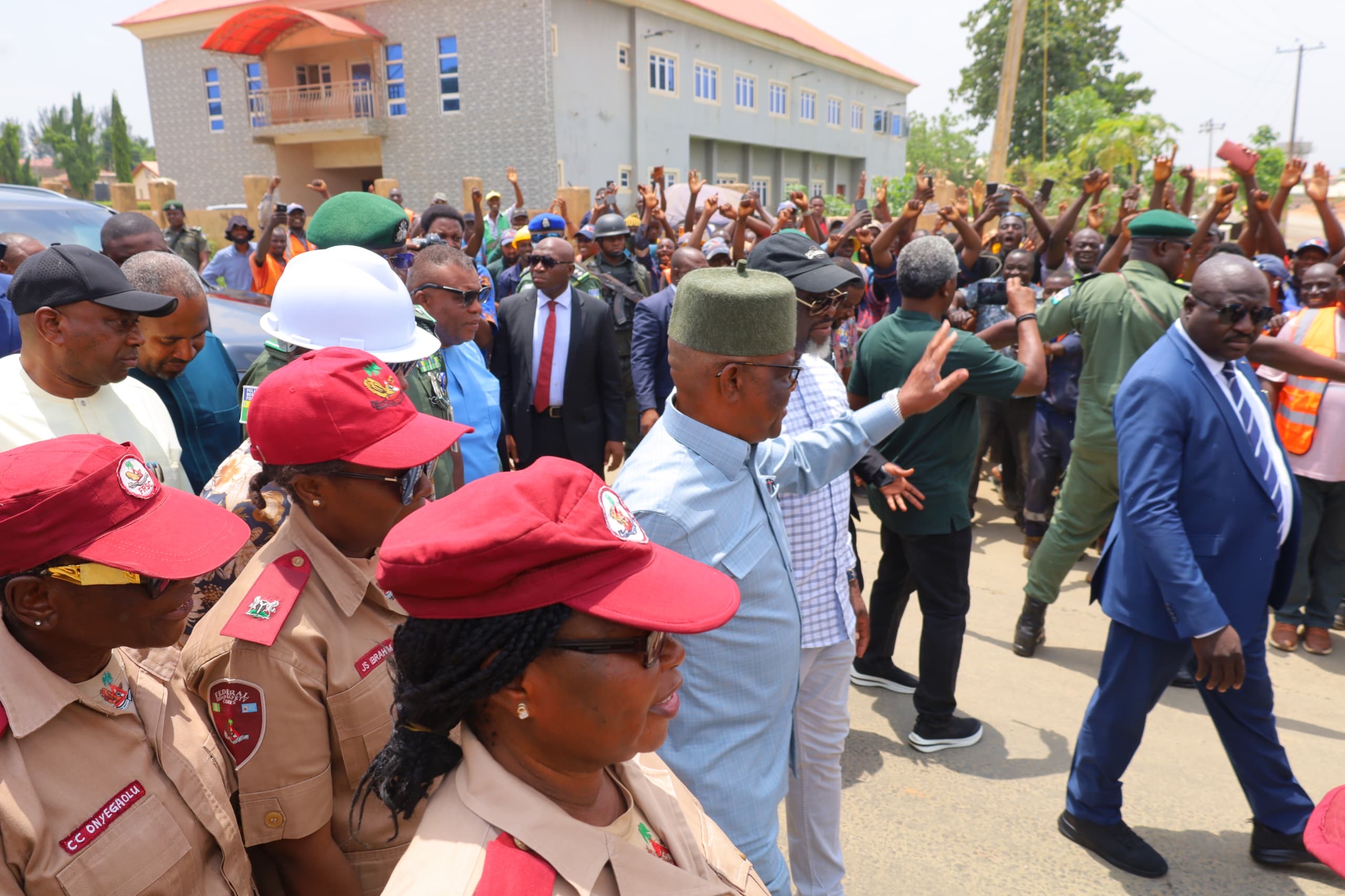
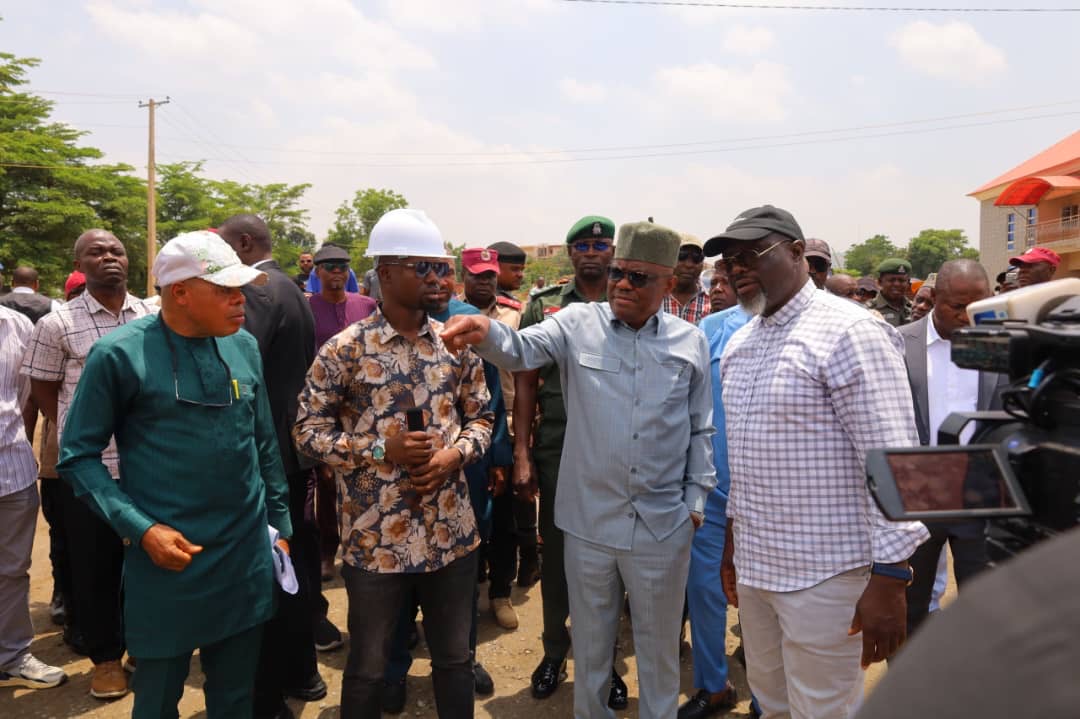
It was an atmosphere of joyful noise as Staff of Abdul Val Construction Company, an indigenous contractor handling the ongoing construction of Karu, Abuja roads hailing the FCT Minister, Nyesom Wike, while inspecting the road project today.

Watch:

Continue Reading

News

Experts Say Africa Forfeits $89bn Every Year To Illicit Financial Flows

Published

on

ADVERTISEMENT
Zoom Ad
ADVERTISEMENT
Zoom Ad

By Gloria Ikibah

African economies continue to suffer major revenue losses due to illicit financial flows, with experts estimating that as much as 89 billion dollars slips out of the continent annually.

Specialists from the West African Tax Administration Forum WATAF and Tax Justice Network Africa TJNA highlighted the scale of the challenge during an engagement with lawmakers at the ongoing 2026 First Ordinary session of the Economic Community of West African States Parliament in Abuja on Monday.

They linked the persistent losses to a range of harmful tax practices that continue to undermine public finances across the region. These include tax evasion, aggressive tax avoidance and the manipulation of trade invoices, all of which weaken governments’ ability to generate revenue.

Advertisement

Discussions at the session also focused on how to implement regional tax directives more effectively, with particular emphasis on strengthening domestic resource mobilisation and promoting greater alignment of tax systems across West Africa.

According to the experts, the continent is grappling with a substantial funding gap, with nearly 194 billion dollars needed each year to meet development demands, a shortfall made worse by ongoing financial leakages.

“Africa has a prevalent problem of illicit financial flows, and at least 65 per cent of these could be categorised as commercially-driven.

“The main practices that could lead to IFFs are: tax evasion, tax avoidance, tax misinvoicing and other harmful tax practices.

Advertisement

“These harmful tax practices haemorrhage the available resources that can be used for development of the continent, and Africa loses up to eighty-nine billion dollars annually,” they said, citing a 2020 report.

They also asserted that advancing tax harmonisation within the ECOWAS sub-region presents a strategic opportunity for WATAF to strengthen regional integration, enhance domestic resource mobilisation, and support sustainable development.

“Tax harmonisation is the fiscal backbone of ECOWAS integration. Without it, the region will continue to lose revenue through loopholes, smuggling, opacity, and profit shifting,” they said.

However, they emphasised that the effectiveness of such efforts would depend on strong political commitment, effective national-level implementation, and active parliamentary oversight.

Advertisement

Dr Nita Belemaobgo, Research Manager, WATAF, while highlighting the session’s expected outcomes, said the organisation’s objective was to support ECOWAS’ transition on tax directives aimed at harmonising fiscal policies across member states.

“Regional cooperation and evidence-based tools can significantly enhance accountability and reform outcomes,” she said.

Danicius Sengbeh, WATAF’s Manager, Communications and Information Technology, underscored the importance of setting regional tax harmonisation and domestic resource mobilisation.

He said the ECOWAS Parliament had an indispensable role to play in the oversight function of tax administration, adding that the engagement was about “sovereignty, fairness, accountability and West Africa’s future.”

Advertisement

Dr Zandile Ndebele of TJNA, in her submission, urged the regional MPs to make laws to ensure that local citizens in African countries benefited from domestic resource mobilisation and management.

Speaking on the theme, “Addressing Tax-Related Illicit Financial Flows (IFFs) through Legislative Frameworks and Transparency,” she said:

“It’s possible to introduce legislation for domestic beneficiation to gain more resources and revenues, apart from gaining from just taxes.”

The experts urged lawmakers to adopt a broad and coordinated approach to tackling illicit financial flows, noting that meaningful progress in this area would be critical to strengthening both national and regional revenue generation.

Advertisement

Speaking on behalf of the Tax Justice Network Africa, Solomon Adoga called on parliamentarians to prioritise stronger legal frameworks for the mining sector, emphasising the need for stricter oversight and accountability.

He advised legislators to focus on “strengthening extractive legislation, scrutinising new mining agreements and monitoring tax incentives through cost-benefit analysis.”

He also stressed the importance of safeguarding the continent’s fiscal interests, warning against continued dependence on external systems.

“It’s important that Africa protects its taxing rights. We must look at where we are losing revenue as Africans. We don’t need to be reliant on other countries outside of Africa,” he said.

Advertisement

The experts further encouraged the Economic Community of West African States to deepen tax harmonisation efforts across the region as a way of reducing distortions, curbing unhealthy tax competition and reinforcing economic integration.

They pointed out that progress in tackling illicit financial flows does not necessarily depend on a unified currency, maintaining that countries can retain separate monetary systems while still working together to address the problem.

“There must be local beneficiation in our countries. Africa has been deprived of taxing rights. Multinational companies are not paying their fair share of taxation,” they noted.

In addition, lawmakers were urged to give priority to global tax reforms, improved information exchange and greater transparency, while encouraging member states to draw lessons from advocacy efforts in countries such as Nigeria, Ghana and Côte d’Ivoire.

Advertisement

A representative of the West African Tax Administration Forum, Jonas Igwe, highlighted the need for sustained commitment to make regional reforms effective.

“Effective implementation of tax harmonisation would require political commitment, institutional coordination, digital modernisation, sustained regional cooperation, monitoring and evaluation by national transition committees,” he added.

Continue Reading

Trending

Copyright © 2024 Naija Blitz News