
Opinion
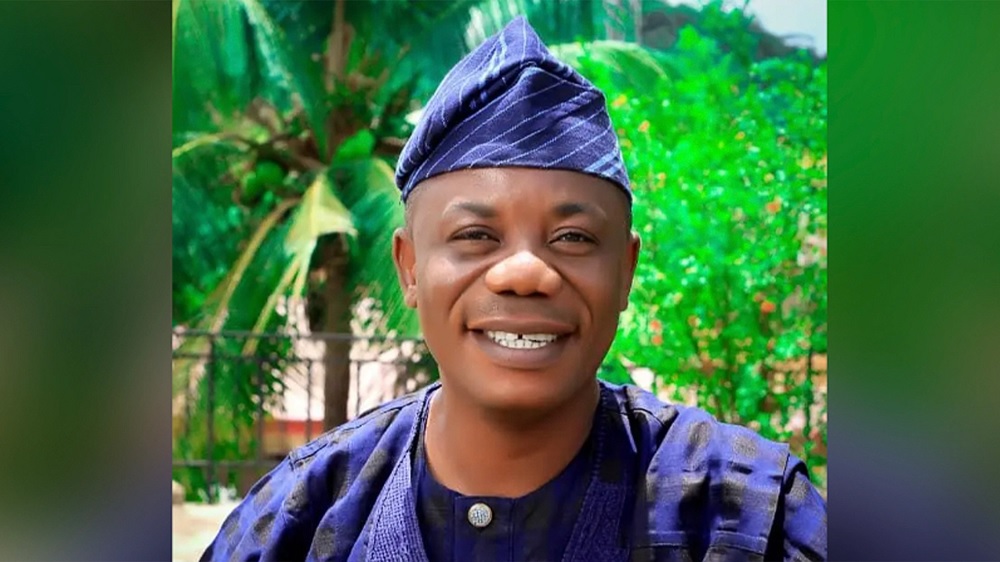
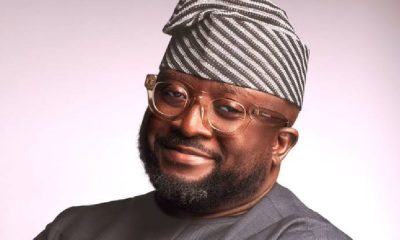
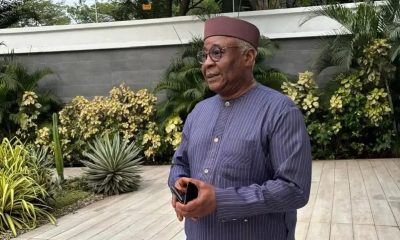
ONDO SOUTH SENATE: A NEW CHAPTER BECKONS FOR DR. D.I KEKEMEKE

- /home/naijuinz/public_html/wp-content/plugins/mvp-social-buttons/mvp-social-buttons.php on line 27
https://naijablitznews.com/wp-content/uploads/2026/05/KEKEMEKE.jpg&description=ONDO SOUTH SENATE: A NEW CHAPTER BECKONS FOR DR. D.I KEKEMEKE ', 'pinterestShare', 'width=750,height=350'); return false;" title="Pin This Post">
- Share
- Tweet /home/naijuinz/public_html/wp-content/plugins/mvp-social-buttons/mvp-social-buttons.php on line 72
https://naijablitznews.com/wp-content/uploads/2026/05/KEKEMEKE.jpg&description=ONDO SOUTH SENATE: A NEW CHAPTER BECKONS FOR DR. D.I KEKEMEKE ', 'pinterestShare', 'width=750,height=350'); return false;" title="Pin This Post">


BY BOLAJI AFOLABI
In the last three to four weeks, the political barometer across the country was charged, as many politicians jostled for various elective positions. Across the major and minor parties, the quest to emerge candidates for states Houses of Assemblies; House of Representatives; Senate; and Governorship brought some frenzy to the political space. As weeks rolled into days, there were clear demarcations and categorization of the aspirants – the serious contenders; the ‘also ran’ group; the ‘coupon’ players; and the outright jokers. Fact is that, each of these were noticeable in all the political parties. From the ruling party, All Progressives Congress, (APC) to the Peoples Democratic Party, (PDP); Social Democratic Party, (SDP); Labour Party, (LP); African Democratic Congress, (ADC); and the newbies Nigerian Democratic Congress, (NDC), politicians of varied persuasion and leanings, with rational and irrational thoughts, as well as sincere and insincere reasons dominated national discussions. All angling for the same thing – candidacies!
At the end of primary elections in virtually all the parties, the dust is clearer, and the cacophony of drama, theatrics has given way to some order in the polity. Away from the buzzing sounds and nuzzling noise, the wheat has been separated from the chaff. To a large extent, there are certainties as to who runs for what in the forthcoming general elections. As expected, the struggle was more fierce in the APC than any other party. Given the peculiarities of our political system, and the mindsets of many politicians, the gravitation towards the APC was readily foretold. With Governors, members of the National Assembly, and some other notable politicians swarming into the ruling party in droves, one cannot expect the contrary during primaries.
Being a beautiful bride, the APC primaries threw up aspirants of varied shapes and sizes. However, at the end of the processes, popular names, not so popular, and fresh faces emerged as the party’s flag bearers for different elective positions in the 2027 polls. From the North to the South, East and West, it was the same. While some outgoing Governors cleared the way for their successors, others emerged as candidates for the Senate – which has become the retirement haven for states chief executives. Also, some preferred choices were railroaded into changing nomenclatures from aspirants to candidates for other elective positions. Though this trend was prevalent in many states, there were few exceptions; where true democratic contests took place.
The APC primaries for Ondo South Senatorial District was one. The list of aspirants who jostled for the ticket included some notable politicians – whose respective resumes are intimidating. Former and present federal legislators, senior party executives, top officials in the state and federal agencies, and some other personalities threw their hats in the ring. For those who understand the place, position, and present status of Ondo South, the number and calibre of aspirants that pushed to be the candidate of the APC was not a misnomer. Variously described as the ‘maritime hub’ and the untapped ‘blue economy wealth’ of the “Sunshine State” the realities of developmental decays and infrastructural deficits that pervade the partly riverine Senatorial District remain painful and pitiable. At the end of the primaries, Dr. I.D Kekemeke emerged the winner with 35, 835 votes – other aspirants including Hon. Akinfolarin Mayowa Samuel, and Hon. Morayo Lebi scored 6,435 and 1,845 respectively.
Considering the tendencies of Nigerian politics, the writer sought for details about the Ondo South Senatorial primaries. The inquisition was driven by one reason. Sometime in October 2025, one was invited to a get-together in honour of Kekemeke by one of his loyal, reliable, and trusted friends; Architect Stephen Adamu, the Principal Partner and Chief Executive of Pine Projects Limited – one of Abuja’s flourishing architectural firms. By the way, the occasion was to celebrate the Ondo-born politician’s academic feat of earning a Doctorate degree in Law. Kekemeke came across as an unusual personality, uncommon politician, who is outrightly frank, disarmingly humble and altruistic in thought and practice. Fortunately, his participation in the primaries provided an opportunity to authenticate or otherwise these attributes from a few of one’s friends and colleagues – though not politicians – but are bonafide indigenes of the District.
Comrade Adebari Ijadola, a civil rights activist described Kekemeke as, “a well grounded politician whose integrity has never been in doubt, a resourceful networker and bridge-builder whose relational capacities will drive good governance and benefit Ondo South.” A paramilitary service officer who pleaded anonymity said, “he is the best person to address unemployment, youth restivness, and infrastructural decay in Ondo South.” He will leverage on his broad experiences in politics and public service for the general well-being and development of our people and district.” Mr. Tubosun Ayodeji, a serial entrepreneur believes that, “without sounding immodest, Kekemeke’s credibility, integrity, accessibility, and acceptance by many people across the State sets him apart from candidates of other parties.” Corroborating, Ms. Morenikeji Ademola, an educationist averred that, “unlike other politicians, he has always used his positions, both past and present to positively touch the lives of people and contributed to the development of the state.”
While R. Buckminster Fuller, a renowned philosopher said, “integrity is the essence of everything successful,” the legendary boxer, Muhammed Ali declared that, “service to others is the rent you pay for your room here on earth,” and an unnamed sociologist concludes that, “the greatest gift of all is the gift of service to humanity.” Indeed, further checks on Duerimini Isaac Kekemeke, widely called “D.I Kekemeke” or “Frank” is an encapsulation of these timeless words. His political career and public service odysseys are framed, driven by service to the people. He does this with unrestrained passion, unequivocal commitment, and unmistakable fervor. Making people the fulcrum of every engagement, he, at different levels and times, has always emerged as the compass for selfless service and purposeful leadership.
As the Minority Leader of the old Ondo State House of Assembly during the aborted Third Republic between 1992 and 1993, Kekemeke, as a young legislator provided the necessary leadership for the opposition caucus through robust advocacy, people-focussed initiatives, and the promotion of welfarist ideals which was the vision of his party. His records of service did not go unnoticed as he was appointed Member, Constitution Drafting Committee of the Peoples Democratic Party, (PDP) in 1998. As the pioneer Board Chairman of the National Examinations Council, (NECO), between 2001 and 2004, he worked assiduously for national and international certifications of the agency’s examinations; standardization, credibility, and integrity of the examinations; established institutional stabilization, financial and administrative procedures, as well as curbing malpractices.
Further, Kekemeke was Attorney General & Commissioner for Justice; Commissioner for Works, Lands, Housing & Transport; as well as the Secretary to the Ondo State Government between 2003 and 2009. He among other things contributed to physical planning, building of housing estates, construction of over 1,000 km of roads, and the delivery of other infrastructures. He established the Office of the Public Defender which provided free legal services to indigent citizens; embarked on comprehensive justice reform and administration; alternative dispute resolution framework. As the “engine room” of the state government, he provided functional and efficient governance through policy ideation, coordination and execution.
Aside from Kekemeke’s legislative and executive experiences, he is proficient in political administration occupying positions that are critical to party development. He was the pioneer Chairman, Ondo State chapter of the APC; National Vice Chairman (South West), APC; re-elected into the same position in 2025. Given the near-total endorsement of his aspiration within and outside the party and across the state, Kekemeke’s chances of being a Senator at the end of the January 23, 2027 general elections look promising. How well he meets the expectations of his constituents thereafter, remains in the belly of time. Like the legendary Jimmy Cliff sang, “Time Will Tell!”
* BOLAJI AFOLABI, a Development Communications specialist was with the Office of Public Affairs, The Presidency, Abuja.

By Dr Festus Goziem Okubor writing from Ute-Erumu
Let us begin with a number so obscene it should make every Nigerian’s blood boil: Four trillion naira. That is what the fuel subsidy hemorrhage cost this nation in 2022 alone. Not on schools.
Not on hospitals. Not on the roads that swallowed trucks. Four trillion naira vanished into the pockets of smugglers, cartel kingpins, and the political godfathers who turned Nigeria’s treasury into their personal automated teller machine.
No doubt, the forecasts for 2023 were worse: over six trillion naira, a sum larger than the entire federal budgets of Ghana, Senegal, and Côte d’Ivoire combined, was projected to go up in smoke, literally. This was not a social safety net. This was not a helping hand for the poor. This was beyond reasonable sense, organized, industrial-scale looting dressed in the language of compassion. The Nigerian fuel subsidy was the greatest heist in the economic history of modern Africa, and for forty years, every single man who occupied Aso Rock looked the other way until
May 29, 2023.
Bola Ahmed Tinubu took the microphone, looked the subsidy vampire in the eye, and drove a stake through its heart. “Subsidy is gone,” he said. No committee. No white paper. No six-month stakeholder consultation designed to produce nothing. Just three words that every one of his predecessors lacked the spine to utter. That is what this piece is about: not spin, not propaganda, but the Cowardice Archive: Forty Years of Broken Promises.
Let us be brutally honest about our history, because the opposition would prefer we rather forget it.
Olusegun Obasanjo tried in 2003. He announced subsidy removal, faced protests, and retreated so fast you could hear the wind break. He tried again in 2004, then 2007; each time blinking at the first sign of resistance. The man who once boasted that Nigeria was not a nation of cows, yet the subsidy swallowed another trillion.
Goodluck Jonathan’s turn; 2012. The Occupy Nigeria movement took to the streets, and Jonathan, facing an election season capitulated completely. He not only restored the subsidy but entrenched it, ensuring the government, deducting billions at source for “under-recovery” a phrase that should live in infamy as the most expensive euphemism in Nigerian history.
Recall the scene again; Inauguration Day. The presidential speech writers must have scripted the
norm; politically correct platitudes; false hope, soothing words with unrealistic inanities. Instead,
Tinubu went off-script and detonated a policy bomb: The fuel subsidy is gone.;
The political class was stunned. Where were the committees? Where was the national dialogue?
Where was the six-month palliation window that had killed every previous attempt? Tinubu had
done the unthinkable: he simply acted. No consultation with the subsidy cartel. No negotiation
with the smugglers. No advance warning to the political godfathers who had grown fat on the
arbitrage between Nigeria’s subsidized campaigns on removing the subsidy. Unlike his
predecessors, who promised reform and delivered capitulation, Tinubu promised action, and for
the first time in Nigerian history, a president& word was total, final and unbreakable.
Tinubu’s May 29 declaration was not cruel. It was the long-overdue demolition of a criminal
enterprise masquerading as social policy. No doubt the petrol prices soared as the immediate
effect of the proclamation. This part is always painted by political antagonists, in its most
gruesome form, while seeking to defame Tinubu as the cruelest President Nigeria ever had.
They refuse to speak on the positive effect that this has on the economy: monthly allocations to
states and Local Governments that once struggled to pay salaries now routinely exceed pre-2023
levels by margins of forty to sixty percent. Governors who spent years blaming Abuja for their
insolvency suddenly found themselves with resources they had never seen. Whereas this article
does not refute the fact that the masses have borne the immediate effect of subsidy removal, the
price shock, real and painful as it is, should not mask the other reality of structural reallocation
of national resources. Nigeria was spending more on subsidizing premium motor spirit than on
its entire capital budget. Let that sink in: more on fuel than on roads, power, health, and
education combined. Have you ever wondered why since 2023 there has been no serious fuel
scarcity in Nigeria? By now, with the current military interface between America, Israel and
Iran, and its attendant global oil crisis, the queues at filling stations as well as unreachable prices
would have crippled the nation.
The IMF, no friend of populist presidents, wants us to believe that the Dangote Refinery with its
650,000 barrels per day of domestic refining capacity is somehow Aliko Dangote’s achievement
alone, disconnected from government policy. This is either ignorance or deceit. The Dangote
Refinery reached operational status under Tinubu’s watch, because Tinubu created the conditions
for it to thrive. A downstream sector still shackled to subsidy economics would have made the
refinery commercially unviable. Why would anyone invest billions in domestic refining price,
quality, without competitive market access?
Consider where this leads: Nigeria, Africa’s largest oil producer, has spent decades importing
refined petroleum because its own refineries were monuments to incompetence and corruption.
The subsidy regime made this madness profitable. Why fix refineries when you could import and
pocket the subsidy differential? Tinubu, the political tactician broke that vicious circle.
The end of fuel importation is no longer a distant dream. It is the logical terminus of policies
now in motion. And when that day comes, when Nigeria refines every drop of its own crude, the
credit will belong not only to Tinubu but to all of us through our collective resilience and
defiance against all that robbed Nigeria thin and lean through the heist of petroleum subsidy.
This collective resilience and defiance, no doubt, is coming with painful cost, as no honest
supporter of this administration is oblivious to the pain, through inflation that the removal of Oil
subsidy has brought on household budgets. This temporary painful condition, which will soon
end in the glory of a salvaged nation, that the rent-seekers who fed on Nigeria for forty years will
not refrain from deploying, using every bureaucratic trick, every media plant, every political
proxy to claw 2027 general elections.
As we approach the 2027 crossroads, the question on the ballot cannot be clearer. On one side:
the subsidy vampires, the political actors, business cartels, and bureaucratic networks that fed on
the narrative that Tinubu has made life harder; They will promise to bring back the good old
days; of cheap fuel. They will not mention that those days were financed by debt our
grandchildren will repay. On the other side: a president who, whatever his imperfections, did
what no one before him dared to do. He looked at a system designed to impoverish the nation
and enrich a few, and he dismantled it. Not gradually. Not after a committee report. On Day One.
The history of nations is written at moments like this.
Every country that has ever broken free ofa resource curse, whether Indonesia under Suharto, Brazil under Cardoso, or India under Rao,did so because someone, somewhere, decided to stop the bleeding, whatever the political cost.
Bola Ahmed Tinubu made that decision for Nigeria on May 29, 2023. The reforms are not
complete. The pain has not fully subsided. But the hemorrhage has been stanched.
The patient is stabilizing. No more fake fuel promises. Nigeria has heard enough of those to last a lifetime.
What we have now for the first time in a generation, is a president who said he would act, and
did.
That is a story worth telling in 2027. That is a record worth defending. That is a man worth
reelecting.

By,
Ken Harries Esq.
Democracies are built not only on elections but also on institutions. While elections provide legitimacy, institutions provide stability and growth. The strongest democracies are those that balance the need for accountability with the need for continuity, recognising that enduring reforms often require consistent leadership to move from legislation to implementation.
As political conversations gradually shift towards the next electoral cycle – 2027, Nigerians should therefore ask a fundamental question: when leadership has demonstrated measurable performance and is steering major national reforms, does changing that leadership necessarily serve the national interest?
This question is particularly elevant to the leadership of the National Assembly. Unlike executive offices where policy direction can change overnight, legislatures thrive on institutional memory, consensus-building, stability and the patient cultivation of broad political support. Complex constitutional amendments, fiscal and governance reforms rarely mature within a single legislative session. They require continuity of vision, experience, stability and leadership.
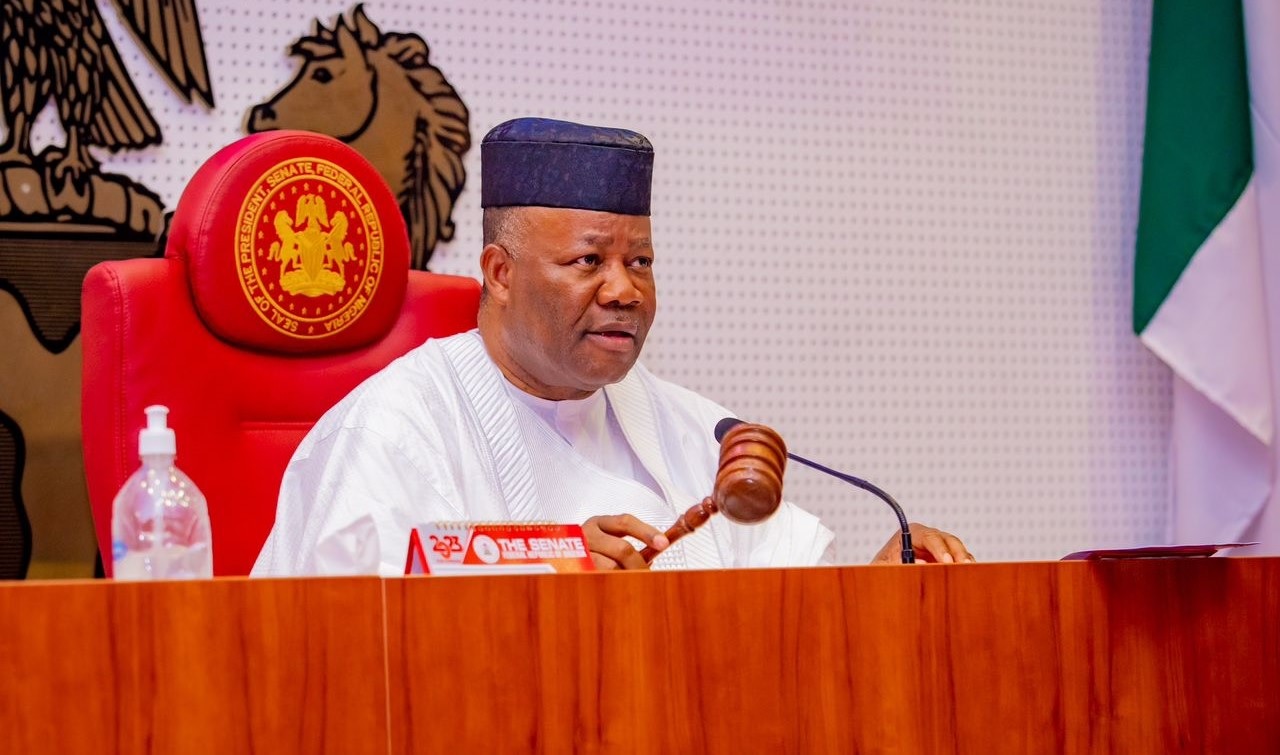
Since its inauguration, the 10th Senate under the leadership of Senator Godswill Akpabio has pursued an ambitious and innovative legislative agenda touching virtually every major areas of national development. Beyond routine lawmaking, the Senate has considered constitutional amendments, electoral reforms, fiscal restructuring, security legislation and institutional reforms designed to address some of Nigeria’s most pressing challenges. Regardless of one’s political persuasion, few would dispute that the legislative agenda of the National Assembly has been extensive, innovative, bold and consequential.
Perhaps no proposal better illustrates this than the State Police Bill.
For decades, Nigerians have debated whether the country’s security challenges can continue to be effectively managed through an exclusively centralised policing structure. Rising incidents of terrorism, banditry, kidnapping, communal violence and farmer-herder conflicts have intensified calls for a policing system that is closer to the communities it serves.
The proposed constitutional amendment seeks to establish state police services operating alongside the Nigeria Police Force under carefully defined constitutional safeguards. Its supporters argue that locally recruited officers would possess a better understanding of their communities’ languages, culture, terrain and security dynamics, thereby improving intelligence gathering, crime prevention and emergency response. Rural communities are currently underserved by federal policing, could receive greater security coverage, while stronger collaboration between local communities and security personnel could significantly enhance intelligence-led policing.
Importantly, the proposal is not simply an exercise in decentralisation. Conscious of concerns about political abuse, the amendment incorporates safeguards including independent State Police Service Commissions, judicial oversight, constitutional limits on state policing powers, nationally recognised operational standards, structured coordination with federal security agencies and legislative oversight. These provisions seek to ensure that decentralisation strengthens security without undermining constitutional rights or national cohesion.
The significance of such a far-reaching constitutional reform extends beyond its passage. Should the amendment eventually become law, its successful implementation would demand sustained legislative oversight, continuous engagement with stakeholders and careful monitoring over several years. Institutional continuity could therefore become a significant advantage in ensuring that the reform achieves its intended objectives.
The same principle applies to the Electoral Act (Amendment) Bill. Elections remain the foundation of democratic legitimacy, and public confidence in electoral outcomes is predicated largely upon the credibility of the legal framework governing the process. The amendments sought to strengthen voters accreditation, improve result management, reinforce the independence of electoral institutions, regulate the deployment of technology, impose stronger penalties for electoral offences and reduce unnecessary post-election litigation through clearer legal provisions.
These reforms are intended not merely to improve election administration but to strengthen public confidence in democracy itself. Yet electoral reforms seldom end with legislative approval. They require continuous oversight, periodic refinement and close collaboration among the legislature, the electoral commission, political parties, the judiciary and civil society. Stable parliamentary leadership provides greater institutional capacity to guide that process without unnecessary disruption.
Equally significant are the Tax Reform Bills, which sought to modernise Nigeria’s tax administration, simplify compliance, broaden the revenue base and create a more predictable fiscal environment capable of supporting long-term economic growth and improved public service delivery. Such reforms are central to Nigeria’s efforts to reduce dependence on volatile oil revenues and build a more sustainable economy. Like other major reforms, however, their long-term success depends as much on consistent legislative oversight as on their initial passage.
Critics may rightly observe that no legislature is beyond criticism, and the 10th Senate is no exception. Parliamentary leadership in every democracy attracts intense public scrutiny, robust debate and differing political opinions. Those debates are healthy because democratic institutions are strengthened when leaders remain accountable to the citizens they serve.
However, leadership should ultimately be evaluated not solely on controversy but on measurable institutional performance. The more important question is whether the legislature has advanced meaningful reforms, strengthened democratic institutions and fulfilled its constitutional responsibilities. Judged by those standards, supporters argue that the current Senate leadership has maintained legislative productivity while addressing complex national challenges requiring broad political consensus.
Indeed, continuity should never be defended merely because an incumbent seeks another term. Democratic renewal remains essential. Yet experience also has value.
Legislatures differ from many other institutions because effectiveness depends less on executive authority than on negotiation, persuasion, stability, coalition-building and procedural mastery. These qualities are developed over time.
Senator Akpabio’s supporters point to his unusual combination of executive and legislative experience, having served as governor, minister and now Senate President. They argue that this background has enabled him to navigate competing political interests, build consensus across party and regional lines, manage complex legislative negotiations and sustain constructive engagements between the executive and legislative arms of government without compromising the Senate’s constitutional core mandates and responsibilities.
History demonstrates that institutions often suffer when successful reforms are interrupted before reaching maturity. Nigeria itself has witnessed numerous policies abandoned, delayed or fundamentally altered simply because leadership changed. Too often, institutional momentum is sacrificed at the altar of political transition. Democracies pay a price when every new leadership begins by restarting the race rather than sustaining it.
The National Assembly is no different. Major constitutional amendments, security reforms and fiscal restructuring are not relay races in which every incoming leadership drops the baton and begins afresh. They are long-distance national projects requiring persistence, stability, institutional memory and steady stewardship. Continuity, where justified by performance, enables reforms to mature, preserves valuable institutional knowledge and reduces avoidable disruptions to legislative priorities.
This is not an argument that leadership should become permanent, nor is it a plea for blind loyalty to any individual. Every Senate President must earn the confidence of colleagues through competence, integrity, fairness and measurable performance. Ultimately, the decision belongs first to the electorates of Akwa Ibom North-West Senatorial District and, if re-elected, to members of the Senate who will choose their presiding officers in accordance with the Constitution and the Senate Standing Orders.
As Nigerians evaluate the future leadership of the National Assembly, the debate should rise above personalities and partisan loyalties. The real question is not whether one individual occupies a particular office, but whether the institution benefits from continuity at a time when significant constitutional, and security, electoral and fiscal reforms remain unfinished.
History rarely remembers legislatures for the political contests surrounding their leaders. It remembers the institutions they strengthened, the reforms they sustained and the foundations they laid for future generations. If Nigeria believes that the ongoing reforms in policing, elections, taxation and governance are essential to its future, then continuity in parliamentary leadership becomes more than a political preference. It becomes a strategic question about how best to consolidate progress, preserve institutional stability and advance the nation’s democratic development.
Ken Harries Esq
Abuja-based Development Communication Strategist


By Sonny Aragba-Akpore
Rising from its 2026 yearly Global Summit recently, the International Telecommunications Union (ITU) listed prospects of Artificial Intelligence (AI) for everyone everywhere as the fulcrum of the maiden Global Dialogue on AI Governance. This is the first mandated by the United Nations (UN)Member States, where every country had a voice in shaping the future of AI. The two-day event, which formed part of the World Summit for Information Society (WSIS) week, emphasised science-based collaboration as the foundation for addressing challenges such as trust, equity, and accessibility, and is set to reconvene in New York in May 2027.
Back-to-back with the AI Dialogue, the yearly AI for Good Global Summit 2026 showcased the latest breakthroughs in AI innovation, showing how real-world solutions, skills development, and standards work together to translate into AI that works for all. At the heart of the summit was the first meeting of the newly formed AI for Good Global Commission, co-chaired by Rwanda’s President Paul Kagame and Salesforce Chair and CEO Marc Benioff, with ITU Secretary-General Doreen Bogdan-Martin serving as Vice-Chair.
Commissioners called for urgent action on trust, equitable access, and real-world AI solutions, highlighting AI’s unparalleled potential to address global challenges. With the future of AI depending on trust, AI for Good announced a new Focus Group on Agentic AI to develop frameworks for trusted digital identity and to ensure that the behaviour of AI agents remains trustworthy and accountable throughout their lifecycle. ITU’s Goodwill Ambassador for the AI for Good AI Skills Coalition, will.i.am, highlighted the importance of skills and education at Summit events throughout the week, while also participating in the announcement of three new AI Skills Coalition partners during the initiative’s yearly meeting.
The AI for Good Global Summit and World Summit for Information Society (WSIS) Forum 2026 wrapped up a landmark Geneva Digital Week, having brought together over 12,000 participants from 177 countries to drive global efforts towards safe and responsible artificial intelligence (AI). The week celebrated breakthroughs in AI and digital innovation, uniting world leaders, tech pioneers, policymakers, civil society, and youth from around the globe.
Showcasing cutting-edge technology to historic discussions on AI governance, the events underscored a shared vision to ensure “AI and digital technologies benefit all of humanity.” “At Geneva Digital Week, the world came together to shape our shared digital future,” said ITU Secretary-General Doreen Bogdan-Martin. “We demonstrated that AI governance, innovation and digital development are not separate challenges — and that international cooperation remains our most powerful tool to solve them, while ensuring technology benefits all people, everywhere.”
With the domestication of the governing rules for Artificial Intelligence (AI), very soon, it will be available for everyone. On July 9, 2026, the ITU announced a new initiative to develop frameworks for trusted digital identity and to ensure that the behaviour of AI agents remains trustworthy and accountable throughout their lifecycle.
With Commissioners calling for urgent action on trust, equitable access, and real-world AI solutions, highlighting AI’s unparalleled potential to address global challenges, the Summit rose with a unified purpose to push AI to all global communities. The future of AI will depend on trust, as AI for Good announced a new Focus Group on Agentic AI to develop frameworks for trusted digital identities. As AI systems plan and act with growing independence, the ability to establish an agent’s identity and whether its behaviour can be trusted becomes critical.
Increasingly, AI agents need to identify and authenticate one another. Just as importantly, their decisions and actions must remain accountable, controllable and trustworthy. Identity systems establish who is acting, while trustworthiness determines whether that actor is reliable. Together, they provide the foundation for safe interaction between humans and autonomous AI systems. The Focus Group will address the challenges of trust management for people and AI agents, the overall trustworthiness of agentic AI systems, and ways to strengthen confidence in how AI agents behave while retaining authority over their actions.
“AI agents will soon negotiate, transact and make decisions on our behalf,” said Focus Group Co-Chair Debora Comparing. “Before that future becomes reality, we need common international foundations that establish who these agents are, when they can be trusted, and how people will remain in control. That is the challenge this Focus Group has been created to address.” “Agentic AI introduces a new class of digital actors that will increasingly collaborate with people and one another,” said Co-Chair Amir Banifatemi. “Identity tells us who is acting, and trustworthiness tells us how that actor can be expected to behave. Bringing these together creates the common foundation needed for interoperable, accountable, and trusted AI systems at a global scale.”
The group is open to technical experts as well as specialists in policy, law and regulation to develop: common terminology and definitions; reference architectures for identity, trust, agent discovery, and interoperability; trust frameworks and lifecycle (assurance) models; interoperability mechanisms for digital identity and credentials; security criteria and benchmarks for the continuous assessment of AI agents; and, a standardization roadmap to coordinate action across expert communities.
Throughout the week, the WSIS Forum 2026, the UN’s longest-standing platform for advancing digital development, gathered global stakeholders to explore innovative ways technology can power sustainable development. With a renewed mandate through 2035, the Forum featured high-level discussions and grassroots exchanges spanning digital cooperation, capacity building, and refugee connectivity. Participants also celebrated the winners of the WSIS Prizes, which honoured top tech solutions for digital development.
A major milestone was reached as the Partner2Connect (P2C) Digital Coalition exceeded its USD 100 billion target, advancing efforts to connect the 2.2 billion people worldwide still offline. WSIS also hosted the final meeting of the International Advisory Body on Submarine Cable Resilience, during which the body adopted its final report with recommendations to strengthen the resilience of the infrastructure that carries over 99 per cent of global data traffic.
Geneva Digital Week closed having linked policy dialogue, science, technical innovation, and actionable solutions, setting the stage for a future where AI and digital technologies work for everyone, everywhere.

Ex-VP Atiku raises alarm over strange payment into his account

Nigeria-China Deepen Cultural Ties With New Media Partnership

Fayose inaugurated as REA board’s chair, promises unprecedented results




-
 News17 hours ago
‘Anyone supporting Tinubu’s administration has been bribed’ — Odumeje
-
 News17 hours ago
ICPC Uncovers Two More Fake Government Agencies, Recommends Prosecution Of Suspect
-
 Entertainment17 hours ago
Top Nollywood director, Dimbo Atiya is dead
-
 Entertainment17 hours ago
Davido reacts as President Tinubu calls his Uncle, Gov Adeleke, moments after he ordered EFCC to vacate court order freezing Osun state govt account
-
 News17 hours ago
Nigerian University Disciplines Final-Year Students for Organising Sign-Out Parties
-
 News16 hours ago
NPC begins nationwide digital birth, death registration
-

 News10 hours ago
Igbale community petitions police over alleged harassment, land dispute involving Lere Oni
-
 News16 hours ago
Tinubu condoles with Kemi Adeosun over husband’s death