By Gloria Ikibah


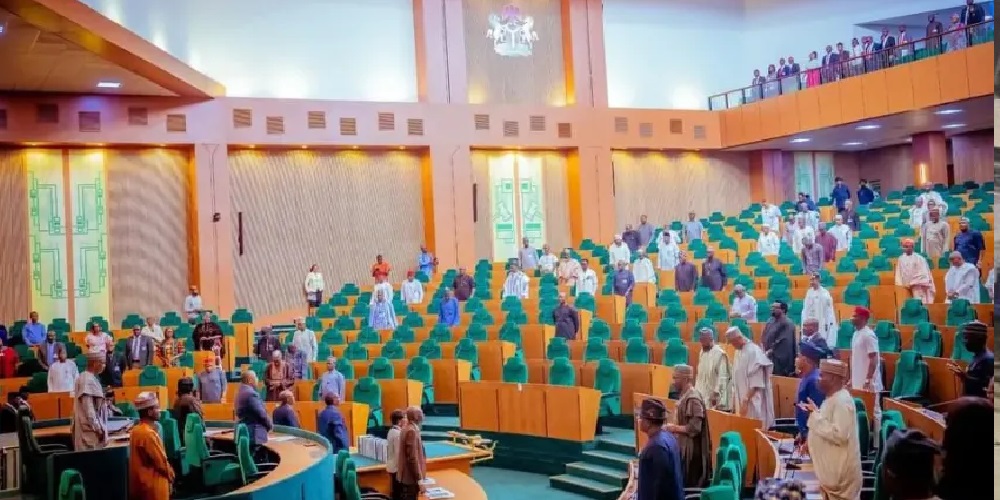
The House of Representatives was thrown into political realignment on Tuesday as 13 lawmakers formally announced their defection from various political parties, while former Minority Leader, Kingsley Chinda, stepped down from his leadership position following his move to the ruling APC.
The defections, announced during plenary, were conveyed through letters read by Speaker Abbas Tajudeen, with the affected lawmakers citing internal crises, leadership disputes and the need to better represent their constituents. 
Among those who switched parties was Gaza, who moved from the Social Democratic Party (SDP) to the Labour Party (LP), with the defection taking effect from May 2026.
Similarly, Alex Ehnona left the All Progressives Congress (APC) for the Peoples Democratic Party (PDP), assuring colleagues that the change in political affiliation would not affect his commitment to legislative duties.
In another notable move, Esosa Iyawo announced his second party switch in less than a month, dumping the APC for the National Democratic Congress (NDC). He blamed persistent disagreements within the Edo State chapter of the APC and what he described as the party’s failure to address concerns raised by members. He also formally withdrew an earlier letter dated May 12, 2026, while reaffirming his dedication to democratic ideals.
Also exiting the APC were Sani Lawal and Shehu Tafoki. Lawal said his decision, which took effect on May 4, was intended to reposition himself for more effective service to his constituents. Tafoki, who joined the PDP, said extensive consultations informed his decision and that the move would enhance his ability to deliver representation.
A major shift occurred in Oyo State, where six PDP lawmakers crossed over to the Allied Peoples Movement (APM). The lawmakers — Adebayo Adepoju, Adedeji Stanley Olajide, Ojo Sunday, Najeem Oyedeji, Folajimi Oyekunle and Abbas Adigun — attributed their departure to protracted leadership crises, internal divisions and unresolved disputes within the PDP.
According to their letters, the decision followed broad consultations with constituents and political stakeholders and was necessary to ensure effective representation.
The PDP also gained a new member in Etanebene Benedict, who defected from the Labour Party. Benedict cited the dissolution of the party’s executive structure, which he said left members without recognised officials to engage during nomination processes. He further alleged that several party leaders were openly backing President Bola Ahmed Tinubu, making it increasingly difficult for him to remain in the party.
Meanwhile, Auwalu Gwalabe of Bauchi State also left the PDP for the APM, with effect from May 4.
In a related development, Chinda formally resigned as Minority Leader following his defection from the PDP to the APC and his emergence as the APC governorship candidate in Rivers State.
Speaker Abbas read Chinda’s resignation letter on the floor of the House, in which the lawmaker announced that he was relinquishing the position with effect from April 23, 2026.
In the letter, Chinda expressed appreciation for the opportunity to lead the opposition caucus.
“It has been a profound honour and privilege to serve in this capacity, representing the collective interest of the Minority Caucus and contributing to the legislative work of the House. I am grateful for the opportunity to have worked under your leadership and alongside distinguished colleagues in advancing democratic governance and national development,” the letter read.
Despite leaving the leadership position, Chinda assured lawmakers that he would continue to play an active role in parliamentary affairs.
“I remain fully committed to my duties as a member of the House and will continue to support the work of the legislature in every way possible. Please accept the assurances of my high esteem and continued regards,” he stated.
His resignation marks the end of his tenure as Minority Leader and is expected to spark consultations among opposition lawmakers over who will succeed him as the leader of the minority caucus in the Green Chamber.