Health
FG heightens Ebola alert, strengthens border controls, emergency response systems
- /home/naijuinz/public_html/wp-content/plugins/mvp-social-buttons/mvp-social-buttons.php on line 27
https://naijablitznews.com/wp-content/uploads/2026/06/Ebola.jpg&description=FG heightens Ebola alert, strengthens border controls, emergency response systems', 'pinterestShare', 'width=750,height=350'); return false;" title="Pin This Post">
- Share
- Tweet /home/naijuinz/public_html/wp-content/plugins/mvp-social-buttons/mvp-social-buttons.php on line 72
https://naijablitznews.com/wp-content/uploads/2026/06/Ebola.jpg&description=FG heightens Ebola alert, strengthens border controls, emergency response systems', 'pinterestShare', 'width=750,height=350'); return false;" title="Pin This Post">
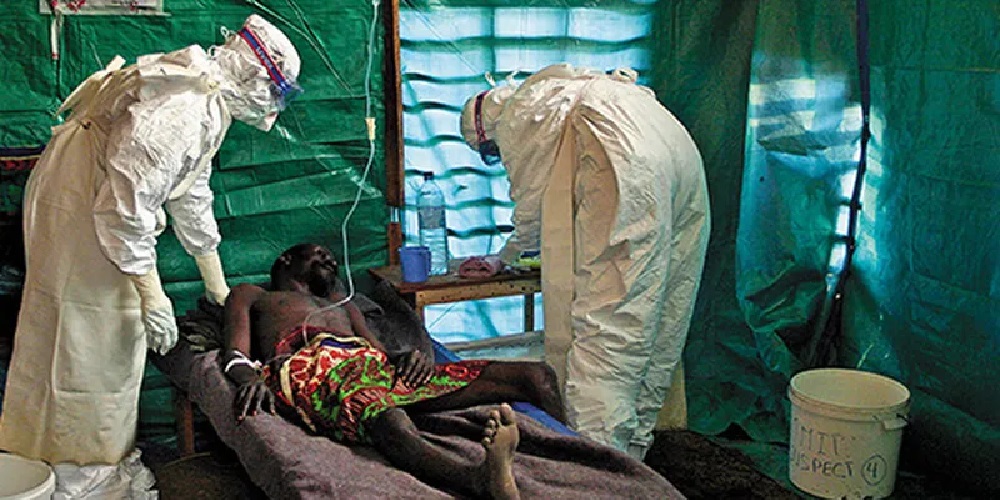
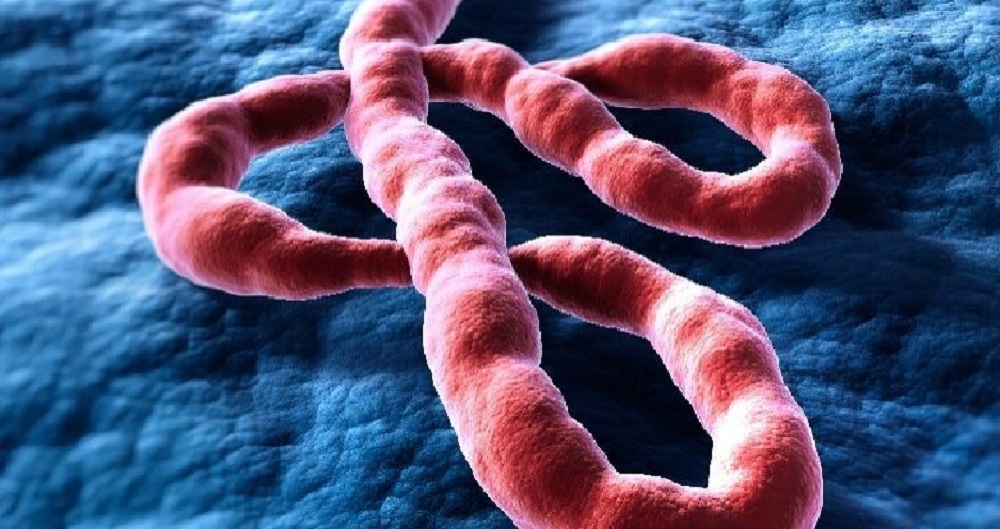
The Federal government has intensified border screening, disease surveillance and emergency response measures nationwide as part of efforts to prevent the possible importation of the Bundibugyo strain of Ebola Virus Disease (EVD), currently circulating in parts of East and Central Africa.

The Federal Ministry of Health and Social Welfare, in a statement on Tuesday by its Assistant Director of Press and Public Relations, Ado Bako, said it has activated enhanced preparedness protocols across the country, including stricter screening procedures at airports, seaports and land borders.
According to the Ministry, arriving travellers are now subject to temperature checks using infrared thermal scanners and handheld thermometers, while health declaration forms, travel history assessments and risk-based screening procedures are being reinforced at designated points of entry.

The Ministry also disclosed that isolation, secondary screening and referral mechanisms have been strengthened for travellers showing symptoms consistent with viral haemorrhagic fevers.
It added that coordination has been expanded among immigration, aviation, maritime and border management agencies to improve early detection and response.
The heightened measures have become imperative following reports of outbreaks of the Bundibugyo ebolavirus disease in parts of the East and Central African region, raising concerns about the risk of cross-border transmission.
Despite the alert, the Ministry reassured Nigerians that there is currently no confirmed case of Ebola Virus Disease in the country.
As part of surveillance efforts, the Ministry said Integrated Disease Surveillance and Response (IDSR) activities have been strengthened nationwide, alongside expanded community-based and event-based surveillance systems.
It said public health alerts and rumours are being actively monitored and investigated, while continuous epidemiological assessments are being conducted in collaboration with regional and international health partners.
To boost emergency response readiness, the Ministry said specimen collection and transportation systems for viral haemorrhagic diseases have been enhanced, while laboratory biosafety and biosecurity measures are being reinforced.
Public Health Emergency Operations Centres have also been placed on alert, with Rapid Response Teams at national and sub-national levels ready for deployment if necessary.
Healthcare facilities have been directed to maintain a high index of suspicion for viral haemorrhagic fevers, strengthen triage systems, promptly isolate suspected cases and comply with established reporting procedures.
The Ministry added that healthcare workers, surveillance officers and other frontline personnel are undergoing continuous preparedness training, while infection prevention and control measures are being reinforced in health facilities nationwide.
It urged Nigerians to remain calm, avoid misinformation and rely only on information from recognised public health authorities.
Members of the public were advised to maintain regular hand hygiene, avoid contact with bodily fluids of symptomatic persons, refrain from handling dead animals or bushmeat from unknown sources, and promptly report unusual illnesses or deaths to the nearest health authority.
The Ministry assured it would continue to monitor developments closely and provide updates as necessary.

Health
Experts say HIV no longer a death sentence
Health experts have assured Nigerians that advances in science, treatment and technology have transformed HIV from a fatal diagnosis into a manageable health condition.
The assurance was given at the weekend in Abuja by the Chief Executive Officer of APIN Public Health Initiatives, Prof. Prosper Okonkwo, during activities marking the organisation’s 25th anniversary.
Okonkwo said people living with HIV can now achieve viral suppression, live healthy lives, have families and pursue their careers without the virus defining their future, describing the progress as the result of years of investment, advocacy and public health interventions.
He noted that APIN currently has more than 314,000 patients on antiretroviral treatment, while about 96 per cent of them have achieved viral load suppression, adding that access to treatment has improved significantly compared to the early years of the epidemic.
The organisation also disclosed that more than 83,000 pregnant women and children who tested positive for HIV in Oyo, Ogun, Ondo, Plateau and Benue states had been placed on treatment as of March 2026, highlighting ongoing efforts to reduce mother-to-child transmission and improve healthcare outcomes.
Health
NAFDAC shuts 16 sachet water factories in Rivers crackdown
The National Agency for Food and Drug Administration and Control, NAFDAC, has warned sachet water producers to stop producing unregistered water and to renew expired licences or face punishment.
The warning was given by the Director of NAFDAC in the South-South Zone, Chukwuma Oligbu, after the agency carried out an enforcement operation in parts of Rivers State, including Asari Toru, Akuku Toru, Degema, and Ikwerre Local Government Areas.
During the operation, 16 sachet water factories were shut down and their owners were invited for questioning.
NAFDAC said the factories were found operating in dirty conditions, using unsafe filters, providing wrong addresses, and, in some cases, using expired licences or violating other regulations.
In a statement on Thursday by the Public Relations Officer of the South-South Zone, Cyril Monye, the agency also warned that factories operating illegally or obstructing officials from carrying out their duties would be shut down and their owners prosecuted.
NAFDAC further urged the public to report any illegal water production.
According to the statement, “The sachet water factories include: Obra Bo Table Water, Abalama, Asari Toru LGA; Loilia Table Water, Okpo, Degema LGA; Jima Table Water, Obuama Harry Town, Degema LGA; and Inye Table Water, Obuama Harry Town, Degema LGA.
“Others are Obuta Table Water, Obuama Harry Town, Degema LGA; S.P. Nimi Table Water, Obuama Harry Town, Degema LGA; Soaltam Table Water, Obuama Harry Town, Degema LGA; and Piasso Table Water, Usokun, Degema LGA.
“Also shut down are: Imumsco Table Water, Port Harcourt–Degema Road, Degema LGA; Granpa Table Water, Abonnema, Akuku Toru LGA; Daa Ajuka Table Water, Abonnema, Akuku Toru LGA; and Diob Table Water, Abonnema, Akuku Toru LGA.
“At Ikwerre LGA, four factories were shut down. They include AQUA-TOBSON Table Water, DUCO Table Water, CHISODEK Table Water, and NEO BRAIN Table Water.”
Health
Bitter kola, salt water not Ebola cure, NCDC warns
The Nigeria Centre for Disease Control and Prevention has warned Nigerians against relying on unverified home remedies for Ebola Virus Disease, stressing that substances such as bitter kola, salt water, herbs, and seasoning cubes cannot prevent or cure the deadly infection.
The agency issued the warning in a public advisory obtained by our correspondent, titled “Ebola Virus Disease (EVD): Myths vs Facts,” amid growing concerns and online rumours linked to a regional Ebola outbreak.
According to the NCDC, Nigeria has not recorded any confirmed case of Ebola, but misinformation surrounding fake cures could create panic and endanger lives.
“There is currently no approved home remedy for Ebola Virus Disease,” the agency stated.
It added: “Early reporting, supportive medical care, and strict infection prevention and control measures are critical. Avoid self-medication and seek care promptly if symptoms develop.”
The agency specifically debunked widespread claims circulating on social media suggesting that “drinking salt water, consuming bitter kola, or using herbal mixtures could protect people from Ebola infection.”
Public health experts have repeatedly warned that reliance on unproven remedies during disease outbreaks often delays proper treatment and increases the risk of transmission.
The NCDC also cautioned Nigerians against spreading unverified health information online, noting that false claims could undermine public health response efforts.
“Sharing unverified information can create panic and confusion. Members of the public are advised to rely only on updates from official public health authorities and credible sources,” the advisory said.
The agency urged Nigerians to remain vigilant despite the absence of any confirmed Ebola case in the country.
“Although no case has been confirmed in Nigeria, outbreaks in the region require vigilance, preparedness, and responsible public health behaviour to reduce the risk of importation and transmission,” it stated.
The warning has revived memories of Nigeria’s 2014 Ebola outbreak, when rumours about salt-water baths and bitter kola consumption flooded communities after the virus entered the country through an infected traveller from Liberia.
At the time, health authorities dismissed the claims after reports emerged that some Nigerians consumed excessive amounts of salt water in desperate attempts to avoid infection, leading to health complications in some cases.
Nigeria was eventually lauded globally for successfully containing the 2014 Ebola outbreak through aggressive contact tracing, rapid isolation of suspected cases, public awareness campaigns, and coordinated emergency response measures.
In its latest advisory, the NCDC urged Nigerians to prioritise preventive measures such as regular hand hygiene, avoiding contact with bodily fluids of sick persons, and promptly reporting unusual illnesses to health authorities.
The agency also reassured the public that surveillance and preparedness activities were ongoing across the country to prevent any possible outbreak.
-
News24 hours agoKano lawmaker rejoins APC after losing return ticket in NDC
-
News14 hours agoWike Assures Protesting Teachers of Rescue Efforts, Warns Against Politicising Insecurity
-
News24 hours ago2022 train attack: FG re-arraigns Tukur Mamu on amended terrorism charge
-
News12 hours agoBETNLAFF New Betting Platform Set To Hit Nigerian Markets
-
News19 hours agoSix members of same family shot dead during domestic dispute in US
-
Economy24 hours agoMiddle East Tensions: Oil Prices Jump as Iran Suspends Peace Talks with US
-
News18 hours agoFG stops three-month Pre-retirement leave for civil servants
-
News14 hours agoDefection Storm Rocks Reps as 13 Lawmakers Switch Parties, Chinda Quits Minority Leader Role