

Economy
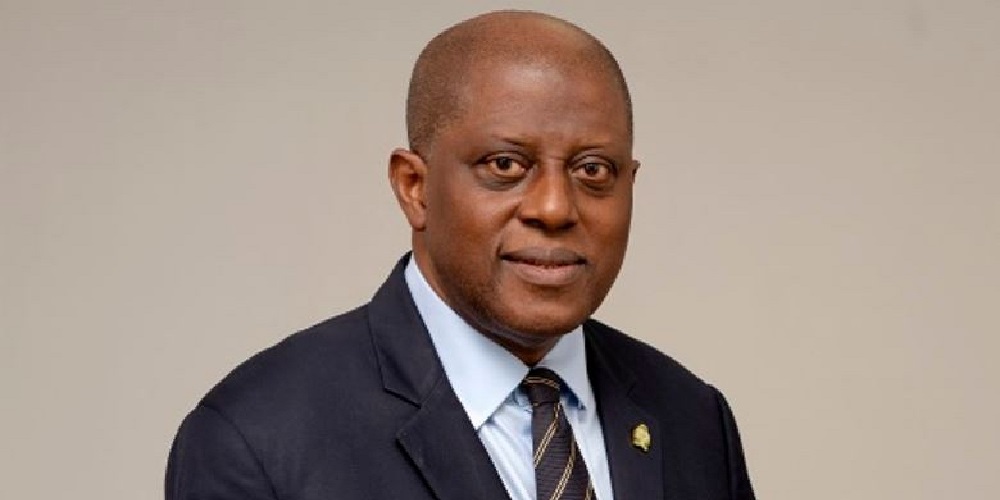
Cardoso formally receives Central Bank of the Year Award in London
- /home/naijuinz/public_html/wp-content/plugins/mvp-social-buttons/mvp-social-buttons.php on line 27
https://naijablitznews.com/wp-content/uploads/2024/02/Olayemi-Cardoso.jpg&description=Cardoso formally receives Central Bank of the Year Award in London ', 'pinterestShare', 'width=750,height=350'); return false;" title="Pin This Post">
- Share
- Tweet /home/naijuinz/public_html/wp-content/plugins/mvp-social-buttons/mvp-social-buttons.php on line 72
https://naijablitznews.com/wp-content/uploads/2024/02/Olayemi-Cardoso.jpg&description=Cardoso formally receives Central Bank of the Year Award in London ', 'pinterestShare', 'width=750,height=350'); return false;" title="Pin This Post">
Akpo Ojo
The Governor of the Central Bank of Nigeria (CBN), Mr. Olayemi Cardoso, formally received the Central Bank of the Year Award at the Central Banking Awards ceremony held in London on Wednesday, June 10, 2026.
He dedicated the honour to the board, management, and staff of the CBN for their steadfast commitment to institutional reform and economic stability.

Also, Cardoso expressed appreciation to the Central Banking Publications and the award judges for the recognition, while congratulating fellow institutions and individuals honoured during the event.
The CBN governor stressed that the award is not a personal achievement but a testament to the collective efforts of the entire CBN, particularly the professionals whose dedication, integrity, and expertise – often exercised away from public attention – have strengthened the apex bank and reinforced confidence in Nigeria’s economy.
“I accept this award on behalf of the board, management and staff of the Central Bank of Nigeria,” Cardoso said.
“Above all, it belongs to the many dedicated professionals who serve our institution with integrity, expertise, and an unwavering commitment to the public good.”
Reflecting on the global economic landscape, Cardoso noted that recent years had presented significant challenges for central banks worldwide, with Nigeria facing its own share of economic pressures and policy tests.
He highlighted several difficult but necessary measures undertaken by the CBN, including efforts to address elevated inflation, implement major reforms in the foreign exchange market, and invest in critical digital and financial infrastructure to support the country’s long-term economic development.
Cardoso also pointed to key milestones achieved during the period, including Nigeria’s removal from the Financial Action Task Force (FATF) grey list and the successful completion of the banking sector recapitalisation exercise.
He noted that these accomplishments reflect the collaborative efforts of multiple institutions and stakeholders.
According to the CBN governor, the apex bank’s reform agenda has been guided by a clear objective: restoring confidence, strengthening institutional resilience and policy credibility, and laying a solid foundation for sustainable economic growth.
While acknowledging that significant work remains ahead, Cardoso expressed optimism about the progress made so far and the renewed confidence emerging across the economy.
He attributed these gains to the support of the federal government, market participants, development partners, and, most importantly, the resilience and confidence of the Nigerian people.
“We receive this recognition with humility,” he said. “We see it not as a destination, but as encouragement to continue the important work ahead.”
Cardoso reaffirmed the CBN’s commitment to preserving public confidence, safeguarding financial and monetary stability, and fulfilling its mandate with integrity, professionalism, and accountability.
The award represents significant international recognition for the Central Bank of Nigeria at a time when monetary and financial sector reforms remain central to the country’s economic recovery and long-term growth agenda.
Economy
Black Market Dollar To Naira Exchange Rate Today 8th September 2026
Dollar To Naira Exchange Rate Today 27 January 2023(Black Market)
The Black Market Dollar-to-Naira Exchange Rate for 8th September 2026 Can Be Accessed Below.
NOTE: The exchange rate changes hourly. It depends on the volume of dollars available and the Demand. This means…you can buy or sell 1 dollar at a certain rate, and the price can change (high or low) within hours.
The official naira black market exchange rate in Nigeria today, including the Black Market rates, Bureau De Change (BDC), and CBN rates.
The exchange rate fluctuates hourly based on the supply and demand of dollars in the market.
What’s the dollar to naira black market today, 8th September 2026?
The exchange rate for a dollar to naira at Lagos Parallel Market (Black Market) players sell a dollar for ₦1405 and buy at ₦1395 on Tuesday, 8th September, 2026, according to sources at Bureau De Change (BDC).
Please note that the Central Bank of Nigeria (CBN) does not recognize the parallel market (black market), as it has directed individuals who want to engage in Forex to approach their respective banks.
Dollar to Naira Black Market Rate Today
Dollar to Naira (USD to NGN) Black Market Exchange Rate Today
Selling Rate ₦1405
Buying Rate ₦1395
Dollar to Naira CBN Rate Today
Dollar to Naira (USD to NGN) CBN Rate Today
Highest Rate ₦1320
Lowest Rate ₦1326
Economy
See Dollar to Naira exchange rate today, September 7, 2026
The dollar-to-naira exchange rate opened the new week with the naira trading at about ₦1,321.68 per US dollar at the official rate, while the parallel market rate stood at ₦1,390 per dollar for buying and ₦1,400 for selling, according to available market data.
The latest available NFEM figure for September 7 puts the official exchange rate at ₦1,321.68 to the dollar. However, the Central Bank of Nigeria’s published NFEM table shows September 4 as the latest dated trading entry, with a rate of ₦1,321.2160 per dollar. The September 7 figure should therefore be treated as the latest available indicative rate rather than a confirmed CBN trading close.
At the parallel market, Aboki Forex reported a buying rate of ₦1,390 and a selling rate of ₦1,400 per dollar. This means a person selling $1 could receive about ₦1,390, while buying $1 could cost approximately ₦1,400. Actual rates may vary by dealer, location and transaction size.
The difference between the indicative official rate and the parallel-market selling rate is about ₦78.32 per dollar. For $100, the indicative official equivalent is approximately ₦132,168, while buying $100 at the parallel-market selling rate would cost about ₦140,000.
The naira’s performance remains closely watched by importers, businesses, travellers and Nigerians receiving or sending foreign currency. However, the parallel market is separate from the regulated official market, and the two rates should not be treated as interchangeable.
Rates can change during the day, so anyone exchanging currency should confirm the current quote with a bank, licensed Bureau de Change or trusted dealer before completing a transaction.
Economy
FG Can’t Account For ₦33.75 Billion Cash Transfers To Vulnerable Nigerians – Auditor-General
The Office of the Auditor-General for the Federation (OAuGF) has raised concerns over ₦33.75 billion transferred to more than 3.29 million households under the Federal Government’s social intervention programme, saying auditors could not obtain sufficient records to verify that the payments reached genuine beneficiaries.
According to Punch, the finding was contained in the Auditor-General for the Federation’s 2024 Annual Report on Non-Compliance/Internal Control Weaknesses in Ministries, Departments and Agencies of the Federal Government.
The audit, which examined transactions carried out by the National Cash Transfer Office in Abuja during the 2023 financial year, raised eight separate queries involving billions of naira and highlighted deficiencies in the agency’s financial controls.
According to the report, ₦33.751 billion was electronically transferred to 3,295,207 households and beneficiaries selected from the National Social Register and enrolled on the National Beneficiary Register across 35 states.
Auditors, however, said the documentation presented for examination was insufficient to establish the identities of those who actually received the money.
The report said payment vouchers accompanying the ₦33.75 billion transactions lacked complete beneficiary information.
More importantly, auditors said they were unable to examine the Remita statement needed to compare recipients of the transfers with names contained in the government’s beneficiary registers.
The report stated, “The paid vouchers for the payments above did not contain the full details of the beneficiaries.
“REMITA statement showing record of the beneficiaries paid as against those listed on the NSR and NBR was not presented for audit. This hindered the authentication of the payments and made it difficult to ascertain whether the beneficiaries who received the funds were genuine.
“All efforts to obtain access to the REMITA statement were obstructed and denied by NTCO accounts staff, thereby frustrating the audit process.”
Consequently, the audit flagged the possibility of payments being made to fictitious or otherwise ineligible beneficiaries, as well as the potential loss of government funds.
The Auditor-General recommended that the National Programme Manager appear before the relevant Public Accounts Committees of the National Assembly to account for the expenditure and produce evidence showing that the intended beneficiaries received the funds.
Where satisfactory evidence cannot be provided, the report recommended recovery of the affected amount and its remittance to the Treasury.
It added that the management of the NTCO did not respond to the audit query.
A separate finding questioned ₦36.744 billion paid through 215 vouchers in December 2023 without undergoing the required prepayment audit.
The transactions, which the report identified as SS, IDA and output-based payments, were processed before being examined by the Internal Audit Unit.
“None of the paid vouchers were pre-audited or checked by the Internal Audit as required by extant regulations,” the report stated.
Instead, internal auditors reviewed the transactions after the payments had already been completed.
The Auditor-General said the procedure exposed public funds to possible misapplication or diversion and recommended that officials account for the ₦36.74 billion before the National Assembly.
Auditors also queried 101 transactions worth ₦4.616 billion after the NTCO failed to provide the corresponding paid vouchers for examination.
The payments were made from the agency’s S&S/IDA Cash Book for various expenditures. Without the vouchers, auditors said they could not adequately scrutinise the spending, prompting another recommendation that the money be accounted for or recovered and returned to the Treasury.
Another issue involved funds released to states for the enrolment of beneficiaries without bank accounts. The report said 32 payments totalling about ₦3.09 billion were made for the exercise.
While documents relating to ₦2.74 billion disbursed to 34 states were presented, auditors said they could not account for the remaining ₦350.18 million.
Even for some of the expenditure presented for inspection, the audit found that the supporting vouchers did not sufficiently explain how the money was spent.
Documents such as beneficiary lists, attendance registers, photographs, enrolment reports and acknowledgements from recipients were also missing.
The Auditor-General recommended recovery of the ₦350.18 million if officials could not satisfactorily account for it.
The report also scrutinised ₦393.71 million reportedly returned by nine State Cash Transfer Units after planned enrolment exercises could not be conducted.
According to the NTCO, insecurity, disasters and other circumstances prevented the affected states from carrying out the exercises, leading to the unused funds being returned to the Treasury in 2023.
Auditors, however, said evidence confirming that the money reached the Consolidated Revenue Fund was not produced.
“No documents were presented by NCTO to confirm that the amount refunded… was credited into the CRF,” the report stated.
It said Remita inflow statements and relevant payment slips that could establish the refund were unavailable. The auditors also found no evidence showing that the affected enrolment exercises were subsequently conducted.
The Auditor-General raised another query over ₦280.42 million paid as mobilisation fees to Payment Service Providers contracted to operate platforms for transferring funds to beneficiaries.
The sum represented a 30 per cent advance payment, but auditors said it was released without an Advance Payment Guarantee.
Questions were also raised about the procurement process used to engage the companies.
According to the report, their files contained no records of pre-qualification, bidding or technical and financial evaluation to demonstrate compliance with procurement requirements.
The audit warned of the risk of paying for unexecuted jobs and recommended recovery of the N280.42m.
Auditors also discovered that goods worth ₦89.51 million purchased by the NTCO were not recorded in its store ledger.
The relevant payment vouchers lacked Store Receipt Vouchers and Store Issue Vouchers needed to track the movement of the items.
More significantly, the audit found that the agency’s store ledger had not been updated since 2020.
The final issue concerned ₦17.42 million spent on diesel through cash advances issued to members of staff.
Auditors faulted the arrangement, saying purchases exceeding the ₦200,000 procurement threshold should have gone through the appropriate contract process.
The report said the items purchased could not be physically sighted or traced to the stores.
It also estimated that the procurement approach denied the Federal Government about ₦2.18 million in Value Added Tax and Withholding Tax.
Across all eight findings, the Auditor-General said the management of the National Cash Transfer Office did not respond to the audit queries.
The report consequently called for explanations, supporting documentation and, where officials fail to satisfactorily account for the affected expenditure, recovery of the funds to the Federal Government’s Treasury.
-
News17 hours agoTunji-Ojo: No Extra Charges For Special Passport Intervention In UK
-
News16 hours ago7 Things Parents and Students Should Know About FG’s New Learner Identification Number (LIN)
-
News16 hours agoMan Who Returned to Nigeria for His Wedding Beaten to Death
-
Entertainment16 hours agoBBN: Nomy Kicked Out Of Big Brother House, Her Participation Revoked
-
News16 hours agoOsun: APC Legal Team Rejects Petition Challenging Adeleke’s Victory
-
Foreign17 hours agoIraqi court affirms woman’s right to Change and register her religion from Muslim to Christian
-
News13 hours agoTinubu Is Beatable in 2027, I Know Him Well — Makinde’s Running Mate, Daura
-
News16 hours agoFake agency sagas: Ministers, DGs face fresh hurdles over foreign trips