Opinion
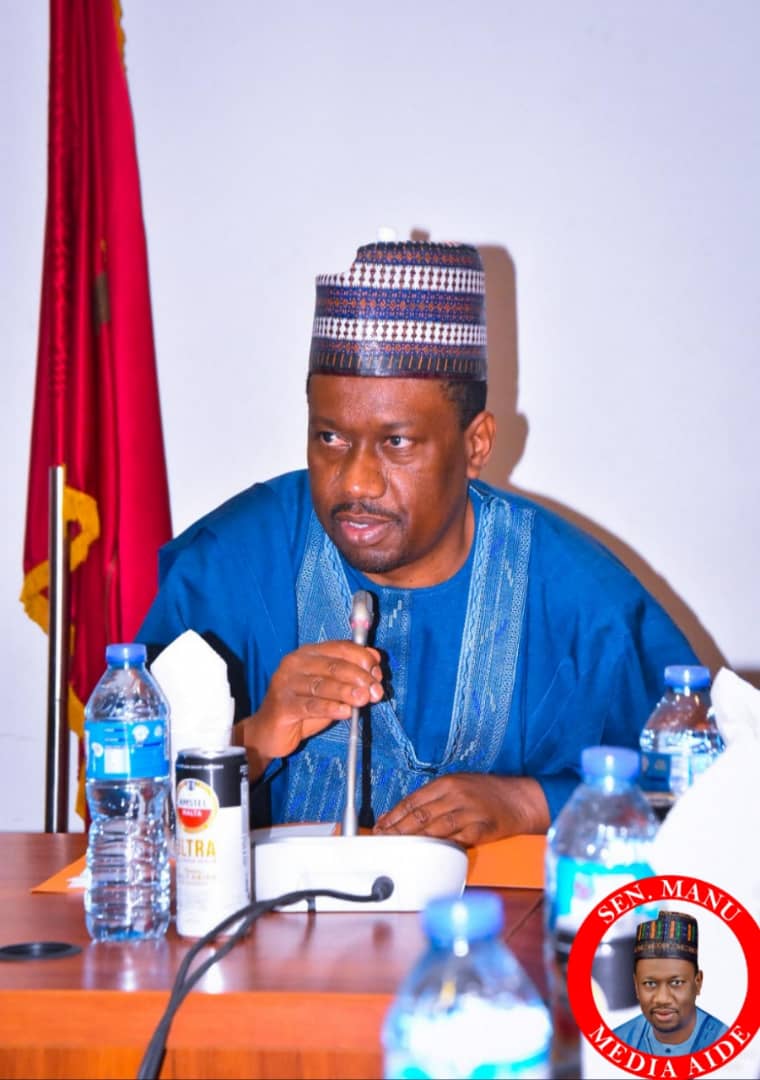
Three years after : Senator Manu’s unequalled constituency outreach that cuts across Taraba Central (Photos )
- /home/naijuinz/public_html/wp-content/plugins/mvp-social-buttons/mvp-social-buttons.php on line 27
https://naijablitznews.com/wp-content/uploads/2026/06/IMG-20260613-WA0011-760x600.jpg&description=Three years after : Senator Manu’s unequalled constituency outreach that cuts across Taraba Central (Photos )', 'pinterestShare', 'width=750,height=350'); return false;" title="Pin This Post">
- Share
- Tweet /home/naijuinz/public_html/wp-content/plugins/mvp-social-buttons/mvp-social-buttons.php on line 72
https://naijablitznews.com/wp-content/uploads/2026/06/IMG-20260613-WA0011-760x600.jpg&description=Three years after : Senator Manu’s unequalled constituency outreach that cuts across Taraba Central (Photos )', 'pinterestShare', 'width=750,height=350'); return false;" title="Pin This Post">
By Ojomah Austin.
…promises fulfilled

Tireless efforts aptly captures His Excellency , Distinguished Senator Manu Haruna’s approach towards constituency development as within his three years at the apex legislative body, his outreach across all segments remained unequalled in Taraba Central.
In 2023 when asked what’s his mission to the National Assembly, he simply said: “Truly, if there’s something I am cringing to do if voted is to connect my constituency to national grid because we are the only constituency in the entire country that’s not probably connected to the grid.
Remarkably this has been half achieved despite low release of funds.
Today, it’s a dream fulfilled in some places as Gunduma in Taraba Central is connected to the National Grid.
Also, Mutum Biyu’s largest ward in Taraba Central Senatorial District got linked to the National Grid.
It was indeed one of his promises fulfilled.
Massive installation of solar powered energy in several communities and palaces across the district.
A PEEP INTO INFRASTRUCTURAL DEVELOPMENT ACROSS TARABA CENTRAL:
PHYSICAL INFRASTRUCTURES
1. Installation of solar Street lights in some selected
villages across Taraba central Zone.
2. Reconnecting of M/Biyu and Gunduma ward of
Gassol Local government back to National Grid
3. He donated 1 transformer to Gunduma and 2 new NOS Transformers and the repair of 4 NOS Transformers in Mutum-Biyu of Gassol Local Government.
4. Installation of Solar lights at PHCs in Kurmi, Garba Chede in Bali Local Government and Gunduma respectively.
5. He donated a brand new Hummer Bus to his media aides worth N25m, in order to show respect and to up hold the contemporary idea of digital governance.
Bought five state of the art operational vehicles for Taraba Central Peoples Democratic Party, PDP to ease

YOUTH/WOMEN EMPOWERMENT
1. Placement of over 500 constituents on a monthly salary ranging from N 15,000 N 20,000 to #50,000 respectively.
2. He facilitated over 47 Youth into Nigerian Army and other paramilitary.
3. On 23 December, 2023 he sponsored free Transportation to over 600 constituents, from Jalingo to various Local governments across his Senatorial
district to Celebrates Christmas
4. Empowerment of over 300 women with 50 thousand naira each, after a training of skills acquisition program of soap making to serve as capital.
5. As a new year package for 2024 Sen Haruna Manu gave out cash sum of #50,000 naira each to about 1000 households and 10 million naira to Youth
groups across his Senatorial district, to curtail the hardship installed on them by the oil subsidy removal policy.
ONE ON ONE TOUCH:
1. Distribution of about Six trailers of Ramadan relief materials including Spaghetti, Indomie, Maggi, salt, Soap and about 18,000 bags of Rice, Maize and SUGAR respectively. Across Taraba Central Zone.
2. Gave out 10 thousand naira each to about 3000 youths, in his Senatorial district during the first week
of 2024 Ramadan month. PAGE 06
3. Sen Haruna Manu distributed about 18,000 bags of Rice and 10,000 Cartoons of Spaghetti, with over three thousand gellicans of Groundnut and Palm oil
to Christian faithful across his Senatorial District.
4. As a part of his birthday welfare package, Sen Haruna Manu celebrated his golden Jubilee by distributing thousands of food items such as rice,
spaghetti, Indomie, oil and many more to the less privileged in his Senatorial District.
MOTIONS/BILLS
Within this Period Senator Haruna Manu moved a motion of urgent public
importance over the vandalisation of the Transmission Company Of Nigeria (TCN) tower, which have retarded the economic activities of the states in
the Northeastern Subregion, and have incurred hardship on the people’s livelihood.
2. Motion on the $ 5.79 billion Mambilla Hydroelectric Power Project (MHEPP) located in Taraba State. The second motion has a direct impact on Tarabans because the Mambilla Plateau is directly in their domain.
HEALTH CARE
The wife of Senator Manu Haruna, Her
Excellency Hajiya Zainab Manu Haruna made an impromptu visit to the cottage Hospital and Referral Hospital in Mutum-Biyu to shows her support and
compassion for the those who are in need for medical care and She gave out of cash to over 300 patience with the sum of 20k each after she took the
responsibility of their medical care, on 10th March 2024.
Her Excellency Hajiya Zainab Manu Haruna took her time to visit the Nigerian Correctional Service in Mutum-Biyu and shared a greetings with
the prisoners as they preparation for Ramadan and Distributes to them a Bags of rice and Millet as their Ramadan packages during Ramadan period on 11th March 2024.
Also when there was cholera outbreak, Senator Manu Haruna quickly stepped in buying medical equipment to help checkmate the spread within his district.
Facilitated ongoing completion of Garba Chede, Bali Local Government Area of the state in 2026.
Other projects:
1. Installation of solar powered energy in Emir of Gembu’s Palace and environs
2. Installation of solar powered energy in Emir of Gashaka’s Palace and environs 3. Installation of solar powered energy in Emir of Mutum Biyu’s Palace and environs.
3. Digging of boreholes in various communities across Taraba Central.
ICT EMPOWERMENT:
1. More than 500 students trained on ICT across three LGAs in Taraba Central
2. 500 students given laptops and starter packs
across three LGAs in Taraba Central
EDUCATION:
A Scholarship program for both domestic and foreign for Taraba Central indigenes fully packaged
To this end, 31 students were given foreign scholarship for postgraduate studies in Health sciences, public health, engineering. They departed Nigeria last year December for India.
Provision of tables and chairs in primary schools and colleges across the district.
Construction of Town Halls across the five local government areas in Taraba Central.

Opinion
Why continuity in the National Assembly leadership could benefit Nigeria
By,
Ken Harries Esq.
Democracies are built not only on elections but also on institutions. While elections provide legitimacy, institutions provide stability and growth. The strongest democracies are those that balance the need for accountability with the need for continuity, recognising that enduring reforms often require consistent leadership to move from legislation to implementation.
As political conversations gradually shift towards the next electoral cycle – 2027, Nigerians should therefore ask a fundamental question: when leadership has demonstrated measurable performance and is steering major national reforms, does changing that leadership necessarily serve the national interest?
This question is particularly elevant to the leadership of the National Assembly. Unlike executive offices where policy direction can change overnight, legislatures thrive on institutional memory, consensus-building, stability and the patient cultivation of broad political support. Complex constitutional amendments, fiscal and governance reforms rarely mature within a single legislative session. They require continuity of vision, experience, stability and leadership.
Since its inauguration, the 10th Senate under the leadership of Senator Godswill Akpabio has pursued an ambitious and innovative legislative agenda touching virtually every major areas of national development. Beyond routine lawmaking, the Senate has considered constitutional amendments, electoral reforms, fiscal restructuring, security legislation and institutional reforms designed to address some of Nigeria’s most pressing challenges. Regardless of one’s political persuasion, few would dispute that the legislative agenda of the National Assembly has been extensive, innovative, bold and consequential.
Perhaps no proposal better illustrates this than the State Police Bill.
For decades, Nigerians have debated whether the country’s security challenges can continue to be effectively managed through an exclusively centralised policing structure. Rising incidents of terrorism, banditry, kidnapping, communal violence and farmer-herder conflicts have intensified calls for a policing system that is closer to the communities it serves.
The proposed constitutional amendment seeks to establish state police services operating alongside the Nigeria Police Force under carefully defined constitutional safeguards. Its supporters argue that locally recruited officers would possess a better understanding of their communities’ languages, culture, terrain and security dynamics, thereby improving intelligence gathering, crime prevention and emergency response. Rural communities are currently underserved by federal policing, could receive greater security coverage, while stronger collaboration between local communities and security personnel could significantly enhance intelligence-led policing.
Importantly, the proposal is not simply an exercise in decentralisation. Conscious of concerns about political abuse, the amendment incorporates safeguards including independent State Police Service Commissions, judicial oversight, constitutional limits on state policing powers, nationally recognised operational standards, structured coordination with federal security agencies and legislative oversight. These provisions seek to ensure that decentralisation strengthens security without undermining constitutional rights or national cohesion.
The significance of such a far-reaching constitutional reform extends beyond its passage. Should the amendment eventually become law, its successful implementation would demand sustained legislative oversight, continuous engagement with stakeholders and careful monitoring over several years. Institutional continuity could therefore become a significant advantage in ensuring that the reform achieves its intended objectives.
The same principle applies to the Electoral Act (Amendment) Bill. Elections remain the foundation of democratic legitimacy, and public confidence in electoral outcomes is predicated largely upon the credibility of the legal framework governing the process. The amendments sought to strengthen voters accreditation, improve result management, reinforce the independence of electoral institutions, regulate the deployment of technology, impose stronger penalties for electoral offences and reduce unnecessary post-election litigation through clearer legal provisions.
These reforms are intended not merely to improve election administration but to strengthen public confidence in democracy itself. Yet electoral reforms seldom end with legislative approval. They require continuous oversight, periodic refinement and close collaboration among the legislature, the electoral commission, political parties, the judiciary and civil society. Stable parliamentary leadership provides greater institutional capacity to guide that process without unnecessary disruption.
Equally significant are the Tax Reform Bills, which sought to modernise Nigeria’s tax administration, simplify compliance, broaden the revenue base and create a more predictable fiscal environment capable of supporting long-term economic growth and improved public service delivery. Such reforms are central to Nigeria’s efforts to reduce dependence on volatile oil revenues and build a more sustainable economy. Like other major reforms, however, their long-term success depends as much on consistent legislative oversight as on their initial passage.
Critics may rightly observe that no legislature is beyond criticism, and the 10th Senate is no exception. Parliamentary leadership in every democracy attracts intense public scrutiny, robust debate and differing political opinions. Those debates are healthy because democratic institutions are strengthened when leaders remain accountable to the citizens they serve.
However, leadership should ultimately be evaluated not solely on controversy but on measurable institutional performance. The more important question is whether the legislature has advanced meaningful reforms, strengthened democratic institutions and fulfilled its constitutional responsibilities. Judged by those standards, supporters argue that the current Senate leadership has maintained legislative productivity while addressing complex national challenges requiring broad political consensus.
Indeed, continuity should never be defended merely because an incumbent seeks another term. Democratic renewal remains essential. Yet experience also has value.
Legislatures differ from many other institutions because effectiveness depends less on executive authority than on negotiation, persuasion, stability, coalition-building and procedural mastery. These qualities are developed over time.
Senator Akpabio’s supporters point to his unusual combination of executive and legislative experience, having served as governor, minister and now Senate President. They argue that this background has enabled him to navigate competing political interests, build consensus across party and regional lines, manage complex legislative negotiations and sustain constructive engagements between the executive and legislative arms of government without compromising the Senate’s constitutional core mandates and responsibilities.
History demonstrates that institutions often suffer when successful reforms are interrupted before reaching maturity. Nigeria itself has witnessed numerous policies abandoned, delayed or fundamentally altered simply because leadership changed. Too often, institutional momentum is sacrificed at the altar of political transition. Democracies pay a price when every new leadership begins by restarting the race rather than sustaining it.
The National Assembly is no different. Major constitutional amendments, security reforms and fiscal restructuring are not relay races in which every incoming leadership drops the baton and begins afresh. They are long-distance national projects requiring persistence, stability, institutional memory and steady stewardship. Continuity, where justified by performance, enables reforms to mature, preserves valuable institutional knowledge and reduces avoidable disruptions to legislative priorities.
This is not an argument that leadership should become permanent, nor is it a plea for blind loyalty to any individual. Every Senate President must earn the confidence of colleagues through competence, integrity, fairness and measurable performance. Ultimately, the decision belongs first to the electorates of Akwa Ibom North-West Senatorial District and, if re-elected, to members of the Senate who will choose their presiding officers in accordance with the Constitution and the Senate Standing Orders.
As Nigerians evaluate the future leadership of the National Assembly, the debate should rise above personalities and partisan loyalties. The real question is not whether one individual occupies a particular office, but whether the institution benefits from continuity at a time when significant constitutional, and security, electoral and fiscal reforms remain unfinished.
History rarely remembers legislatures for the political contests surrounding their leaders. It remembers the institutions they strengthened, the reforms they sustained and the foundations they laid for future generations. If Nigeria believes that the ongoing reforms in policing, elections, taxation and governance are essential to its future, then continuity in parliamentary leadership becomes more than a political preference. It becomes a strategic question about how best to consolidate progress, preserve institutional stability and advance the nation’s democratic development.
Ken Harries Esq
Abuja-based Development Communication Strategist
Opinion
Ai beckons to everyone, everywhere
By Sonny Aragba-Akpore
Rising from its 2026 yearly Global Summit recently, the International Telecommunications Union (ITU) listed prospects of Artificial Intelligence (AI) for everyone everywhere as the fulcrum of the maiden Global Dialogue on AI Governance. This is the first mandated by the United Nations (UN)Member States, where every country had a voice in shaping the future of AI. The two-day event, which formed part of the World Summit for Information Society (WSIS) week, emphasised science-based collaboration as the foundation for addressing challenges such as trust, equity, and accessibility, and is set to reconvene in New York in May 2027.
Back-to-back with the AI Dialogue, the yearly AI for Good Global Summit 2026 showcased the latest breakthroughs in AI innovation, showing how real-world solutions, skills development, and standards work together to translate into AI that works for all. At the heart of the summit was the first meeting of the newly formed AI for Good Global Commission, co-chaired by Rwanda’s President Paul Kagame and Salesforce Chair and CEO Marc Benioff, with ITU Secretary-General Doreen Bogdan-Martin serving as Vice-Chair.
Commissioners called for urgent action on trust, equitable access, and real-world AI solutions, highlighting AI’s unparalleled potential to address global challenges. With the future of AI depending on trust, AI for Good announced a new Focus Group on Agentic AI to develop frameworks for trusted digital identity and to ensure that the behaviour of AI agents remains trustworthy and accountable throughout their lifecycle. ITU’s Goodwill Ambassador for the AI for Good AI Skills Coalition, will.i.am, highlighted the importance of skills and education at Summit events throughout the week, while also participating in the announcement of three new AI Skills Coalition partners during the initiative’s yearly meeting.
The AI for Good Global Summit and World Summit for Information Society (WSIS) Forum 2026 wrapped up a landmark Geneva Digital Week, having brought together over 12,000 participants from 177 countries to drive global efforts towards safe and responsible artificial intelligence (AI). The week celebrated breakthroughs in AI and digital innovation, uniting world leaders, tech pioneers, policymakers, civil society, and youth from around the globe.
Showcasing cutting-edge technology to historic discussions on AI governance, the events underscored a shared vision to ensure “AI and digital technologies benefit all of humanity.” “At Geneva Digital Week, the world came together to shape our shared digital future,” said ITU Secretary-General Doreen Bogdan-Martin. “We demonstrated that AI governance, innovation and digital development are not separate challenges — and that international cooperation remains our most powerful tool to solve them, while ensuring technology benefits all people, everywhere.”
With the domestication of the governing rules for Artificial Intelligence (AI), very soon, it will be available for everyone. On July 9, 2026, the ITU announced a new initiative to develop frameworks for trusted digital identity and to ensure that the behaviour of AI agents remains trustworthy and accountable throughout their lifecycle.
With Commissioners calling for urgent action on trust, equitable access, and real-world AI solutions, highlighting AI’s unparalleled potential to address global challenges, the Summit rose with a unified purpose to push AI to all global communities. The future of AI will depend on trust, as AI for Good announced a new Focus Group on Agentic AI to develop frameworks for trusted digital identities. As AI systems plan and act with growing independence, the ability to establish an agent’s identity and whether its behaviour can be trusted becomes critical.
Increasingly, AI agents need to identify and authenticate one another. Just as importantly, their decisions and actions must remain accountable, controllable and trustworthy. Identity systems establish who is acting, while trustworthiness determines whether that actor is reliable. Together, they provide the foundation for safe interaction between humans and autonomous AI systems. The Focus Group will address the challenges of trust management for people and AI agents, the overall trustworthiness of agentic AI systems, and ways to strengthen confidence in how AI agents behave while retaining authority over their actions.
“AI agents will soon negotiate, transact and make decisions on our behalf,” said Focus Group Co-Chair Debora Comparing. “Before that future becomes reality, we need common international foundations that establish who these agents are, when they can be trusted, and how people will remain in control. That is the challenge this Focus Group has been created to address.” “Agentic AI introduces a new class of digital actors that will increasingly collaborate with people and one another,” said Co-Chair Amir Banifatemi. “Identity tells us who is acting, and trustworthiness tells us how that actor can be expected to behave. Bringing these together creates the common foundation needed for interoperable, accountable, and trusted AI systems at a global scale.”
The group is open to technical experts as well as specialists in policy, law and regulation to develop: common terminology and definitions; reference architectures for identity, trust, agent discovery, and interoperability; trust frameworks and lifecycle (assurance) models; interoperability mechanisms for digital identity and credentials; security criteria and benchmarks for the continuous assessment of AI agents; and, a standardization roadmap to coordinate action across expert communities.
Throughout the week, the WSIS Forum 2026, the UN’s longest-standing platform for advancing digital development, gathered global stakeholders to explore innovative ways technology can power sustainable development. With a renewed mandate through 2035, the Forum featured high-level discussions and grassroots exchanges spanning digital cooperation, capacity building, and refugee connectivity. Participants also celebrated the winners of the WSIS Prizes, which honoured top tech solutions for digital development.
A major milestone was reached as the Partner2Connect (P2C) Digital Coalition exceeded its USD 100 billion target, advancing efforts to connect the 2.2 billion people worldwide still offline. WSIS also hosted the final meeting of the International Advisory Body on Submarine Cable Resilience, during which the body adopted its final report with recommendations to strengthen the resilience of the infrastructure that carries over 99 per cent of global data traffic.
Geneva Digital Week closed having linked policy dialogue, science, technical innovation, and actionable solutions, setting the stage for a future where AI and digital technologies work for everyone, everywhere.
Opinion
Mutfwang’s Apology Was Statesmanship, Not Historical Revisionism
By Ayuba Bitrus
Jonathan Ishaku’s lengthy critique of Governor Caleb Mutfwang’s apology to the Igbo community is intellectually engaging, but it rests on a fundamental misconception: that an apology necessarily amounts to an admission of legal guilt or a repudiation of history. It does not.
The governor’s remarks should instead be understood as a moral and political act of reconciliation, consistent with the responsibilities of a leader seeking to heal old wounds rather than reopen them.
The commentary seeks to justify the absence of an apology after the Civil War by relying heavily on legal arguments surrounding secession and the Federal Government’s constitutional obligation to preserve Nigeria’s territorial integrity. That argument, however, misses the point entirely.
Governor Mutfwang was not speaking as General Yakubu Gowon or on behalf of the Federal Government of 1970. He was speaking as the elected governor of Plateau State in 2026—a leader addressing fellow Nigerians who continue to share the same land and destiny.
Leadership often requires acknowledging historical pain even where there is no personal culpability. Across the world, political leaders have apologised for historical injustices they neither committed nor authorised because reconciliation demands empathy as much as legality. Such gestures do not rewrite history; they help societies move beyond it.
Ironically, the commentary itself recounts the massacres of Igbo civilians following the 1966 coup. It also acknowledges that many innocent people suffered, irrespective of the legal arguments surrounding Biafra’s secession. If innocent civilians experienced unspeakable pain, what is objectionable about expressing regret for that suffering? Compassion should never be mistaken for an admission of criminal liability.
The author further argues that Plateau had already demonstrated friendship through the policies of Governors Joseph Gomwalk and Solomon Lar. That argument actually strengthens Governor Mutfwang’s position. His apology did not erase those noble legacies; it built upon them. Acts of reconciliation are not exhausted by history. Every generation has the opportunity—and sometimes the obligation—to reaffirm bonds of unity in language that resonates with its own time.
The criticism that the governor failed to consult widely before apologising also misunderstands the nature of executive leadership. Governors routinely make statements of sympathy, condolence and reconciliation without first obtaining legislative resolutions. Their moral authority derives from the office they occupy and the people they represent.
More importantly, the suggestion that the apology was politically motivated because someone in the audience promised Igbo votes is speculative. The reaction of one listener cannot determine the intent of the speaker. Statesmanship should be judged by the substance of an act, not by the opportunism of those who respond to it.
Governor Mutfwang demonstrated emotional intelligence by recognising that historical memory survives long after legal disputes have ended. Nigeria’s unity cannot be sustained merely by constitutional arguments or military victories. It also depends on trust, empathy and the willingness of leaders to acknowledge the hurts that still linger in the national consciousness.
History remembers leaders not only for the wars they fought but also for the peace they nurtured. Gowon’s famous declaration of “No Victor, No Vanquished” succeeded because it prioritised healing over vengeance. Governor Mutfwang’s apology belongs to that same tradition.
It neither diminishes Plateau’s proud history nor questions the patriotism of those who fought to keep Nigeria one. Rather, it reminds Nigerians that reconciliation is not a single event completed in 1970 but a continuing national responsibility.
Far from being a red herring, Governor Mutfwang’s apology was an act of courage, humility and inclusive leadership. In choosing empathy over triumphalism, he demonstrated the qualities of a true statesman—one who understands that the strongest societies are built not only on justice, but also on the grace to heal.
*Ayuba Bitrus is Coordinator, Plateau Alliance for Peace and Unity
-
News15 hours agoAdeleke kicks as IG returns CP Gotan to Osun ahead of governorship poll
-
Metro15 hours ago21-Year-Old Nigerian Basketball Player Arrested in U.S. Over First-Degree Rape Charge
-
News14 hours agoRep OK Chinda’s political network sparks across Rivers
-
News15 hours agoOyo 2027: Busari Drags Accord, Hamzat to Court Over Governorship Ticket
-
Politics15 hours agoFocus on Winning Osun, Everything Else Can Wait – Uzodinma to APC Campaign Team
-
Foreign15 hours agoMan Jailed for Keeping His Mom’s Dead Body in a Freezer for Nearly 3 Years While Receiving Her Financial Benefits
-
News9 hours agoNigerian Tech Founder Launches AI-Powered School Management Platform To Transform Education Administration
-
News7 hours agoREAD FCT minister Wike’s media chat in punches