
News
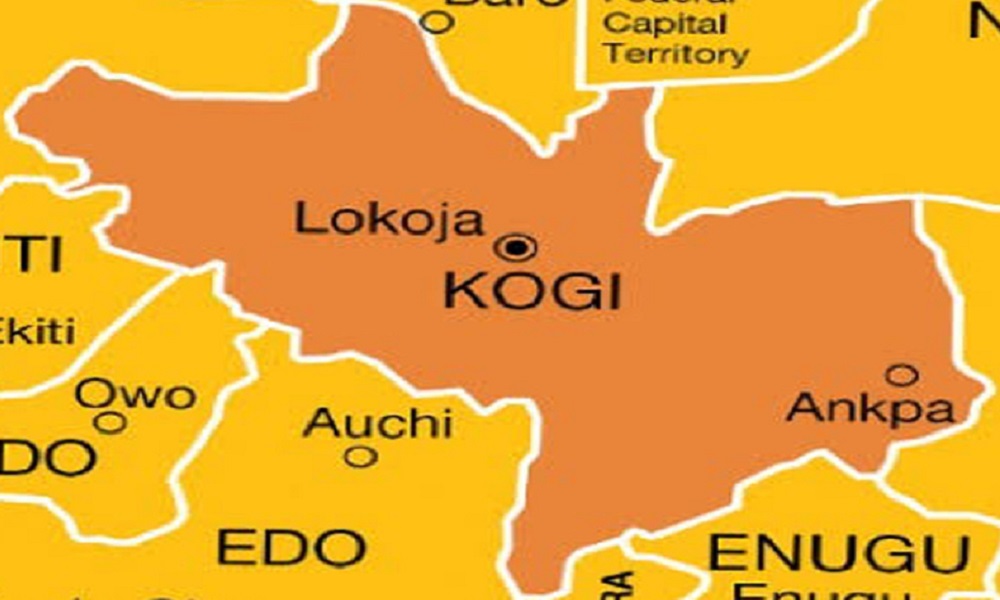
Insecurity: Kogi Bans Okada Operations In Bunu District, Night Travel

- /home/naijuinz/public_html/wp-content/plugins/mvp-social-buttons/mvp-social-buttons.php on line 27
https://naijablitznews.com/wp-content/uploads/2024/04/kogi-state-map.jpg&description=Insecurity: Kogi Bans Okada Operations In Bunu District, Night Travel', 'pinterestShare', 'width=750,height=350'); return false;" title="Pin This Post">
- Share
- Tweet /home/naijuinz/public_html/wp-content/plugins/mvp-social-buttons/mvp-social-buttons.php on line 72
https://naijablitznews.com/wp-content/uploads/2024/04/kogi-state-map.jpg&description=Insecurity: Kogi Bans Okada Operations In Bunu District, Night Travel', 'pinterestShare', 'width=750,height=350'); return false;" title="Pin This Post">


The Kogi State Government has announced sweeping security measures targeting criminal elements operating in parts of Kabba/Bunu Local Government Area, including a ban on commercial motorcycle operations in designated hinterland communities, the closure of markets, restrictions on fuel sales, and a statewide prohibition on night travel after 7:00 p.m.
The measures, which take immediate effect, were announced on Saturday in a statement signed by the Commissioner for Information and Communications, Kingsley Femi Fanwo.
The government said the directives followed ongoing security operations in Bunu District after a recent terrorist attack on Iluke community that was “successfully repelled” by security forces.
According to the statement, intelligence and operational reports indicate that joint security forces have made significant gains against the attackers, with several of them neutralised and others sustaining injuries while remaining trapped in forested areas across the district.
Okada Ban Targets Supply Routes
To prevent the fleeing criminals from receiving supplies and logistical support, the government imposed an immediate ban on commercial motorcycle operations across several routes in Bunu District.
“The affected areas include the corridor stretching from Idoyi Bunu through Illah Bunu, Iluke Bunu and Kiri, as well as the route from Iluke Bunu through Odai Bunu, Igbo Bunu, Ilogun Bunu, Olle Bunu, Ayede Bunu, Oke-Ofin Bunu and Edumo Bunu. The restrictions shall also apply to the Ayede Bunu, Aherin, Eshi and Ighun Bunu corridor and all other routes within the Bunu hinterlands,” the statement said in part.
The government explained that security intelligence had identified motorcycle operators as a major channel through which food, water, drugs and other essential items were being transported to bandits hiding in forest locations.
Authorities also alleged that some criminal elements use motorcycles to gather intelligence on communities before launching attacks.
The state government warned that anyone violating the directive would face severe legal consequences under existing anti-terrorism laws.
“Consequently, any motorcycle rider found transporting passengers, goods or supplies along the designated routes shall be apprehended and dealt with in accordance with the provisions of the Kogi State Anti-Terrorism Law,” the statement added.
The Motorcycle Operators Association of Nigeria (MOAN) was directed to immediately sensitise its members on the new restrictions.
Markets Shut
In addition to the motorcycle ban, the government said that all markets located along the affected corridors have been ordered shut until further notice.
Mobile medicine vendors and drug distributors were also instructed to suspend the transportation and sale of medicines on motorcycles within the affected communities for the duration of the security operation.
As part of efforts to further isolate criminal groups, the government announced a ban on the sale of Premium Motor Spirit (PMS), popularly known as petrol, and Automotive Gas Oil (Diesel) in jerricans throughout Kabba/Bunu Local Government Area.
Officials said the restriction was designed to prevent fuel supplies from reaching bandits operating in remote forest camps.
The government maintained that the measures were necessary to consolidate gains already recorded by security agencies and to deny criminal elements access to resources that could prolong their activities.
Statewide Night Travel Ban Begins
Beyond Kabba/Bunu, the government also announced a statewide restriction on movement along all state-owned roads after 7:00 p.m.
“As part of measures to strengthen security across the state and deny criminal elements the opportunity to operate under the cover of darkness, the Kogi State Government hereby announces a ban on night travel on all state-owned roads across Kogi State.
“Consequently, all movements on state roads must cease by 7:00 p.m. daily until further notice. Any person found travelling on a state-owned road after 7:00 p.m. shall be arrested and prosecuted in accordance with the law,” the statement said.
The government disclosed that it possesses credible intelligence on individuals allegedly collaborating with criminal groups and assured residents that actions were already being taken against such persons.
While acknowledging that the directives may cause temporary inconvenience to residents and businesses, the state government said the protection of lives and communities remains its top priority.
“The Executive Governor of Kogi State, His Excellency Alhaji Ahmed Usman Ododo, has directed all security agencies to ensure strict enforcement of these measures and full compliance by all residents and stakeholders.
“The Government further warns that any individual found aiding, supplying, harbouring or collaborating with terrorists in any form shall be treated as an accomplice to terrorism and prosecuted accordingly,” it added.
On Wednesday, a deadly attack by suspected bandits on Government Secondary School, Iluke Bunu, in Kabba/Bunu Local Government Area of Kogi State, left three people dead, including a vice principal and a six-year-old boy.
The incident, which occurred around 10 a.m., heightened security concerns in the community.
The Kogi State Police Command said the attackers, who arrived on about 40 motorcycles, stormed the area in large numbers with the suspected aim of kidnapping students and other residents.
According to the Command, the Divisional Police Officer of Kabba ‘A’ Division swiftly activated a joint security response after receiving distress calls from the area.


A late-night fire has destroyed six houses, several shops and storage facilities at Kofar Wanbai Market in Kano State, with property worth millions of naira reportedly lost.
The fire broke out at about 9:43pm on Friday in the Babban Layi, Yan Robobi section of the market, according to the Kano State Fire Service.
The agency’s Public Relations Officer, Saminu Abdullahi, confirmed the incident in a statement issued on Saturday.
He said a distress call from a Principal Fire Superintendent, Usman Idris Fagge, prompted the immediate deployment of firefighting teams from the state headquarters and stations at Rijiyar Zaki, Sabon Gari, Government House and Bompai.
Abdullahi said firefighters arrived to find the blaze had engulfed parts of a two-storey building measuring about 120 by 125 feet and used mainly as plastic shops and storage facilities.
He identified the affected houses as Gidan Alhaji Sani, Gidan Sani Muhammad, Gidan Alhaji Kwa Kwa, Gidan Alhaji Shafi’u and Gidan Alhaji Sulaiman.
According to him, the fire started on the upper floor before spreading to two shops on the ground floor, two on the first floor, six permanent stores and four temporary units on the top floor.
Firefighters eventually brought the inferno under control and prevented it from spreading to adjoining sections of the busy market.
Preliminary findings by the fire service indicated that the blaze was caused by a faulty solar system installation.
The Director of the Kano State Fire Service, Sani Anas, urged traders and residents to observe fire safety measures, install smoke detectors and ensure that functional fire extinguishers are available in commercial and residential premises.

A Kaduna-based man, Nasiru Musa Idris, has accused Islamic cleric Sheikh Ahmad Gumi of allegedly keeping his Moroccan wife away from him for about 11 months after he took her to the cleric for counselling.
Idris made the allegation in an interview with RFI Hausa, claiming he took his wife to Gumi after the cleric requested to counsel her because she was young.
According to him, his wife stopped responding to his calls after the meeting, while attempts to have security agencies investigate the matter were allegedly frustrated.
“For 11 months now, my wife has been in his hands through injustice and ill-treatment. He has no relationship with her; she had never known him. The only place they knew each other was through me,” Idris alleged.
Gumi, however, has denied the allegation, insisting that the Moroccan woman had already left Nigeria and was in Morocco with her parents.
The cleric, who declined to provide further details because the matter is before a court, also threatened to sue Idris for defamation.
“But I will take him to court for defamation against me. As for the issue of the girl, she has already left Nigeria and she is in Morocco happily with her parents,” Gumi said.
Idris said he first met Gumi at a pharmacy on Isa Kaita Road in Kaduna while he was with members of his family and later introduced his Moroccan wife to the cleric.
He said his wife had no prior connection with anyone in Nigeria before he travelled to Morocco to marry her, adding that the marriage was conducted with the approval of her parents and relevant authorities.
“The Moroccan girl had never known anyone in Nigeria and nobody knew her except through me. I went to seek her hand in marriage in her country, and we had an engagement with the approval of the embassy and the approval of her parents,” he said.
The dispute, according to Idris, escalated after Gumi allegedly asked him to obtain another marriage certificate from a Sharia Court despite the couple already having marriage documents issued in Morocco and Nigeria.
“I told him that I did not agree with the marriage certificate he told me to obtain. Later, he went to the Sharia Court in Malali and asked them to issue one to him,” Idris alleged.
He said he submitted several documents supporting the marriage, including papers from Nigeria’s Ministry of Foreign Affairs and the Nigerian embassy in Morocco, alongside other documents and a police character report.
Idris further alleged that Gumi later sought the dissolution of the marriage and interfered with efforts by security agencies to investigate the matter.
He urged the cleric to honour a police invitation and submit himself to questioning.
“My complaint is that he should come forward and answer the invitation of the police so that an investigation can be conducted. If he is right, there is nothing stopping him from going to the authorities to clear his name,” he said.
Idris also rejected claims that his wife’s mother travelled to Nigeria and took her daughter back to Morocco.
He maintained that he personally processed the documents that enabled his wife to travel to Nigeria, insisting that he only took her to Gumi because he trusted the cleric and believed he was seeking to help the young woman.
“Because I trusted him, I took her there. From then on, whenever I called, she did not answer the phone,” he alleged.
Meanwhile, Malam Nasiru Ayuba, popularly known as Dan Agaji, chairman of the Volunteers of Sultan Bello Mosque, Kaduna, and Gumi’s personal assistant on special assignment, denied that the cleric kept Idris’ wife in his house.
“The allegation that Malam kept his wife in his house is not true. It was the woman herself who went to Malam to ask him for help,” Ayuba said.
He claimed that the Moroccan woman approached Gumi over a personal matter and sought his intervention, after which the cleric took the matter to court.
“She brought the matter herself because she knew what she was going through. Th

Today sons and daughters of Ikwerre LGA in Port Harcourt held a civic reception in his honour.
The message was as they declare that on election day, before 11 am, Rotimi Amaechi will tell his people to boycott the election because he knows there’s no way he’ll defeat us. If he wins his village, Ubima, then he has won the election. That’s if he will win his own polling unit.
Watch below:

Fire Guts Kano Market, Destroys Six Houses, Shops, Warehouses

Moroccan Wife Has Been Away From Me for 11 Months — Husband Accuses Sheikh Gumi

Watch Wike delivering his speech at civic reception held in his honour today




-

 News21 hours ago
2027: Christian, Muslim youths sign peace accord in Abuja
-
 Metro20 hours ago
Protesters storm Katsina streets over rising bandit attacks, urge govt to step up action
-

 News13 hours ago
Court of Appeal Upholds Order Against Mark-Led ADC Congresses, Declares Exercises Null and Void
-

 News12 hours ago
Two Policemen fired over death of UNIPORT graduate in Port Harcourt
-

 Politics21 hours ago
(FULL LIST) 2027: ADC unveils governorship, deputy candidates in 28 states
-

 Entertainment20 hours ago
2Baba’s daughter laments separation of her parents
-

 News11 hours ago
‘Provid Evidence El-Rufai Paid Bandits To Kill Kaduna People’ – Ex-Gen Queries Defence Minister
-

 Politics20 hours ago
FBI records: I’m ready for scrutiny, unlike you, Atiku tells Tinubu