Connect with us

Sports

Drama as Cape Verde captain Ryan Mendes is fingered in messy rape scandal

Published

on

ADVERTISEMENT
Zoom Ad
ADVERTISEMENT
Zoom Ad

By Francesca Hangeior

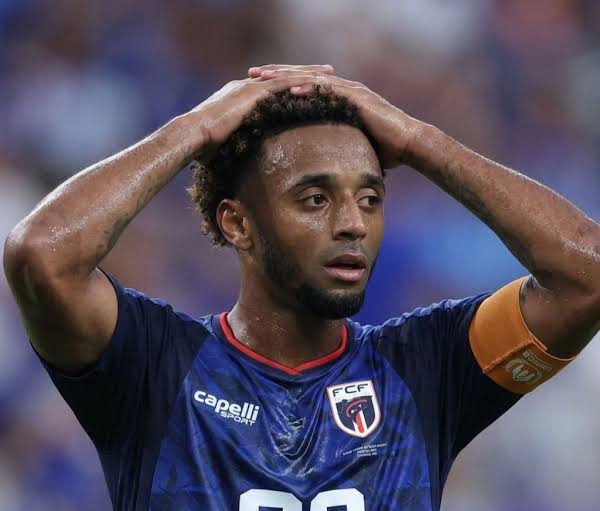
Cape Verde national team captain Ryan Mendes has been accused of rape by a team translator, who alleged that he entered her hotel room and assaulted her during the team’s trip to New Zealand in March.

According to Brazil’s Globo news outlet, the 36-year-old footballer, who has featured in all three of Cape Verde’s World Cup matches, is accused of sexually assaulting a Brazilian woman hired to serve as the team’s translator during the FIFA Series in New Zealand.

The woman, whose identity has not been disclosed, reportedly said she informed at least three officials of the Cape Verde Football Federation about the alleged incident but received no response.

Advertisement

New Zealand Police are investigating the allegations. Authorities have reportedly obtained security camera footage from an Auckland hotel and are awaiting the results of forensic examinations before deciding whether to file charges against Mendes.

The alleged assault was first reported by New Zealand media last month, although the player’s identity was not disclosed at the time. Reports only indicated that the suspect was a member of the Cape Verde national team.

In her statement, the translator said she had been hired to work with the Cape Verde squad during their matches in the FIFA Series.

She explained that after the team’s first game against Chile, she was invited to what she believed would be a work-related meeting in one of the hotel rooms reserved for the national team.

Advertisement

However, she claimed that upon arriving, she realized her translation services were not required and that the gathering was purely social. She said she returned to her room shortly afterward, where she later heard a knock on her door.

The investigation remains ongoing, and no criminal charges have been announced. Mendes has not publicly responded to the allegations.
Continue Reading
Advertisement

Sports

Aftermath ofWorld Cup: 17 national team coaches step down after fiesta

Published

on

ADVERTISEMENT
Zoom Ad
ADVERTISEMENT
Zoom Ad

The emotional aftermath of the 2026 FIFA World Cup has continued to reshape international football, with no fewer than 17 national team coaches leaving their positions following the conclusion of the tournament.

For some, the decision marked the end of remarkable eras built over several years, while for others, the disappointment of failing to meet expectations proved too difficult to overcome. A number of coaches chose to resign, others saw their contracts expire without renewal, while some were dismissed as their football associations looked to begin a new chapter.International Sports Competitions

The latest casualty is Belgium manager Rudi Garcia, whose departure was confirmed on Monday after the Royal Belgian Football Association announced it would not renew his contract, which expires on July 31.

Garcia guided Belgium to the quarter-finals, where the Red Devils were eliminated by eventual champions Spain, who went on to edge Argentina 1-0 in Sunday’s final.

Advertisement

His exit adds to a growing list of high-profile managerial changes that have followed the tournament, reflecting the enormous expectations and pressure attached to coaching at the highest level of international football.

Among the biggest departures is France’s Didier Deschamps, who brought an end to his remarkable 14-year reign after leading Les Bleus through one of the most successful periods in their history.

Portugal’s Roberto Martínez also stepped down after his side’s Round of 16 defeat to Spain, while Croatia’s Zlatko Dalić ended his nine-year spell after his team’s Round of 32 elimination.

Mexico’s Javier Aguirre resigned after England knocked his side out in the Round of 16, while Netherlands coach Ronald Koeman departed following the Dutch team’s Round of 32 exit.

Advertisement

Marcelo Bielsa also stepped aside after their respective World Cup campaigns, as Scotland’s Steve Clarke and South Korea’s Hong Myung-bo resigned after failing to achieve their tournament objectives.International Sports Competitions

Tunisia dismissed Sabri Lamouchi after a crushing 5-1 defeat in their opening match, Germany’s Julian Nagelsmann also departed following disappointing campaigns that fell short of expectations while Czechia’s Miroslav Koubek resigned following his country’s group-stage exit

Senegal parted ways with Pape Thiaw after terminating his contract, while Carlos Queiroz left Ghana after the Black Stars were eliminated in the Round of 32.

The full list of coaches who have left their national teams after the 2026 FIFA World Cup includes:

Advertisement

Didier Deschamps (France)

Roberto Martínez (Portugal)

Zlatko Dalić (Croatia)

Javier Aguirre (Mexico)

Advertisement

Ronald Koeman (Netherlands)

Sebastián Beccacece (Ecuador)

Marcelo Bielsa (Uruguay)

Steve Clarke (Scotland)

Advertisement

Hong Myung-bo (South Korea)

Sabri Lamouchi (Tunisia)

Miroslav Koubek (Czechia)

Pape Thiaw (Senegal)

Advertisement

Rudi Garcia (Belgium)

Carlos Queiroz (Ghana)

Jamal Sellami (Jordan)

Vladimir Petković (Algeria)

Advertisement

Julian Nagelsmann (Germany)

The wave of departures underlines the harsh realities of international football, where even experienced coaches often pay the price for underwhelming performances. With qualification campaigns for future tournaments already on the horizon, many football federations are expected to begin rebuilding under new leadership in the coming months.

Continue Reading

Sports

2026 World Cup: FIFA begins to probe Argentina V Spain final over malpractices

Published

on

ADVERTISEMENT
Zoom Ad
ADVERTISEMENT
Zoom Ad


FIFA has began a disciplinary investigation into the aftermath of the 2026 World Cup final between Argentina and Spain.

Recall there were ugly scenes at the end of the game, involving players and coaches from both teams.

The game was ultimately decided by Ferran Torres’ goal in the 106th minute.

Advertisement

Before Torres’ goal, Argentina midfielder Enzo Fernández had been sent off by referee Slavko Vincic for a 90th minute foul on Pau Cubarsí.

At the end of the game, footage has emerged of Argentina’s Leandro Paredes and Nahuel Molina hitting Spain’s Eric García and Rodri, while Argentina coach Roberto Ayala was also seen to strike Dani Olmo.

A FIFA statement said, “Following an assessment of the relevant match reports for the FIFA World Cup final between Spain and Argentina, and in line with article 36 of the FIFA Disciplinary Code (FDC), the FIFA Disciplinary Committee has appointed a Disciplinary and Ethics Prosecutor to investigate potential breaches of the FDC with regard to the post-match incidents.

“Further details will be communicated by the FIFA Disciplinary Committee once the prosecutor’s report has been completed.”

Advertisement
Continue Reading

Sports

Rodri wins Golden Ball as Spain dominate World Cup awards

Published

on

By

ADVERTISEMENT
Zoom Ad
ADVERTISEMENT
Zoom Ad

Spain midfielder Rodri was crowned the Player of the Tournament after inspiring his country to the 2026 FIFA World Cup title, capping a remarkable campaign with another prestigious individual honour.

The Manchester City star received the Golden Ball following Spain’s 1-0 extra-time victory over Argentina in the World Cup final, where Ferran Torres scored the decisive goal to hand La Roja their second world title.

Rodri, widely regarded as the heartbeat of the Spanish team, controlled matches throughout the tournament with his composure, vision and leadership, playing a pivotal role in Spain’s unbeaten run to the trophy.

The award adds to an already glittering career for the 30-year-old, who has won the Ballon d’Or, the UEFA Champions League, four Premier League titles, the European Championship and now the FIFA World Cup, further cementing his place among the finest midfielders of his generation.

Advertisement

Spain also swept two other major individual awards at the tournament.

Goalkeeper Unai Simón claimed the Golden Glove after an outstanding campaign between the posts. The Athletic Bilbao shot-stopper kept seven clean sheets and conceded just one goal throughout the tournament, producing a series of crucial saves that underpinned Spain’s march to the title.

Meanwhile, 19-year-old Pau Cubarsí was named the Young Player of the Tournament following a series of composed and commanding performances in defence. The Barcelona centre-back emerged as one of the breakout stars of the competition, earning widespread praise for his maturity, confidence and consistency despite his age.

Spain’s clean sweep of the tournament’s top individual honours underlined the country’s dominance at the 2026 World Cup, where Luis de la Fuente’s side combined defensive solidity with attacking quality to reclaim football’s biggest prize.

Advertisement

The triumph marked Spain’s second FIFA World Cup title, 16 years after their historic success in South Africa in 2010, while Rodri’s Golden Ball served as fitting recognition of a tournament in which he was the driving force behind the new world champions.

Continue Reading

Trending

Copyright © 2024 Naija Blitz News