…lawmakers divided over proposed ban on compulsory multi-year rent


…call for regulation, not outright prohibition
By Gloria Ikibah 
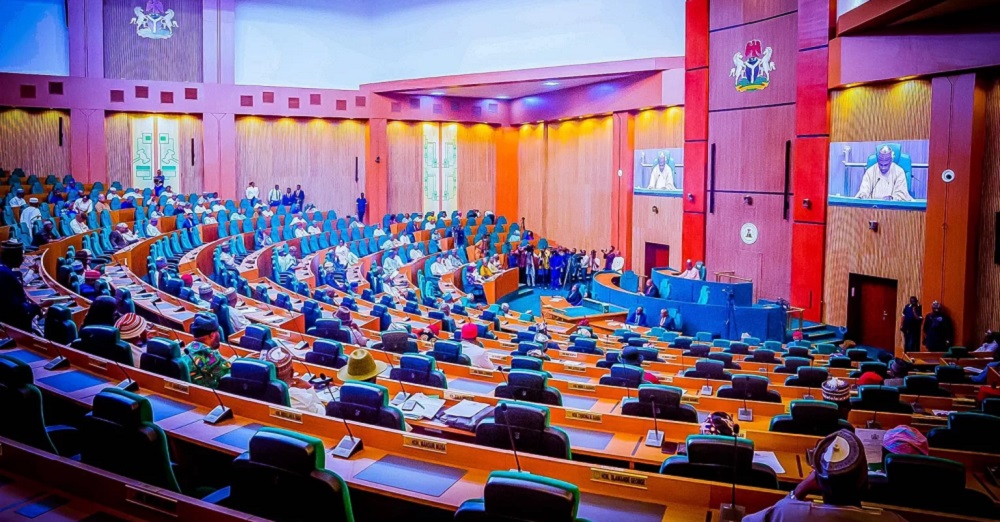
The House of Representatives has passed for second reading a bill seeking to regulate rental payments and curb exploitative practices by landlords and housing agents in the Federal Capital Territory (FCT).
The bill, sponsored by Rep. Paul Sunday Nnamchi, is titled: “A Bill for an Act to Regulate Rental Payments, Prohibit Compulsory Multiple-Year Rent Demands, Housing Agency Practices and Rent increases in the Federal Capital Territory to Establish a Unified Digital Register for Housing Agents, Prescribe Agency Fees, Protect Landlords and Tenants and for Related Matters”.
This piece of legislation, seeks to prohibit compulsory multi-year rent demands, regulate rent increases and agency fees, and establish a unified digital register for housing agents.
It also proposes safeguards for both landlords and tenants, alongside penalties for non-compliance.
Leading the debate, Rep. Nnamchi said excessive rental demands had placed significant financial pressure on residents, affecting household savings, small businesses and employment mobility.
He said the proposed law was intended to establish a fairer and more accountable rental framework through advance-rent regulation,
a unified platform for identifying housing agents, reasonable limits on agency fees and protection against coercive practices.
He said: “Mr. Speaker, this legislation is not intended to undermine property rights or discourage investment. Rather, it recognises that legitimate commercial interests must coexist with public protection. Landlords deserve reasonable returns.
“Agents deserve professional recognition. And tenants deserve fairness and protection from exploitation”.
Nnamchi added that a properly regulated rental market will promote transparency, certainty and accountability, protect consumers and improve confidence in the housing sector.
He urged members to support the bill and allow it to proceed to the relevant committee for detailed consideration and stakeholder engagement.
“The responsibility of legislation is not merely to protect economic transactions, but also to ensure that those transactions do not become instruments of undue hardship or exploitation.
“Ultimately, access to decent accommodation should not be determined by one’s ability to make extraordinary advance payments. Fairness, accountability and the protection of legitimate interests must remain the guiding principle of our rental markets. Mr Speaker, I so move”, he added.
Contributing to the debate, Rep. Idris Zacharias, lawmaker representing Ida/Igalamela/Ibaju/Ofu Federal Constituency of Kogi State, described the bill as important but urged the House to consider wider land and housing issues in the FCT.
He called for the House Committee on FCT and Area Councils to be involved in the committee that will consider the bill.
Rep. Chinedu Ogah, member representing Ikwo/Ezza South Federal Constituency of Ebonyi State, also supported the proposal, saying high rents and agency fees were making it difficult for businesses to establish offices in Abuja.
He cited the cost of renting a three-bedroom office in Wuse, which he said could range between N25 million and N30 million annually, with agency fees adding to the burden.
Ogah said the bill would help regulate the sector and encourage investors by providing clearer rules for rental transactions.
Rep. Leko Jafaru Gambo, representing Bogoro/Dass/Tafawa Balewa Federal Constituency of Bauchi State, supported the bill but argued that the word “prohibit” in its title should be replaced with “regulate”.
He also suggested that the legislation should have nationwide application, although the Deputy Speaker, Benjamin Kalu, clarified that the bill’s current scope was limited to the FCT.
Rep. Ibe Okwara Osonwa, representing Arochukwu/Ohafia Federal Constituency of Abia State, said he supported regulation but cautioned against a blanket prohibition on multi-year rent demands.
“This is a free market situation. By the free market economy, are we now going to, for every good or service that is sold outside, we now start to tell people how to trade on their own businesses?” he asked.
Osonwa said some circumstances might justify multiple-year rent arrangements, adding that the legislation should focus on regulation and appropriate conditions.
Rep. Joseph Bagudu also called for regulation rather than prohibition, noting that landlords needed to recover their investments amid rising building material costs.
He disputed a claim that agency fees were as high as 25 per cent, saying they were generally around 10 per cent.
Rep. Ayodeji Alao-Akala member representing Ogbomoso North/South/Orire Federal Constituency of Oyo, supported the bill, arguing that its provisions were aimed at compulsory multiple-year rent demands rather than preventing landlords from increasing rent.
He said the requirement for young couples to pay two years’ rent upfront placed an unreasonable burden on them.
“As a youth, when a young couple comes out of service now, and is being asked to pay 2 years, where will this insurance money come from?” he asked.
He said the proposed law could allow for arrangements such as monthly, six-monthly or annual payments, while preventing landlords from compelling tenants to pay several years’ rent at once.
Patrick Umoh, however, warned that the bill could raise constitutional concerns over property rights and freedom of trade. He urged the House to step it down for further consultation and a review of the FCT’s tenancy laws.
But the Deputy Speaker, said the bill’s provisions could be inconsistent with the Constitution, while the presiding officer pointed to provisions in Section 44(2)(c) concerning laws relating to leases and tenancies.
Rep. Sunday Umeha, member representing Ezeagu /Udi Federal Constituency of Enugu State, said there is no better time for the parliament to embrace a bill as important as the one before the House.
“Mr Speaker, the provisions of this bill are very clear. They do not in any way conflict with the clear provisions of Section 44 of the Constitution, as earlier alluded to.
“Secondly, Mr Speaker, the purpose of this House is to make laws for the welfare and good governance of the Nigerian people. Out there, Nigerians are experiencing serious difficulties when it comes to tenancy and related matters.
“Mr Speaker, the essence of the law is to bring order, peace and tranquillity. This bill, upon scrutiny, is one that we should allow to pass this stage. There are other stages the bill will go through, where we will have the opportunity to make the necessary corrections before returning to give it final passage.
“I support this bill wholeheartedly, without any objection, and I do not see how its long title or provisions conflict with the general intent of the Constitution. I see it rather as a welcome development for the people of Nigeria”, he said.
Rep. Umeha said the bill is not anti-investment. “It is not against landlords or those investing in the real estate sector. This bill is beneficial to both landlords and tenants”, he added.
Rep. Wale Raji member representing Epe Federal Constituency of Lagos State, said previous attempts to regulate rents had not adequately addressed the problem, arguing that the gap between housing demand and supply remained a major factor behind rising costs.
He said social housing and increased housing supply were necessary to address the crisis.
Sunday Umeh, in contrast, said the bill did not conflict with the Constitution and should proceed to the next stage, where its provisions could be scrutinised and amended.
“The purpose of this House is for us to make laws for the welfare and good governance of the Nigerian people.
“The bill is not anti-investment. The bill is not against even the landlords or those making investment in the real estate environment or industry. This bill is of good use to both the landlords and the tenants”, he said.
Minority Leader, Rep. Frederick Agbedi urged members to support the bill, saying the high cost of rent in the FCT was pushing residents into overcrowded and unsuitable living conditions in the suburbs.
He said the proposal was intended to address excesses in the rental market without discouraging investment.
House Leader Julius Ihonvbere also backed the bill, citing the difficulties residents face in securing accommodation and the activities of unregistered agents.
“I think this is a very important bill. And I want to thank Professor Namche for thinking about it,” he said.
The House Leader, Rep. Julius Ihonvbere said the proposal will proceed to a public hearing, where Nigerians, professionals and other stakeholders would have the opportunity to contribute.
He urged members to support the bill, adding: “We are in a stage where we have a duty to protect Nigerians. It’s not against you to build your house. You can build as many houses as you want.”
The Deputy Speaker who presided over plenary cited Section 16 of the Constitution, which provides for the welfare of citizens and suitable and adequate shelter.
He said Nigeria operates a mixed economy in which certain sectors, particularly those linked to essential needs such as housing, could be regulated.
“Not all sectors of the economy should be free and capitalist. Especially when it has to do with shelter, which is fundamental. So, some sectors should be regulated as well as controlled,” he said.
The bill was subsequently passed for second reading.