By Gloria Ikibah


The Nigeria Customs Service has surpassed its 2025 revenue target by more than 10 per cent, raking in N7.277 trillion against a target of N6.584 trillion, even as it sought the approval of the House of Representatives for its proposed N11.274 trillion revenue and expenditure framework for the 2026 fiscal year.
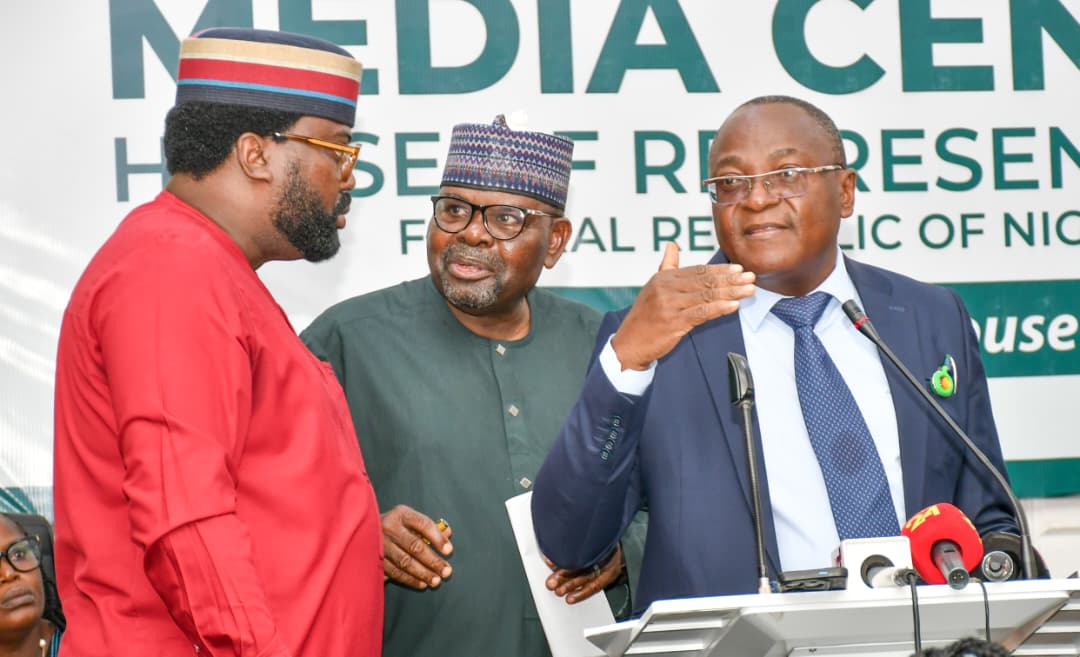
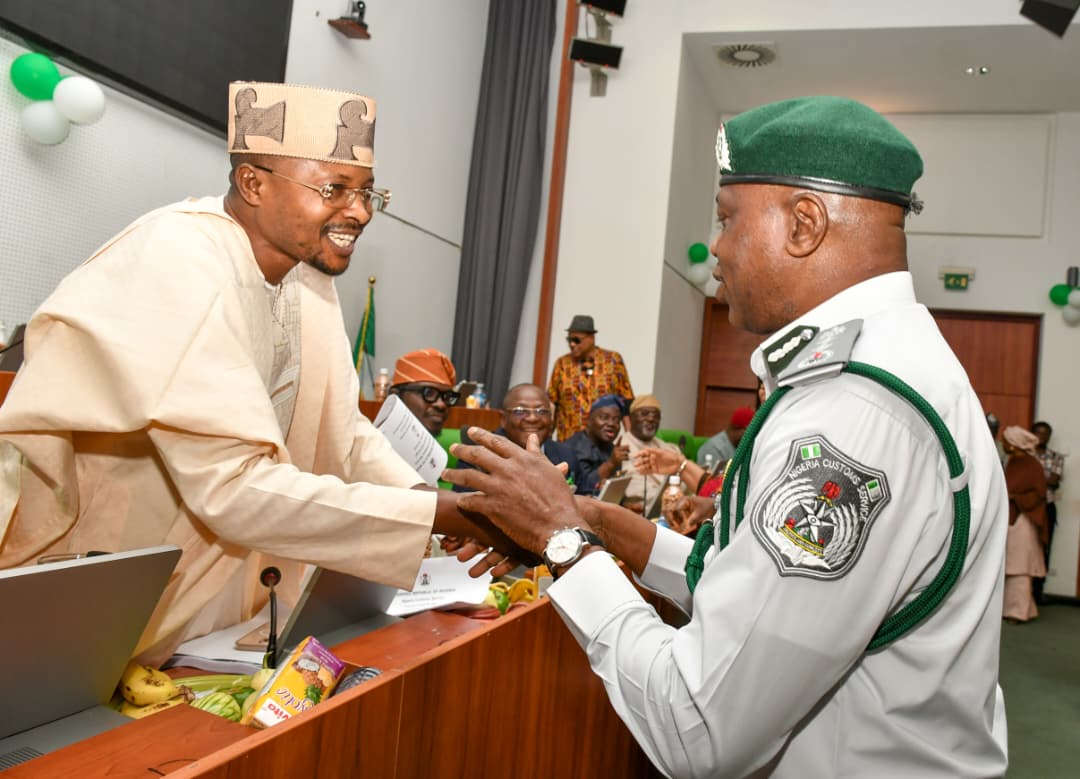
The Comptroller-General of Customs, Bashir Adewale Adeniyi, disclosed this on Monday while defending the agency’s 2026 budget estimates before the House Committee on Customs and Excise in Abuja. 
Opening the session, the Committee Chairman, Rep. Leke Abejide, said the exercise was part of the National Assembly’s constitutional oversight responsibility.
He said: “It is not a long speech day. It is simply a day to carry out what Sections 88 and 89 of the 1999 Constitution mandate us to do, which is to scrutinise your budget proposal.”
Reps. Abejide added that after the committee concluded its review, its recommendations will be presented to the House for consideration and approval.
Presenting the agency’s performance, Adeniyi said Customs generated N7.277 trillion between January and December 2025, exceeding its revenue target by 10.24 per cent despite a series of government fiscal incentives that reduced potential earnings.
He explained that duty waivers on healthcare products, compressed natural gas (CNG) vehicles, electric vehicles and import duty exemption certificates all affected revenue collections.
According to him, the suspension of excise duties on telecommunications services and other tax relief measures also impacted earnings of theService.
Adeniyi further revealed that although the National Assembly approved an expenditure budget of N1.132 trillion for Customs in 2025, the agency received only N808.86 billion, representing about 71.4 per cent of the approved amount.
He attributed the shortfall to delays in implementing the funding provisions contained in the Nigeria Customs Service Act.
“The variance between what was approved and what we received resulted from the delayed implementation of the new funding structure”, he noted.
He further explained that the Service continued to operate under the former seven per cent cost-of-collection model until August 2025 before transitioning to the new four per cent Free-on-Board (FOB) funding framework introduced by the Act.
The Comptroller-General also clarified that concessionary fees, previously paid through the Comprehensive Import Supervision Scheme account managed by the Federal Ministry of Finance and the Central Bank of Nigeria, are now settled directly by the Customs Service under the new legal framework.
During the budget defence, lawmakers sought explanations on the disparity between the approved budget, actual releases and expenditure, as well as details surrounding concessionary fees.
In response, the Chairman reminded the lawmakers that while the National Assembly approved N1.132 trillion, only N808.86 billion was eventually released, urging the Service to account for how the available funds were utilised.
Looking ahead, Adeniyi said Customs had set an ambitious revenue target of N11.274 trillion for 2026.
He explained that the projection comprises N5.542 trillion from Federation Account collections, N1.495 trillion from non-Federation revenue, N2.973 trillion from import Value Added Tax and N1.264 trillion from the four per cent FOB collection.
According to him, the Service intends to achieve the target through technology-driven reforms, including the full deployment of the Unified Customs Management System, stronger post-clearance audit processes, improved trade facilitation and closer engagement with stakeholders.
Adeniyi also announced reductions in import levies on vehicles under the 2026 fiscal policy.
He said the levy on used vehicles had been reduced from 15 per cent to five per cent, while that on new vehicles had been cut from 20 per cent to 10 per cent.
The announcement drew praise from lawmakers, with Abejide urging the Customs Service to publicise the development.
“I want the general public to know that the government is doing something good for them”, the Chairman said.
Adeniyi acknowledged that while the reductions would provide relief to importers and consumers, they would inevitably affect Customs revenue.
He said the measures formed part of broader fiscal policies coordinated by the Federal Ministry of Finance to support national priorities, including improved healthcare, transportation through the CNG initiative and other strategic government interventions.
For the 2026 fiscal year, the Customs Service proposed N421.7 billion for personnel costs, N307.77 billion for overheads and more than ₦620 billion for capital expenditure.
According to the Comptroller-General, priority would be given to completing ongoing projects, expanding infrastructure, improving staff welfare and enhancing operational efficiency.
He appealed to lawmakers to approve the proposal, expressing confidence that the budget would strengthen the Service’s capacity to boost revenue generation, facilitate legitimate trade and contribute more effectively to Nigeria’s economic growth.