

Connect with us

News

House Defends Abbas Over Capital Projects Motion, Says Row Was About Procedure, Not Debate

Published

on

ADVERTISEMENT
Zoom Ad
ADVERTISEMENT
Zoom Ad

By Gloria Ikibah

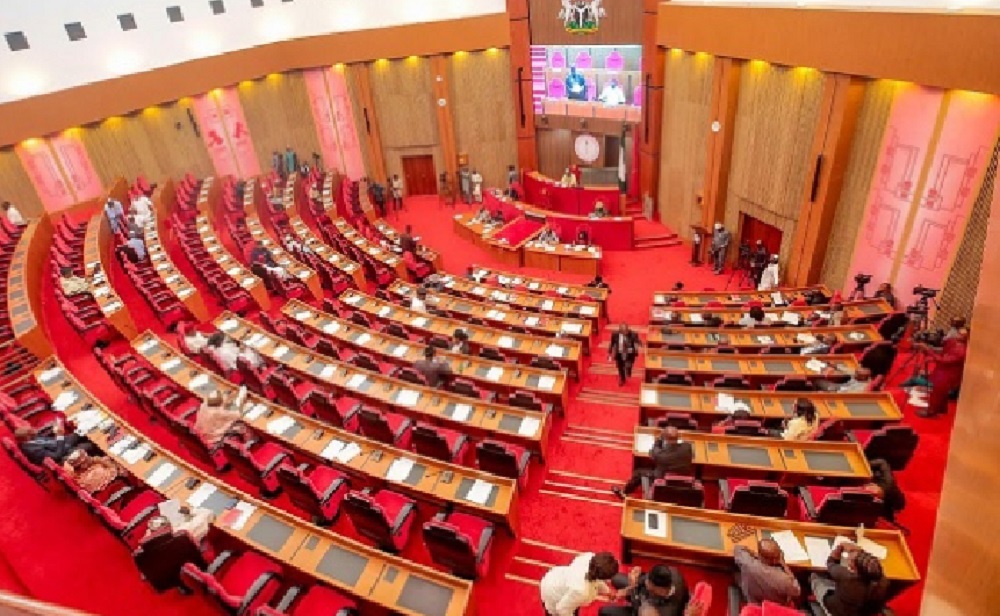
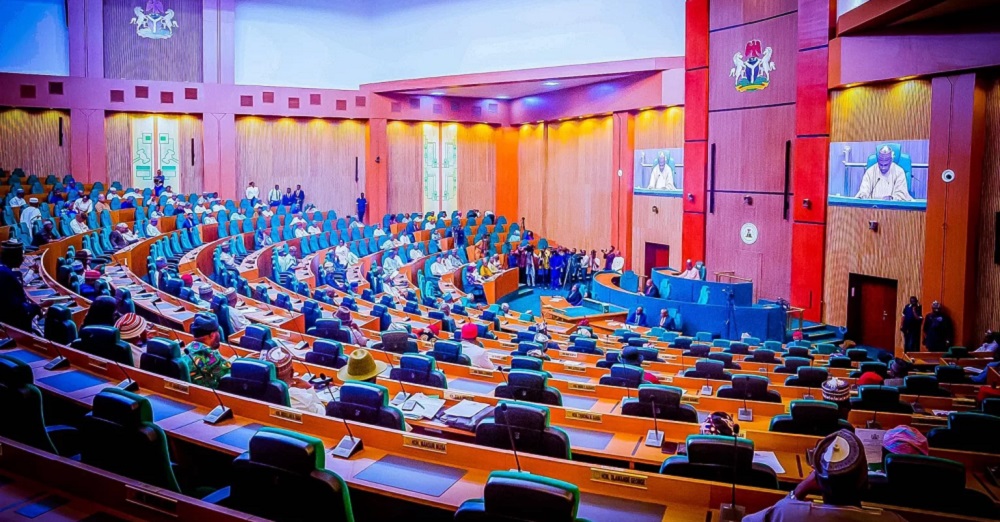
The House of Representatives has defended Speaker Rt. Hon. Tajudeen Abbas  over Wednesday’s controversy surrounding a motion on the implementation of capital projects in the 2026 Budget, insisting that the disagreement was purely procedural and not an attempt to prevent debate on the issue.

In a statement issued on Wednesday, by the House Spokesman, Akin Rotimi,  he said public reactions to the incident had misconstrued what transpired during plenary, stressing that the Speaker acted strictly in accordance with the House Standing Orders.

The clarification followed debate over a Matter of Urgent Public Importance sponsored by the member representing Aba North/Aba South Federal Constituency of Abia State, Rep. Alexander Mascot Ikwechegh, on funding challenges confronting Ministries, Departments and Agencies (MDAs) and the execution of the capital component of the Federal Budget.

Advertisement

According to the House, the controversy did not stem from the subject matter of the motion but from discrepancies between the version submitted to the Speaker for approval and the one eventually presented on the floor.

“The issue was not the substance of the motion, but a procedural matter relating to a difference between the version of the motion submitted to the Speaker for approval and the version presented on the floor,” the statement said.

It explained that under Order Eight, Rule 5(1) of the Standing Orders of the House of Representatives (Eleventh Edition), every Matter of Urgent Public Importance must first be submitted to the Speaker before it can be raised during plenary.

“This ensures that only matters meeting the required threshold of urgency are admitted and that Members deliberate on an authenticated text,” the statement added.

Advertisement

The House noted that despite objections from some lawmakers, Speaker Abbas admitted the motion for debate, allowing Ikwechegh to present it before members.

However, while the motion was being moved, the Speaker observed that key aspects of the document differed from the version earlier approved.

“Some portions of the motion, particularly the proposed resolutions and prayers, differed materially from the version earlier submitted and approved. Additional prayers not contained in the approved document had been introduced,” the statement said.

To safeguard the integrity of parliamentary proceedings, the Speaker directed that the officially submitted version be read aloud and invited members of the Minority Caucus to verify the discrepancies.

Advertisement

“As an institution built on records and due process, the House can only take decisions based on motions and documents duly submitted, authenticated, and admitted for consideration. Any substantial alteration to an approved motion during presentation must follow the appropriate parliamentary procedure,” the statement further read.

The House rejected suggestions that the opposition lawmaker had been prevented from raising the matter.

“It is important to emphasise that the sponsoring Member was not prevented from raising the issue before the House. The concern was solely about ensuring compliance with established procedures and maintaining the integrity of legislative records,” it stated.

The statement further reminded lawmakers of their responsibility to comply strictly with parliamentary rules.

Advertisement

“While acknowledging that Members continue to deepen their understanding of parliamentary practice, all Members are expected to present motions strictly in the form submitted and approved for consideration,” it noted.

According to the House, the Speaker subsequently referred the matter, based on the prayers contained in the officially approved motion, to an ad hoc committee for further legislative examination and a report.

Reaffirming its commitment to due process, the House said it will continue to protect members’ right to raise issues of urgent public importance while ensuring that legislative business is conducted in line with established rules.

“The House of Representatives remains committed to protecting Members’ rights to raise matters of public importance while ensuring that all proceedings are conducted in line with the Standing Orders, due process, and the highest standards of parliamentary integrity,” the statement asserted.


Advertisement
Continue Reading
Advertisement

News

FG Moves to End Unrealistic Budget Forecasts, Unveils New Economic Data Framework

Published

on

ADVERTISEMENT
Zoom Ad
ADVERTISEMENT
Zoom Ad

By Gloria Ikibah

The Federal Government has moved to strengthen the credibility of economic forecasts used in Nigeria’s budgeting process, with plans to introduce a single data repository and tighter scrutiny of the assumptions underpinning future budgets.

The Ministry of Finance and Ministry of Budget and Economic Planning reached the resolutions at a Macroeconomic Data and Assumptions Validation Workshop held on August 29, 2026.

The workshop brought together key fiscal and monetary data institutions across government to address weaknesses in economic forecasting and ensure that national planning is based on credible data, realistic assumptions and transparent methodologies.

Advertisement

A review of previous budget cycles revealed significant gaps between some macroeconomic projections and actual outcomes, particularly in oil production and revenue.

The participants agreed that the gaps must be addressed through stronger forecasting, improved coordination and measures to reduce optimism bias in future budgets.

One of the key resolutions was the establishment of a Standing Committee on Macroeconomic Data and Assumptions. The committee will be responsible for continuous validation and review of economic data and assumptions, with its reports submitted to the Economic Management Team.

The government also plans to establish a central data repository to ensure that government institutions work with a single and consistent set of economic data and assumptions.

Advertisement

Another resolution is the development of a unified national data reporting framework containing standard definitions for revenue, expenditure and borrowing.

The workshop further called for stronger coordination between fiscal and monetary authorities and improvements in the timeliness and quality of key national statistics.

The areas identified for improvement include employment, productivity and producer-price data, which are considered important for accurate economic forecasting and policy decisions.

The assumptions underpinning the Medium-Term Expenditure Framework (MTEF), Fiscal Strategy Paper (FSP) and annual Budget will also face tougher scrutiny before finalisation.

Advertisement

The government said these assumptions will be subjected to stronger methodology, sensitivity analysis and scenario testing to assess how different economic conditions could affect projected outcomes.

The measures form part of the Federal Government’s wider efforts to improve fiscal transparency, accountability and evidence-based economic management.

The workshop emphasised the importance of reliable data in shaping economic policy, noting that better data would lead to more realistic assumptions, improved planning and, ultimately, stronger economic outcomes for Nigerians.

The resolutions come as preparations for the 2027 budget gather pace, with the government seeking to improve the accuracy of its economic projections and strengthen the foundation on which national spending and revenue decisions are made.

Advertisement
Continue Reading

News

NIS deports 99 foreigners over irregular migration

Published

on

By

ADVERTISEMENT
Zoom Ad
ADVERTISEMENT
Zoom Ad

The Nigeria Immigration Service repatriated 99 foreigners for irregular migration between July and August 2026, according to its latest operational report.

The report prepared for the Office of the National Security Adviser showed that 90 foreigners were repatriated in July, while nine others were repatriated in August.

The July figure comprised 33 Cameroonians, 38 nationals of Côte d’Ivoire, 15 Pakistanis, four Nigeriens, four Chadians, two Burkinabè, two Central Africans and one national of the Democratic Republic of Congo.

The report identified irregular migration as the primary reason for the repatriations.

Advertisement

It said, “90 foreigners were recorded as repatriated in July, while nine were recorded in August. The cases primarily involved irregular migration, with the July records including nationals of Cameroon (33), Niger (four), Pakistan (15), Côte d’Ivoire (38), Burkina Faso (two), Chad (four), Central African Republic (two) and the Democratic Republic of the Congo (one).”

The NIS also reported rescuing 23 victims of trafficking and other forms of exploitation during the period.

Seven victims were rescued in July, while 16 were rescued in August following interventions at locations including the Murtala Muhammed International Airport, Seme Border, Baji Patrol Post and other locations.

Some of the rescued victims were handed over to the National Agency for the Prohibition of Trafficking in Persons for further care and investigation.

Advertisement

The immigration authorities also apprehended a stowaway at the Murtala Muhammed International Airport in August.

“Seven victims were recorded as rescued in July and 16 in August. The records include interventions at MMIA, Seme Border, Baji Patrol Post, NAIA and other locations, with some victims handed over to the National Agency for the Prohibition of Trafficking in Persons.

“One stowaway was recorded as apprehended at the Murtala Muhammed International Airport in August 2026.

“Twenty-three victims were recorded as rescued across July and August. July interventions accounted for seven victims, including cases involving Thailand, Mali, Egypt and domestic locations. August interventions accounted for 16 victims, including cases intercepted at Seme Border, MMIA, NAIA and Baji Patrol Post,” it said.

Advertisement

In addition, four persons of interest were identified during the period, comprising three in July and one in August.

“The August case involved a potential trafficking victim who was referred to NAPTIP,” it added.

The NIS further disclosed that it had dismantled a fraudulent transnational organised crime syndicate linked to the QNET/Ignite group.

The operation, according to the report, led to the apprehension of the syndicate leaders and 11 facilitators in Lagos and Ogun states.

Advertisement

The service said the interventions formed part of its efforts to strengthen border security, regulate migration and combat transnational organised crime.

The report also highlighted the detection of document fraud, enforcement operations, arrests and prosecutions as part of measures taken by the service to safeguard Nigeria’s borders and prevent the exploitation of migrants.

The NIS said its operations during the period were aimed at ensuring effective migration management while contributing to national security.

Advertisement
Continue Reading

News

NABTEB releases 2026 NBC/NTC results, records 81.24% pass rate

Published

on

By

ADVERTISEMENT
Zoom Ad
ADVERTISEMENT
Zoom Ad

The National Business and Technical Examinations Board (NABTEB) has released results of the 2026 June/July National Business Certificate (NBC) and National Technical Certificate (NTC) examinations.

According to the board, 79,503 candidates, representing 81.24 per cent, obtained five credits and above, including English Language and Mathematics, in the Examinations.

Registrar and Chief Executive Officer of NABTEB, Dr. Aminu Mohammed, announced the results yesterday in Benin at a news conference.

It said the certified craftsmen were among 100,069 candidates that registered for the examinations in 2026, which represented an increase of 7,193 when compared to 92,876 candidates that registered in the 2025 examination cycle.

Advertisement

Mohammed said the increment reflected the growing interest in business and technical education.

He said 97,867 candidates sat for the examinations out of the 100,069 candidates that registered for the examination.

Mohammed said outcome of the examinations was the board’s mandate to promote practical skills. acquisition and occupational competence.

The NABTEB boss said the analysis showed that 79,503 candidates, representing 81.24 per cent, obtained five credits and above, including English Language and Mathematics, in the NBC/NTC Examinations.

Advertisement

He said 89,580 candidates, representing 91.53 per cent, obtained five credits and above, with or without English Language and Mathematics.

According to him, “Comparatively, this performance is significantly higher than that recorded in the May/June 2025 NBC/NTC Examinations, where 61,104 candidates, representing 68.18 per cent, obtained five credits and above including English Language and Mathematics.

“In the same 2025 examination cycle, 74,633 candidates, representing 83.28 per cent, obtained five credits and above, with or without English Language and Mathematics.

“The improvement recorded in the 2026 examination is encouraging and demonstrates the collective effort of candidates, teachers, schools, parents and the wider education system.

Advertisement

“These statistics provide useful indicators of performance; however, beyond the percentages lays the more important question of what these qualifications mean for the future of our young people and for Nigeria’s economic development.”

Dr. Mohammed said the NBC/NTC examinations occupied an important position within Nigeria’s technical and vocational education and training ecosystem.

Continue Reading

Trending

Copyright © 2024 Naija Blitz News