
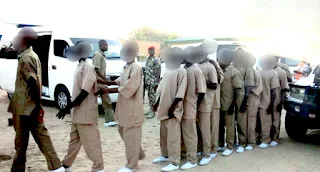
The Federal Government has introduced a new operational framework aimed at strengthening the disarmament, demobilisation and reintegration (DDR) of former terrorists, bandits and other individuals who have renounced armed violence across Nigeria.


The initiative, unveiled through the National Counter Terrorism Centre (NCTC) under the Office of the National Security Adviser (ONSA), is designed to improve coordination among government agencies and ensure a more structured approach to rehabilitating ex-combatants while promoting lasting peace in conflict-affected communities.
The National Coordinator of the NCTC, Major General Adamu Laka, disclosed this on Monday during the National Validation Workshop on the Standard Operating Procedures (SOPs) for Disarmament, Demobilisation and Reintegration held in Abuja. 
According to Laka, the newly developed procedures will guide the implementation of the DDR programme at the federal level and in the pilot states of Kaduna, Katsina and Zamfara.
He explained that the initiative forms part of the Federal Government’s broader strategy to tackle insecurity through a combination of military operations and non-military interventions aimed at addressing the root causes of violent extremism.
Laka said the Standard Operating Procedures were developed to ensure that the government’s reintegration programme is implemented in a coordinated, transparent and effective manner.
He noted that the guidelines provide practical direction for ministries, security agencies, civil institutions and other organisations involved in identifying, processing, rehabilitating and reintegrating individuals who have abandoned violence.
According to him, the framework clearly outlines the responsibilities of participating institutions, promotes accountability and strengthens collaboration among stakeholders, while eliminating overlaps in responsibilities.
The NCTC coordinator observed that although Nigeria already has a National DDR Framework, there was a need for detailed operational guidelines to translate policy objectives into practical actions.
“Recognising that a policy framework alone is insufficient to guide implementation, the NCTC and its partners subsequently developed a comprehensive set of Standard Operating Procedures to translate the strategic objectives of the National DDR Framework into practical guidance for implementing institutions,” Laka said.
He explained that the SOPs establish uniform standards for implementing the programme nationwide while clearly defining the roles and responsibilities of each participating agency.
Laka disclosed that the framework was developed after extensive consultations with security agencies, government institutions, peacebuilding organisations and other relevant stakeholders.
According to him, the procedures draw from Nigeria’s previous experiences, international best practices and the country’s unique security realities.
“These Standard Operating Procedures have been developed through extensive consultations and draw upon national experiences, international best practices, and the unique realities of the Nigerian context,” he added.
He noted that the consultations considered the experiences of communities affected by terrorism and banditry as well as lessons learned from similar rehabilitation programmes in other countries.
The Federal Government selected Kaduna, Katsina and Zamfara as pilot states for the implementation of the new framework due to the prolonged security challenges confronting the North-West region.
The three states have witnessed repeated attacks by terrorists, bandits and kidnappers, resulting in numerous deaths, displacement of residents and disruption of economic and social activities.
Officials said the pilot phase would enable the government to evaluate the effectiveness of the guidelines, identify implementation gaps and make necessary adjustments before extending the programme to other parts of the country.
Laka stressed that the initiative reflects the government’s belief that military operations alone cannot permanently resolve Nigeria’s security challenges.
He said effective disarmament, rehabilitation and reintegration programmes would help reduce the likelihood of former fighters returning to violent groups while also supporting reconciliation and the recovery of communities devastated by years of conflict.
The NCTC coordinator, however, emphasised that the success of the programme would depend on effective collaboration among government institutions, security agencies, traditional rulers, community leaders, civil society organisations and other stakeholders.
He reaffirmed the Federal Government’s commitment to implementing comprehensive strategies aimed at restoring peace, enhancing public safety and rebuilding communities affected by terrorism, banditry and other forms of armed violence.