Connect with us

News

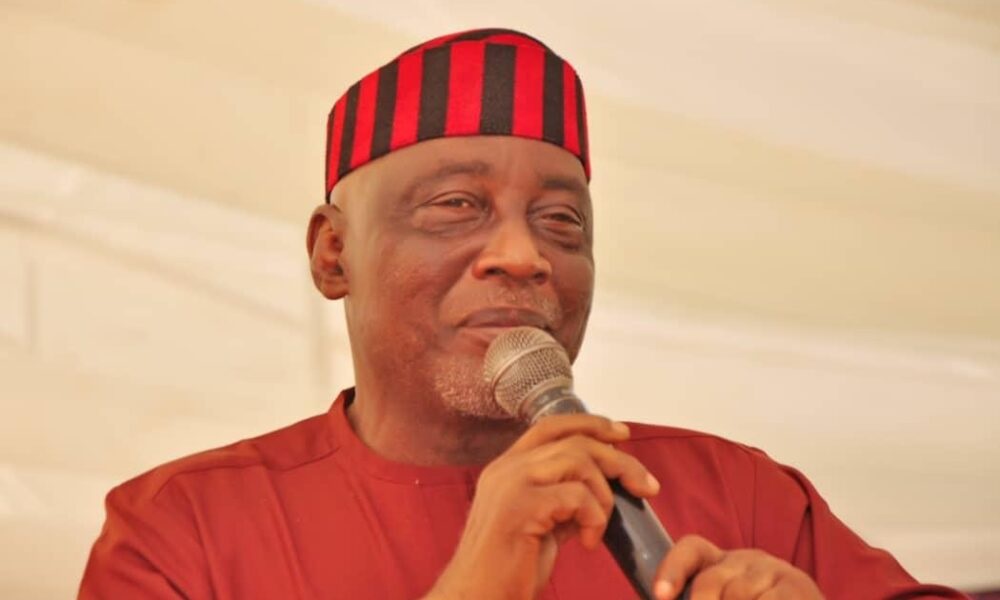
Senator Abba Moro moves motion demands heavy deployment of security to troubled communities in Otukpo

Published

on

ADVERTISEMENT
Zoom Ad
ADVERTISEMENT
Zoom Ad

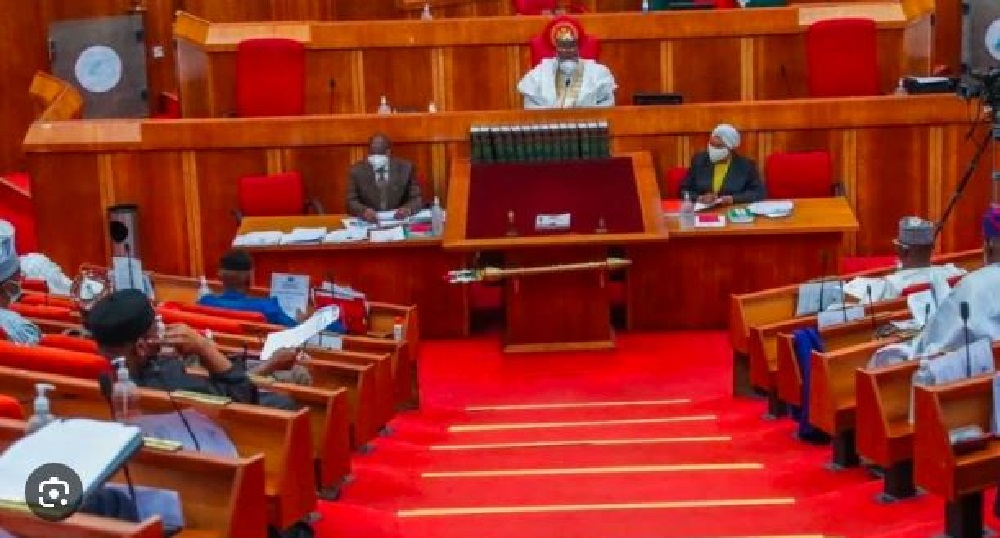
The senator representing Benue South Senatorial District and Senate Minority Leader, Comrade Abba Moro, on Wednesday moved a motion on the renewed attacks on Benue South communities in the last few days.


Akpachi-Ugboju, Otukpo-Nobi and Ondo Ugboju communities of Otukpo Local Government Area were attacked by armed bandits on Friday, Sunday and Tuesday respectively resulting in the death of 20 persons, displacement of several persons and destruction of properties worth millions of naira.

In the motion titled, “The urgent needto stop the gruesome murder of inhabitants of Akpachi-IUgboju Otukpo-Nobi inhabitants and fresh attacks on Ondo Ugboju in Otukpo LGA of Benue State by suspected bandits”, Senator Moro lamented sustained attacks on defenceless constituents and called on government at all levels to secure the lives and properties of Nigerians, which is the primary responsibility of every government.

The motion reads;

Advertisement

“The Senate:

“Notes with utter dismay and heavy heart the horrific and unprovoked attacks on the peaceful, agrarian Communities of Akpachi-Ugboju, Otukpo-Nobi and Ondo Ugboju communities of Otukpo Local Government Area, Benue State, by suspected Armed Bandits between Friday, Sunday of last week and Tuesday this week;

“The primary responsibility of any government, as enshrined in Section 14(2)(b) of the 1999 Constitution of the Federal Republic of Nigeria (as amended), is the security and welfare of its citizens;

“Aware that the weekend assaults resulted in the tragic and gruesome murder of innocent, defenseless citizens, with a confirmed death toll of two (2) lives lost in Akpachi-Ugboju and sixteen (16) lives lost in Otukpo-Nobi, bringing the total number of fatalities in these two incidents to eighteen (18);

Advertisement

“Disturbed that aside from the lives lost, numerous members of these communities sustained varying degrees of life-threatening injuries and are currently admitted in various hospitals struggling for their lives, while properties and farmlands have been destroyed, forcing survivors to flee their ancestral homes;

“Alarmed by the sudden, coordinated, and fresh attack launched on Ondo Ugboju, July 14, 2026, which has thrown the entire local government area into a state of panic, widespread displacement, and severe humanitarian crisis with a confirmed death cases of two (2) lives lost in Ondo-Ugboju, Otukpo Local Government Area of Benue State;

“Concerned that the relentless and audacious nature of these attacks suggest a deliberate attempt to decimate these communities, and if urgent security interventions are not immediately deployed, the situation will degenerate into a complete breakdown of law and order, alongside a looming food crisis as farmers are forced to abandon their farmlands out of fear for their lives.

“Accordingly resolved to (PRAYERS):

Advertisement

“1. Observe a minute of silence in honor of the twenty (20) innocent citizens who were gruesomely murdered in Akpachi-Ugboju and Otukpo-Nobi, and others who may have lost their lives in the fresh attack on Ondo Ugboju.

“2. Condemn in the strongest possible terms the unprovoked killings and destruction of properties by suspected bandits in Ugboju and Otukpo Districts.

“3. Urge the Inspector General of Police (IGP), the Chief of Army Staff (COAS), and other relevant security agencies to immediately deploy a heavy security presence to Akpachi-Ugboju, Otukpo-Nobi, Ondo Ugboju, and surrounding communities to restore normalcy, protect lives, and prevent further attacks.

“4. Mandate the Inspector General of Police to conduct a thorough investigation into the attacks, track down the perpetrators, and ensure they are brought to justice to serve as a deterrent to others.

Advertisement

“5. Urge the National Emergency Management Agency (NEMA) and the Federal Ministry of Humanitarian Affairs and Poverty Alleviation to urgently mobilize and supply relief materials (including food, medical supplies, and shelter) to the displaced persons and the injured currently receiving treatment in various hospitals.

“6. Mandate the Senate Committees on Police Affairs, Defense, and National Security and Intelligence to interface with the heads of security agencies to evaluate their operational strategies in Benue South and ensure compliance with these resolutions.

“I so move.”

In his response, the President of the Senate, Senator Godswill Akpabio, GCON, sympathized with Senator Moro and the people of Benue South over the attacks. He said Nigerians deserved the right to sleep in their houses with their eyes closed and go about their lawful activities without fear.

Advertisement

He expressed optimism that the resolutions of the senate would be implemented to forestall future occurrence in the affected communities and indeed the entire country.

A minute silence was observed in honour of all those who died in the attacks.

Continue Reading
Advertisement

News

CBN Opens Applications for Second Cohort Of Regulatory Sandbox Programme

Published

on

ADVERTISEMENT
Zoom Ad
ADVERTISEMENT
Zoom Ad


The Central Bank of Nigeria has commenced applications for the second cohort of its regulatory sandbox programme, inviting innovators, financial institutions, virtual asset service providers, fintechs and technology companies to submit proposals for supervised testing of new financial products and services.

The application window opened on August 12, 2026, and will close on August 31, 2026, according to a statement signed by the acting Director of Corporate Communications and Investor Relations Department, Hakama Sidi-Ali.

The CBN said the second cohort builds on its efforts to promote responsible innovation within Nigeria’s financial system while maintaining consumer protection, financial stability and market integrity.

Advertisement

Under Cohort 2, the programme will operate through two dedicated testing tracks.

The first is the virtual asset service provider track, which is designed to support innovative solutions involving virtual assets, stablecoins, payments, settlement, custody, wallets and related financial infrastructure that require supervised live testing.

The second is the data-enabled financial services track, which will support innovations that use secure digital infrastructure and permission-based data sharing to improve financial inclusion, payments, credit, risk management, operational efficiency and consumer outcomes.

The CBN explained that its regulatory sandbox provides a controlled environment where eligible participants can test innovative financial products, services, business models and enabling technologies under the supervision of the apex bank.

Advertisement

According to the bank, the arrangement allows regulators and innovators to engage throughout the testing process, enabling the CBN to better understand emerging technologies while allowing companies to test their solutions within clearly defined regulatory parameters.

The apex bank said the launch of the second cohort reflects its commitment to developing a transparent, proportionate and risk-based regulatory framework capable of encouraging innovation without compromising monetary and financial stability.

It added that lessons gathered from supervised testing would contribute to the development of regulatory and supervisory frameworks for Nigeria’s evolving digital financial ecosystem.

Eligible applicants will be assessed based on several criteria, including the level of innovation, readiness for controlled live testing, potential benefits to consumers or the market, governance structures, risk management capacity and the suitability of their proposed testing plans.

Advertisement

Successful participants will conduct supervised testing within parameters agreed with the CBN.

The bank said the testing process would include safeguards covering consumer protection, operational resilience, cybersecurity and regulatory reporting.

However, the CBN stressed that participation in the regulatory sandbox should not be interpreted as a licence or approval to operate outside the specific testing parameters approved by the bank.

It said the programme is intended to facilitate responsible experimentation, strengthen engagement between regulators and innovators, and support evidence-based policymaking in accordance with the CBN’s statutory mandate.

Advertisement

Interested organisations are required to submit their applications through the CBN regulatory sandbox portal before the August 31 deadline.

The latest initiative comes as Nigeria’s financial sector continues to see rapid development in digital payments, fintech services, virtual assets and data-driven financial products, increasing the need for regulatory frameworks that can accommodate emerging technologies while managing associated risks.

Continue Reading

News

Just in: Finally, after years of litigations, Cross River, again becomes oil producing state

Published

on

ADVERTISEMENT
Zoom Ad
ADVERTISEMENT
Zoom Ad


Finally, Cross River State has recorded a significant breakthrough in its long-running quest for recognition as an oil-producing state, following the emergence of its onshore petroleum assets within the Nigerian Upstream Petroleum Regulatory Commission’s (NUPRC) 2025 Licensing .

This development has opened a new chapter in oil and gas exploration in the state, with three petroleum blocks in the Calabar Flank—PPL 2A61, PPL 2A62 and PPL 2A45—included in the licensing process. The NUPRC has described the Calabar Flank as a historically underexplored geological province with significant potential for future petroleum discoveries.

The development is particularly significant for the Ikang, Calabar and Odukpani–Mbiabo petroleum corridors, where previous exploration activities produced wells, including Ikang-1 and the Calabar wells, as well as long-documented capped and abandoned wells around Mbiabo Ikot Offiong. With the latest licensing cycle, these historical petroleum frontiers could now be subjected to modern seismic interpretation, subsurface modelling, exploratory drilling and contemporary oil and gas technologies.

Advertisement

At the NUPRC commercial bid conference held on July 21, 2026, 31 companies emerged winners of 37 oil and gas blocks. Saratoga emerged as the successful bidder for PPL 2A45, Clinton Oil Field for PPL 2A62, while Nikstallis won PPL 2A61.

Final awards have been made, while payment of the applicable signature bonuses is ongoing and said to be nearing completion in line with the provisions of the Petroleum Industry Act.

The successful companies are also processing their entry into Cross River State.

The development represents more than another licensing exercise for Cross River. It signals a shift in the state’s petroleum narrative from historical evidence and political agitation towards regulated investment, exploration and potential commercial production.

Advertisement

The participation of new investors in the Calabar Flank indicates that the area is increasingly being recognised within Nigeria’s upstream petroleum architecture as a legitimate frontier for oil and gas exploration.Geographic Reference The development is also being viewed as a significant milestone for Governor Bassey Edet Otu, whose administration has consistently pushed for recognition of Cross River’s oil-producing status and greater participation in Nigeria’s petroleum economy.

Governor Otu’s administration has continued to place the state’s petroleum claims within the national policy and development conversation, helping sustain pressure for recognition based on geological, technical and documentary evidence.

The latest development shifts the central question from whether Cross River possesses petroleum potential to how the state can responsibly develop those resources and convert them into revenue, investment, employment and sustainable development.

From Oil Status to an Oil Economy

Advertisement

The next challenge for Cross River will go beyond securing recognition as an oil-producing state.

The state will need to develop the institutional and economic structures required to capture value across the petroleum chain, including exploration, drilling, production, gas development, infrastructure, local content, technical skills, host-community development, environmental protection and petroleum-linked industrial investment. The Ikang–Calabar–Odukpani–Mbiabo corridor could become an important component of this emerging energy economy.

From Petitions to Regulatory Validation Cross River’s campaign for oil-producing-state recognition predates the current licensing round. The state government has made a sustained series of petitions and representations to the President of Nigeria, backed by documentary, geological and technical evidence relating to onshore and offshore oil wells and derivation interests.

The state’s position has consistently been that its petroleum resources and verified well locations deserve appropriate recognition within Nigeria’s derivation and upstream regulatory framework.Geographic Reference The emergence of Cross River’s onshore petroleum potential within the NUPRC licensing architecture therefore represents a major milestone in that long-running campaign. It also strengthens the state’s position as it pursues the next stage of its petroleum claim—offshore recognition.

Advertisement

Offshore Frontier Remains Attention is now expected to shift towards the offshore component of Cross River’s petroleum claim. According to the state’s technical position, more than 119 offshore well coordinates have been verified and are awaiting presidential consideration and approval. If approved and formally incorporated into the relevant national petroleum and derivation framework, the offshore recognition could further strengthen Cross River’s position in Nigeria’s petroleum economy and potentially improve its revenue prospects. The strategic implication is significant: while onshore validation provides an important foundation, offshore accreditation could complete a broader petroleum recognition being pursued by the state.

Cross River will therefore need to consolidate the current momentum through a coordinated petroleum investment and development strategy that links exploration with infrastructure, community development, local enterprise, technical manpower and long-term economic planning. The wells of yesterday may have been capped, but Cross River’s petroleum future is being reopened. The ultimate objective, however, should go beyond crude oil and gas production. The state must ensure that its petroleum resources translate into broad-based economic prosperity, sustainable development and improved opportunities for its people.

Continue Reading

News

See Dollar to Naira exchange rate today, August 12, 2026

Published

on

ADVERTISEMENT
Zoom Ad
ADVERTISEMENT
Zoom Ad


The naira remained broadly stable against the United States dollar on Wednesday, August 12, 2026, with the official Nigerian Foreign Exchange Market (NFEM) rate trading around the mid-₦1,360 band while the parallel market hovered in the low-₦1,400 range.

Data from the Central Bank of Nigeria’s NFEM platform showed the official exchange rate at about ₦1,364 per dollar, reflecting only marginal movement from recent sessions. The official rate is derived from the volume-weighted average of trades executed on the market and serves as Nigeria’s benchmark exchange rate.

Currency dealers in Lagos said the parallel market (black market) traded at approximately ₦1,405 per dollar for buying and ₦1,415 per dollar for selling on Wednesday morning, keeping the spread between the official and unofficial markets relatively narrow compared with the sharp gaps recorded in 2024 and early 2025. Recent market trackers have shown street-market quotes clustering around the ₦1,410 region.

Advertisement

At the prevailing official rate, $100 exchanged for roughly ₦136,400, while $1,000 was worth about ₦1.364 million. In the parallel market, the same amounts were valued at about ₦141,500 for $100 and ₦1.415 million for $1,000.

Market participants attributed the relative calm to continued liquidity management by the Central Bank of Nigeria and steady foreign-exchange supply through the formal market. Analysts also noted that importer demand has remained moderate, helping the naira hold within a relatively tight range in recent weeks.

Reuters reported that traders expect the naira to remain broadly stable in the near term, supported by the CBN’s presence in the market and efforts to ease demand pressure for dollars. The report placed recent official-market trading around the ₦1,360 level and street trading near ₦1,425 per dollar.

The official market has traded mostly between ₦1,362 and ₦1,370 per dollar in recent sessions, according to market data compiled by Proshare, underscoring the currency’s recent consolidation around the ₦1,360 range.

Advertisement

For Nigerians monitoring exchange rates for travel, school fees, imports, or international payments, the key levels to watch today are about ₦1,364/$ at the official NFEM window and ₦1,415/$ in the parallel market.

Continue Reading

Trending

Copyright © 2024 Naija Blitz News