Connect with us

Foreign

UK warns young travellers against accepting ‘free holidays’ from drug gangs

Published

on

ADVERTISEMENT
Zoom Ad
ADVERTISEMENT
Zoom Ad

The UK Home Office has warned young travellers not to jeopardise their futures by accepting offers of free holidays or luxury trips from criminal gangs seeking to recruit drug couriers.


The warning released on July 17, 2026 on its website, issued by Border Force ahead of the peak summer holiday season, comes amid a sharp rise in cannabis smuggling through UK airports, with organised crime groups increasingly targeting school and university leavers, first-time travellers and young holidaymakers through social media.

According to the Home Office, the number of cannabis smugglers intercepted on arrival in the UK by air increased from 142 in 2023 to 976 in 2025.

In the first six months of 2026 alone, 600 air passenger couriers were arrested at UK airports, with men aged between 18 and 37 travelling from Thailand accounting for the largest group.

Advertisement

Border Force said criminal gangs “entice victims with promises of free luxury holidays, business-class flights and spending money” before coercing them into carrying cannabis into the UK.

As part of a nationwide awareness campaign at UK airports, Border Force has “advised travellers to refuse offers of free holidays or accommodation, particularly to destinations where cannabis is legal, including Thailand, Canada and parts of the United States.”

The agency also urged travellers to ensure they know the contents of their luggage, avoid carrying bags belonging to others, ignore approaches made through social media platforms, retain control of their passports and personal documents, and remember that bringing cannabis into the UK remains a serious criminal offence regardless of its legal status abroad.

Border Force Lead Officer for Safeguarding, Kate Goldstone, said: “Organised criminal gangs are exploiting young people for profit – living it up while leaving their courier victims facing lifetime consequences.

Advertisement

“Our message to young travellers is simple. If an offer feels too good to be true, it probably is.

“A single decision made before a holiday could lead to a criminal record, a prison sentence and years of lost opportunities.”

Border Force warned that anyone caught smuggling cannabis could face arrest, prosecution, a criminal record, up to 14 years’ imprisonment and restrictions on future international travel, with lasting consequences for employment and education.

The agency said cannabis seizures at UK airports have reached record levels, rising by 50 per cent over the past year. Seizures from air passengers increased from 2.1 tonnes in 2022 to more than 28 tonnes in 2025.

Advertisement

Although Thailand has emerged as a major source country, Border Force said “criminal networks also operate in other jurisdictions where cannabis is legal or more readily available, including Canada, the United States and parts of Europe.”

The warning coincides with the implementation of a joint UK-Thailand crackdown on cannabis smuggling.

Under the initiative, British nationals caught attempting to “smuggle cannabis from Thailand face average fines of about £17,700 or prison sentences of up to two years.”

Border Force urged anyone approached to transport cannabis or other illegal drugs to report the matter to local authorities, consular services or Crimestoppers.
Advertisement
Continue Reading
Advertisement

Foreign

Iran demands war damages compensation for reopening Strait of Hormuz

Published

on

ADVERTISEMENT
Zoom Ad
ADVERTISEMENT
Zoom Ad


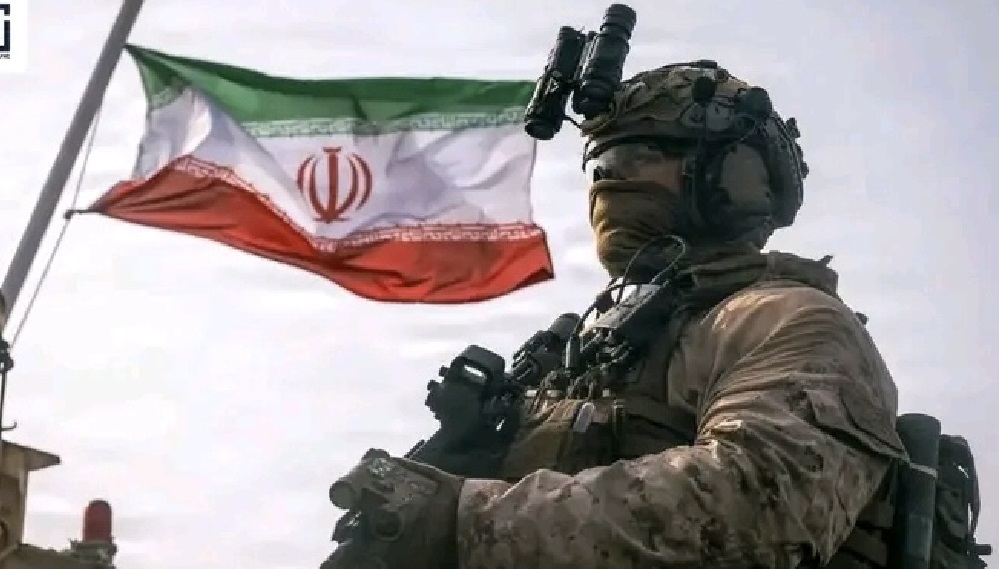
Iran on Saturday gives conditions for the reopening of the Strait of Hormuz, including compensation for war damages, complicating a potential deal to open the waterway essential to the world economy.

Tehran has imposed an effective blockade of the strait since the United States and Israel struck Iran in late February, and wants to charge tolls for passage, attacking ships it accuses of attempting to circumvent its preferred route.

Continued attacks in the strait, which was free to transit before the war, led to the collapse of an April ceasefire. Mediators have since urged both sides to return to the terms of a June memorandum.

Advertisement

Iranian Foreign Minister Abbas Araghchi said discussions with Oman over transit and management of the strait were “approaching the final stages”, but added the reopening of Hormuz “is subject to other conditions and compensation for the violation” of the June agreement.

Security chief Mohammad Bagher Zolghadr on Saturday laid out a list of demands for reopening the strait, including an end to the “war and aggression against Iran and its allies in Lebanon, Palestine, Yemen, and Iraq”.

He also demanded the lifting of a parallel US naval blockade of Iran, the end of sanctions, the release of frozen assets and compensation for wartime damage, according to remarks reported by Tasnim news agency.

Iran’s Revolutionary Guards, meanwhile, said Hormuz’s reopening had “nothing to do with the negotiations between Iran and Oman”, adding that the “enemy is forced to accept Iran’s conditions for the opening of the strait”.

Advertisement

The comments came as transit through Hormuz has dropped significantly, with Iran targeting ships it accuses of skirting its preferred route through Iranian waters.

The United Arab Emirates’ foreign ministry on Saturday condemned what it called a “hostile Iranian attack that targeted a tanker belonging to ADNOC (Abu Dhabi National Oil Company) with a missile while it was transiting the Strait of Hormuz, without causing casualties”.

Later on Saturday, the United Kingdom Maritime Trade Operations (UKMTO) said a ship was hit by a projectile off Oman in the Strait of Hormuz, causing a fire that was extinguished but no casualties. It was unclear whether they were referring to the same ship.

On Friday, ADNOC had put out a statement saying that since the start of the war, 15 of its vessels had been attacked in Hormuz, “including three vessels this week alone”.

Advertisement

Oman’s foreign ministry on Saturday condemned “repeated attacks on vessels transiting the Strait of Hormuz”, without naming Iran.

It also said that “ongoing negotiations regarding navigation arrangements in the Strait of Hormuz are proceeding in a positive and constructive atmosphere”, and urged against any actions that might jeopardise the progress.

The previous Iran-US deal — meant to serve as a jumping-off point for negotiations on a permanent settlement — had said Iran and Oman would hash out future arrangements for the strait in discussion with other Gulf countries and “in line with the applicable international law”.

International law generally forbids tolling in such waterways.

Advertisement

Security agreement

Turkey’s foreign minister said Saturday he expected Egypt to join a joint defence agreement between Turkey, Saudi Arabia and Pakistan designed to stabilize the region, calling the country a “natural partner on all issues”.

“I believe that at the next stage Egypt will also be among us in the alliance. We already act toward one another as if we were alliance members,” Foreign Minister Hakan Fidan said in an interview.

A drone struck US assets at an Egyptian port on the Mediterranean last month, marking the first drone attack on Egyptian territory since the outbreak of the Iran war.

Advertisement

Fidan said the agreement does not target a specific country.

“There is no common threat that we have put in writing,” he said, according to the news agency.

Pakistan’s foreign ministry said Friday the pact meant an attack on any member would be regarded as an attack on all, adding it was “intended to strengthen collective deterrence”.


Advertisement

AFP

Continue Reading

Foreign

Spain imposes border checks on Italy over migrant dispute

Published

on

By

ADVERTISEMENT
Zoom Ad
ADVERTISEMENT
Zoom Ad

Spain on Saturday started border checks on travellers arriving from Italy, responding to similar measures Rome imposed following an unprecedented migrant rush into the Spanish north African enclave of Ceuta.

“I don’t see a lot of the word ‘diplomacy’ used in these decisions, not by the Italian government, nor by the Spanish government,” said one 36-year-old Italian tourist, Maria Celeste Grillo, who had just flown into Madrid.

She said she had not seen any added checks as she stepped off the plane, but found their implementation “sad”.

Spain announced Friday it would proceed with the heightened controls, citing “persistent irregular migration pressure” facing Italy — deepening a row between the EU partners and NATO allies.

Advertisement

Spain’s left-wing government has complained that Italy’s hard-right government on July 31 unfairly imposed one month of border checks on travellers from Spain — suspending the EU’s Schengen Area visa-free travel arrangements — because of the Ceuta influx.

More than 70,000 migrants had crossed from Morocco into the Ceuta enclave on July 30 and 31, though almost all of them subsequently returned to Morocco within 48 hours.

The inflow alarmed European nations, especially right-wing ones urging tougher rules on irregular migrants. However, rules for Ceuta mean migrants cannot travel onward to continental Europe without passing another layer of border checks.

Spain’s interior ministry said the new checks on incoming travellers from Italy would apply until September 7.

Advertisement

AFP

Continue Reading

Foreign

Court Halts Trump’s White House Ballroom Project, President Kicks

Published

on

By

ADVERTISEMENT
Zoom Ad
ADVERTISEMENT
Zoom Ad

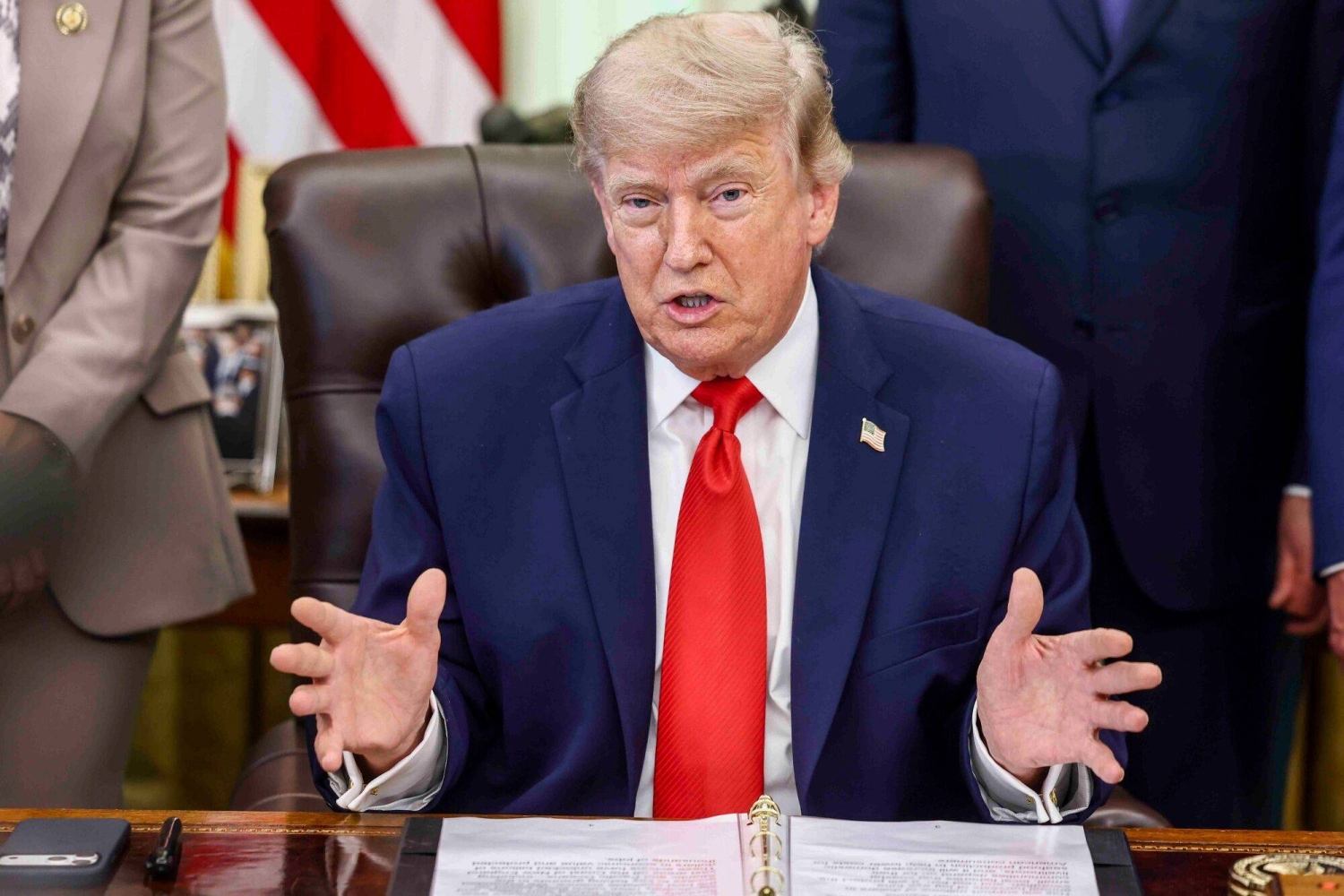
An appeals court on Friday upheld an order halting work on Donald Trump’s proposed White House ballroom, enraging the US leader and setting up another Supreme Court battle over the limits of presidential authority.

The US Court of Appeals for the DC Circuit, which had allowed construction to continue while it considered the case, agreed with a lower court that such a massive White House overhaul required the explicit consent of Congress.

It stayed its own decision for two weeks to give Trump time to ask the Supreme Court to intervene.

The Republican president lashed out after the 2-1 ruling, calling it “horrendous, politically motivated, and unlawful”.

Advertisement

The two majority judges were appointed by Democratic presidents, while the dissenting judge was nominated by Trump himself.

The President vowed in a lengthy social media post to immediately appeal to the Supreme Court.

“This decision, made after much of the work has been done and paid for, is a National Security Threat at the highest level. It is also a National Disgrace,” Trump said in another post on his Truth Social platform on Friday night.

Trump initially touted the construction of the ballroom as necessary to host galas but has since repeatedly pointed to the concurrent addition of an underground military bunker and other security features.

Advertisement

Under the district judge’s initial order, work was to be allowed to continue only on a limited set of structures, including those that were underground.

“This holding has nothing at all to do with whether the proposed ballroom is desirable or not as a matter of policy. This ruling does not even necessarily mean that the Defendants may not ultimately construct the ballroom,” the majority wrote on Friday.

“What it does mean is that the Defendants may not do so during the district court’s expeditious litigation without securing Congress’s authorisation, as the Constitution and laws require.”

Trump, who has repeatedly complained that the White House lacks sufficient space for grand galas such as state dinners, unilaterally ordered construction of the massive ballroom.

Advertisement

Work on the project began last year with the sudden demolition of the White House’s entire historic East Wing.

Since then, photographs have shown significant work on a basement complex, with some concrete walls rising above ground level.

Trump has insisted that the ballroom will be privately financed, but media reports in June showed that significant taxpayer funds were going towards the project, which could cost as much as $600 million.

While the White House initially cited a $200 million price tag for the project, it quickly doubled the estimate to $400 million.

Advertisement

The ballroom is just one of Trump’s pet projects aimed at leaving his mark on Washington by the time he leaves office in 2029, along with a renovation of the Lincoln Memorial Reflecting Pool and other parks, as well as the construction of a gigantic arch.

Several of the projects have similarly faced legal challenges, but the ballroom project would be the first to reach the Supreme Court.

Continue Reading

Trending

Copyright © 2024 Naija Blitz News