
Foreign
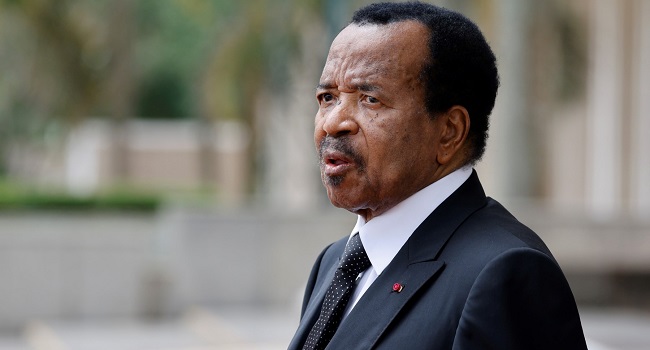
Biya’s Long Absence Raises Fresh Questions In Cameroon

- /home/naijuinz/public_html/wp-content/plugins/mvp-social-buttons/mvp-social-buttons.php on line 27
https://naijablitznews.com/wp-content/uploads/2025/07/Cameroon-President-Paul-Biya.jpg&description=Biya’s Long Absence Raises Fresh Questions In Cameroon', 'pinterestShare', 'width=750,height=350'); return false;" title="Pin This Post">
- Share
- Tweet /home/naijuinz/public_html/wp-content/plugins/mvp-social-buttons/mvp-social-buttons.php on line 72
https://naijablitznews.com/wp-content/uploads/2025/07/Cameroon-President-Paul-Biya.jpg&description=Biya’s Long Absence Raises Fresh Questions In Cameroon', 'pinterestShare', 'width=750,height=350'); return false;" title="Pin This Post">


Cameroon is facing renewed political debate as President Paul Biya remains outside the country for 48 days, raising concerns among opposition leaders and many citizens over delays in government decisions and the country’s leadership.
Biya, 93, who has ruled Cameroon for more than four decades and is the world’s oldest serving head of state, left the country on June 7 for what officials described as a brief private visit to Europe with his wife, Chantal Biya.
Since then, he has remained in Switzerland, where he has frequently travelled over the years.
His prolonged stay has again led to rumours about his health. Earlier reports claimed he had been admitted to a clinic in Geneva, but Cameroon’s Communication Minister, Rene Emmanuel Sadi, denied the reports on June 18, insisting that the president had not been hospitalised.
Despite the government’s assurance, opposition parties say Biya’s continued absence has left the country without active leadership.
Mamadou Mota, vice-president of the Cameroon Renaissance Movement (MRC), said the situation reflects a clear gap in the country’s institutions.
The leader of the Cameroon Democratic Union (UDC), Patricia Tomaino Ndam Njoya, also called on the government to create a clear legal process for determining when a president is temporarily or permanently unable to carry out official duties.
The ruling party has rejected claims that the country lacks leadership. Higher Education Minister Jacques Fame Ndongo said President Biya remains fully involved in government work and continues to receive and review official documents wherever he is staying.
This is not the first time Biya’s absence has attracted public attention. In late 2024, he also spent about 50 days outside Cameroon, leading to similar concerns.
The opposition Social Democratic Front (SDF) described the country as operating without active direction, saying government activities appear to be continuing without proper leadership.
Many Cameroonians have also expressed frustration over the slow pace of government decisions. Viviane Ondoua Biwole, a public management professor at the University of Yaounde, said many people are tired of waiting for changes. She noted that the current government has remained in office for eight years, while many citizens expected a cabinet reshuffle after the last election.
Biya secured an eighth presidential term in the October election, but the result sparked protests across the country. Security forces moved against demonstrators, and the government later confirmed that several dozen people died during the unrest, although it did not release a full casualty figure. Opposition parties rejected the election outcome, while several Western embassies reacted with caution.
In his New Year’s address on December 31, Biya promised to appoint a new government in the coming days. More than seven months later, no new cabinet has been announced.
At the same time, municipal and parliamentary elections have been postponed several times, allowing current office holders to remain in their positions beyond their expected terms.
Although Cameroon has introduced some constitutional and institutional changes, including replacing the heads of both chambers of parliament in March and creating the office of vice-president through constitutional reforms in May, no one has yet been appointed to fill the new position.
The uncertainty has also encouraged the spread of false information. In June, fake documents made to resemble an official presidential decree were sent to a state-owned radio station in the capital, claiming that a vice-president had been appointed. Journalists verified that the documents were not genuine and refused to broadcast the claim.
As questions continue over who could eventually succeed Biya, political observers say there are reports of disagreements among people close to the president.
According to political analyst Stephane Akoa, different groups within Biya’s inner circle are competing for influence, while First Lady Chantal Biya is becoming more involved in government matters and is increasingly mentioned in discussions about appointments and key decisions.
Under Cameroon’s constitution, if the presidency becomes vacant and no vice-president has been appointed, Senate President Aboubakary Abdoulaye would take over temporarily until a new presidential election is held.

Iran on Saturday fired back at US President Donald Trump’s claim that he would soon declare the Strait of Hormuz part of US territory, saying the crucial energy waterway it has blockaded “will remain Iranian”.
Trump has repeatedly insisted that the strait, which Tehran effectively closed at the start of the Middle East war in late February, is under US control despite traffic remaining throttled.
“The Strait of Hormuz has been Iranian, is Iranian, and will remain Iranian,” Iranian Deputy Foreign Minister Kazem Gharibabadi said on X.
“This strait will only be closed and opened under Iran’s command.”
Trump told a political rally in New York state on Friday that after the US defeats Iran, “pretty soon I’ll be declaring the Hormuz Strait a territory of the United States”.
“It’s true,” he added.
An unnamed White House official later clarified that Trump was joking, the Wall Street Journal reported.
Last week, a top Iranian official set out a list of conditions for reopening the strait, including an end to the “war and aggression against Iran and its allies in Lebanon, Palestine, Yemen, and Iraq”.
Mohammad Bagher Zolghadr also demanded the end of crippling sanctions, the release of frozen assets and compensation for wartime damage.
– Ongoing attacks –
As diplomacy stalls between the longtime foes, attacks in the Hormuz strait have continued, highlighting the continued risks to regional shipping.
The United Arab Emirates’ state-owned oil giant ADNOC said on Saturday that one of its vessels came under attack the night before.
Abu Dhabi’s foreign ministry later blamed Tehran, and said that Iran’s Revolutionary Guards were engaged in “acts of piracy” in the strait.
On Friday the Gulf nation blamed Iran for other attacks on two vessels linked to ADNOC as they passed through the waterway.
Such attacks led to the collapse of an April ceasefire between the United States and Iran.
As Iran chokes traffic in Hormuz, its Houthi allies in Yemen have also declared a parallel maritime blockade on Saudi ports in the Red Sea, the oil-exporting giant’s only other maritime route.
A June deal between Washington and Tehran — meant to serve as a jumping-off point for negotiations on a permanent settlement — had said Iran and Oman would hash out future arrangements for the Hormuz in discussion with other Gulf countries and “in line with the applicable international law”.
Before the war, the strait carried around a fifth of the world’s oil and LNG exports, and prices have repeatedly surged since the dispute over the waterway erupted, piling economic and political pressure on Washington.
Iran wants to control the strait and charge tolls, powers it did not exercise before the war and ones that the US fiercely opposes.
The closure of Hormuz has driven up prices for US voters, creating a political headache for Trump as November’s midterm elections near.
US Vice President JD Vance said this week that Washington’s top priority in the Iran war was keeping energy prices low for Americans, while preventing Tehran from acquiring a nuclear weapon ranked second.
Tehran signalled last week that it had agreed with Oman on a route for ships to transit the strait and were finalising arrangements to jointly manage the waterway.
The US has imposed its own retaliatory blockade of Iranian ports in an attempt to cripple its economy.
“We have the blockade. No ships get through unless we want them to,” Trump said to a cheering crowd of supporters on Friday.
AFP

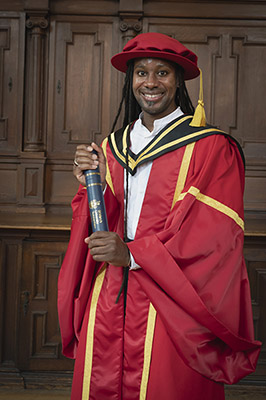
Who Was Jason Arday, the sociologist whose remarkable rise through academia made him one of Britain’s most prominent Black scholars, has died at the age of 41.
Arday was found unresponsive at an address in Battersea, south London, on Friday afternoon. Police said his death was unexpected but is not currently being treated as suspicious. His cause of death has not been made public, with a report expected to be prepared for the coroner.
His death came days after he was fired from Cambridge University and Jesus College raising dust that something must be amiss.
But before the controversy, Arday had built a career around an extraordinary personal and academic journey.
Despite those early challenges, he went on to pursue higher education, earn a doctorate and establish himself as a sociologist whose work focused on race, inequality, social mobility and education.
Arday’s family said in a statement that they were “in shock to have lost this amazing father, partner, brother, uncle and son”.
They added: “The campaign of misinformation was too much for Jason, who was a gentle man and who always wanted to see the best in everyone.”
Earlier on Friday, police officers were called to an address in Battersea by the London Ambulance Service.
In a statement, the Metropolitan Police said: “At this time his death is being treated as unexpected, but is not believed to be suspicious.”
Cambridge University vice-chancellor Prof Deborah Prentice said: “We are desperately saddened to hear this tragic news.”
“Our heartfelt sympathies go to Jason Arday’s family and friends at this incredibly difficult time,” she said.
Education Secretary Lucy Powell said she was “deeply shocked and saddened” to hear about the death and she urged people to “remember there are real people with loved ones involved”.
Arday, 41, had denied any plagiarism – but admitted errors in his work – and last week said the recent controversy about his work had led to “an unrelenting level of public scrutiny and personal attack”.
The row first erupted after another academic – self-defined “race realist” Nathan Cofnas, who was sacked from his Cambridge role in 2024 – said he found numerous instances of plagiarism in the professor’s work.
Arday said some errors in his early academic work arose because of his autism, as he relied on using mimicry to make sense of information.
Similar scrutiny would find similar errors in work by other academics, he said.

The United States government announced that it has completed 15 consecutive months without releasing any undocumented immigrants into the country, citing over 3 million deportations alongside a series of tightened visa and citizenship regulations.
According to an official fact sheet released by the Department of State, the measures form part of a broader framework aimed at prioritizing American citizens and overhauling federal immigration enforcement following record-breaking border crossings under the previous administration:
“President Trump has delivered on his promise to fix the immigration system, prioritize American citizens, and protect U.S. citizenship. The border is sealed. The results are undeniable.”
Official figures indicate that more than 3 million foreign nationals have been deported, including thousands of individuals convicted of violent offenses. Alongside border enforcement, federal authorities launched an unprecedented denaturalization campaign targeting individuals accused of obtaining citizenship through fraudulent means, with legal claims already filed against 88 individuals.
The policy shift also extends to social welfare, election integrity, and international travel. Federal agencies terminated public assistance benefits for over 1.4 million ineligible individuals, barred non-citizens from more than a dozen taxpayer-funded healthcare programs, and paused visa processing for 75 high-risk nations.
Furthermore, the administration initiated measures to remove tens of thousands of non-citizens from state voter rolls while introducing a revised naturalization exam designed to evaluate applicants’ understanding of American history and government institutions.
Highlighting the continuation of strict enforcement measures initiated via executive order early in the presidential term, officials underscored the operational shift:
“For 15 straight months, no illegal aliens have been released into the country.”
The broader policy push carries significant international implications, particularly in nations with high visa volumes. The U.S. Mission has issued repeated advisories urging visa applicants and holders to adhere strictly to immigration rules, warning that violations, including overstays, fraudulent claims, or criminal conduct—will result in immediate visa revocation and deportation.
With immigration remaining a central focal point ahead of the 2026 midterm elections, the administration continues to position its hardline enforcement strategy as a necessary restoration of national security, legal order, and fiscal discipline

Rainbow Coalition Moves to End Rivers Political Rift, Assures Members of No Victimisation

Arsenal Send Strong Premier League Warning, Flog Man City 3-0 to Win Community Shield

FCT: Tinubu’s Govt Signs 26,272 Certificates of Occupancy To Aid Businesses, 17,575 More Than Those Signed in 13 Years




-
 News19 hours ago
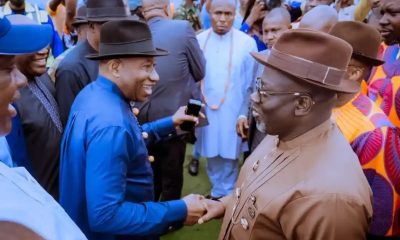
Jonathan, Oborevwori, Diri, Ibori Mourn 104-Year-Old Prince Penawou
-

 News20 hours ago
Ferran Torres Joins PSG From Barcelona
-
 News19 hours ago
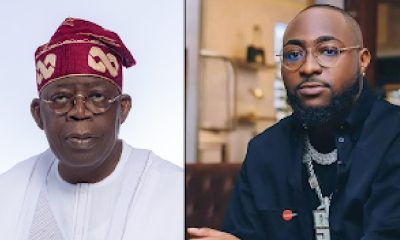
“U No Try President Bola Tinubu’ – Davido Accuses Tinubu Of Planning To Withdraw Police, Military From Osun
-
 News20 hours ago
Adeleke Maintains Lead As Collation Of Osun Governorship Results Continues
-
News19 hours ago
Adeleke coasting to victory with 439,132 votes as Oyebanji trails behind
-

 News19 hours ago
Real reasons I left Christianity for Ifa – Ex-pastor
-
 News20 hours ago
INEC Plans To Declare Osun Election Inconclusive— Adeleke Camp
-
 News16 hours ago
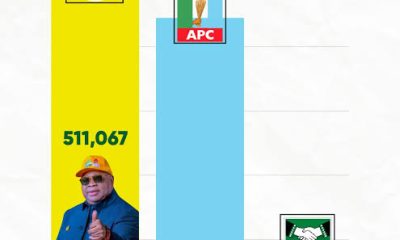
BREAKING: Adeleke dismantles APC with 511,067 votes