Connect with us

Sports

W’Cup: Messi in tears, hails Spain as better after losing back-to-back dream

Published

on

ADVERTISEMENT
Zoom Ad
ADVERTISEMENT
Zoom Ad

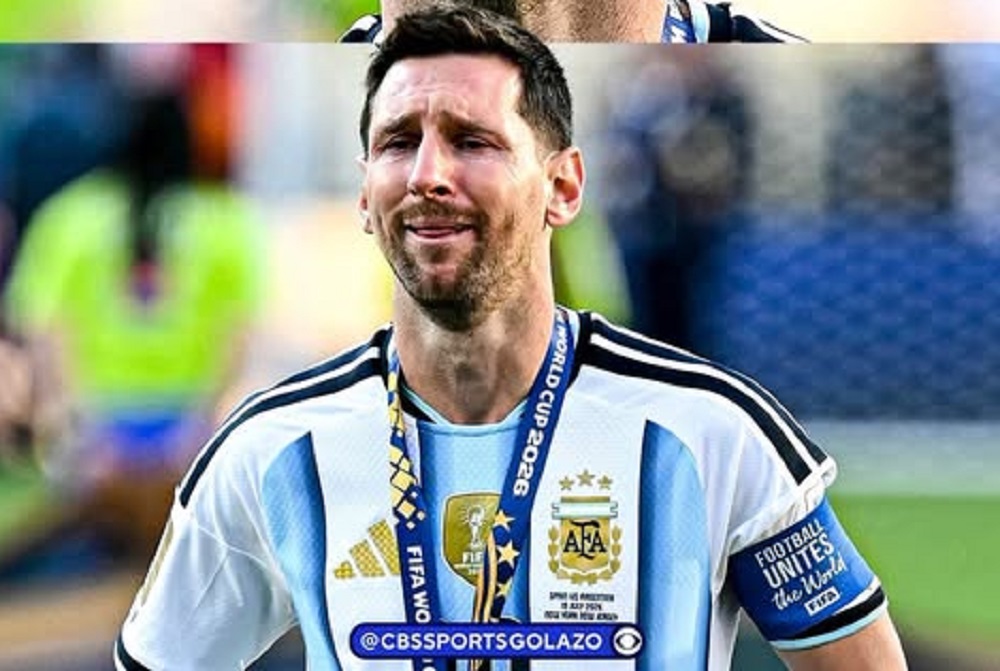
Even with his magical performance through which he pulled Argentina at of the deeps in virtually all their encounters, Lionel Messi, appeared inconsolable with his inability to create the most enduring piece of history he apparently desired – winning the World Cup – back-to-back.


For this, he went to the podium soaked in his own tears to receive his medal as the defending champions fell to Spain in the just ended football tournament, which ended this Sunday, at MetLife Stadium, New Jersey, the United States.

Failing to reach the first back-to-back men’s World Cup winner since Brazil in 1962, no thanks to Ferran Torres, who scored 37 seconds into the second extra-time period, to seal the spectacular performance of the La Furia Roja (The Red Fury) with a 1-0 victory and handed them their second World Cup title, the Argentine prodigy, was all full of praises for the champions.

Fighting back tears, the 39-year-old Argentine captain said of the La Furia Roja who posted a 20-1 advantage in shots, and 845-433, showing total dominance: “I feel sad, but I am aware that we played our hearts out.

Advertisement

“They were better, to be honest. We lost the game, and we accept that. That doesn’t mean that we will forget everything we’ve done so far, so I’d like to thank my people, my players and the country.”

Even with a year short of 40, by which time virtually all footballers would have retired from the game, Messi’s performance in the three-nation, 2026 World Cup, leaves many believing that he could even show up at the next edition in 2030 to be jointly hosted by Morocco, Portugal, and Spain. opening matches holding in Argentina, Paraguay, and Uruguay, mark the centenary of the tournament.
Continue Reading
Advertisement

Sports

Rodri wins Golden Ball as Spain dominate World Cup awards

Published

on

By

ADVERTISEMENT
Zoom Ad
ADVERTISEMENT
Zoom Ad

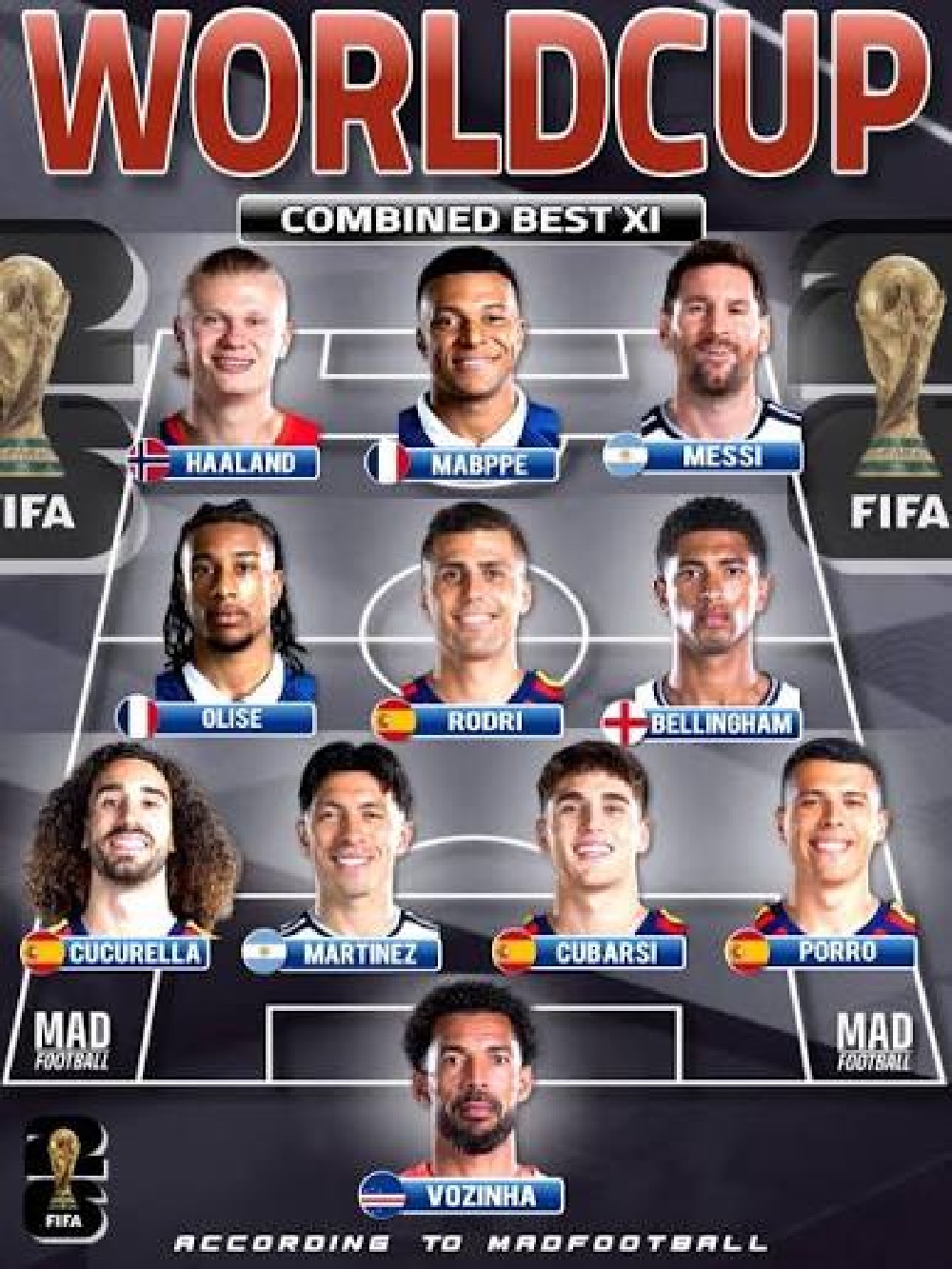
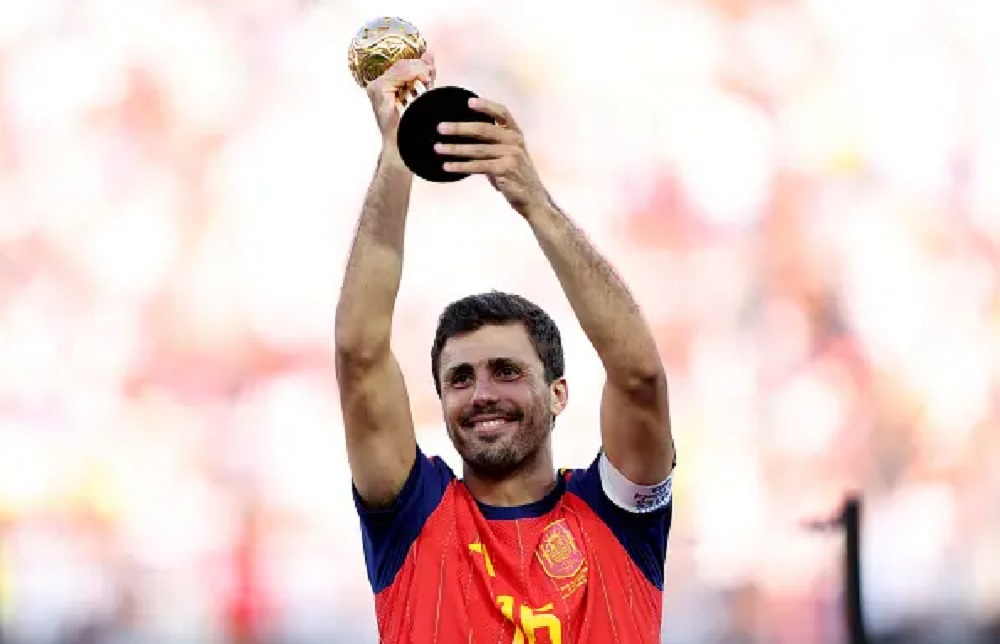
Spain midfielder Rodri was crowned the Player of the Tournament after inspiring his country to the 2026 FIFA World Cup title, capping a remarkable campaign with another prestigious individual honour.

The Manchester City star received the Golden Ball following Spain’s 1-0 extra-time victory over Argentina in the World Cup final, where Ferran Torres scored the decisive goal to hand La Roja their second world title.

Rodri, widely regarded as the heartbeat of the Spanish team, controlled matches throughout the tournament with his composure, vision and leadership, playing a pivotal role in Spain’s unbeaten run to the trophy.

The award adds to an already glittering career for the 30-year-old, who has won the Ballon d’Or, the UEFA Champions League, four Premier League titles, the European Championship and now the FIFA World Cup, further cementing his place among the finest midfielders of his generation.

Advertisement

Spain also swept two other major individual awards at the tournament.

Goalkeeper Unai Simón claimed the Golden Glove after an outstanding campaign between the posts. The Athletic Bilbao shot-stopper kept seven clean sheets and conceded just one goal throughout the tournament, producing a series of crucial saves that underpinned Spain’s march to the title.

Meanwhile, 19-year-old Pau Cubarsí was named the Young Player of the Tournament following a series of composed and commanding performances in defence. The Barcelona centre-back emerged as one of the breakout stars of the competition, earning widespread praise for his maturity, confidence and consistency despite his age.

Spain’s clean sweep of the tournament’s top individual honours underlined the country’s dominance at the 2026 World Cup, where Luis de la Fuente’s side combined defensive solidity with attacking quality to reclaim football’s biggest prize.

Advertisement

The triumph marked Spain’s second FIFA World Cup title, 16 years after their historic success in South Africa in 2010, while Rodri’s Golden Ball served as fitting recognition of a tournament in which he was the driving force behind the new world champions.

Continue Reading

Sports

2026 FIFA World Cup: What To Know About The Prize Money For Winner

Published

on

By

ADVERTISEMENT
Zoom Ad
ADVERTISEMENT
Zoom Ad

The 2026 FIFA World Cup will offer the biggest prize money in the tournament’s history, with the champions set to receive $50 million.

The winners of Sunday’s FIFA World Cup final (July 19) between Spain and Argentina will receive $50 million, while the runners-up will earn $33 million (KSh4.27 billion).

The winner of Saturday’s third-place playoff between France and England will take home $29 million, with the fourth-placed team receiving $27 million (KSh3.49 billion).

Below are the full details;

Advertisement

The winner of the World Cup will get a trophy, receive championship rings for the first time, and gain a lifetime of glory in what will be a defining moment in the country’s sports history.

FIFA expanded the payout for the 2026 World Cup, setting a record with a combined $871 million paid to the 48 participating teams.

That tally includes more than $100 million that was added in April after some federations in Europe lobbied for help to cover costs at a tournament across three countries that has required extensive travel and lodging costs.

The $51 million for either Argentina or Spain is a large sum, but it also pales in comparison to the fortunes that are spent on global soccer.

Advertisement

It’s also smaller than what last year’s Club World Cup winner earned in a tournament also played in the U.S.

For perspective, the $51 million for the winner is less than the transfer fee paid Tuesday by English club Brighton for a 19-year-old defender who spent most of the World Cup on the bench, Croatia’s Luka Vušković.

All teams get paid

FIFA pays money to the 48 national federations in two categories: Prize money bonuses based on how far each team advances in the tournament and across-the-board payments to cover training and preparation costs.

Advertisement

All 48 get at least $12.5 million for competing in the World Cup, including $10 million in prize money for qualifying and playing in the group stage. Each receives $2.5 million for pre-tournament training and expenses.

That upfront money was agreed at past World Cups to help avoid pre-tournament tensions when it wasn’t uncommon for players to claim that bonuses had not been paid by their federation.

The prize money goes up depending on how far the teams advance.

Higher amounts come after federation demands
Some federations, especially from Europe, had told FIFA that the prize money structure and payments for preparation costs set last year would leave them losing money on the tournament unless their teams went deep into the knockout rounds.

Advertisement

World Cup champion gets the big bucks
The eventual champion receives $51 million, compared to $42 million for Argentina’s federation for winning the 2022 tournament in Qatar. That 32-team edition had a total prize fund of $440 million.

Here is what the others are getting:

Runner-up: $34 million
Third place (England): $30 million
Fourth place (France): $28 million
Quarterfinalists (fifth to eighth): $20 million each
Round of 16 (ninth to 16th): $16 million each
Round of 32 (17th to 32nd): $12 million each
Group stage (33rd to 48th): $10 million each

Flights and hotels are covered
In addition to the payout sums and under World Cup regulations, FIFA is already obliged to pay for business‑class return flights for each federation to travel to the tournament plus board and lodging for a 50-person delegation, which includes the players.

Advertisement

The hotel payments start five nights before a team’s first game and one night after it is eliminated.

FIFA also covers the cost of domestic travel for up to 50 delegation members, and “a dedicated fleet of vehicles, including an equipment truck.”

The soccer federations of World Cup teams must pay for “adequate insurance … including but not limited to injury, accident, disease and travel,” plus “incidental hotel costs” and housing additional members of a delegation.

The World Cup trophy
On Sunday, the champions will celebrate with it after the final whistle during an award ceremony.

Advertisement

The original trophy is not awarded permanently. Instead, the winners will receive a gold-plated replica, which they can keep.

As for World Cup prize money, that’s paid by FIFA to the federations — not the players. It’s up to each federation’s rules how they handle the money.

For example: U.S. soccer will get to keep 20% of the prize money. The remaining 80% that the U.S. men’s national soccer team receives will be split evenly between the men’s and women’s national teams following a 2022 milestone agreement to pay its men’s and women’s teams equally, making the American national governing body the first in the sport to promise both sexes matching money.

Medals and World Cup Rings
Beyond the cash rewards, the World Cup winners will also receive gold medals.

Advertisement

All 26 players in the winning squad, together with the coaching staff, will each receive a gold medal. The runners-up will be awarded silver medals, while the third-placed team will receive bronze medals.

The tradition of awarding medals has evolved over the years. Before the 1978 World Cup, only the 11 players who featured in the final received medals.

In 2007, FIFA retrospectively awarded 122 medals to squad members from World Cup-winning teams between 1930 and 1974 who had missed out because they did not play in the final.

Match officials selected to officiate the World Cup final will also receive commemorative medals.

Advertisement

Following the final, FIFA will present its individual awards, including the Golden Ball for the tournament’s best player, the Golden Glove for the best goalkeeper and the Golden Boot for the tournament’s top scorer.

For the first time, FIFA will also present World Cup championship rings to the winners.

30 rings will be awarded to the champions, while another 1,996 commemorative rings featuring a miniature World Cup trophy and engraved band will be made available to fans.

Advertisement
Continue Reading

Sports

BREAKING: Ferran Torres Fires Spain To World Cup Title, Spoils Messi Fairytale

Published

on

ADVERTISEMENT
Zoom Ad
ADVERTISEMENT
Zoom Ad

Spain’s forward #07 Ferran Torres celebrates scoring his team’s first goal during the 2026 World Cup football tournament final match between Spain and Argentina at the New York/New Jersey Stadium in East Rutherford on July 19, 2026.

Spain’s forward #07 Ferran Torres celebrates scoring his team’s first goal during the 2026 World Cup football tournament final match between Spain and Argentina at the New York/New Jersey Stadium in East Rutherford on July 19, 2026.

Ferran Torres scored an extra-time winner as Spain defeated holders Argentina 1-0 to win the World Cup on Sunday and shatter Lionel Messi’s dreams of a triumphant farewell to football’s greatest stage.
Barcelona striker Torres lashed home a thumping finish in the 106th minute to reward a dominant display by Spain against an Argentina team who failed to register a single shot on target in 120 minutes.

A star-studded crowd of 80,663 that included US President Donald Trump packed East Rutherford’s MetLife Stadium to see if Argentina captain Messi could crown his glittering career with a second World Cup victory.
But the 39-year-old maestro — almost certainly playing in his final World Cup game — was reduced to irrelevance as Spain took control early on against an Argentina team who committed a catalogue of cynical fouls throughout.
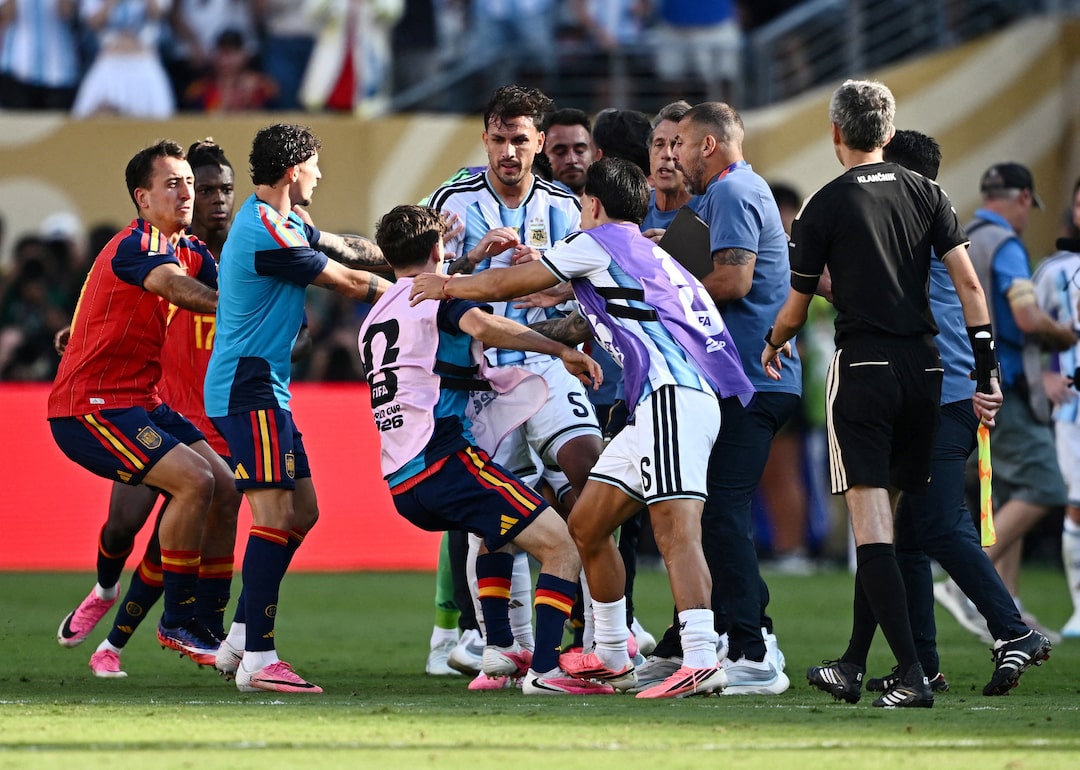
The South Americans’ skullduggery ended with midfielder Enzo Fernandez being sent off after a brutal challenge on Spain defender Pau Cubarsi in injury time.
For long periods though it looked as if Argentina may somehow hold on for a penalty shoot-out as Spain struggled to make the breakthrough.

Advertisement

But after Nico Williams had a goal controversially disallowed in extra-time, Spain struck.
A lofted cross to the back post by Pedro Porro found Williams who nodded into the path of Torres to crash home the goal that would clinch Spain’s second World Cup title after their maiden 2010 triumph.
Earlier, a clear sign of Argentina’s frustration came in the 15th minute when Alexis Mac Allister went flying in with a studs-up challenge that struck Dani Olmo’s ankle.
Mac Allister escaped an early yellow card although after Slovenian referee Slavko Vincic only awarded a foul.

Spain made their presence felt moments later though, with Alex Baena poleaxing Messi with an elbow to the back that again escaped sanction.
Argentina continued to test referee Vincic’s patience with a series of niggly challenges, and Nicolas Tagliafico was lucky not to be cautioned after raking Lamine Yamal’s calf in a clumsy challenge.
Lopsided half
Spain meanwhile continued to probe for openings but Mikel Oyarzabal failed to seriously test Emi Martinez with a low shot that the Argentina goalkeeper gathered easily in the 39th minute.
Eventually though Vincic did reach for a yellow card, with Lisandro Martinez booked for a cynical challenge on Oyarzabal.

Martinez was substituted shortly afterwards with an apparent injury, veteran Nicolas Otamendi coming on in his place.
The final’s controversial extended half-time show featuring the likes of Madonna, Shakira and Justin Bieber stretched to 27 minutes but did little to upset Spain’s rhythm.
The Spanish piled on the pressure in a lopsided second half as Argentina hung on grimly.
Spain coach de la Fuente sent on Pedri and Ferran Torres for Fabian Ruiz and Oyarzabal and the chances continued with Argentina in full siege mode.
Yamal twisted away and chipped a cross for Torres, whose downward header was saved by Martinez.
Pedri and Cubarsi both lashed long-range shots that Martinez failed to grasp at the first attempt but somehow Argentina continued to hold on.
But the arrival of substitutes Williams and Mikel Merino gave fresh life to Spain’s attacking momentum, and the onslaught continued.
Fernandez was booked for dissent in the 82nd minute before Torres and Rodri both fired long-range shots from Martinez.
Fernandez’s dismissal left Spain down to 10 men heading into extra-time.
Martinez had one last save deep in stoppage time when Yamal’s superb whipped free-kick was clawed wide.
The Spanish dominance continued in extra-time, with Williams almost opening the scoring with a glancing header that Martinez got down well to save one-handed.
Moments later it looked as if Spain had made the breakthrough when Williams slid a low finish into the net but referee Vincic blew for a marginal foul on Nicolas Otamendi.
But the breakthrough came with Torres’s winner on 106 minutes. Argentina made a desperate last raid on Spain’s goal but La Roja held firm to seal victory.
AFP

Advertisement
Continue Reading

Trending

Copyright © 2024 Naija Blitz News