
News
Rotary Steps Up Hepatitis Fight as Abuja Clubs Deliver Lifesaving Health Outreach+PHOTOS

- /home/naijuinz/public_html/wp-content/plugins/mvp-social-buttons/mvp-social-buttons.php on line 27
https://naijablitznews.com/wp-content/uploads/2026/07/20260728_105240.jpg&description=Rotary Steps Up Hepatitis Fight as Abuja Clubs Deliver Lifesaving Health Outreach+PHOTOS', 'pinterestShare', 'width=750,height=350'); return false;" title="Pin This Post">
- Share
- Tweet /home/naijuinz/public_html/wp-content/plugins/mvp-social-buttons/mvp-social-buttons.php on line 72
https://naijablitznews.com/wp-content/uploads/2026/07/20260728_105240.jpg&description=Rotary Steps Up Hepatitis Fight as Abuja Clubs Deliver Lifesaving Health Outreach+PHOTOS', 'pinterestShare', 'width=750,height=350'); return false;" title="Pin This Post">


By Gloria Ikibah
As the world marks the 2026, World Hepatitis Day on July 28, Rotary leaders have called for stronger public awareness, wider access to testing and affordable vaccination against hepatitis, warning that the disease continues to pose a major public health threat despite receiving far less attention than other infectious diseases.
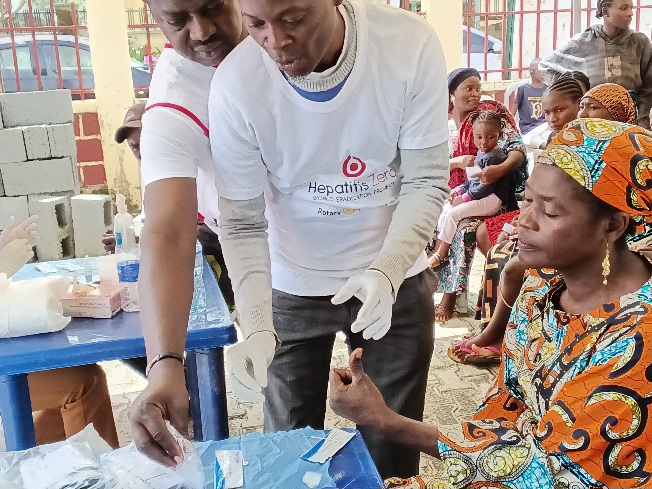
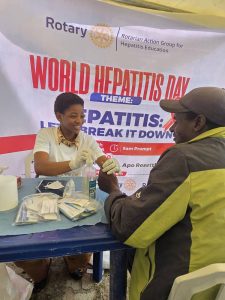
The call was made on Tuesday during a joint Maternal and Child Health and Hepatitis intervention organised by the Rotary Club of Abuja Apo Resettlement and the Rotary Club of Abuja Metro at the Apo Resettlement Primary Health Care Centre in Abuja to mark World Hepatitis Day.
The outreach combined free hepatitis screening and vaccination with maternal and child healthcare services, including the distribution of birth kits to pregnant women and nursing mothers.
Director of Community Service, Rotary Club of Abuja Metro, Rotarian Hauwa Abbas, said the collaboration was designed to expand Rotary’s impact by working alongside its partner club within its adopted community.
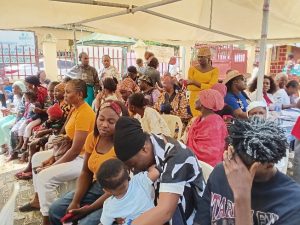
According to her, the project focused on healthcare education and hepatitis interventions, with this year’s World Hepatitis Day providing an opportunity to offer free counselling, testing and vaccination.
She said: “We are engaging in health projects, educational projects and environmental projects this year. Today is World Hepatitis Day. We are here to offer counselling, free testing and free vaccinations for those that seek medical intervention.
“We came to this community because it is the community of our adopted partners, the Rotary Club of Abuja Apo Resettlement. This is a partnership, so we decided to work together to enhance our intervention support.”
She disclosed that the project cost between N500,000 and N1 million, depending on the number of beneficiaries.
Highlighting the growing burden of hepatitis, Rotarian Abbas described the disease as an emerging public health concern that now deserves greater attention.
She urged government and development partners to invest more in awareness campaigns and make vaccination affordable for ordinary Nigerians.
“Hepatitis currently is really high in different communities.
“Of course, now it is more alarming than HIV because HIV has been there for a long time. A lot of awareness has been put into HIV through the government, through civil society, through NGOs and CBOs and other stakeholders. So now the focus should shift to hepatitis because there are lots of opportunistic diseases that can arise connected to hepatitis.
“First of all, we need to increase awareness. Awareness is really important because if there is no awareness, there will be no understanding of hepatitis.
“There are different types of hepatitis by the way. The second thing is to ensure that we get, whether it’s international sponsorship or corporate sponsorship, to ensure that the vaccination is subsidised.
“Two, three years ago, the vaccination, you could get it in government hospitals for N1,000 to N2,000.
“Now, to get vaccinated, one dose is between N5,000 to N8,000 in government hospitals. Remember, there are three doses. So you can imagine it’s capital intensive for families to be able to complete the doses.
“So what should we do? To ensure that we get partners and funders, whether it’s corporate organisations. Corporate organisations can tap into their CSR pockets to ensure that things are subsidised for community people”, Abbas explained.
President of the Rotary Club of Abuja Apo Resettlement, Rotarian Christian Njoku, disclosed that more than 100 residents had already turned out for hepatitis vaccination.
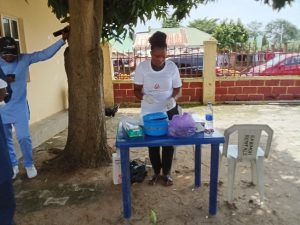
“Today we’re actually embarking on two projects.
“The first one is actually maternal and child health projects where we actually have 100 birthing kits we wanted to give to pregnant women and people that just delivered the baby.
“Then the second project is hepatitis. We’re actually giving out hepatitis vaccine for free. That’s the second project and they’re all ongoing.
“As it is now we are almost going above 100 and more people are still coming because we all know what hepatitis is.
“Hepatitis is actually a deadly disease that actually affects the liver and can actually take away someone’s life.
“Rotary decided to give us the vaccine for free and this vaccine is for three months, once in each month.
“So today, the next time we’ll be coming is by this time next month, August, then we’ll finish the remaining one by September”, he said.
Njoku explained that the vaccine provides long-term protection.
While acknowledging government efforts, he urged authorities to intensify awareness campaigns in rural communities.
“This vaccine lasts for 10 good years.
“Well, anyway, the government is actually trying their best and that is where Rotary also come in to help the government expand more, create more awareness.
“The government doesn’t have that time to go into the rural areas to create awareness and make sure that the people are taking this vaccine.
“So I only plead to the government, they should actually try as much as possible, see how they can go into the grassroots, go into the rural areas to create more awareness and to make sure there are enough facilities for hepatitis”, he stated.
Also speaking, Past Rotary International District Governor, Rotarian Ayoola Oyedokun described hepatitis as one of Africa’s silent killers, stressing that ignorance and poor testing remain major obstacles to controlling the disease.
“As we all know that hepatitis is one of the silent killers, which even kills faster than malaria in these sub-Saharan countries.
“And we have some that are prevalent in Africa, Nigeria, hepatitis B, hepatitis C and hepatitis D. And these are some of the silent killers, which is a liver infectious disease.
“And the major problem we have is that a lot of people are not being tested. And when you are not being tested, that means you do not know your status.
“And the moment we don’t know our status, we are not careful on how we know we prevent it from spreading to others”, he noted.
He explained that Rotary’s intervention centres on advocacy, screening and encouraging people to know their hepatitis status before complications develop.
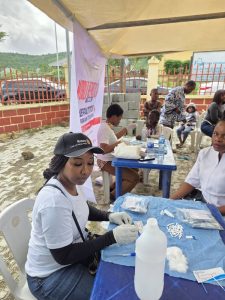
“So why Rotary has come in and why the Rotary Action Group has also come in is in the place of advocacy and in the place of testing. And let people be aware about the fact that this disease exists and anybody can be a carrier of this disease.
“And when we know our status, then we can prevent it from spreading either by taking the vaccines to prevent us from getting this disease.
“Or if we know our status and we are positive, then we now know how to get the cure. Although it doesn’t have a cure, but it has a system in which it can reduce the rate of it being a killer disease.
“Because you know your status, then you know how you keep on treating it in that direction. So that’s where Rotary comes in”, he said.
Oyedokun noted that hepatitis screening has now become a regular feature of Rotary medical outreaches, although funding constraints continue to limit the scale of interventions.
“Rotary has taken it, not only today that it’s Hepatitis Day, but every other medical outreach, medical interventions that we are doing, we always include Hepatitis B, C and D testing in every of our interventions.
“Funding is one of the major problems that we always have.
“In polio, Rotary has taken it as a flagship project and it’s been 100% funded by Rotary.
“But in case of all these things, we leave it to action groups, we leave it to the district, we leave it to clubs to take it as part of the project.
“And that’s why the action group is working with every district, every club to see how we can partner with them.
“Let’s support you with testing kits. You make your investments in the vaccines because it’s not enough just being tested.
“If we get, you know, like today now we have tested over 100 people, we don’t know how many of them will be positive.
“And definitely when you know that there’s a positive person, you need to refer them to the next health care centre so that they can commence the treatment process”, he added.
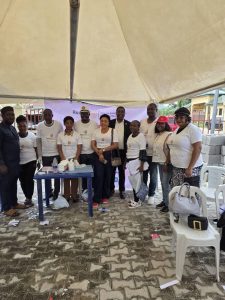
General Secretary of the Rotarian Action Group for Hepatitis Eradication, Rotarian Oye Oyewo, said this year’s World Hepatitis Day theme underscores the urgency of acting now.
“Today is World Hepatitis Day. And the theme for this year is Hepatitis Can’t Wait. So we too should not wait.
“That is why we are here in this community to make sure that we give our best and make sure that people are vaccinated, tested.
“If they are negative then they get vaccinated. And this is to make sure that we have a healthy community”, he said.
He described hepatitis as inflammation of the liver that often remains undetected until it is too late.
“Hepatitis is just inflammation of the liver. “And because it doesn’t have symptoms, that is why they call it silent killer.
“At any time that anybody have symptoms from Hepatitis, then it is too late”, he added.
Explaining the different forms of the disease, Oyewo said: “We have A, B, C, D, E.
“A, D, E are the ones that the body system can fight easily.
“But for B and C, B doesn’t have cure but it can be prevented.
“C has cure but has no vaccine.
“So that is why today we are screening people for B and C.”
He commended Rotary’s achievements in the fight against polio but called for similar commitment towards hepatitis eradication.
“Rotary is doing well in the area of polio. We have done very well in eradicating polio in many countries except for the one that we are working on now.
“But we need to look at what next, what is the post polio engagement that Rotary is going to be looking at”, Oyewo asserted.
According to him, hepatitis deserves greater priority because of its long-term impact on public health and productivity.
“I would say Rotary is doing very well but we should do more because the only thing is that because Hepatitis does not have symptoms.
“So a lot of people that are carrying it can’t even know, awareness is very low.
“So that’s why we are doing campaign and on every 28th July, which is declared as World Hepatitis Day, we always join WHO, Federal Government and some other partners to make sure that we reach out to people”, he stressed.


… Reaffirms loyalty to President Bola Tinubu, vows to continue building sustainable leadership
Former Governor of Rivers State and Minister of the Federal Capital Territory (FCT), Chief Nyesom Wike, has challenged the people of Evo Kingdom to point to any tangible development or political empowerment attracted to their land by his predecessor, Chibuike Rotimi Amaechi, despite holding top political offices as Speaker, Governor, and Minister for 24 years.
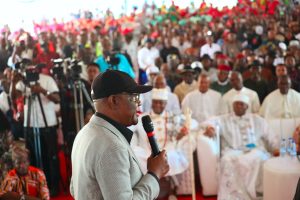
Speaking during an interactive session with leaders and stakeholders of Evo Kingdom in Obio-Akpor Local Government Area, Wike declared that unlike past leaders who used their elevation to pull down others and monopolize power, his political philosophy centers on human capacity development, divine gratitude, and uplifting his people.
Wike questioned the moral right of those who spent decades in high offices without leaving behind a legacy of leadership or infrastructure in the area, warning against selfish politics that crumbles once the leader passes on.
”Because how will I answer before God if these people could take that kind of risk, and opportunity came up for you to help, for you to uplift them? But because of your greed, because of your selfishness, you don’t want anybody to reach the level you are,” Wike said.

He said; “You don’t want anybody in Obio-Akpor to be governor again because you have become governor. God will not be happy with me”.
Taking direct aim at Amaechi’s 24-year tenure across various arms of government, Wike challenged the kingdom to present evidence of what was attracted to the land under his rival’s reign.
”Someone was Speaker of the House of Assembly for eight years, Governor for eight years, and Minister for eight years—that is 24 years in top leadership positions! What can anybody point to that he attracted to Evo Kingdom or Rivers State in all those 24 years? Nothing! Not one single thing!
”I was a Minister of State for Education, and as I sit here, I can count the projects I brought to Rivers State and my people. But somebody was Speaker, Governor, and headed a very lucrative ministry as a full Minister for eight years, yet brought nothing back home! How can someone who spent 24 years in power without empowering his people or raising new leaders now turn around to tell you he loves you?” Wike queried.

Highlighting his political trajectory and contentment with his achievements under the administration of President Bola Ahmed Tinubu, the FCT Minister stressed that he has no further personal political ambitions other than serving as a vessel for his people.
”After all, what do I want that God has not given to me? Nothing! Nothing! Nothing! The only thing I ask from God today is to continue to give me long life,” he said.
“I can’t be a governor again. I’ve been a minister two times. I cannot be chairman of council again. So I am happy. I don’t have anything to lose”.
He continued: “What leadership, as you are leaving, what’s the leadership you have kept behind to continue with where you have stopped? Because our problem here is that you just want only yourself. When you die, everything crumbles. That is not our own case.”
Addressing political uncertainties and betrayal, the Minister reiterated his firm trust in God rather than human promises.
”As a politician, I know that the only person who will not disappoint is God,” Wike declared.
“So, don’t ever believe that a human being will not disappoint you. No matter the love you have, do the best you can do. If the person disappoints you, don’t kill yourself. God will right the wrong”, he said.
Wike also recounted how his administration restructured the chieftaincy institution to give Evo Kingdom adequate representation in the Rivers State Council of Traditional Rulers, dismissing claims that traditional politics or native charms could intimidate him.
Political leaders and traditional rulers like Eze Temple Ejekwu
and Elder Peter Chinwo, President of Evo Assembly assured the FCT Minister of victory for the President and other candidates endorsed by the Rainbow Coalition.
News
Nigeria’s Ambassador to Hungary, Abass Ogwime, Selected to Commission Hungarian-African House in Budapest

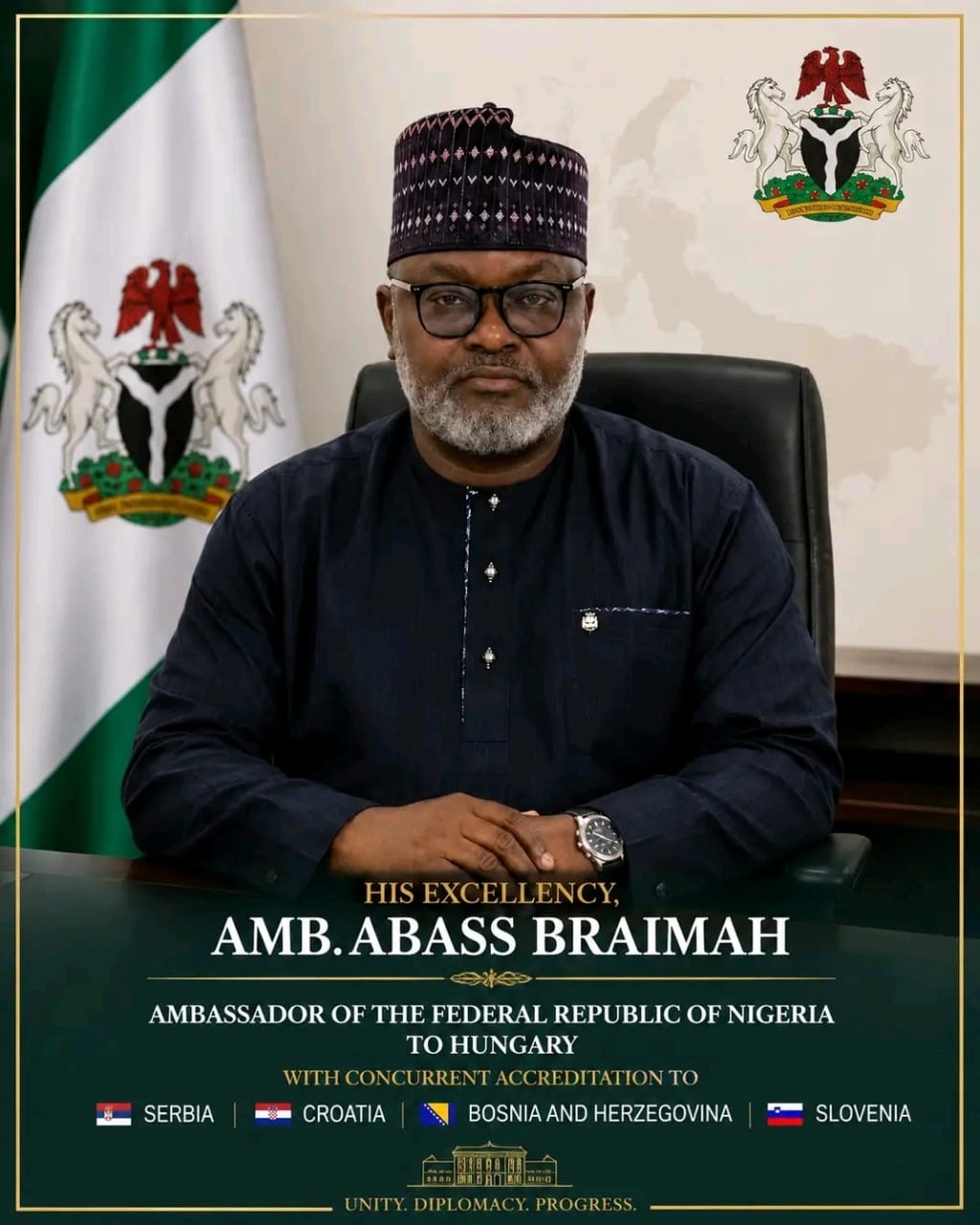
Nigeria’s Ambassador to Hungary, Abass Braimah Ogwime, has been selected among African ambassadors accredited to Hungary to officially commission the newly established Hungarian-African House in Budapest.
Ogwime, who also serves as Nigeria’s ambassador to Serbia, Croatia, Bosnia and Herzegovina, and Slovenia, was the guest speaker at the inauguration ceremony held in Budapest on October 2, 2026.
The event attracted members of the diplomatic community, Hungarian government representatives, African heads of mission, business executives, investors, members of the African diaspora and other stakeholders seeking to strengthen economic, cultural and diplomatic relations between Hungary and African countries.
The Hungarian-African House, known locally as Magyar-Afrika Ház, is an initiative of the Foundation for Africa. The facility is designed to serve as a permanent platform for dialogue, business development, cultural exchange and cooperation between Hungary and African nations.
The initiative is expected to provide a meeting point for Hungarian and African businesses, investors, academic institutions and government representatives to explore investment opportunities, establish strategic partnerships and develop practical areas of collaboration.
Ogwime’s selection as one of the African ambassadors chosen for the commissioning underscores Nigeria’s participation in diplomatic engagements aimed at expanding cooperation between African countries and Hungary.
The Nigerian Embassy in Budapest reaffirmed its commitment to strengthening diplomatic ties, promoting economic partnerships and supporting initiatives that encourage collaboration between Nigerian, African and Hungarian institutions and communities.
The establishment of the Hungarian-African House comes amid broader efforts to deepen Africa-Europe engagement through trade, investment, cultural diplomacy and institutional partnerships.
The new facility is expected to provide a dedicated space for advancing these objectives and fostering long-term relationships between Hungary and African countries.

Hundreds of youths on Thursday staged a peaceful protest in Potiskum Local Government Area of Yobe State, demanding an end to President Bola Tinubu’s administration over worsening economic hardship, insecurity and unemployment.
The demonstration, tagged “Tinubu Must Go”, coincided with Nigeria’s 66th Independence Anniversary on October 1.
The protesters marched through the Tsohowar Kasuwa area of Potiskum, carrying placards and flags of the African Democratic Congress (ADC), while expressing dissatisfaction with the state of the country.
They said President Tinubu’s Independence Day broadcast failed to address their concerns, particularly the rising cost of living, poverty, unemployment, insecurity and what they described as poor governance since the administration assumed office in 2023.
Speaking to journalists on condition of anonymity, one of the protesters said the demonstration was an exercise of their fundamental rights and a call for urgent action to address the country’s challenges.
“We came out today to express our fundamental rights, freedom of speech. We are suffering from this government, people are dying due to insecurity, poverty and unemployment in the land,” the protester said.
Another demonstrator, who identified with the opposition, expressed concern over the country’s economic situation and the state of the education sector.
He said the youths were dissatisfied with the government’s handling of issues affecting ordinary Nigerians.
Similarly, a protester identified as Malam Gambo said the demonstration was organised to draw attention to hunger, insecurity and what the participants described as bad governance.
Eyewitnesses reported that the protest remained peaceful and orderly, with young men and women making up the bulk of the demonstrators.
Some participants were seen carrying ADC flags as they marched through parts of Potiskum to express their grievances against the Tinubu administration.

Wike fires Amaechi: You failed as Speaker, Governor and Minister For 24 Years(Photos)

Nigeria’s Ambassador to Hungary, Abass Ogwime, Selected to Commission Hungarian-African House in Budapest

‘Tinubu Must Go’: Yobe Youths Protest Economic Hardship, Insecurity



-

 News18 hours ago
Independence Day: NNPCL Slashes Petrol Price With N66 Discount for Nigerians
-

 Metro17 hours ago
‘I Hit Her With a Pistol, Hacked Her With Machete’ — Suspect Confesses to Killing Girlfriend in Enugu
-

 News20 hours ago
Nigeria Bids Farewell to Reverend Okoye, Ex-Aso Villa Chaplain
-

 News15 hours ago
2027: Wike rallies support for Tinubu In Akpor kingdom, Insists He’II resign as Minister should president lose FCT, Rivers(Photos)
-
 Sports17 hours ago
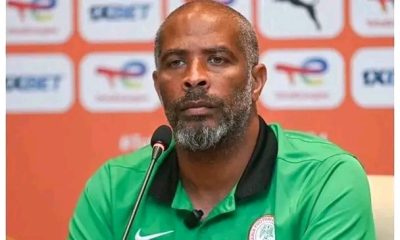
AFCON 2027: Chelle Vows Super Eagles Will Bounce Back, Targets Tanzania Double
-

 Sports17 hours ago
Man City Launch Appeal Against Premier League Verdict Over £830m Financial Scandal