Connect with us

News

State House Disowns PFIPC Budget Request as Reps Uncover Fresh Discrepancies

Published

on

ADVERTISEMENT
Zoom Ad
ADVERTISEMENT
Zoom Ad

…as FRSC defend issuance of official number plates, say documents appeared authentic

By Gloria Ikibah

The House of Representatives Ad-hoc Committee investigating the controversial Presidential Foreign Investment Promotion Council (PFIPC) on Thursday uncovered fresh contradictions in the alleged establishment of the body after the State House denied ever requesting a budget code for the council or having any knowledge of its existence.

The development came as the Federal Road Safety Corps (FRSC) defended its decision to issue seven official Federal Government number plates to the purported agency, insisting that it followed due process based on documents and representations it believed to be genuine at the time.

Advertisement

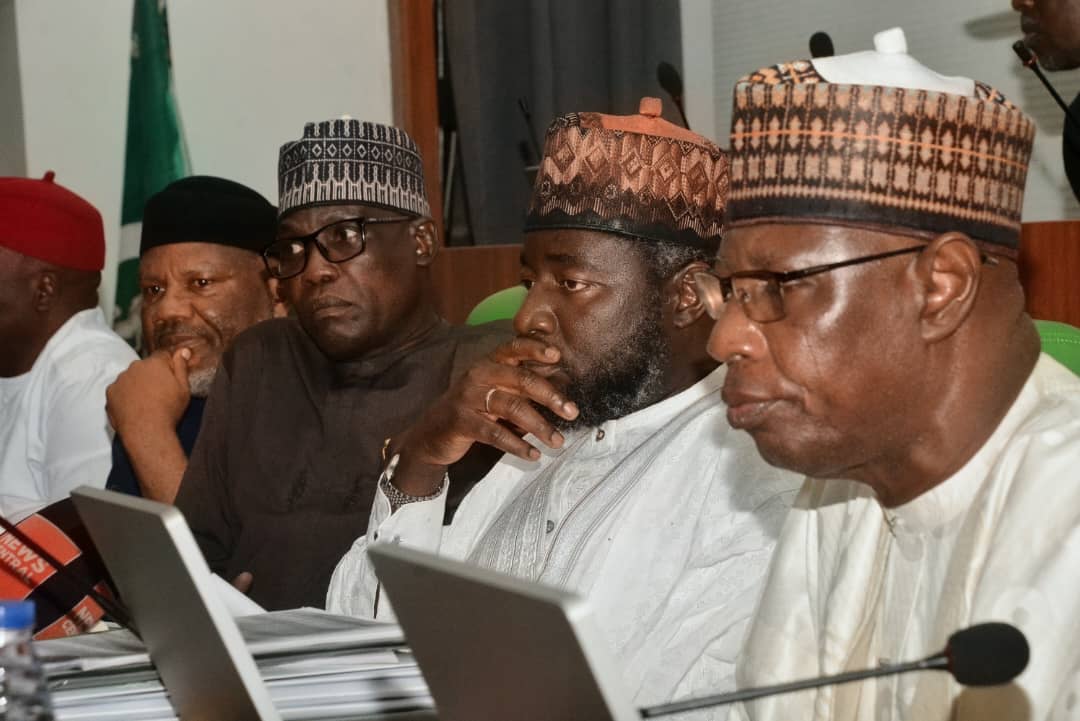
The committee, chaired by Rep. Yusuf Gagdi, is investigating the circumstances surrounding the alleged fraudulent establishment of the PFIPC and its reported inclusion in the Federal Government’s budget framework.

Representing the Permanent Secretary of the State House, Director of Administration, Abdulkadri Idris, told the committee that the Presidency never wrote to the Office of the Accountant-General of the Federation (OAGF) requesting a budget code for the council.

“I want to state that we did not send any correspondence nor any request to the Office of the Accountant-General in respect of this council. We don’t even know anything about this council. We never heard about this council until we started seeing it in the media,” he said.

Idris also rejected documents before the committee which purportedly originated from the State House, describing them as fake.

Advertisement

He explained that one of the letters was allegedly signed by an individual identified as “Akande Adewale”, described as Director of Administration and Support Services, a designation he said had never existed in the Presidency.

“I presented the list of Directors of Administration in the State House from 2003 to date, and there was no name resembling Akande Adewale.

“In addition, there is no department known as Directorate of Administration and Support Services in the State House. We have only the Department of Administration. Akande Adewale has never, ever been Director of Administration in the State House,” he said.

To support its position, the State House submitted official records previously forwarded to the Nigeria Police National Cybercrime Centre, including the list of past Directors of Administration and authentic State House letterheads.

Advertisement

Reacting to the testimony, Committee Chairman Yusuf Gagdi said the evidence exposed glaring inconsistencies between documents obtained from the Accountant-General’s Office and records from the Presidency.

“The State House has denied that it ever wrote any letter to the Accountant-General requesting for budget codes. Secondly, there is no Directorate of Administration and Support Services as contained in those documents.

“The Accountant-General responded to an office that the State House says does not exist, while the name of the signatory, Akande Adewale, is absent from all official records submitted to this committee,” Gagdi said.

He described the revelations as a significant breakthrough in the committee’s effort to determine how official government processes were allegedly manipulated.

Advertisement

The State House also denied issuing any appointment letter to the purported Director-General of the PFIPC, explaining that appointments of Directors-General are political appointments communicated through the Office of the Secretary to the Government of the Federation (SGF).

“If the President approves any appointment, the conveyance is done by the Office of the Secretary to the Government of the Federation,” Idris added.

In a memorandum dated August 6, 2026, and signed by the Corps Marshal, Shehu Mohammed, the FRSC explained how seven official Federal Government number plates were issued to the PFIPC.

Mohammed said the Corps remained committed to professionalism, transparency and strict compliance with established procedures in processing requests for official government vehicle registration.

Advertisement

He explained that every ministry, department or agency seeking official number plates must submit a formal application, which is verified through the head of the requesting institution, while newly created agencies are expected to provide their enabling law or other legal instruments.

According to him, because the PFIPC claimed to be a newly established federal agency, the FRSC subjected its request to additional scrutiny.

The Corps Marshal said the application process began with a letter dated April 4, 2025, signed by Prince Adeniyi Adeyemi on behalf of the Presidential Economic Advisory Council/Presidential Foreign Investment Promotion Council, requesting official government number plates.

A follow-up reminder dated April 11, 2025, was later received, accompanied by documents outlining the council’s mandate and a schedule of vehicles for registration.

Advertisement

Mohammed disclosed that Adeyemi personally delivered the request to the FRSC headquarters.

He added that officers also visited the website provided by the applicant, which carried a Federal Government domain name and listed several senior government officials as members of the council’s governing board.

The Corps further carried out a physical inspection of the office located at the Federal Secretariat Complex, Phase III, Second Floor, Central Business District, Abuja, where officials found the office fully operational.

“Having completed the foregoing verification processes and being satisfied with the information presented, the Corps approved and allocated seven Official Federal Government Vehicle Number Plates to the Agency,” Mohammed said.

Advertisement

The vehicles included a 2024 bulletproof Lexus LX, two Toyota Land Cruiser Sport Utility Vehicles and four Toyota Hilux vehicles, which were assigned official registration numbers ranging from PFIPC 01 to PFIPC 07 after verification of their chassis numbers.

Mohammed, however, said the Corps was later taken aback when it became clear that the PFIPC was not a recognised Federal Government agency.

“It therefore came as a profound shock to the Corps when it subsequently emerged that the Presidential Foreign Investment Promotion Council was not an approved Federal Government Agency and that the representations made by Prince Adeniyi Adeyemi were false,” he stated.

He disclosed that the FRSC had already begun the process of retrieving the seven official number plates issued to the agency and had strengthened its internal verification procedures to prevent a recurrence.

Advertisement

During the hearing, Gagdi questioned aspects of the verification process after observing that the documents relied upon by the Corps lacked standard Federal Government security features and unusually listed President Bola Ahmed Tinubu, the Secretary to the Government of the Federation, the Head of the Civil Service of the Federation and several serving ministers as members of the council’s governing board.

“Does this look normal to you?” Gagdi asked.

Responding, the Corps Marshal admitted: “No, not at all.”
He nevertheless maintained that the Corps acted based on the information available at the time, including the existence of an operational office, official-looking documents, a government-domain website and successful verification of the vehicles presented for registration.

The committee subsequently directed the FRSC to provide the current status and location of all vehicles registered under the PFIPC as investigations continue.

Advertisement

Gagdi also announced that the committee will conclude its investigation next Wednesday, directing the committee clerk to invite all relevant agencies to appear for the final phase of the inquiry.
Continue Reading
Advertisement

News

Abia @35: Kalu Hails Peace, Security, Democratic Gains, Calls for Sustained Progress

Published

on

ADVERTISEMENT
Zoom Ad
ADVERTISEMENT
Zoom Ad

By Gloria Ikibah

Deputy Speaker of the House of Representatives, Rt. Hon. Benjamin Kalu, has congratulated the government and people of Abia State on the 35th anniversary of the state, commending its strides in peace, security, democratic governance and development.

Abia State was created on 27 August 1991 by the administration of former military Head of State, General Ibrahim Babangida, after it was carved out of the old Imo State.

In a statement issued on Thursday, Kalu, who represents Bende Federal Constituency, said the people of Abia had demonstrated resilience by sustaining peace and strengthening confidence in democratic leadership.

Advertisement

He described peace and security as essential foundations for economic growth, development and investment, noting that the state had remained largely peaceful and safe.

The Deputy Speaker also praised successive military and civilian administrations for their contributions to the development of the state, saying the progress recorded over the years was the result of collective efforts by past and present leaders.

Kalu specifically commended the administration of Governor Alex Otti for prioritising security and good governance, including the establishment of an Air Force office in Umuahia, the state capital.

He also praised what he described as bipartisan political cooperation between the state and Federal Government, citing the approval of Certificates of Occupancy for federal projects and initiatives in Abia.

Advertisement

Among the projects he highlighted were the Industrial Court, Renewed Hope Housing Projects and newly approved federal educational institutions in the state, which he said had been facilitated through legislative interventions.

According to Kalu, the projects and other developments expected in the state would help attract investment, create employment and expand infrastructure.

He stressed that Abia stood to gain significantly from continued cooperation between the Federal and state governments.

The Deputy Speaker also commended reported efforts by the state government to settle outstanding pensions and gratuities owed workers, urging the authorities to sustain the payments as a way of honouring retired public servants who served the state.

Advertisement

“Abia at 35 is a story of resilience and progress. I commend the governments, present and previous administrations for their efforts aimed at developing our dear state and I urge us to sustain the momentum of peace, unity and service delivery,” Kalu said.

He wished the people of Abia a successful celebration of the state’s 35th anniversary, while urging residents and leaders to continue working together to consolidate the gains recorded over the years.

Continue Reading

News

Nigeria Regains Frontier Market Status as FTSE Russell Signals Renewed Investor Confidence

Published

on

ADVERTISEMENT
Zoom Ad
ADVERTISEMENT
Zoom Ad

By Gloria Ikibah

Nigeria’s capital market is set to return to the global Frontier Market index after FTSE Russell approved its reclassification from “Unclassified” status, nearly three years after the country was removed from the index.

The Federal Ministry of Finance, in a statement issued  on Friday, said the reclassification will take effect from the opening of trading on Monday, 21 September 2026.

Nigeria was excluded from the FTSE Russell Frontier Market universe in September 2023 following persistent challenges around foreign exchange execution and the repatriation of capital, which made it difficult for international investors to operate in the market.

Advertisement

The latest decision, however, follows improvements in foreign exchange liquidity, capital repatriation and overall market accessibility, with the ministry linking the development to the Federal Government’s wider macroeconomic and structural reform programme.

Welcoming the development, the Minister of Finance and Coordinating Minister of the Economy, Taiwo Oyedele, described the reclassification as an important endorsement of Nigeria’s reform efforts.

“The reclassification is an important validation of Nigeria’s reform trajectory and a foundation for the next phase of the country’s capital market development. It is a meaningful signal to global capital that our market is open, orderly and improving,” Oyedele said.

He said the development was the result of sustained efforts by both the government and private sector to rebuild investor confidence and improve the functioning of the capital market.

Advertisement

“It reflects years of disciplined work across government and the private sector to restore confidence in our economy. We see this as a milestone, not a destination,” he said.

Oyedele further stated that the government’s ambition was to move beyond Frontier Market status and position Nigeria for Emerging Market classification.

“Our ambition remains to build a capital market that is deep, liquid and competitive enough to earn Emerging Market status in the near term,” he said.

The minister commended key institutions in the financial sector for their role in securing the reclassification, including the Securities and Exchange Commission, Central Bank of Nigeria, Nigerian Exchange Group and Central Securities Clearing System.

Advertisement

He also acknowledged the contribution of capital market operators and other stakeholders, saying their cooperation had been critical to restoring Nigeria’s position with global index providers.

“Their coordinated efforts spanning regulatory reform, market infrastructure modernisation and investor engagement have been central to restoring Nigeria’s standing among global index providers,” Oyedele said.

The return to the Frontier Market index is expected to improve Nigeria’s visibility among international investors and strengthen efforts to attract foreign capital into the domestic market.

The ministry said the reclassification reflected cumulative improvements in the country’s ability to facilitate foreign exchange transactions, allow investors to repatriate capital and provide greater access to the market.

Advertisement

Looking ahead, the Federal Government said it will continue working with financial regulators and market institutions to deepen liquidity, expand participation and strengthen investor protection.

It said the medium-term objective was to secure Nigeria’s progression from Frontier Market status to Emerging Market status.

“The Ministry will continue to support policies that enhance the depth, transparency and global competitiveness of Nigeria’s capital market as a key pillar of the nation’s economic transformation agenda,” the statement said.

The development comes as the Tinubu administration continues to defend its economic reforms, particularly measures aimed at improving foreign exchange liquidity, strengthening public finances and attracting investment.

Advertisement

For Nigeria’s capital market, the FTSE Russell decision represents a significant step towards restoring the country’s international market standing after years of foreign exchange and capital repatriation difficulties.

Continue Reading

News

BREAKING! Norway’s King Harald V is dead

Published

on

ADVERTISEMENT
Zoom Ad
ADVERTISEMENT
Zoom Ad

Norway’s King Harald V has died at the age of 89, after he was taken to hospital last week for treatment for a rare blood condition.

The palace in Oslo said he passed away peacefully at 06:35 local time (04:35GMT) on Friday at the national hospital in Oslo.

The royal flag on the roof of the palace has been lowered to half-mast.

In the 24 hours leading up to his death, members of the royal family had visited the king, and crowds had laid flowers at the palace.

Advertisement

Harald was Norway’s first king born in Norway since the 14th Century.

He has been succeeded by his son Haakon, 53, who will hold an extraordinary council of state with the government later on Friday.

After 35 years on the throne, Harald will be remembered as a popular and reforming figure who modernised the monarchy, broke with tradition by marrying a commoner and served as a unifying figure at Norway’s most difficult moments.

Royal observers say he was down-to-earth, respected and beloved, describing him as a “grandfather” of the nation and the “People’s king” – a title also used by his father King Olav V.

Advertisement

In the wake of the 2011 bomb and gun attacks on Oslo and the island of Utøya, Harald appealed to Norwegians to support each other and not “let fear take over”.

More recently, Harald and his family faced health challenges and scandal, especially over his daughter-in-law Mette-Marit’s association with the late sex offender Jeffrey Epstein, and her son Marius Borg Høiby’s conviction for rape.

During his reign, the Norwegian monarchy became more egalitarian and transparent with finances and health, Ole-Jørgen Schulsrud-Hansen, historian and TV2 royal correspondent, told the BBC.

Tove Taalesen, royal correspondent for Nettavisen, described the late king as “one of us”, while Caroline Vagle, royal expert for Se og Hør magazine, said he had “always been very close to the people”.

Advertisement

When Norway’s national football team returned from the US after making it to the World Cup quarter-finals for the first time, Harald welcomed them home at the palace.

He is survived by his wife of almost 58 years, Queen Sonja, their daughter Princess Märtha Louise, their son, the new King.

Harald was born on 21 February 1937 on the Skaugum estate near Oslo.

He was three when dictator Adolf Hitler ordered Norway’s invasion by Nazi Germany early in World War Two.

Advertisement

Harald’s mother fled with her children across the border to Sweden, and they travelled to the US on the invitation of President Franklin D Roosevelt.

Prince Harald returned with his family to Norway at the end of the war and completed his school and compulsory military service. He became crown prince in 1957, and studied social science, history and economics at Balliol College in Oxford from 1960 to 1962.

He met Sonja Haraldsen, the daughter of a businessman, at a party, but the crown prince had to wait nine years before he was allowed to marry her. His father, King Olav, had always hoped he would marry a European princess.

Eventually he told his father that if he could not marry Sonja, he would stay single, King Harald told Norway’s public broadcaster.

Advertisement

His father finally gave his consent, and the couple wed in Oslo Cathedral on 29 August 1968.

Continue Reading

Trending

Copyright © 2024 Naija Blitz News