News
‘Anyone supporting Tinubu’s administration has been bribed’ — Odumeje
- /home/naijuinz/public_html/wp-content/plugins/mvp-social-buttons/mvp-social-buttons.php on line 27
https://naijablitznews.com/wp-content/uploads/2026/08/Odumeje-1000x554.jpg&description=‘Anyone supporting Tinubu’s administration has been bribed’ — Odumeje', 'pinterestShare', 'width=750,height=350'); return false;" title="Pin This Post">
- Share
- Tweet /home/naijuinz/public_html/wp-content/plugins/mvp-social-buttons/mvp-social-buttons.php on line 72
https://naijablitznews.com/wp-content/uploads/2026/08/Odumeje-1000x554.jpg&description=‘Anyone supporting Tinubu’s administration has been bribed’ — Odumeje', 'pinterestShare', 'width=750,height=350'); return false;" title="Pin This Post">
Popular Anambra-based cleric, Chukwuemeka ‘Odumeje’ Ohanaemere, has alleged that Nigerians who publicly support President Bola Tinubu and his administration have been “bribed”.

Odumeje made the allegation in a video circulating on social media on Thursday.
The controversial preacher also criticised Tinubu over his recent comments on hunger in Nigeria, accusing political leaders of prioritising their personal and family interests over the welfare of citizens.

According to him, public officials are only custodians of the country’s resources and must use them for the benefit of Nigerians.
He urged citizens to use the 2027 general elections to determine the future of the country and hold elected officials accountable.
The clergyman said: “Anyone you see singing praises for the current government is doing so because that person has been bribed if you are coming into government, whether you forced your way in or the people elected you.
“You are there to manage our resources, not your personal business or your family’s business. These are resources that belong to every Nigerian citizen. And yet you tell them they have been hungry.”
Odumeje further accused governors and senators of defending Tinubu’s statement that “there’s hunger before I was born”.
He said Nigerians would decide during the 2027 elections whether the country belongs to political leaders and their families or to all citizens.
He said: “In 2027, we shall decide if it’s you, governor or senator, whose family owns Nigeria, or whether all of us own Nigeria. We are no longer boys; we are fathers. Your President Tinubu confessed, before answering the question, that even before he was born, Nigeria had been living with hunger. To all the people supporting President Tinubu, thank God you are now seeing how you are selling our children’s future, all because of money.
“We know all of you, as a governor, as a senator. I know why you are there supporting this man: it is because of yourself, your family, and what you can gather and acquire. After your term, if you win again, you will continue. If you do not win again, you will carry the money you have already acquired for yourself and your children, and travel to another country, leaving behind the very people you called ‘Nigerians.’ That is one thing a president has nothing to offer his own country.”
The cleric maintained that elected leaders were expected to serve Nigerians rather than pursue personal interests.
He also said he appreciated politicians who spoke honestly about the country’s problems instead of shifting blame to opposition parties or previous administrations.
He added: “‘We are leaders; we are no longer boys; we are fathers. If you have nothing to offer the citizens of this country, then let us divide this thing we call a country. There are people whose resources you are managing.
“The resources the president of Nigeria manages do not belong to him; they belong to you and me. You are not leading animals; you are leading people,” said Odumeje.
Odumeje also faulted the Tinubu administration over its borrowing, demanding accountability for loans obtained by the Federal Government.
He warned that the debts being incurred in the name of Nigerians would ultimately affect the people and future generations.
“A person who is leading the people must know how to talk to the people. The money you borrow, you borrow in all our names. So you must account for it, because that debt falls on our heads, and on the future of all our children.”
News
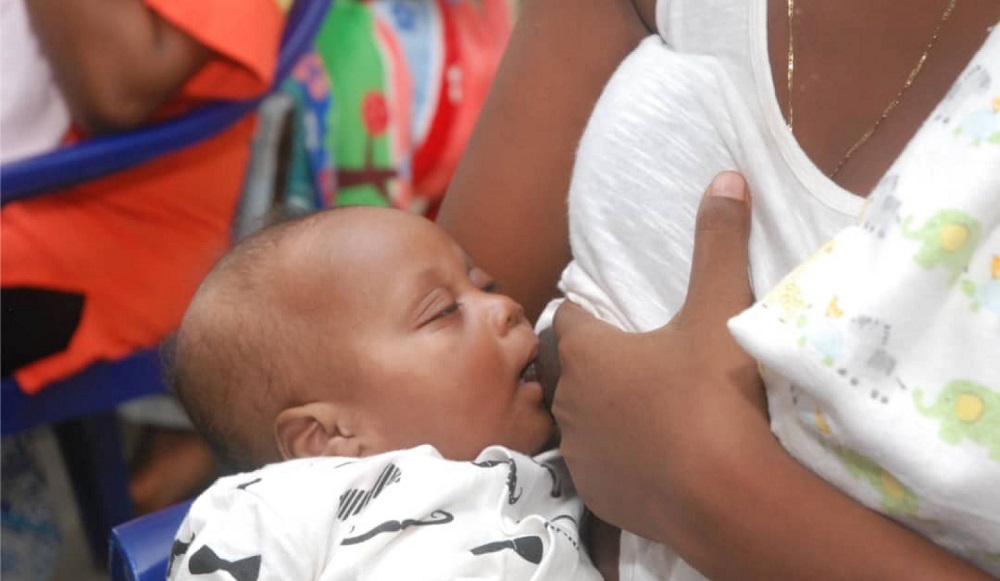
World Breastfeeding Week 2026: 14 Myths, Facts Every Nursing Mother Should Know
As the 2026 World Breastfeeding Week comes to a close on Friday, health experts are reminding mothers and families that misinformation about breastfeeding continues to prevent many babies from getting the best possible start in life.
This year’s theme: “Breastfeeding for a Sustainable Start in Life: Strengthen What Works,” highlights the need to expand proven support systems such as skilled breastfeeding counselling, family support and workplace policies that enable mothers to exclusively breastfeed for the first six months and continue breastfeeding up to two years and beyond.
Experts at the Federal Medical Centre (FMC), Abuja during an antenatal section, say many long-held beliefs about breastfeeding are simply myths with no scientific basis. They urge mothers to rely on evidence-based information rather than cultural misconceptions that may interfere with optimal infant feeding.
Here are some of the most common myths—and the facts every family should know.
Myth: Mothers who deliver through Caesarean section cannot breastfeed immediately
Fact: Mothers who have a Caesarean section can begin breastfeeding as soon as they are medically stable after surgery.
According to experts, early initiation of breastfeeding is possible after a C-section with adequate support from healthcare workers and family members.
Myth: Breastmilk alone is not enough for newborns
Fact: Breastmilk provides all the nutrients a healthy baby needs during the first six months of life.
Experts explain that crying after breastfeeding does not automatically mean a baby is still hungry. Babies may cry because of wet diapers, abdominal colic, reflux, discomfort or the need for comfort. As long as the baby is feeding well, properly attached to the breast and gaining weight, mothers should be reassured that their milk is sufficient.
Myth: Women with small breasts produce less milk
Fact: Breast size has nothing to do with milk production.
The amount of milk produced depends largely on how often the baby breastfeeds and how effectively the baby empties the breast—not the size or shape of the breasts.
Myth: Exclusively breastfed babies struggle to accept complementary foods
Fact: Babies can successfully transition to complementary feeding after six months.
Health experts advise introducing a variety of nutritious complementary foods while continuing breastfeeding. They note that patience and persistence are key, as babies may take time to accept new tastes and textures.
Myth: Some mothers’ breastmilk is unsuitable for their babies
Fact: Every mother’s breastmilk is specially designed for her baby.
Unless there is a clear medical reason, mothers should continue breastfeeding. Experts add that even when breastmilk appears brownish—a harmless condition known as “rusty pipe syndrome”—it is still safe for the baby.
Myth: Mothers must wash their breasts before every feeding
Fact: Routine washing before breastfeeding is unnecessary.
Experts say frequent washing may actually dry or irritate the nipples. Normal daily bathing is sufficient, as the nipples naturally contain beneficial bacteria and protective oils.
Myth: Mothers with fever should stop breastfeeding
Fact: Mothers should continue breastfeeding even when they are ill.
In most common illnesses, breastfeeding should continue because breastmilk contains antibodies that help protect babies from infections. Only a healthcare professional should advise stopping breastfeeding in rare medical situations.
Myth: Breastmilk becomes sour if breastfeeding stops for a few days
Fact: Breastmilk inside the breast does not become sour.
Experts say mothers can resume breastfeeding whenever possible. Although milk supply may reduce after a prolonged break, it can often be rebuilt with frequent feeding and proper support.
Myth: Babies should stop breastfeeding once they turn one or begin walking
Fact: Walking is not a sign that breastfeeding should end.
Following recommendations by the World Health Organization and UNICEF, babies should receive exclusive breastfeeding for six months, begin complementary foods thereafter and continue breastfeeding until at least two years of age or beyond.
Myth: Mothers should immediately stop breastfeeding once they become pregnant
Fact: Pregnancy does not automatically require stopping breastfeeding.
Experts advise mothers not to panic if pregnancy occurs while still nursing. Depending on the mother’s health and nutritional status, breastfeeding may continue, while gradual weaning over several months may be considered where necessary.
Myth: Breastmilk can treat eye infections
Fact: Breastmilk should never be used as eye medicine.
Although breastmilk has infection-fighting properties when consumed by babies, it is not a treatment for conjunctivitis or any eye infection. Babies with eye discharge should be examined by qualified healthcare professionals.
Myth: Drinking more milk or palm wine increases breastmilk production
Fact: There is no evidence that milk or palm wine boosts milk supply.
Experts say good nutrition, adequate hydration, enough rest, proper positioning and frequent breastfeeding are the real factors that promote successful lactation.
Myth: Babies with diarrhoea should not breastfeed
Fact: Breastfeeding should actually be increased during diarrhoea.
Breastmilk helps prevent dehydration, provides nutrition and supports recovery. Experts stress that breastfeeding reduces the overall risk of diarrhoeal diseases and should continue alongside appropriate medical care.
Myth: Mothers must stop breastfeeding for 24 hours after vaccination
Fact: Vaccination is not a reason to interrupt breastfeeding.
Experts say mothers can safely continue breastfeeding after receiving vaccines. Vaccination does not contaminate breastmilk or make it unsafe for healthy babies.
News
Tinubu condoles with Kemi Adeosun over husband’s death
President Bola Tinubu has extended deep sympathy to former Minister of Finance, Kemi Adeosun, over the passing of her husband, Anthony Adeniyi Adeosun, at 62.
The President condoled with the Adeosun family, friends and business associates over the loss, urging comfort in the legacies of steadfast faith, community service and charity that the devout Christian left behind.
President Tinubu noted the outpouring of testimonies on the life, times and good works of Mr Adeosun, particularly his dedication to supporting the less privileged.
He prayed that the Almighty God will grant the former minister and the Adeosun family strength and comfort at this very difficult time, and grant the deceased eternal rest.
News
NPC begins nationwide digital birth, death registration
The National Population Commission (NPC) has begun nationwide digital registration of births and deaths. This, it said, is part of efforts to strengthen Nigeria’s civil registration system, improve access to legal identity, and provide reliable demographic data for national development.
The initiative was announced at a news conference marking the 2026 World Population Day and the nationwide rollout of the fully digitised birth and death registration system under the Electronic Civil Registration and Vital Statistics (E-CRVS) platform, known as VitalReg. This year’s World Population Day theme is “Realising the Hopes and Aspirations of Young People – Today and for the Future”. The event was held simultaneously across all 36 states of the federation.
Federal Commissioner of the NPC in Lagos State, Barr. Saidat Oladunjoye, said the VitalReg platform became fully operational nationwide on July 1, 2026. She explained that the digital platform is designed to provide faster, more accessible registration services, improve the accuracy of demographic records, reduce processing delays, and support evidence-based planning for national development.
According to her, this year’s World Population Day theme highlights the need to invest in Nigeria’s growing youth population through quality education, healthcare, employment opportunities, social protection, and access to legal identity.
“Nigeria, with an estimated population of more than 238 million people, is the most populous country in Africa. Young people are a significant proportion of this population and remain one of the country’s greatest resources,” Mrs Oladunjoye said.
The Federal Commissioner, however, expressed concern about the low rate of birth and death registration in the country, warning that millions of Nigerians risk being denied legal identity, while gaps in vital registration continue to undermine the availability of reliable population data required for effective planning and the equitable distribution of resources.
To address these challenges, Oladunjoye said the Commission is strengthening collaboration with government agencies, healthcare institutions, traditional and religious leaders, and development partners to ensure that all births and deaths are properly registered.
She said, “The new digital CRVS platform would simplify the registration process, reduce paperwork, improve data security, shorten processing time and strengthen Nigeria’s digital identity ecosystem. The NPC has entered strategic partnerships with the Association of Local Governments of Nigeria (ALGON), the National Identity Management Commission (NIMC), UNICEF and private technology partners to decentralise registration services and bring them closer to communities.”
While assuring Nigerians that birth registration remains highly subsidised, Oladunjoye urged parents and guardians to register every child immediately after birth. She also appealed to the media to sustain public awareness campaigns on population issues, youth development, and the importance of obtaining legal identity.
“The NPC will continue to partner with governments and development partners to build a modern civil registration system capable of generating credible demographic data for national planning and sustainable development,” she added.
-
News24 hours agoArmy puts N60m price on wanted ISWAP gov, deputy
-
News24 hours agoWhy we froze Osun govt accounts — EFCC
-
News13 hours agoIgbo Muslim top army officer slain in Nasarawa as Sultan demands immediate probe
-
News13 hours agoBREAKING: “Your timing is wrong”, Tinubu orders EFCC to halt Osun account freeze
-
News13 hours agoJust in: Court sacks top APC candidate from contesting 2027 election
-
Economy24 hours agoNAICOM revokes Nigeria Reinsurance’s licence, appoints Muiz Banire as receiver/liquidator
-
News14 hours agoNamdas Applauds President Tinubu Over Military Welfare Package
-
News14 hours agoNAMA Pushes for 56% Share of Aviation Revenue