



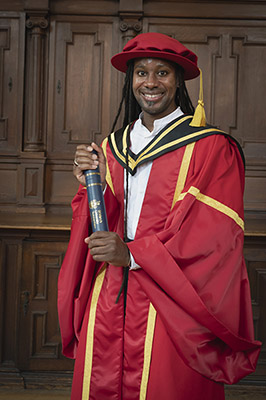


Who Was Jason Arday, the sociologist whose remarkable rise through academia made him one of Britain’s most prominent Black scholars, has died at the age of 41.
Arday was found unresponsive at an address in Battersea, south London, on Friday afternoon. Police said his death was unexpected but is not currently being treated as suspicious. His cause of death has not been made public, with a report expected to be prepared for the coroner.
His death came days after he was fired from Cambridge University and Jesus College raising dust that something must be amiss.
But before the controversy, Arday had built a career around an extraordinary personal and academic journey.
Despite those early challenges, he went on to pursue higher education, earn a doctorate and establish himself as a sociologist whose work focused on race, inequality, social mobility and education.
Arday’s family said in a statement that they were “in shock to have lost this amazing father, partner, brother, uncle and son”.
They added: “The campaign of misinformation was too much for Jason, who was a gentle man and who always wanted to see the best in everyone.”
Earlier on Friday, police officers were called to an address in Battersea by the London Ambulance Service.
In a statement, the Metropolitan Police said: “At this time his death is being treated as unexpected, but is not believed to be suspicious.”
Cambridge University vice-chancellor Prof Deborah Prentice said: “We are desperately saddened to hear this tragic news.”
“Our heartfelt sympathies go to Jason Arday’s family and friends at this incredibly difficult time,” she said.
Education Secretary Lucy Powell said she was “deeply shocked and saddened” to hear about the death and she urged people to “remember there are real people with loved ones involved”.
Arday, 41, had denied any plagiarism – but admitted errors in his work – and last week said the recent controversy about his work had led to “an unrelenting level of public scrutiny and personal attack”.
The row first erupted after another academic – self-defined “race realist” Nathan Cofnas, who was sacked from his Cambridge role in 2024 – said he found numerous instances of plagiarism in the professor’s work.
Arday said some errors in his early academic work arose because of his autism, as he relied on using mimicry to make sense of information.
Similar scrutiny would find similar errors in work by other academics, he said.