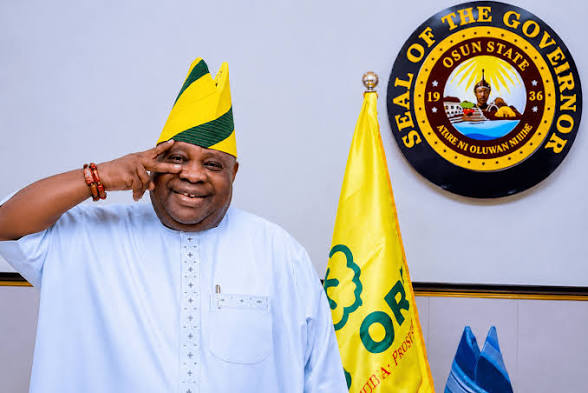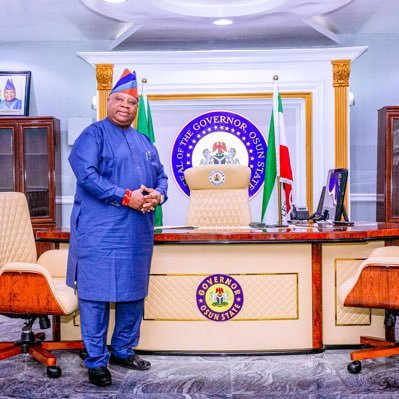


Dancing Governor Ademola Adeleke’s victory in the 2026 Osun State governorship election was more than a routine incumbency advantage.
It was the product of several political forces coming together at a critical moment: a strong grassroots structure, the visibility of his administration, strategic vote mobilisation and an opposition that failed to convert its numerical strength into a winning coalition. 
When the Independent National Electoral Commission (INEC) finally declared the result, Adeleke of the Accord Party had secured 511,067 votes, defeating the All Progressives Congress (APC) candidate, Bola Oyebamiji, who polled 444,815 votes.
The governor won by 66,215 votes and carried 19 of the state’s 30 local government areas.
The figures tell only part of the story. Behind them lies a political campaign that demonstrated the importance of grassroots organisation, personal popularity and the ability to turn incumbency into electoral advantage.
The incumbency advantage
Perhaps the most obvious factor was Adeleke’s position as the sitting governor.
Unlike his principal challenger, Adeleke entered the contest with an established political structure and a record voters could assess. His campaign was therefore not based entirely on promises about what he would do; it could point to projects and programmes undertaken since his assumption of office.
Before the election, his campaign organisation repeatedly highlighted his administration’s achievements and its five-point agenda, while presenting the governor as a leader with a record to defend. That strategy gave his campaign a simple message: voters should compare the administration they had experienced with the alternative being offered.
In an election where more than two million voters were registered, that distinction mattered.
A powerful grassroots machine
Osun politics has always been heavily influenced by grassroots mobilisation, and Adeleke’s political strength has increasingly been built around that reality.
The governor did not rely solely on major rallies in Osogbo or other urban centres. His campaign maintained visibility across local governments and communities, with political structures working to translate his popularity into actual votes.
The final result showed how effective that machinery was.
Adeleke did not simply win narrowly in a handful of constituencies. He accumulated sizeable margins in several areas, producing a statewide advantage that the APC could not overturn. Reports from the collation exercise showed Accord taking important victories in places including Iwo, Ede South and Ife North.
That pattern is significant: in a first-past-the-post election, winning comfortably in multiple local governments can be more decisive than producing isolated landslides.
The Adeleke factor
Another major reason for the victory was the governor’s personal political brand.
Adeleke has developed an unusual connection with sections of the Osun electorate, particularly among younger voters. His dancing, informal public appearances.