Connect with us

News

EU Releases €2.3m Emergency Fund as Cholera Cases Surge Across West/Central Africa

Published

on

ADVERTISEMENT
Zoom Ad
ADVERTISEMENT
Zoom Ad

By Gloria Ikibah

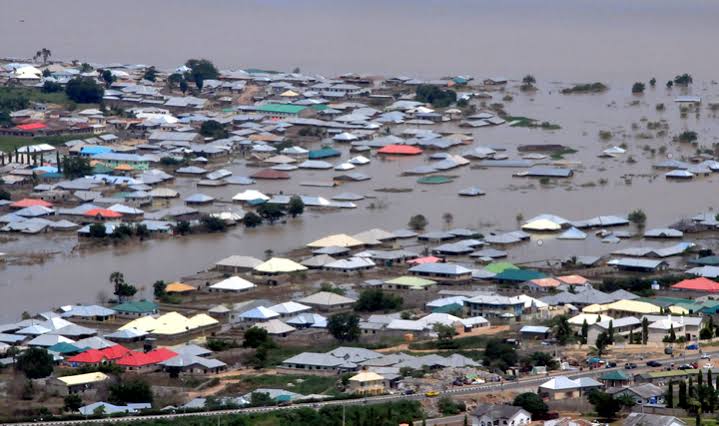
The European Union has approved €2.3 million in emergency humanitarian funding to help Nigeria, Cameroon, Chad and the Central African Republic contain the worsening cholera outbreak spreading across West and Central Africa.

The intervention comes as the World Health Organization (WHO) reported more than 61,000 cholera cases across the African region within the first five months of 2026, raising concerns over the growing public health crisis.

Nigeria, which has recorded one of the highest disease burdens, will receive the largest share of the funding, amounting to €1.5 million.

Advertisement

According to the European Commission, the support will be used to expand emergency response teams, provide essential medical supplies, distribute cholera treatment kits and strengthen water, sanitation and hygiene interventions.

The funding will also support the treatment of public water sources and household water, improve epidemiological surveillance in hard-to-reach communities and strengthen case management, risk communication and public awareness campaigns.

Cameroon will receive €100,000 to support outbreak containment efforts through the deployment of additional personnel, provision of essential medicines and establishment of more cholera treatment units and oral rehydration centres in affected communities.

In the Central African Republic, €500,000 has been earmarked to improve case management, expand vaccination campaigns and strengthen water, sanitation and hygiene programmes.

Advertisement

The funding will also support surveillance, case detection, community engagement and provision of safe and dignified burials.

Chad will receive €200,000 to improve access to clean water, strengthen sanitation services and support community-based surveillance and treatment programmes aimed at stopping the spread of the disease.

European Commissioner for Preparedness and Crisis Management, Hadja Lahbib, said the outbreak highlighted the devastating consequences of inadequate access to basic healthcare and clean water.

“Cholera is preventable and treatable. Yet it still threatens lives when people lack something as basic as safe water and healthcare.

Advertisement

“At a time when humanitarian needs are growing and resources are shrinking, Europe is not looking away.

“This emergency funding will help our partners act quickly, contain the outbreaks and protect the communities most at risk,” Lahbib said.

Health experts say cholera is caused by the Vibrio cholerae bacterium and is commonly transmitted through contaminated water or food.

The disease can cause severe diarrhoea, leading to rapid dehydration and shock if left untreated.

Advertisement

Although cholera remains a major public health challenge in many developing countries, the European Commission noted that it is not a common health problem in Europe and that the risk of transmission from imported cases remains low.

The latest intervention underscores growing international concern over the spread of cholera across Africa, where poor sanitation, limited access to clean water and humanitarian crises continue to fuel outbreaks.

Public health experts have repeatedly stressed that improving access to safe drinking water and strengthening healthcare systems remain the most effective long-term solutions to preventing future outbreaks.

Advertisement
Continue Reading
Advertisement

News

FAAC Distributes N3.007tn July Revenue as States Get Bigger VAT Share Under New Tax Regime

Published

on

ADVERTISEMENT
Zoom Ad
ADVERTISEMENT
Zoom Ad

By Gloria Ikibah

The Federation Account Allocation Committee (FAAC) has shared a total of N3.007 trillion generated in July 2026 among the Federal Government, the 36 state governments faacand the 774 local government councils, despite a decline in Value Added Tax (VAT) receipts.

The decision was reached at FAAC’s monthly meeting for August 2026, held in Owerri, Imo State, where members also reviewed the country’s fiscal outlook and discussed strategies to strengthen revenue generation and public financial management.

According to the committee, the Federal Government received N1.146 trillion from the July revenue, while the 36 states shared N943.352 billion.

Advertisement

The 774 local government councils received N673.649 billion, while oil-producing states shared N243.478 billion as 13 per cent derivation revenue from mineral resources.
The latest figures showed a strong increase in statutory revenue.

Gross statutory revenue rose to N4.359 trillion in July, representing an increase of N658.087 billion, or 17.8 per cent, compared with the N3.700 trillion recorded in June.

However, VAT collections fell slightly during the period.
Gross VAT revenue stood at N793.968 billion in July, down by N5.778 billion, or 0.7 per cent, from the N799.746 billion generated in June.

FAAC attributed the growth in statutory revenue to stronger collections from key revenue sources, including Petroleum Profit Tax, Hydrocarbon Tax, Companies Income Tax, Capital Gains Tax, Stamp Duty Tax, petroleum royalties, mineral royalties, excise duty and gas flared penalties.

Advertisement

The committee noted, however, that the gains were partly offset by declines in VAT, import duty, Common External Tariff levies, rental of gas flared fees and other oil-related revenue.

It pledged to continue working with revenue-generating agencies to improve collections and close existing gaps in remittances.

FAAC also reaffirmed its commitment to ensuring the “full, transparent and timely remittance of collectible revenue by all revenue-generating agencies into the Federation Account”, especially as preparations begin for the planned accounts reconciliation exercise.

The committee emphasised the need to reduce Nigeria’s dependence on oil revenue by expanding non-oil income sources.

Advertisement

It identified solid minerals and other non-oil royalty streams as sectors with significant growth potential.

The meeting, which was held alongside the ongoing National Council of Federation and Economic Development (NACOFED), also focused on how the recent rise in government revenue could be translated into long-term fiscal stability across all three tiers of government.

As part of the discussions, Commissioners of Finance and Accountants-General participated in a special session on subnational fiscal sustainability.

The session examined ways to strengthen public finances and ensure that higher allocations lead to improved infrastructure, economic growth and better social services.

Advertisement

FAAC noted that allocations from the Federation Account had increased significantly over the past three years, largely due to the removal of fuel subsidies, exchange-rate reforms and recent tax policies.

The committee also highlighted the impact of the Nigeria Tax Act 2025, which came into effect on January 1, 2026.

Under the new tax regime, the share of VAT allocated to states increased from 50 per cent to 55 per cent, while the Federal Government’s share declined from 15 per cent to 10 per cent.

In addition, 30 per cent of the states’ VAT allocation is now distributed based on where goods and services are consumed rather than where companies are officially registered.

Advertisement

The committee said the new formula would create a stronger relationship between economic activities within states and the revenue they receive from the Federation Account.

FAAC urged both federal and state governments to focus on six critical indicators of fiscal strength, including revenue quality, asset strength, economic growth, investment attraction, human capital development and institutional transparency.

It advised governments to broaden their internally generated revenue beyond conventional tax sources, identify idle public assets and put them to productive use.

The committee also encouraged states to develop reliable Gross Domestic Product (GDP) data to improve economic planning and measurement.

Advertisement

It further called on governments at all levels to create business-friendly environments capable of attracting local and foreign investment.

According to the committee, sustained investments in education and healthcare remain essential for long-term economic growth and development.

On public financial management, FAAC urged all levels of government to maintain transparent, timely and properly audited accounts.

It also called for the establishment of comprehensive asset registers, improved payroll verification systems and the prompt publication of audited financial statements within the next 12 months.

Advertisement

The committee stressed that the sustainability of recent revenue gains would depend largely on greater discipline in revenue collection and remittances by Ministries, Departments and Agencies.

FAAC reiterated its support for ongoing reforms aimed at improving the transparency, predictability and growth of revenue allocations across the three tiers of government.

Continue Reading

News

Ali Ndume: A Willing Shield In Borno’s Terror War Zone

Published

on

ADVERTISEMENT
Zoom Ad
ADVERTISEMENT
Zoom Ad

By Chris Ochayi

In the early hours of a Monday in July, residents of Ngoshe, a border community in Borno South, woke to gunfire. By dusk, families were counting the missing. Within 48 hours, the familiar blame cycle began again: social media posts, press statements, and then, an accusation that has followed Senator Ali Ndume for years, that he was somehow involved in paying ransom, or playing middleman between terrorists and government.

This time, the claim came from Samaila Kaigama, President of the Borno South Youth Alliance.

Ndume’s response on Channels Television’s Politics Today on Friday was blunt: “I have said it before. In my entire life, I have never seen N1 billion in cash, let alone N5 billion.” He called the allegation “dangerous and baseless.”

Advertisement

But to understand why such claims sting, and why they keep coming, you have to go back 15 years. You have to go to Gwoza, Chibok, Damboa, and the dozens of villages in Borno South that have lived in the shadow of Boko Haram and now ISWAP.

Because if there is one public figure in Nigeria who has consistently put his name, his office, and at times his life, on the line to speak for those communities, it is Senator Ali Ndume.

This is not a story about one denial. It is a chronicle of a man who has spent more than a decade trying to protect 9 local governments from an insurgency that has killed over 35,000 people and displaced more than 2 million.

Long before Boko Haram became a household name, Ndume was already raising the alarm.

Advertisement

Elected to the House of Representatives in 2003 and later Senator for Borno South in 2011, he was among the first lawmakers to publicly warn that the sect was not just a “Yusufiya problem” confined to Maiduguri.

In Senate plenary and in interviews, he argued that the military approach alone would fail without intelligence, community engagement, and development in the Lake Chad basin.

In 2013, when the Federal Government declared a state of emergency in Borno, Yobe and Adamawa, Ndume backed it, but also pushed for civilian protection protocols. His argument was simple: soldiers can clear territory, but only communities can hold it.

That position would later put him in direct conflict with the insurgents. In 2014, Boko Haram overran Gwoza, declared it part of a caliphate, and placed Ndume’s name on a list of “apostate” politicians to be targeted. His hometown of Gwoza was under terrorist control for months.

Advertisement

Borno South is not a monolith. It is 9 LGAs: Biu, Bayo, Chibok, Damboa, Gwoza, Hawul, Kwaya Kusar, Shani, and Askira-Uba. Six of them share borders with Cameroon, Chad, and Niger. That geography made it the perfect corridor for Boko Haram and later ISWAP.

From 2014 to 2017, the story in Borno South was abduction and displacement:
Chibok, April 2014, 276 schoolgirls kidnapped. Ndume was the first senator to visit the town after the abduction, despite military warnings. He pushed for a dedicated rescue task force and for families to be given a direct line to the Presidency.

Gwoza, 2014-2015, Overrun and renamed. Ndume coordinated with the Civilian JTF and IDP leaders to document deaths and missing persons. He used his office to lobby for Gwoza to be prioritized in the military counter-offensive of early 2015.

Damboa and Askira-Uba: Repeated attacks between 2016 and 2019. Ndume consistently raised them on the Senate floor, often against the advice of party leaders who preferred “quiet diplomacy.”

Advertisement

A 2016 report by an NGO working in IDP camps noted that Ndume’s office was one of three in Borno that maintained a weekly call-in line for communities to report attacks. The line was not for politics. It was for coordinates, casualty figures, and urgent evacuation requests.

What makes Ndume different from many of his colleagues is that he refused to go silent.

Between 2015 and 2023, Senate records show he sponsored or co-sponsored over 18 motions directly related to insecurity in the Northeast. Some of the most cited:
1. 2016: Motion on the resurgence of Boko Haram attacks in Borno South and the need for enhanced surveillance on border communities.
2018: Motion urging the FG to equip the Civilian JTF and hunters with better communication gadgets after an ISWAP attack in Rann.

2020: Motion on the killing of farmers in Zabarmari, where he argued that the problem was not just terrorists but the collapse of rural livelihoods.

Advertisement

2022: Motion on ISWAP’s use of drones and IEDs in the Mandara Mountains, calling for air interdiction.

In each case, his strategy was the same: drag the issue to public space. “If we don’t talk about it, Abuja will forget Ngoshe exists,” he told a town hall in Biu in 2021.

That approach earned him enemies in high places. It also earned him trust in villages where government presence was limited to the sound of gunfire.

Ndume’s defense of Borno South has not been limited to security motions. He has argued repeatedly that terrorism thrives where there is no economy.

Advertisement

Through constituency projects and advocacy, his office has:
Facilitated the return of IDPs* to Biu, Hawul, and Shani by lobbying NEMA and SEMA for housing materials and farm inputs.

Pushed for the reopening of the Biu-Damboa-Maiduguri road*, a critical trade route repeatedly targeted by IEDs. In 2022 he personally led a convoy of journalists on the road to prove it was passable.
– *Supported vocational training* for over 3,000 youths in Borno South, with a focus on ex-IDPs and orphans, to reduce recruitment into armed groups.

In 2020, when ISWAP began targeting fishermen in Lake Chad, Ndume moved a motion calling for a joint MNJTF operation to reclaim fishing grounds. His point: “You cannot defeat an ideology on an empty stomach.”

The latest accusation, that Ndume received ransom or acted as middleman is not new. Similar claims surfaced in 2017 during the Dapchi negotiations and again in 2020 after an attack in Auno.

Advertisement

Security analysts who have tracked Borno politics say the pattern is familiar. When a community is attacked and government response is slow, local actors look for someone to blame. As the most visible federal representative from Borno South, Ndume becomes the target.

“He is accessible,” said a civil society leader in Maiduguri who asked not to be named. “People can call his line. So when things go wrong, they assume he knows something. But the truth is, he has been shouting for help louder than anyone.”

On Politics Today, Ndume challenged his accusers to provide proof. “Bring evidence. I have spent my life in public service. My record is there. I have buried constituents. I have visited IDP camps when it was dangerous. I will not now turn around and collect money from the people who killed them.”

In Biu last month, a group of women who run a cooperative for widows of Boko Haram victims described Ndume as “the man who comes even when there is no camera.”

Advertisement

In Gwoza, a youth leader recalled how Ndume’s office helped transport 200 students who fled the 2014 school closures to write WAEC in Biu.

Even critics admit his presence. A local government chairman in Askira-Uba, who disagrees with Ndume politically, said: “Whether you like him or not, when there is an attack at 2am, his number is the one people share on WhatsApp.”

That visibility has come at a price. Ndume has survived at least two assassination attempts linked to insurgents. His convoy has been attacked. In 2015, the Senate suspended him for six months after he accused the leadership of padding the budget a move many in Borno interpreted as punishment for being too vocal on security spending.

Through it all, he has refused security details that would keep him in Abuja. He spends an average of 15 days every month in Borno South, according to his aides.

Advertisement

The war in Borno is not over. ISWAP still operates in the Mandara Mountains. Boko Haram factions still lay IEDs. And every attack produces grief, anger, and the search for someone to hold responsible.

In that environment, allegations are easy. Proof is hard.

Senator Ali Ndume’s record over the last 14 years is public: Senate motions, visits to attacked communities, advocacy for IDPs, and constant pressure on the military and federal government to do more for Borno South.

You can disagree with his politics. You can disagree with his style. But to claim that the man who has spent his career trying to get troops, food, and attention to Ngoshe, Chibok, and Gwoza is now working with the people who burn them requires evidence that has not been presented.

Advertisement

As he put it on Friday: “My people are suffering. Don’t add lies to their pain.”

For the people of Borno South, the war is not about press releases. It is about whether the next convoy gets through, whether the next harvest is safe, and whether their children can go to school without fear.

In that fight, Senator Ali Ndume has chosen to stand in front, not behind.

Chris Ochayi, an Abuja based journalist could be reached on [email protected]

Advertisement
Continue Reading

News

NSITF to lead NBA session on expanding legal protections for workers at Port Harcourt Conference

Published

on

ADVERTISEMENT
Zoom Ad
ADVERTISEMENT
Zoom Ad

…As Faleye speaks on compliance, payroll transparency under ECA

By Kayode Sanni-Arewa

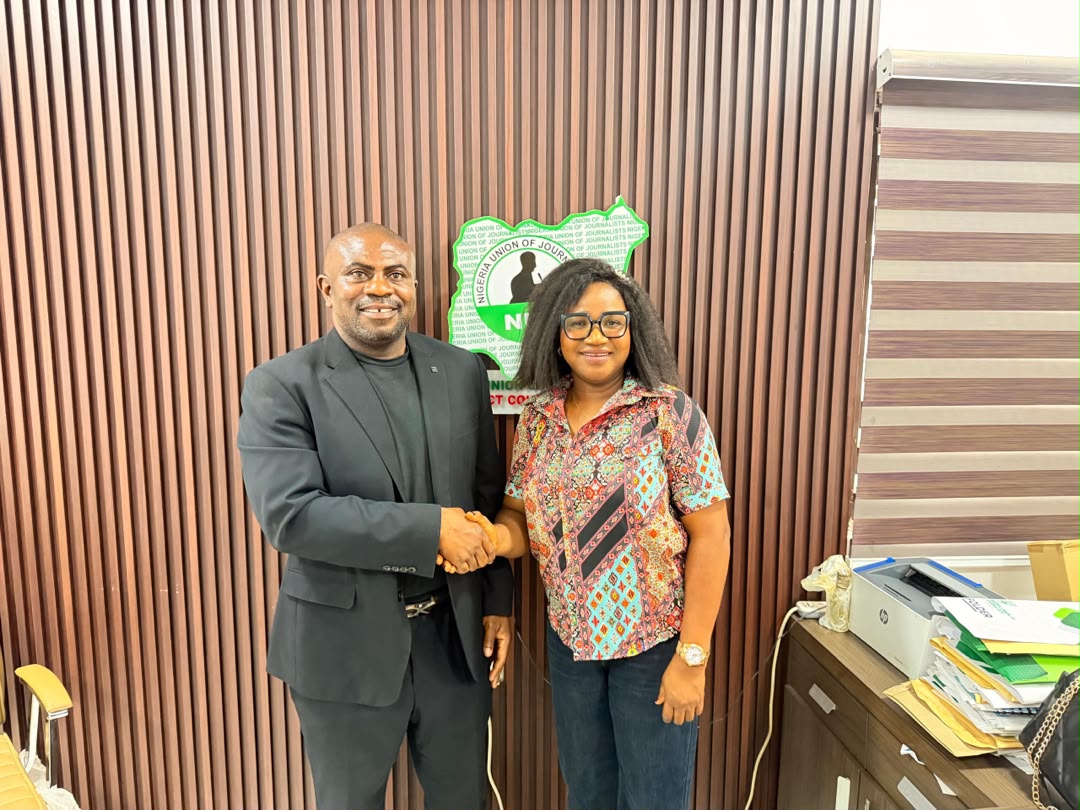
The Nigeria Social Insurance Trust Fund (NSITF) will take centre stage at the Nigerian Bar Association (NBA) Annual General Conference this month with a dedicated session aimed at pushing the legal boundaries of workplace protection and social security in Nigeria.

The session, scheduled for the NBA-AGC holding from 21st to 28th August 2026 in Port Harcourt, Rivers State, will be led by the Managing Director/Chief Executive of NSITF, Mr Oluwaseun Faleye.

Advertisement

With the theme _“Expanding The Legal Frontiers Of Workplace Protection And Social Security Beyond Limits In Nigeria,”_ the NSITF session builds on last year’s conference, which focused largely on creating awareness around the Employees’ Compensation Act, ECA 2010.

The 2026 engagement seeks to move beyond awareness to concrete action: strengthening implementation, driving employer compliance, and improving strategies for delivering workplace protection to Nigerians across all sectors and income levels.

Faleye, who will speak at the session, is expected to outline NSITF’s current drive to expand coverage and deepen collaboration with the judiciary and NBA to enforce the provisions of the Act.

The Port Harcourt session is expected to examine judicial perspectives on compliance, with particular focus on the legal implications of payroll under-declaration.

Advertisement

Discussions will also centre on transparency in employer obligations and how the legal community can help bridge the gap between policy and practice to ensure more workers can access compensation benefits.

The ECA 2010, administered by NSITF through the Employees’ Compensation Scheme, ECS, provides compensation, medical care and rehabilitation for workers who suffer workplace injuries, occupational diseases, or death in the course of employment.

Despite its progressive provisions, NSITF has noted that major gaps persist around awareness, understanding of rights and obligations, and enforcement.

The Fund has also flagged under-declaration or outright exclusion of employees from employer payrolls as a critical issue limiting workers’ access to benefits.

Advertisement

The NSITF has noted that “Legal practitioners play a crucial role as stakeholders in promoting statutory obligations, advocating for employees, and supporting enforcement of the Act”.

The NBA Annual General Conference is the largest gathering of legal professionals in Nigeria and this year’s edition in Port Harcourt is expected to attract thousands of lawyers, judges, and policymakers to debate national issues around law, governance and social justice.

The Nigeria Social Insurance Trust Fund is the agency saddled with administering the Employees’ Compensation Scheme under the Employees’ Compensation Act 2010, providing social protection for workers in both public and private sectors.

Advertisement
Continue Reading

Trending

Copyright © 2024 Naija Blitz News