Connect with us

News

Nigeria’s economy gathers momentum on track to hit $1trn GDP

Published

on

ADVERTISEMENT
Zoom Ad
ADVERTISEMENT
Zoom Ad

Nigeria’s economy continues to demonstrate resilience and accelerating growth with second quarter of 2026 real Gross Domestic Product (GDP) expanding by 4.43 per cent year-on-year, up from 4.23 per cent in Q2 2025 and 3.89 per cent in Q1 2026.The strong Q2 2026 outturn lifted real GDP growth for the first half of 2026 to 4.16 per cent, up from 3.68 per cent in the corresponding period of 2025, a clear signal of sustained strengthening across the economy.Growth is also becoming more broad-based. In Q2 2026, 27 economic subsectors recorded real growth above 3.0 per cent, up from 23 subsectors in Q2 2025, showing that expansion is no longer concentrated in a handful of industries.The productive sectors led the way.


Manufacturing grew by 3.24 per cent, more than double the 1.60 per cent recorded in Q2 2025, reflecting improved industrial output. Agriculture expanded by 4.39 per cent, up from 2.82 per cent, underscoring stronger production and value-chain performance.

Services, the largest driver of growth, expanded by 4.60 per cent, up from 3.94 per cent.The relative stability and steady appreciation of the exchange rate further amplified these gains in dollar terms.

The naira appreciated by more than 12 per cent between H1 2025 and H1 2026, resulting in an expansion of the economy by approximately 17 per cent in U.S. dollar terms over the period, a pace that, if sustained along with the various social programmes of the Government, will meaningfully strengthen dollar incomes, improve purchasing power and lift millions of Nigerians out of poverty.Given this momentum, Nigeria is well positioned to consolidate its standing among Africa’s largest economies and to advance toward the Government’s target of a USD 1 trillion economy by 2030.

Advertisement

The International Monetary Fund has already ranked Nigeria among the top 10 contributors to global real GDP growth in 2026, projecting the country to account for roughly 1.5 per cent of world growth this year, ahead of several advanced and emerging economies.

Continued macroeconomic stability, sustained growth across productive sectors, and improving investor confidence would accelerate Nigeria’s progression toward becoming Africa’s largest economy by 2028.

These results underscore the importance of sustaining our reforms and ensuring policy consistency as their benefits begin to reach households across the country.

The Government remains focused on accelerating inclusive growth and translating these macroeconomic gains into shared prosperity for every Nigerian family.Federal Ministry of FinanceAbuja, Nigeria
Advertisement
Continue Reading
Advertisement

News

Breaking Dangote Refinery stops sales of petroleum products to Matrix, AA Rano, others

Published

on

ADVERTISEMENT
Zoom Ad
ADVERTISEMENT
Zoom Ad

Dangote Petroleum Refinery has indicated that it will no longer sell Premium Motor Spirit (PMS), commonly known as petrol, to major oil marketers that hold valid licences to import the product.

Industry sources said the refinery’s decision is targeted at companies that continue to bring petrol into Nigeria despite the increasing availability of locally refined products.

According to figures cited by Dangote Refinery, imported petrol accounted for about 43 per cent of total PMS supply in July.

The refinery is concerned that the continued influx of imported petrol is reducing the market available to domestic refiners and could undermine investments in local refining capacity.

Advertisement

Under the new arrangement, Dangote Refinery is expected to prioritise marketers that do not have petrol import licences.

Companies that continue to import PMS under the Federal Government’s approved import regime may therefore no longer be able to purchase petrol directly from the refinery.

Six companies were issued licences by the Nigerian Midstream and Downstream Petroleum Regulatory Authority (NMDPRA) in May to import PMS. They are Matrix Energy, A.A. Rano, AYM Shafa, NIPCO, Pinnacle Oil and Gas, and Bono Energy.

Such a situation, the sources said, could make it difficult for consumers and regulators to distinguish between Dangote’s products and imported fuel. Any quality-related complaints could consequently affect the refinery’s reputation.

Advertisement

The refinery has also questioned whether NMDPRA currently has sufficient laboratory capacity to conduct comprehensive testing of imported petrol entering the Nigerian market.

Dangote Refinery’s latest position represents a further escalation of its longstanding concerns over continued petrol imports into Nigeria.

The refinery has previously warned that sustained imports could force it to export more of its refined products rather than incur the high cost of storing unsold petrol locally.

The development could lead to a more divided supply system in the Nigerian downstream oil market, with Dangote Refinery supplying mainly marketers that do not import petrol while licensed importers source a larger share of their products from overseas.

Advertisement

The development could lead to a more divided supply system in the Nigerian downstream oil market, with Dangote Refinery supplying mainly marketers that do not import petrol while licensed importers source a larger share of their products from overseas.

This could affect the availability of petrol at different depots, demand for imported cargoes and, potentially, pump prices across different parts of the country.

The Federal Government had approved petrol import licences as part of efforts to ensure adequate supply and maintain competition in the downstream petroleum sector. Dangote Refinery, however, maintains that continued dependence on imported petrol could weaken the market for locally refined products and discourage further investment in domestic refining capacity.

Advertisement
Continue Reading

News

30 Years after: Former Gang Leader ‘Keffe D’ Davis Found Guilty Of Tupac’s Murder

Published

on

ADVERTISEMENT
Zoom Ad
ADVERTISEMENT
Zoom Ad

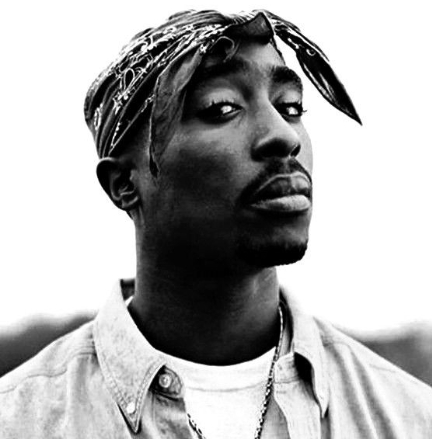
The conviction of former gang leader Duane “Keffe D” Davis by a Las Vegas jury has reopened an old wound in American popular culture — the 1996 murder of Tupac Amaru Shakur, better known to the world as 2Pac.

For those of us who encountered 2Pac during our secondary school days, his music was more than entertainment. His lyrics spoke of struggle, injustice, poverty, violence, ambition and the contradictions of life.

Decades after his death, his voice remains remarkably alive, particularly among a generation that grew up listening to his songs and debating the circumstances surrounding his death.

He died six days later, leaving behind a career that had barely reached its peak and a murder mystery that would remain unresolved for decades.

Advertisement

A Las Vegas jury found Davis guilty of first-degree murder with use of a deadly weapon in connection with the killing. He was the only person ever charged in the case.

But Davis was not accused of being the man who pulled the trigger.

Instead, prosecutors presented him as the person who orchestrated the attack and supplied the firearm used in the shooting.

That distinction is important.

Advertisement

The prosecution’s case reportedly leaned heavily on Davis’s own public statements over the years, including admissions he made in his 2019 memoir, Compton Street Legend. His words, once part of his attempt to tell his own story, ultimately became important pieces of evidence against him.

Under Nevada law, a person who aids and abets a killing can face the same legal consequences as the person who physically pulls the trigger. And unlike many lesser offences, murder does not have a statute of limitations in Nevada.

In other words, time does not automatically erase accountability for the most serious crimes.

How many murder cases remain unresolved because investigators ran out of leads, witnesses remained silent, evidence disappeared or perpetrators simply believed that enough years had passed for the law to forget?

Advertisement

2Pac’s murder became one of the most famous unsolved killings in modern American popular culture. His fame ensured that the case never completely disappeared from public consciousness.

Fans continued to ask questions. Investigators continued to revisit the evidence. And theories — some credible, others wildly speculative — proliferated for nearly three decades.

This conviction is therefore more than a legal development concerning one defendant.

It is a reminder that unresolved does not necessarily mean forgotten.

Advertisement

Justice can be painfully slow. Sometimes it takes years. Sometimes decades. And in some cases, it may arrive long after the victim’s family has stopped expecting it.

For 2Pac’s family, friends and millions of admirers around the world, nothing can bring back the young rapper whose life was cut short at 25.

But accountability, whenever it comes, still matters.

There is also a lesson here for societies everywhere: a cold case is not necessarily a closed case.

Advertisement

Evidence can resurface. Witnesses can eventually speak. Investigative techniques can evolve. And, sometimes, the people who once believed they had escaped justice can become the very witnesses against themselves.

2Pac once rapped extensively about life, death, injustice and survival. Nearly 30 years after his death, his story has once again reminded the world that some questions refuse to die.

Justice delayed may be frustrating. But when justice finally arrives, it still matters.

For Tupac Amaru Shakur, perhaps this conviction represents another step toward closing one of the most enduring chapters in the history of American music and crime.

Advertisement

Justice delayed, but not denied.

Continue Reading

News

Just in: Court fires 2027 APC candidate, orders fresh primaries

Published

on

ADVERTISEMENT
Zoom Ad
ADVERTISEMENT
Zoom Ad


The Federal High Court in Gusau, Zamfara State, has sacked Senator Sahabi Ya’u Kaura as the 2027 All Progressives Congress (APC) candidate for the Zamfara North Senatorial District and ordered the party to conduct a fresh primary election.

Justice Hassan Dikko issued the order on Monday after hearing arguments from the parties involved in the case.

The judge directed the APC to organize another primary for the senatorial district within 14 days of the judgment.

Advertisement

The court’s decision followed a suit filed by APC senatorial aspirant, Dr Sani Abdullahi Shinkafi, who challenged the validity of the primary election conducted by the party.

Kaura had emerged as the winner of the APC primary held on May 19, 2026.

He reportedly secured 65,642 votes to defeat other aspirants who participated in the contest.

Among those who contested against him were Shinkafi, Hannafi Musa-Moriki and Tijjani Yahaya.

Advertisement

The court’s latest ruling has therefore cancelled the result of the earlier primary, meaning Kaura can no longer rely on that election as the party’s candidate for the district.

The APC is now expected to conduct another primary within the 14-day period ordered by the court.

The fresh exercise will provide the aspirants with another opportunity to compete for the party’s ticket ahead of the 2027 general election.

Shinkafi, who took the matter to court, welcomed the ruling and said the decision was a positive development for his legal challenge.

Advertisement
Continue Reading

Trending

Copyright © 2024 Naija Blitz News