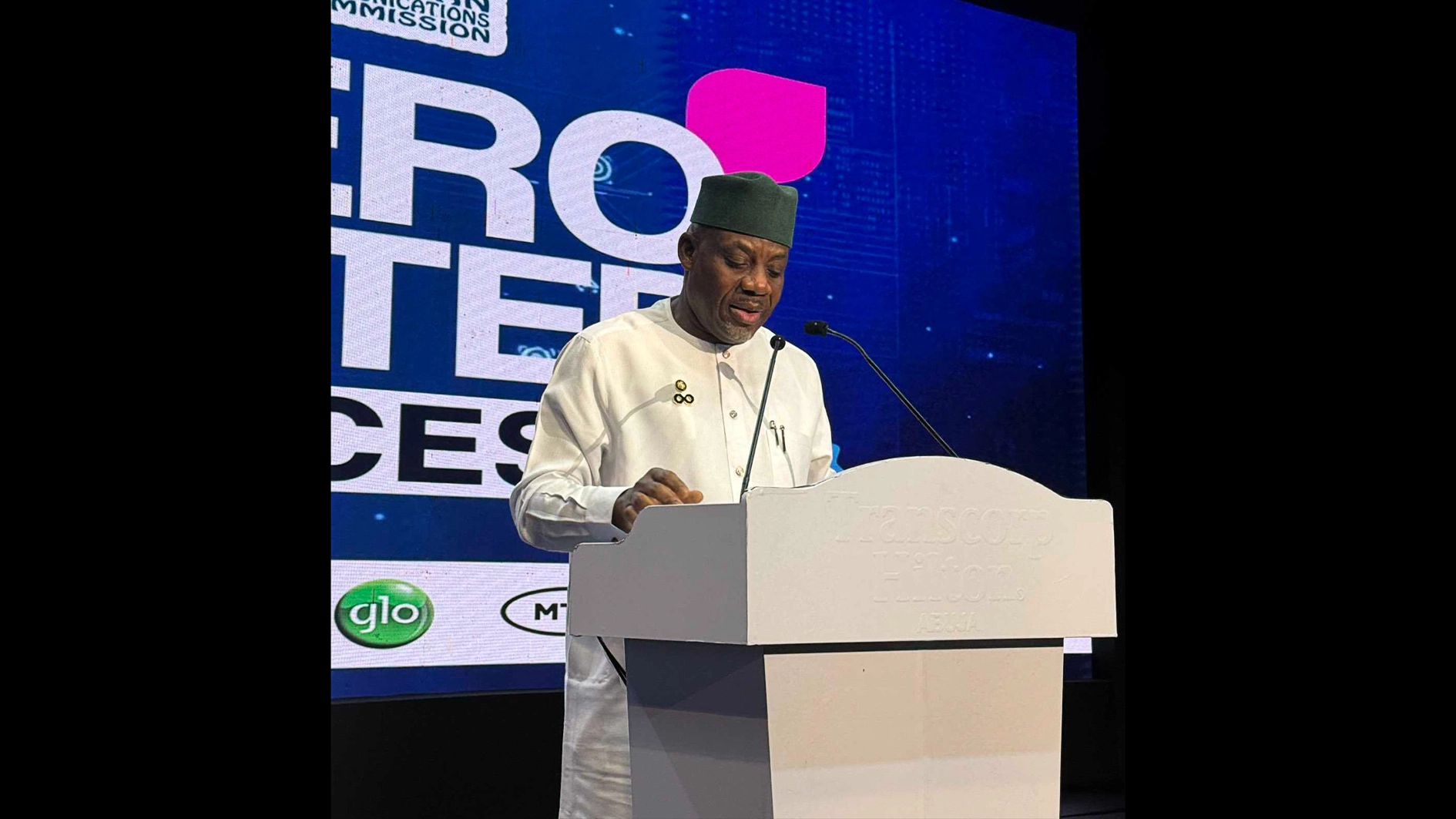
The Federal Government has announced October 1, 2026, as the take-off date for its free educational data initiative, with about five million Nigerian students expected to receive daily data access to approved learning platforms.


The Minister of Education, Dr Tunji Alausa, disclosed this on Thursday in Abuja at the official launch of the Zero-Rated Access to Educational Platforms and Content initiative, organised by the Nigerian Communications Commission (NCC).
Under the programme, eligible students will receive 100 megabytes of free data every day to access approved educational websites, platforms and digital learning resources without paying for the data used. 
“Let me let out the secret. This will be made available to Nigerian students from October 1, 2026,” Alausa said.
The minister described the initiative as a major step towards removing one of the biggest barriers to digital education, particularly for students from low-income families and communities with limited access to learning resources.
According to him, the programme is designed to move digital education from policy discussions to practical implementation by ensuring that students can access knowledge regardless of their location or financial circumstances.
Alausa said digital transformation remained a major pillar of the Federal Ministry of Education’s Nigeria Education Sector Renewal Initiative, stressing that Nigeria could not build a modern education system with outdated tools.
He disclosed that more than 240,000 schools had been geomapped and geolocated, while the digitised Nigeria Education Management Information System was providing government with data on enrolment, teachers, classrooms, laboratories, libraries and internet connectivity.
The minister also highlighted the planned Learner Identification Number (LIN), which will give every Nigerian learner a unique education identity and allow the government to track their educational journey from primary school through tertiary education.
However, he noted that such digital reforms would have limited impact if students could not afford the internet data required to use online educational resources.
“By enabling learners to access approved educational platforms and content without bearing the cost of data, we are removing one of the most significant barriers to digital learning in Nigeria,” he said.
The initiative will initially target senior secondary and tertiary students, with plans to expand the scheme to other categories of learners.
Alausa stressed that the zero-rating would apply only to credible, secure educational platforms and content aligned with Nigeria’s national curriculum.
He also urged stakeholders to assess the programme based on its impact on learning rather than simply measuring the amount of data consumed.
“We must track utilisation. We must understand who is accessing these platforms and who is not, and we must measure the quality of engagement,” he said.
The minister said the scale of the intervention would be significant, noting that 100MB daily for five million students would translate to approximately 15 billion megabytes of data every month.
He estimated the annual value of the data provided to students at about ₦180 billion.
Alausa called on development partners and other stakeholders to view the initiative as a major additional investment in Nigeria’s education sector.
He said the ultimate objective was to ensure that neither poverty nor geographical location determined a child’s access to quality education.
“Let us build a Nigeria where geography does not determine educational opportunity. Let us build a Nigeria where poverty does not prevent a child from accessing knowledge,” he said.
NCC: Initiative Goes Beyond Internet Access
The Executive Vice Chairman and Chief Executive Officer of the NCC, Dr Aminu Maida, said the programme was not simply about providing internet connectivity but about using connectivity to expand access to knowledge and create oppo