
News
2027: Peter Obi Launches Four-Year Reform Plan

- /home/naijuinz/public_html/wp-content/plugins/mvp-social-buttons/mvp-social-buttons.php on line 27
https://naijablitznews.com/wp-content/uploads/2026/01/Peter-Obi.jpg&description=2027: Peter Obi Launches Four-Year Reform Plan', 'pinterestShare', 'width=750,height=350'); return false;" title="Pin This Post">
- Share
- Tweet /home/naijuinz/public_html/wp-content/plugins/mvp-social-buttons/mvp-social-buttons.php on line 72
https://naijablitznews.com/wp-content/uploads/2026/01/Peter-Obi.jpg&description=2027: Peter Obi Launches Four-Year Reform Plan', 'pinterestShare', 'width=750,height=350'); return false;" title="Pin This Post">


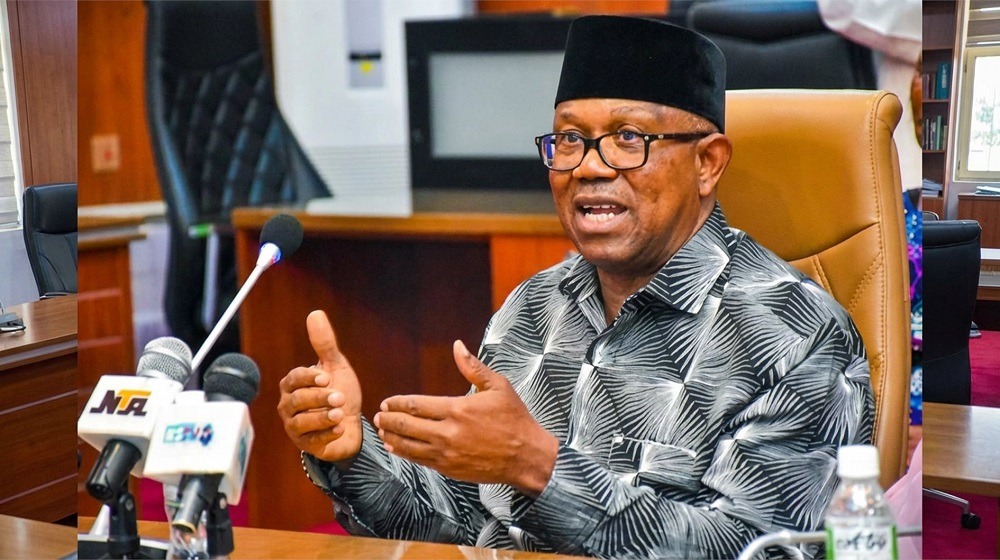
Presidential candidate of the Nigeria Democratic Congress (NDC), Peter Obi, has launched a four-year governance plan focused on economic reforms, competent appointments, infrastructure rehabilitation, security and direct engagement with Nigerians if elected president in 2027.
Obi said he would personally take charge of the government and would not govern through proxies, insisting that the president must remain directly accountable to the people.
The former Anambra State governor disclosed the plan during an exclusive interview with Arise News on Thursday as part of the station’s presidential campaign series.
He said four years would be enough to begin transforming Nigeria if the government identified clear priorities, appointed competent officials and implemented the right policies.
“I will be in charge and I will not run government by proxy. I will be answerable to the people,” Obi said.
He also reiterated his pledge to serve only one four-year term if elected, saying he would not remain in office beyond his tenure.
“I will not spend one extra day. Four years is enough to engender change and I did it as Governor of Anambra State,” he said.
On infrastructure, Obi said his administration would concentrate first on rehabilitating existing roads, schools and other public facilities before embarking on new projects.
“We will not build new roads until we fix the existing ones,” he said.
Obi said he would remove the corruption associated with the petrol subsidy regime but rejected the restoration of the old system.
He said the Federal Government had disclosed that about N15.8 trillion was generated from subsidy removal, adding that such resources should have been invested in productive sectors including agriculture, small businesses, manufacturing and job creation.
“The subsidy regime in Nigeria was enmeshed with corruption and criminality. I have said it clearly that I will remove subsidy and fight that corruption and criminality,” he said.
He said increased domestic refining and regular supply of crude oil to Nigerian refineries could help moderate fuel prices without returning to the old subsidy regime.
Obi also criticised government spending, arguing that resources being deployed to less critical projects could instead be invested in healthcare, including cancer treatment, education and other essential services.
Security
On insecurity, the NDC candidate promised to take personal charge of the country’s security architecture and appoint competent heads of security agencies with clear mandates.
“In the first week, it’s for me to appoint competent heads of security agencies with a decisive instruction: We must deal with this,” he said.
Obi said he would personally visit states affected by serious insecurity instead of managing security challenges exclusively from Abuja.
“I’m not going to sit in Abuja if there’s a problem in Zamfara. We’ll call the people in Zamfara and see what this problem is, and deal with it decisively,” he said.
He expressed support for deploying modern surveillance technology against criminals and rejected ransom payments as a strategy for dealing with kidnappers.
Obi said agriculture would be central to his economic plan for Northern Nigeria, describing the region’s vast arable land as a major economic asset.
He promised to invest in agriculture, education and skills development while supporting young people, including almajiris, to become productive participants in the economy.
According to him, increased agricultural production would provide food, create employment, supply raw materials to industries and expand Nigeria’s export opportunities.
“The north has an asset… and that asset is agriculture. I will deal with that asset,” he said.
Criticism of Tinubu
Assessing President Bola Tinubu’s administration, Obi said the government had not performed well and accused it of being reckless in its spending and management of the country.
“I think you should ask the people. But if you ask me, they’ve not done well. They’ve been a bit reckless in what they’re doing,” he said.
Asked whether he believed President Tinubu was fully in charge, Obi responded: “At times, I believe he’s not in charge.”
He said that, if elected, he would personally explain government decisions and remain accountable for every public expenditure.
“Nobody will talk for Peter. Because I’m the one that’s elected. I’ll be answerable to the people. And for every penny, I’ll be answerable to the people,” he said.
Electoral Reforms
Obi also promised electoral reforms, including real-time transmission of results from polling units to a central situation room.
He clarified that he would not establish a parallel electoral commission but would strengthen the use of technology within the existing electoral system.
“I won’t set up a parallel INEC but will make sure that in every polling unit we have a system that transmits results in real time to our Situation Room,” he said.
2023 Election
The NDC candidate maintained that he won the 2023 presidential election but said he would accept defeat in 2027 if the election was free, fair and credible.
“If the election is free, fair and credible, I will. That’s it. Because it’s an election… I will respect the will of the people. That’s democracy,” he said.
However, he added: “As long as I live, I will maintain that I won the 2023 presidential election.”
Competence Over Ethnicity
Obi rejected calls for the presidency to be determined by ethnic or religious considerations, arguing that competence should be the primary qualification for leadership.
“Our elections should not be driven by tribe or religion. Today, in terms of qualification, I’m qualified to be president of Nigeria. I have the competence,” he said.
He also cited his educational and professional background as evidence of his preparedness for the presidency.
The NDC candidate said his broader objective was to reverse Nigeria’s current trajectory within four years and lay the foundation for sustainable economic development.
“In four years, people will see the difference,” Obi said.
He further promised a physically present presidency, saying he would regularly visit states and communities and interact directly with ordinary Nigerians rather than govern exclusively from Abuja.




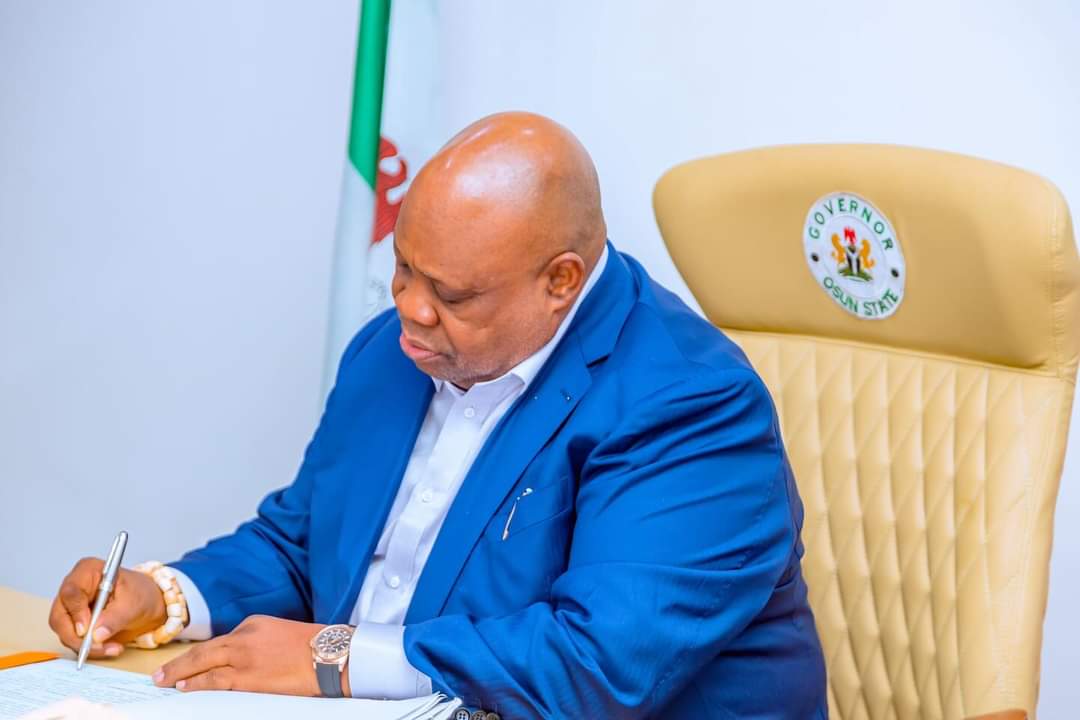
The Osun State Government has said it has filed an application before the Federal High Court in Lagos seeking to set aside the ex parte order restricting transactions on accounts operated by the state government over a $13.9 million arbitration award in favour of Gamji Nigeria Company Limited.
The government also assured the public that it had commenced necessary legal steps to vacate the order and protect the state’s interests through a judicial review of the arbitration award.
In a statement issued on Sunday and signed by the Commissioner for Information and Public Enlightenment, Kolapo Alimi, the government described the order as having been obtained through what it called non-disclosure of material facts to the court.
According to the statement, the arbitration award Gamji sought to enforce was also allegedly affected by several irregularities, prompting the state government’s legal team to approach the Lagos State High Court to challenge the award.
The government said the ex parte order of September 9, 2026 referenced an alleged arbitral award, but maintained that no such award was made against the state government in July 2024.
It clarified that the only arbitral award against the state government was issued in July 2026 and that the award was already being challenged by the government before the Lagos State High Court.
The government traced the dispute to a 2017 contract awarded during the administration of former Governor Adegboyega Oyetola. It said the administration rejected a variation request by Gamji, particularly over the company’s claim that the state was indebted to it in the sum of $15,982,638.22.
The matter subsequently proceeded to arbitration, which the state government alleged was improperly handled in favour of Gamji, while the state was denied a fair hearing and full participation in the process.
The government said its legal team had already filed a suit at the Lagos State High Court on September 1, 2026, seeking to set aside the arbitral award before Gamji approached the Federal High Court.
It added that a motion on notice seeking to suspend enforcement of the award pending the determination of the suit was also filed and served on Gamji and its counsel.
According to the state government, Gamji was therefore aware that the award was being challenged before a competent court when it approached the Federal High Court to seek enforcement.
The government further alleged that Gamji failed to disclose to the Federal High Court that the validity of the award was already being challenged before the Lagos State High Court and that the company had been served with an application seeking to suspend enforcement pending the determination of the case.
The state government disclosed that it had also filed a motion on notice seeking to set aside the September 9 order and informed the Federal High Court of the circumstances surrounding the arbitration proceedings and the pending challenge.
It, however, said it would refrain from making further comments on the merits of the case because the matter remains sub judice.
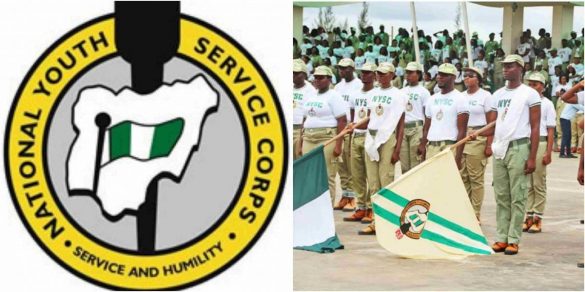
The 20 National Youth Service Corps (NYSC) members kidnapped by gunmen in Imo State have allegedly been subjected to physical ass@ult by their captors, with the kidn@ppers reportedly reducing their ransom demand to N5 million per victim.
The graduates were abducted on Thursday while travelling from Ibadan to their NYSC orientation camps in Abia and Akwa Ibom states. They were reportedly att@cked along the Owerri-Onitsha Road in Umunoha, Imo State, while travelling in two buses.
A relative of one of the victims, Alhaja Alimot Akande, said the abd¥ctors initially demanded N50 million for each victim but had now reduced it to N5 million.
“They are still demanding N5 million. They have come down to N5 million each,” she said.
Akande also alleged that the abductors had started beating the victims, including the women.
When I spoke to my sister, they started beating them since yesterday,” she said.
Asked if the female victims were also being assaulted, she replied: “They are not sparing anybody. They are beating all of them.”
She said one victim was also allowed to speak with his father, with the abd¥ctors reportedly monitoring the calls to assess the family’s ability to raise the ransom.
Meanwhile, the Oyo State Government said it was working with the Imo State Government and security agencies to secure the victims’ release.
Oyo State Commissioner for Information, Prince Dotun Oyelade, said the government was drawing on its experience from the recent Oriire abduction to assist efforts in Imo State.
“Oyo State Government had not and will not abandon its citizens. We will continue to work endlessly and desperately to secure the release of our children,” he said.
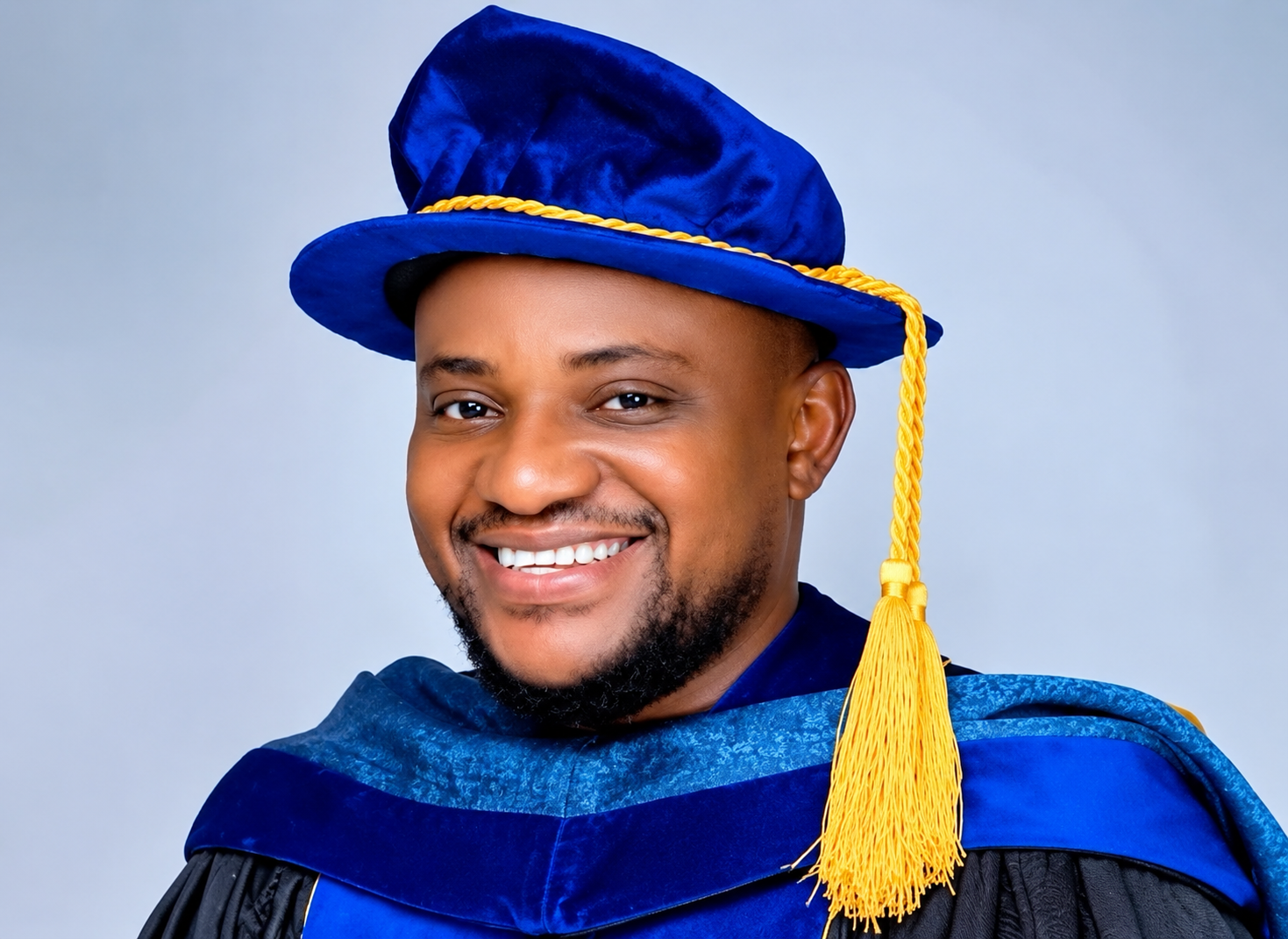
Tansian University, Umunya, Anambra State, has been thrown into mourning following the sudden death of its newly inaugurated substantive Vice-Chancellor, Professor Carter Dike Umeoduagu, barely 48 hours after assuming office.
Umeoduagu was formally sworn in as the substantive Vice-Chancellor of the university on Thursday, October 1, 2026, marking the commencement of his tenure.
However, the professor reportedly took ill on Saturday, October 3, two days after his assumption of office, and subsequently died.
His sudden death has sent shock waves through the university community, particularly coming at a time when the institution has been facing leadership challenges.
The development is also coming amid recent controversy over the leadership of the university, including disputes surrounding the tenure of the former Vice-Chancellor, Professor Eugene Okoye Nwadialor, and the emergence of an acting leadership structure.
The death of Umeoduagu, coming almost immediately after his formal assumption of office, has added a tragic dimension to the university’s recent leadership crisis.
Details of the circumstances surrounding his illness and death were not immediately available as of the time of filing this report.
The university community, academics, colleagues, family members and associates are expected to mourn the deceased academic and administrator, whose tenure as Vice-Chancellor ended almost as soon as it began.

BREAKING: Temi Nkem emerges winner of BBNaija 11th season

Osun Govt finally speaks As Court orders banks to freeze state accounts

Sad development as abductors beat up 20 corp members, reduce ransom from N50m to N5m each


-

 News18 hours ago
Imo Police Locate Kidnappers’ Camp, Reveal Why Abducted Corps Members Are Yet to Be Rescued
-

 News18 hours ago
Was Tinubu’s Speech AI-Generated? Elon Musk’s Grok AI Makes Strong Revelation
-
 News6 hours ago
Monarchs in Etche LGA presenting symbolic traditional kola to FCT minister Wike at ongoing interactive meeting with Ogbakor, other stakeholders (Video)
-

 News18 hours ago
Edo 2027: APC Chairman ‘AK-47’ threat – Amnesty International Makes Strong Demand
-

 News18 hours ago
How I Hired Cars To Get Drivers Abducted By My Gang, Kidnap Suspect Reveals
-

 Entertainment18 hours ago
My Penis Stopped Working When…— Commedian Julius Agwu