Connect with us

Opinion

How And Why Sunrise Lost $2.35 Billion Claim Against Nigeria

Published

on

ADVERTISEMENT
Zoom Ad
ADVERTISEMENT
Zoom Ad

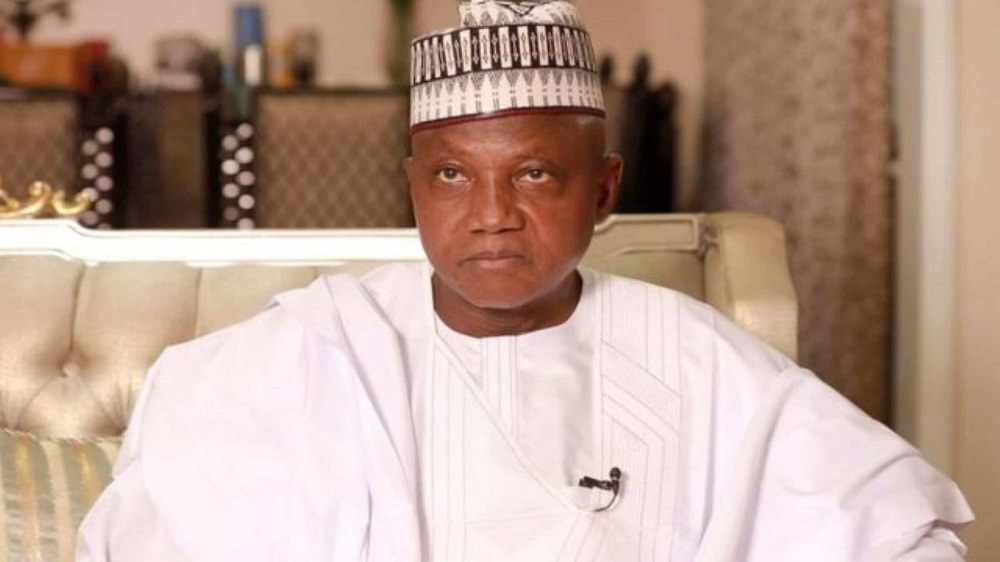
By Garba Shehu,
Former Presidential Spokesman.

There are good reasons why Leno Adesanya and his company, Sunrise Power Transition Company lost their case at the International Chamber of Commerce, ICC, an outcome that sparked widespread nationwide celebrations across Nigeria.
The ICC threw out the USD 2.35 billion claim by Sunrise on the Mambila Hydro Electric Power Project over the weekend and, as widely reported, and also rejected a USD 400 million settlement claim, ordering instead, the company and Adesanya to reimburse Nigeria about USD 11. 82 million in legal and other expenses.
As a news person -perhaps the only one- in the Nigerian team present at the January 15 2025 sitting of the tribunal in Paris, one was privileged to witness the universe of corruption, falsehood, deceit and lies by Sunrise and its owners melt on the floor of Ritz Carlton Hotel’s meeting rooms.
At the hearing, Presidents Olusegun Obasanjo and Muhammadu Buhari featured as strong pillars of the country’s defense against this flagship scheme similar to the P & ID in using international arbitration to steal billions of dollars from the country using fraud, deceit and lies, and as did some others including Buhari Ministers, Engineer Sulaiman Adamu and Babatunde Raji Fashola.
It was, however, clear from day one that Leno and company would lose this case following the failure of all the witnesses they invited, including, of course a beautiful lady from Senegal allegedly providing comfort to one of their government contacts. (Senegalese beauties were allegedly on offer in addition to cash).
At stake in Paris was the extraction of USD 660 Million and a second one to follow for USD 2.7 billion from the country’s treasury through bogus claims of failed contracts.
The two past Presidents, alongside other key witnesses were prevailed upon by President Bola Ahmed Tinubu to rise to the occasion of defending the nation against fraudsters whose stock in trade was to bribe and get government contracts, only for them to use such projects to obtain huge sums of money as costs for settlement using arbitration.
In the year before, the English Supreme Court saved Nigeria from the theft of USD 11 billion through similar schemes, and President Tinubu vowed “ not again.”
The team to Paris was led by the Minister of Justice and Attorney General of the Federation, Lateef Fagbemi, SAN.
At its meeting of 21 May 2003, the Federal Executive Council, FEC, chaired by the then President of Federal Republic of Nigeria, Chief Olusegun Obasanjo, considered a memo for the issuance of Mambila contract to Leno and his company, and refused to give its approval, asking that the memo be withdrawn while noting that the establishment of new power plants must be done through a competitive process.
In spite of the above background, on 22 May 2003 – the next day and seven days before the end of President Obasanjo’s first term – the Minister of Power and Steel at that time, Dr. Olu Agunloye, sent Mr. Adesanya of Sunrise a letter purporting to indicate a preliminary ‘approval’ for Sunrise to have a role in the construction of the Mambilla Hydroelectric Power Station with a value of USD 6 billion.
As far as credibility and reputation are concerned, Sunrise got the so-called “award” without any prior expertise on such projects or any real assets.
Documents placed before the tribunal by Nigeria included filed statements by Sunrise at the Corporate Affairs Commission, CAC that the company had no turnover in 2017, 2018 or 2019, and had total net declared assets of only N1,000,000 (one million Naira).
At the time they received the “award,” the financial position of the company was N318,685 on 3rd December, 2004 and N270,370 as of 31st December, 2005.
A new Minister wrote to Leno Adesanya of Sunrise to confirm the non-approval of the FEC, on 3 September 2003 and therefore had no contract whatsoever with government.
A new tender process was initiated and the contract was awarded to two Chinese companies, CGGC and CGC.
At a later meeting between President Muhammadu Buhari and the Chinese leader, Xi Xiping the Nigerian president requested funding by ChinaExim bank of the Mambila project, and requested President Xi to nominate credible companies to execute the contract. President Xi gave an instant commitment of the Chinese government to promoting the promote the project.
Sunrise wahala began by demanding payment of (1) GBP 33 million as the costs that it had allegedly incurred “on preparation for the execution of the project”; and (2) USD 1.2 billion, which allegedly represented 20% of the USD 6 billion estimated cost of the Project “as projected profit of our client [Sunrise] on the project.”
Sunrise sought to prevent the Project from moving forward by taking the following steps: One, filing a claim at the Federal High Court against Nigeria’s Minister of Power, the Attorney-General of the Federation, CGGC, and CGC and two, they sought an order preventing any development of the Project except through Sunrise and, in the alternative, claimed the sum of USD 960 million in alleged damages.
As a result of the Sunrise litigation, the project was held up for all these years. ChinaExim withheld funds – as would any lender – pending the resolution of the legal tussle.
In order to move the Project forward, Nigeria entered into settlement discussions with Sunrise, CGGC, and CGC. The settlement discussions were inherited by the administration of President Buhari.
In those discussions in 2012, the Federal Ministry of Power entered a ‘General Project Execution Agreement’ with Sunrise and Sinohydro (another Chinese contractor that Sunrise had involved) (the “GPEA”), an initial agreement with Sunrise relating to the Mambilla Project.
On the 14th January, 2015, a letter was signed by the Federal Ministry of Power supposedly giving approval for Sunrise to be engaged as the local content partner on the Project.
On 9 November 2019, a meeting was held between, on the one hand, Sunrise, represented by Mr. Adesanya, and, on the other, Nigeria’s Attorney-General and Minister of Justice and the Minister of Water Resources in London.
At that meeting, it was made clear to Mr. Adesanya / Sunrise that any settlement negotiated would, of course, depend on approval by the president.
At this meeting, Mr. Adesanya offered to accept a figure of USD 500 million, and the Minister of Justice and the Minister of Water Resources – no doubt under pressure to settle the dispute so that the Project could proceed – made a counter-proposal of USD 100 million ( based on claims that they had incurred expenses between USD 70-80 million).
After a series of meetings, the Attorney General and Minister of Justice and the Ministers of Power, Finance and Water Resource agreed to propose the sum of USD 200 million as a full and final settlement of Sunrise’s claims, subject, understandably to approval of the President. This proposal was accepted by Sunrise.
On 25 March 2020, a second document entitled ‘Addendum to the Term[s] of Settlement’ was signed between Sunrise and representative of Nigeria. Again, the document provides for a potential doubling of Nigeria’s liability by another USD 200 million in case of delayed payment.
On 31 March 2020, the ‘Terms of Settlement’ and ‘Addendum to the Term of Settlement’ were presented to President Buhari for the first time for his approval. Upon reviewing the documents, the President decided not to grant approval. In a hand-written and signed note dated 20 April 2020, the President withheld his approval for entry into these documents, on the basis that “FG [the Federal Government] hasn’t got USD 200m to pay [Sunrise]”.
Despite repeated attempts, President Buhari wasn’t convinced that Nigeria should pay USD 200, or even higher to someone who did nothing but merely presented an unauthorized contract document.
From here, Sunrise commenced another arbitration against Nigeria alleging a violation of the terms of settlement, at which it asked to be paid USD 680 million.
President Tinubu welcomed the tribunal verdict as the removal of the “ biggest legal hurdle” in the path of the 3,960MW Mambila power project, describing it as an affirmation of Nigeria’s determination not to succumb to the “predatory and exploitative claims by local and international entities and their enablers and funders.”
Well said.
The next steps he needs to take, in national interest and in honor of the late president whose heart was in the Mambila project until his death, is to urgently link up to the Chinese leader, to get him to fulfil his longstanding promise to fund the power project.#


Continue Reading
Advertisement

Opinion

Beyond the Politics of Name-Calling: Time to Put Development Front and Center

Published

on

ADVERTISEMENT
Zoom Ad
ADVERTISEMENT
Zoom Ad

By Dr. Osamhanze Akugbe Idahosa.


Nigerian politics has a familiar rhythm that repeats itself with the certainty of the rainy season. As an election approaches, the airwaves fill not with policy proposals or development blueprints, but with recycled scandals, resurrected controversies, and character assassinations dressed up as accountability. Old files are reopened. Rumours are given new life. Personalities are dissected forensically, while the economy — the very thing that determines whether ordinary Nigerians eat, work, and hope — is left to fend for itself in the background noise.

This is not new. It is, in fact, a pattern the late Professor Claude Ake diagnosed with uncomfortable precision decades ago. In his enduring body of work on how politics has underdeveloped Africa, Ake argued that the continent’s governing elites have rarely treated development as politics’ central business. Instead, politics became the prize — an unrelenting contest for power and its spoils, disconnected from any serious commitment to transforming people’s material conditions. Development was talked about, promised, and occasionally budgeted for, but it was never the organizing logic of governance. Power for its own sake was.

Advertisement

Nigeria, in many painful ways, has continued to prove Ake right. A country blessed with abundant human capital, fertile land, solar potential across its northern belt, gas reserves that could power industries for generations, and a youthful population bursting with energy and ambition, still finds itself struggling with basic questions of electricity, food security, and job creation. The paradox is not a mystery. It is the direct consequence of a political culture that majors on the minor and minors on the major—one where cutthroat politicking consistently displaces the harder, slower, less theatrical work of nation-building.

The Noise That Drowns Out the Signal
Every election cycle in Nigeria seems to produce its own theatre of distraction. Certificates are questioned. Personal histories are excavated. Allegations, some genuine and many manufactured for effect, are deployed not to inform the electorate but to overwhelm them. The result is a public conversation so saturated with noise that the signal — what each aspirant actually intends to do about unemployment, inflation, infrastructure decay, and industrial collapse — gets lost entirely.

This is not to say that character and integrity do not matter in leadership. They do, profoundly. But there is a difference between legitimate scrutiny of a candidate’s fitness for office and the wholesale substitution of personality warfare for policy debate. When name-calling becomes the primary currency of political engagement, it does more than distract; it actively erodes the electorate’s capacity to hold anyone accountable for economic outcomes, because the entire conversation has shifted away from outcomes altogether.

What 2027 Should Really Be About
As Nigeria edges toward the 2027 electioneering season, there is a genuine opportunity to break this cycle — but only if electorates themselves insist on it. The question voters ask of every aspirant should not primarily be “what has this person done to embarrass their opponent,” but rather “what, brick by brick, will this person do to build an economy that works?”

Advertisement

Brick by brick is the operative phrase, because national economic transformation is not a single grand gesture. It is the cumulative result of deliberate choices: stable macroeconomic policy that tames inflation without strangling growth; a manufacturing and agro-industrial base that converts raw endowments into finished value rather than exporting them raw; an education and skills pipeline that matches the needs of a modern economy; an investment climate credible enough to attract long-term capital rather than speculative inflows; and an energy infrastructure reliable enough to let businesses plan beyond the next generator refueling.

None of this makes for exciting soundbites. It does not trend the way a scandal trends. But it is the substance that determines whether Nigeria remains a country of enormous unrealized potential or becomes genuinely competitive within the comity of nations — able to stand alongside the economies it is so often, and so wistfully, compared to.

Change for the Sake of Change Is Not Change
The revered Benin monarch, Oba Ewuare II, recently offered a formulation that deserves wider circulation in the run-up to 2027: change should not be pursued for its own sake, but only where it promises something demonstrably better than what already exists. This is a subtle but important corrective to a political culture that often treats “change” as a self-justifying slogan, detached from any rigorous comparison of what is being offered versus what is being replaced.

Applied to Nigeria’s coming election, the royal father’s counsel suggests a discipline that both aspirants and voters would do well to adopt. Aspirants should be pressed to show, in concrete, measurable terms, how their vision improves on the present—not merely that they are different from the incumbent or from a rival. And voters should resist the seduction of change as spectacle, insisting instead on change as substance: a credible, costed, and coherent pathway to shared prosperity.

Advertisement

A Call to Refocus
Nigeria’s governing class, and the political ecosystem that surrounds it — commentators, party strategists, media platforms, and yes, the electorate itself — bear collective responsibility for the terms on which political contests are fought. If the 2027 cycle is allowed to descend, once again, into a contest of who can most effectively humiliate whom, the country will have squandered another opportunity to have the conversation it desperately needs: the conversation about how to convert its abundant natural and human endowments into the kind of broad-based prosperity that reduces poverty, creates jobs, and restores national dignity.

Professor Ake’s warning was never simply academic. It was a call to reorder national priorities before politics as usual consumes what remains of the country’s developmental promise. As 2027 approaches, that call deserves to be heard again — not as a lament, but as an instruction: look beyond the name-calling, beyond the personality contests, and ask instead what each aspirant will actually build.

Dr. Osamhanze Akugbe Idahosa is of the Africa Development Studies Center and writes from Abuja.

Advertisement
Continue Reading

Opinion

Wike and the APC Governors’ Nightmare

Published

on

ADVERTISEMENT
Zoom Ad
ADVERTISEMENT
Zoom Ad

By Osamhanze Idahosa.


A peculiar kind of fear grips a ruling party when its coalition arithmetic no longer adds up, and Nigeria’s All Progressives Congress is living through it. On the surface, the story is simple: Nyesom Wike, Minister of the Federal Capital Territory and, by card-carrying membership, still a leader of the opposition Peoples Democratic Party, has been accused by the APC Governors’ Forum of working against President Bola Tinubu’s re-election. Underneath that surface, however, is a far more revealing story about governance, internal democracy, and the political cost of treating power as an inheritance rather than a performance review.

Let us be honest about the sequence of events. Wike joined the Tinubu government as a strategic bridge — a PDP heavyweight whose presence in the cabinet would blunt opposition unity and lend the administration a cross-party sheen. He accepted the role with an unusual and, for Nigerian politics, almost unfashionable clarity: he would serve the President loyally in office while keeping his own political house, the PDP structure in Rivers State and beyond, intact. That was never a secret arrangement. It was the deal, stated openly from day one.

Advertisement

What has changed is not Wike’s position. What has changed is that his hybrid arrangement, once tolerated as a curious footnote, has become politically dangerous to a specific class of APC governors — and it is worth naming why.
The Primaries Came Home to Roost
Across several states, the APC’s primary election season was less a democratic exercise than a coronation.

Sitting governors and their anointed successors cleared the field through disqualifications, last-minute substitutions, and delegate lists that read more like loyalty registers than voter rolls. Heavyweights with genuine grassroots followings — men and women who had built name recognition, delivered constituency projects, or simply outworked the anointed candidate — were shown the door. Some were persuaded to “wait their turn.” Others were not persuaded at all.

Politics abhors a vacuum, and disenchanted heavyweights do not simply retire from public life because a governor prefers someone else. They look for a vehicle. Right now, the PDP structure that Wike has kept oiled and functional — even while sitting in an APC cabinet — is the most obvious vehicle available. That is not Wike engineering a rebellion; that is Wike’s continued political relevance meeting a supply of aggrieved politicians that the APC governors themselves created.
Whose Nightmare, Exactly?
It is important to be precise about who is actually frightened, because “the APC” is not a single, undifferentiated body with one uniform interest.

The governors sounding the loudest alarm tend to fall into two overlapping categories. First, governors who cannot seek re-election and have instead positioned themselves — or their preferred proxies — for Senate seats or other offices, and who now worry that a resurgent opposition vehicle could deny them or their anointed successors a soft landing. Second, and more damning, governors and their candidates whose only real campaign asset is proximity to the President’s name, because their own tenure in office has not generated a record voters would queue up to reward.

Advertisement

Put simply: the governors are not afraid of Wike as a person. They fear what an alternative platform does to a race they planned to win by default. A governor with roads, schools, hospitals, and jobs to show for two terms does not lie awake worrying that a PDP structure exists in the next local government. It is the governor — or the imposed proxy — with nothing but a party logo and the President’s coattails who feels the tremor.

A Forum Resolution Is Not a Governance Plan
The APC Governors’ Forum’s response — resolving to reject any “alliance or political arrangement” that could undermine the President’s re-election or the party’s candidates — is a legitimate defensive move on paper. No party is obliged to tolerate parallel structures that split its votes. But a resolution passed in a closed-door meeting in Abuja does not, by itself, rebuild the trust that a mismanaged primary destroyed in a local ward. It does not return a disqualified aspirant’s confidence in the process. It does not convert an imposed candidate into a popular one. Institutional discipline can constrain Wike’s coalition partners at the margins; it cannot manufacture the credibility that internal democracy would have produced for free.

The Lesson, Stated Plainly
Wike’s sphere of direct political command is one state out of thirty-six. That a single minister with a one-state base can rattle an entire governors’ forum controlling more than two-thirds of the federation is not a testament to his genius alone — it is an indictment of how thinly some of these governors’ popularity is actually rooted. Politicians who open their primaries, let the ballot decide, and then spend their tenure governing rather than merely occupying office need not fear an opposition figure of any size. Their performance becomes their coalition. Their record becomes their firewall.
The APC governors’ nightmare, then, is not really Nyesom Wike. It is the mirror he has, perhaps unintentionally, held up to their own governance report cards. Until they learn that lesson, every election cycle will produce a new version of this same anxiety, regardless of which minister or opposition figure happens to be standing nearby when the aggrieved go looking for a platform.

Dr Idahosa Oshamanze is the Vice President of Africa Development Study Centre, ADSC, he wrote from Abuja.

Advertisement
Continue Reading

Opinion

Wike and the APC Governors’ Nightmare

Published

on

By

ADVERTISEMENT
Zoom Ad
ADVERTISEMENT
Zoom Ad

By Osamhanze Idahosa

A peculiar kind of fear grips a ruling party when its coalition arithmetic no longer adds up, and Nigeria’s All Progressives Congress is living through it. On the surface, the story is simple: Nyesom Wike, Minister of the Federal Capital Territory and, by card-carrying membership, still a leader of the opposition Peoples Democratic Party, has been accused by the APC Governors’ Forum of working against President Bola Tinubu’s re-election. Underneath that surface, however, is a far more revealing story about governance, internal democracy, and the political cost of treating power as an inheritance rather than a performance review.

Let us be honest about the sequence of events. Wike joined the Tinubu government as a strategic bridge — a PDP heavyweight whose presence in the cabinet would blunt opposition unity and lend the administration a cross-party sheen. He accepted the role with an unusual and, for Nigerian politics, almost unfashionable clarity: he would serve the President loyally in office while keeping his own political house, the PDP structure in Rivers State and beyond, intact. That was never a secret arrangement. It was the deal, stated openly from day one.

What has changed is not Wike’s position. What has changed is that his hybrid arrangement, once tolerated as a curious footnote, has become politically dangerous to a specific class of APC governors — and it is worth naming why.
The Primaries Came Home to Roost
Across several states, the APC’s primary election season was less a democratic exercise than a coronation.

Advertisement

Sitting governors and their anointed successors cleared the field through disqualifications, last-minute substitutions, and delegate lists that read more like loyalty registers than voter rolls. Heavyweights with genuine grassroots followings — men and women who had built name recognition, delivered constituency projects, or simply outworked the anointed candidate — were shown the door. Some were persuaded to “wait their turn.” Others were not persuaded at all.

Politics abhors a vacuum, and disenchanted heavyweights do not simply retire from public life because a governor prefers someone else. They look for a vehicle. Right now, the PDP structure that Wike has kept oiled and functional — even while sitting in an APC cabinet — is the most obvious vehicle available. That is not Wike engineering a rebellion; that is Wike’s continued political relevance meeting a supply of aggrieved politicians that the APC governors themselves created.

Whose Nightmare, Exactly?

It is important to be precise about who is actually frightened, because “the APC” is not a single, undifferentiated body with one uniform interest.

Advertisement

The governors sounding the loudest alarm tend to fall into two overlapping categories. First, governors who cannot seek re-election and have instead positioned themselves — or their preferred proxies — for Senate seats or other offices, and who now worry that a resurgent opposition vehicle could deny them or their anointed successors a soft landing. Second, and more damning, governors and their candidates whose only real campaign asset is proximity to the President’s name, because their own tenure in office has not generated a record voters would queue up to reward.

Put simply: the governors are not afraid of Wike as a person. They fear what an alternative platform does to a race they planned to win by default. A governor with roads, schools, hospitals, and jobs to show for two terms does not lie awake worrying that a PDP structure exists in the next local government. It is the governor — or the imposed proxy — with nothing but a party logo and the President’s coattails who feels the tremor.

A Forum Resolution Is Not a Governance Plan
The APC Governors’ Forum’s response — resolving to reject any “alliance or political arrangement” that could undermine the President’s re-election or the party’s candidates — is a legitimate defensive move on paper. No party is obliged to tolerate parallel structures that split its votes. But a resolution passed in a closed-door meeting in Abuja does not, by itself, rebuild the trust that a mismanaged primary destroyed in a local ward. It does not return a disqualified aspirant’s confidence in the process. It does not convert an imposed candidate into a popular one. Institutional discipline can constrain Wike’s coalition partners at the margins; it cannot manufacture the credibility that internal democracy would have produced for free.

The Lesson, Stated Plainly
Wike’s sphere of direct political command is one state out of thirty-six. That a single minister with a one-state base can rattle an entire governors’ forum controlling more than two-thirds of the federation is not a testament to his genius alone — it is an indictment of how thinly some of these governors’ popularity is actually rooted. Politicians who open their primaries, let the ballot decide, and then spend their tenure governing rather than merely occupying office need not fear an opposition figure of any size. Their performance becomes their coalition. Their record becomes their firewall.

Advertisement

The APC governors’ nightmare, then, is not really Nyesom Wike. It is the mirror he has, perhaps unintentionally, held up to their own governance report cards. Until they learn that lesson, every election cycle will produce a new version of this same anxiety, regardless of which minister or opposition figure happens to be standing nearby when the aggrieved go looking for a platform.

Dr Idahosa Oshamanze is the Vice President of Africa Development Study Centre, ADSC, he wrote from Abuja.

Continue Reading

Trending

Copyright © 2024 Naija Blitz News