Opinion
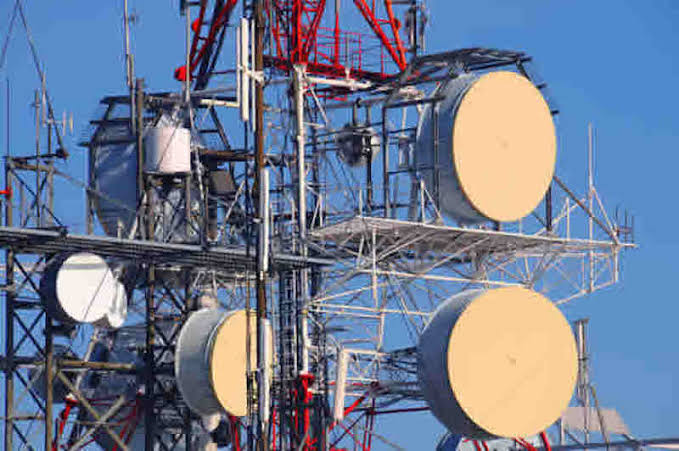
Mafab and the unfulfilled 5G network rollout
- /home/naijuinz/public_html/wp-content/plugins/mvp-social-buttons/mvp-social-buttons.php on line 27
https://naijablitznews.com/wp-content/uploads/2024/12/5G.jpeg&description=Mafab and the unfulfilled 5G network rollout', 'pinterestShare', 'width=750,height=350'); return false;" title="Pin This Post">
- Share
- Tweet /home/naijuinz/public_html/wp-content/plugins/mvp-social-buttons/mvp-social-buttons.php on line 72
https://naijablitznews.com/wp-content/uploads/2024/12/5G.jpeg&description=Mafab and the unfulfilled 5G network rollout', 'pinterestShare', 'width=750,height=350'); return false;" title="Pin This Post">
By Sonny Aragba-Akpore

Regarded as an underdog, unknown, and unsung, Mafab Communications was the least likely qualified bidder in the 2021 fifth-generation (5G) technology auction. It had no experience or history in telecommunications.
But it shocked everyone except its promoters and its supporters in the system. Many questions followed. MTN, which won the second of the two licenses on offer, was well known. So how did Mafab Communications find its way into the arena? Official records state that the company was incorporated on July 8, 2020, and a year later, here it was fighting for a 5G license in the same auction with MTN and Airtel.
There must be something about it that is strange to the public. It paid the $273.6m license fees with a fanfare, and its permit and timeline to roll out were secured. It failed to meet its rollout obligations, and despite a second extension granted by the regulator, Nigerian Communications Commission (NCC), it still did not make any difference. Then the news filtered out recently that the game was over. It was preparing to cede its spectrum to its “competitor” MTN, thus truncating the ambitions to join the big league in telecommunications service provision in Nigeria.

While it is assumed that Mafab Communications had some stamina to hold on for nearly five years even when it was obvious it was swimming against the tide, no one has claimed responsibility for the failed dream of its promoters, but sometime in the future, Torians will ask questions about how the regulator and its consultants concluded to award Mafab a sophisticated license like 5G when there was no sign the company could weather the storms without the requisite experience and expertise. Indeed, the alleged “failure of Mafab cannot be traced to the company alone but also to the system which ignored due diligence in every material particular and went ahead to assign the spectrum.
Industry players were worried then and so are not shocked by the turn of events now. Even when circumstances appear different, let us refresh our memories about the privatisation of Nigerian Telecommunications Limited (NITEL). The Bureau of Public Enterprises (BPE) had released a very well-articulated information memorandum (IM) for the privatisation process of the state-owned company in 2001. Tempting as the document was, no fewer than 16 companies and multinational corporations expressed interest in bidding.
The process began according to the rules, but somewhere along the way, the system began to alter the rules, allegedly tilted in favour of some interests. Three bidders with technical and financial proposals which met the information memorandum were formally evaluated by the BPE in November 2001.
Investors International London Limited (IILL), promoted by Chief Bode Akindele (the Parakoyi of Ibadan), First Bank Nigeria, among others, emerged as the preferred bidder with a bid price of US$1.317 billion. Telnet Nigeria was the reserve bidder with US$1.310 billion bid price. It was promoted by Dr Babatunde Carew, Dr O.Denloye, Chief Sonny Odogwu (the Ide Ahaba of Asaba) and others.
IILL paid the required 10% deposit but defaulted in paying the remaining 90% by the deadline, causing the transaction to collapse. Telnet Nigeria was subsequently invited to negotiate, but it too declined to take up the offer. And so, the exercise was truncated. But unlike Mafab Communications, which jumped into the 5G fray with no requisite experience or any known technical partners, all the bidders for NITEL had experienced technical partners. The BPE guidelines were very clear about that to prequalify. So apart from exhibiting financial muscle, such companies must have relationships with technical partners that have managed a minimum of one million telecommunications networks.
Investors International (London) Limited (IILL) had as technical partners Portugal Telecom and KPN of the Royal Dutch Telecom Netherlands, as the preferred bidder that won the core stake auction in late 2001, but later defaulted on completing the final payment by the 2002 deadline. Telnet Consortium had as technical partners a joint venture comprising Korea Telecom and Sweden’s Swedetel AB that paid the initial commitment fee to inspect facilities. Telnet was a wholly owned Nigerian company. The third was Newtel Consortium, a partnership involving Nigerian and German interests, that qualified for the final bidding stage. Other major international and local companies that showed initial expressions of interest (EOI) earlier in 2001 included France Telecom, Telekom Malaysia, Orascom (Egypt), MSI (Netherlands), and the Dangote Group. Mafab was believed to have joined the industry on wobbly grounds and so encountered storms early in the day.
While MTN and Airtel came prepared for the 5G auction with extensive existing towers, fibre networks, backhaul, and other infrastructure, Mafab anticipated building much of its network infrastructure from scratch as a greenhorn operator.And having got the spectrum, alleged regulatory delays, difficulties connecting sites, foreign-exchange pressures and the rising cost of imported telecom equipment added to its bottlenecks. Its inexperience and lack of expertise and technical partners made matters worse. Despite obtaining a Unified Access Service Licence (UASL) and numbering plan in July 2022, in preparation to operate as a full telecommunications provider, building a network from scratch was a mountain too difficult to climb. Mafab had what looked like launch events in January 2023, with “incomplete infrastructure that led to a failed commercial rollout and later adopted a more phased approach, focusing deployment on Abuja and Kano before expanding to other markets”, according to analysts. As it navigated through those challenges, established operators continued expanding their 5G networks.
Although not yet established, a major advantage is being gained by MTN, which is already a dominant service provider even as a Mobile Network Operator (MNO). The transaction is still a work in progress, but talks have gone very far, and the conclusion and approval for the transfer would mark a significant reversal for Mafab, which paid $273.6 million in 2021 to secure a 100 MHz block in Nigeria’s first 5G spectrum auction and become one of the country’s two initial 5G operators. “But the transaction is also part of a broader effort by the Nigerian Communications Commission (NCC) to ensure that valuable spectrum is being used efficiently rather than sitting underutilised, “according to one analyst.
Stakeholders had expressed misgivings at the time Mafab got the license because of their concerns about the capacity of Mafab to roll out 5G in Nigeria, without an existing telecom infrastructure.
Mafab was an obscure company in 2021 when it was assigned the 5G spectrum. It was relatively small with no footprint as a telecom operator because it had no subscriber base, unlike other established telecom operators in the country. There were no known offices and addresses across the country and no customer care service centres where prospective subscribers could go and make enquiries about their services in order to sign up on its network. There were widespread worries and fears as Nigerians raised questions as to the possibility of a successful rollout of Mafab’s 5G services in the country.
Now their fears have been confirmed. The NCC says it wants to ensure that “limited valuable spectrum is in the hands of those who need it.” The regulator is not averse to secondary sales of spectrum. It maintains frequency assignment tables covering commercial bands including 2.1 GHz, 2.3 GHz, 2.6 GHz and 3.5 GHz, and its spectrum management system requires operators to submit utilisation and interference reports.
The regulator says its frequency management framework is designed to promote spectrum discipline and increase efficiency and usage. Mafab is not the only company caught up in this web. Megatech Engineering Limited, which acquired a 2.6 GHz spectrum licence from the NCC in March 2020, subsequently transferred the asset to Globacom in a transaction valued at more than ₦20 billion ($15.01 million).
Opinion
Tegbe’s 24-Hour Energy Zones and the Shift From Megawatts to Money
By Sufuyan Ojeifo
There is a point at which a country’s electricity problem ceases to be merely an electricity problem. It becomes a problem of economic geography.
Where can factories operate with confidence? Where can businesses plan beyond the next appearance of a generator? Where can hospitals, schools, technology companies, markets and households begin to organise their lives around the reasonable expectation that electricity will be there?
This is the thinking behind the latest initiative from the Minister of Power, Joseph Tegbe, to develop what the Federal Government calls Energy Zones – defined corridors where homes, businesses and industries could receive stable, 24-hour electricity.
The proposed zones cover the Lagos axis, the Abuja-Kaduna-Kano corridor and the Enugu-Port Harcourt corridor. Tegbe’s latest move is a meeting with selected electricity distribution companies to begin working through what it would take to make the idea real.
At first glance, it sounds like another promise of uninterrupted electricity in a country that has heard too many such promises. However, there is something more consequential in the architecture of the proposal.
Tegbe is asking Nigerians to look at the power problem differently.
For years, the national conversation has been dominated by generation. How many megawatts are being produced? How much can the transmission grid carry? How many generating plants are working? These are important questions. But electricity does not become useful simply because it has been generated.
It must travel. It must be received. It must be distributed. And ultimately, somebody must be able to use it. That last part has often been treated as the end of the conversation when, in reality, it is where the economic value of electricity begins.
Tegbe has put the point plainly. The constraint is not limited to generation and transmission; it also includes how much electricity can be taken up and delivered at the distribution end. The proposed Energy Zones are intended to address precisely that gap while improving commercial demand and the revenue performance of the distribution companies.
There is an important idea here.
Nigeria does not necessarily have to wait for every weakness in the electricity value chain to be solved simultaneously before beginning to create pockets of reliability. A country of more than 200 million people, with enormous differences in industrial activity, population density and commercial demand, may have to proceed through carefully selected economic corridors while the wider system is repaired.
This is not an argument for abandoning the national grid. It is an argument for making the grid more economically purposeful.
The three corridors selected by the Ministry are revealing. Lagos and its adjoining industrial axis represent perhaps the country’s most concentrated commercial and industrial demand. The Abuja-Kaduna-Kano corridor connects the political capital with major commercial and industrial centres in the North. Enugu-Port Harcourt links important commercial, manufacturing and energy-producing communities in the South-East and South-South.
These are not simply lines on a power map. They are lines on Nigeria’s economic map. That distinction matters.
For too long, Nigerians have experienced electricity largely as a household inconvenience. The light goes off. The generator comes on. A business buys diesel. A manufacturer factors self-generation into production costs. A hospital makes contingency arrangements. A young entrepreneur learns, often painfully, that the real price of electricity is not what appears on the bill but what it costs to keep the business alive when the supply fails.
A reliable electricity corridor changes that equation.
If a factory knows that a particular industrial cluster has dependable power, investment decisions begin to change. If a commercial district can plan around predictable electricity, operating costs become easier to manage. If businesses can depend on supply for most of the day, generators can move from being the first line of defence to being what they were always supposed to be: backup.
This is where Tegbe’s technocratic instincts may prove significant.
His background is not that of a career power-sector operator. His professional experience has largely been in consulting, fiscal and economic reform, institutional transformation and advisory work. That background has been visible in his early approach to the ministry – diagnosis, audits, financial questions, infrastructure bottlenecks, and attempts to identify where one part of the system is preventing another from functioning properly.
His Energy Zones proposal fits that pattern. It treats the electricity market less as a single machine waiting for one dramatic repair and more as a system of interconnected constraints that can be isolated, diagnosed and addressed.
Tegbe had already identified the three corridors as priorities for grid stabilisation, with technical audits intended to establish the condition of critical infrastructure. The latest engagement with DisCos suggests that the idea is now moving beyond technical diagnosis towards the more difficult question of how distribution will work within those corridors.
That is where the hard work begins.
A 24-hour power zone cannot be created by a press statement. It requires generation that is available when needed, transmission capacity that can carry it, distribution infrastructure capable of receiving it, transformers and feeders that can withstand the load, metering that properly captures consumption, customers willing and able to pay, and a commercial structure in which the various participants have an incentive to keep the system working.
It also requires protection. Vandalism and energy theft do not respect administrative boundaries. Neither do faulty equipment, unpaid bills or poor collection practices. Tegbe himself has acknowledged that the sector’s problems reinforce one another. Weak collections affect the market. Market weakness affects maintenance and gas payments. Unreliable supply in turn depresses collections.
This is why the Energy Zone experiment, if it is to succeed, must be judged by more than the number of hours electricity is available.
The real test will be whether reliability begins to produce economic consequences. Does industrial output increase? Do businesses spend less on self-generation? Does investment respond? Do DisCos collect more because customers are receiving a service they can trust? Does the government recover enough value from improved commercial activity to justify further infrastructure investment?
Those are the questions that should eventually accompany the glossy language of 24-hour power.
And there is another question that Tegbe and the Federal Government will have to confront: what happens outside the zones?
Nigeria cannot become a collection of electrically privileged corridors surrounded by communities waiting indefinitely for their turn. The logic of concentrating investment in high-demand areas can be defended economically, especially if the resulting commercial activity strengthens the wider electricity market. But the strategy will ultimately have to demonstrate how successful zones become stepping stones towards broader reliability.
That is the difference between an experiment and a system.
There is also a danger in admiring the architecture of reform from the comfort of an office. It has to be said here that the statement issued by the minister’s media aide was long on ambition and conspicuously short on the details that matter. No timeline. No capacity targets. No specific investment figures. It is the kind of announcement that has, historically, been the precursor to nothing at all.
So Nigerians should watch the idea with interest, but also with the healthy scepticism that comes from decades of promises about electricity.
The minister deserves a measure of credit for at least diagnosing an important part of the illness. For once, the conversation has shifted from the head to the feet – from generation to distribution, from megawatts to money.
At the same time, the Nigerian people have been given blueprints before. They have learned to admire the drawings while the building crumbles.
The Energy Zones remain a proposal. The government has not yet announced the detailed capacity requirements, implementation timetable or precise infrastructure investments that would make 24-hour supply possible.
That is not necessarily a fatal flaw. It may simply mean the idea is still being worked out. But it does mean that the language of 24-hour power should be treated as an aspiration until it is matched by the machinery of implementation.
Yet the proposal deserves attention because it reflects a potentially important shift in the way the power problem is being conceived.
Nigeria may not fix its electricity crisis in one heroic sweep. It may have to build reliability corridor by corridor, demand centre by demand centre, and economic cluster by economic cluster.
There is nothing inherently glamorous about such work. It is engineering, finance, regulation, distribution and relentless attention to the weak link in the chain. But perhaps that is precisely the point.
The country has spent decades waiting for the great national electricity breakthrough. Tegbe’s emerging approach suggests something less dramatic and potentially more practical: make a few economically critical parts of the system work properly, learn from them, strengthen the model, and expand it.
The success of that approach will ultimately be measured not in speeches or megawatts, but in what Nigerians can do with the electricity when it arrives.
Does the factory run a second shift? Does the business hire more workers? Does the hospital keep its equipment running through the night? Does the young entrepreneur stop budgeting for diesel and start budgeting for growth?
That is where the real power story begins. And that is the standard against which Tegbe’s Energy Zones should ultimately be judged: not by whether 24-hour power sounds impressive in a press release, but by whether the lights stay on long enough for Nigerians to build something with them.
● Sufuyan Ojeifo is the Publisher/Editor-in-Chief of THE CONCLAVE online newspaper.
News
Nigeria at 66: The Story We Must Learn to Tell About Ourselves
By Gloria Ikibah
At midnight on 30 September 1960, Nigeria was still a British colony, and by the following morning, everything had changed.
The Union Jack came down, while the green-white-green flag went up. In Lagos, crowds gathered, there were speeches, music, dancing and the excitement that comes when a people finally hear themselves described as free.
But beneath the celebration was a much bigger question.
What would Nigerians do with freedom?
Sixty-six years later, that question has not gone away. Nigeria has grown from a newly independent country into Africa’s most populous nation, one of its largest economies and a global centre of culture, entertainment, business and diplomacy.
But it has also travelled through coups and counter-coups, civil war, military rule, economic hardship, religious and ethnic conflicts, democratic disappointments, insecurity and deep political disagreements.
Yet here we are.
Still together.
Still arguing.
Still creating.
Still hoping.
Still trying.
That, perhaps, is the first part of the Nigerian story we do not tell often enough. Nigeria’s history is not simply the story of what went wrong, it is the story of a people who have repeatedly found the strength to continue.
And as the country marks its 66th Independence anniversary, perhaps the time has come to tell that story differently.
Not as a collection of dates to be memorised in school.
Not as a list of presidents and military rulers. But as the story of people — their courage, their mistakes, their sacrifices, their conflicts, their dreams and their stubborn belief that tomorrow can be better.
Before 1960, there was already a Nigeria
Long before the British colonial flag flew over Lagos, there were societies across the territory now known as Nigeria with their own governments, economies, religions, technologies and systems of social organisation.
There was the Benin Kingdom, famous for its extraordinary bronze works, here was also Oyo, one of the great political powers of West Africa, and there were the Hausa city-states and the Sokoto Caliphate.
There was Kanem-Borno, with centuries of political and intellectual history, the Igbo communities existed with their distinctive forms of local governance.
There were the Ijaw, Efik, Ibibio, Nupe, Tiv, Gbagyi, Edo, Yoruba, Fulani, Kanuri and hundreds of other peoples with their own histories.
Nigeria’s cultural inheritance is therefore much older than the country itself, that is why some of the nation’s most important monuments are not monuments to independence. They are reminders that civilisation was already here.
Take Sukur, in present-day Adamawa State, its stone structures, terraces, palace, sacred landscape and remains of iron production which tell the story of a community with a sophisticated relationship between agriculture, technology, religion and political authority.
UNESCO recognises the Sukur Cultural Landscape as an outstanding example of a traditional human settlement and cultural landscape that has retained much of its original character.
Then there is the Osun-Osogbo Sacred Grove. For generations, the grove has remained a centre of Yoruba religious and cultural life. Its sculptures, shrines, sacred spaces and river are not simply tourist attractions. They are part of a living tradition.
These places remind us of something important.
Nigeria did not begin with colonialism.
The colonial state created a political structure that brought many peoples under one administration. But it did not create the histories, cultures and memories of the people who occupied the land.
Those were already here.
Then came resistance
The road to independence was not paved by politicians alone, it was built by workers, journalists, students, traders, traditional rulers, nationalists and ordinary people who challenged colonial authority in different ways.
And some of the fiercest resistance came from women. In 1929, women in parts of south-eastern Nigeria rose against colonial policies and the warrant-chief system in what became known as the Aba Women’s War, or Aba Women’s Riot.
The colonial label of “riot” hardly captures the scale of the movement.
Thousands of women mobilised across communities, they protested taxation, the exercise of colonial authority and the power of warrant chiefs.
They sang, marched, surrounded administrative offices and challenged the men who represented the colonial system.
They were not simply angry women in a market, they were political actors who understood the power of collective action, showing that resistance to colonial rule was not exclusively a man’s affair.
That history deserves to be told loudly, especially to young Nigerian girls who may otherwise grow up believing that the country’s political history was made entirely by men.
There were other struggles.
Workers went on strike, as the 1945 general strike demonstrated the power of organised labour.
Then came the 1949 shooting of coal miners at Iva Valley in Enugu, when colonial police opened fire on protesting miners. The incident became another powerful symbol of the tensions between colonial authority and Nigerian workers.
Across the country, newspapers became platforms for nationalist politics, politicians began to demand greater representation.
The demand gradually changed from “Give us a voice” to “Let us govern ourselves.”
By the 1950s, independence was no longer a distant dream, it was becoming a political timetable.
1 October: the flag changed, but the work had just begun
Nigeria became independent on 1 October 1960.
The country did not emerge from colonial rule as a blank page.
It inherited institutions.
It inherited a federal structure.
It inherited regional political divisions.
It inherited economic arrangements designed largely under colonial priorities.
And it inherited enormous differences among its peoples.
The new Nigeria had to answer a difficult question: Could all these different peoples build one country?
For a while, the answer appeared to be yes.
Then came political instability, the coups of 1966.
The civil war from 1967 to 1970, military governments, years of authoritarian rule, the return to civilian government, then another military intervention.
And eventually, in 1999, the beginning of the current uninterrupted democratic era. The Nigerian story after independence is therefore not a simple march from victory to victory, it is a story of two steps forward and sometimes one step backwards.
But it is also a story of recovery.
After the civil war, people rebuilt.
After military rule, democracy returned.
After economic crises, Nigerians created businesses.
When institutions failed, communities often found ways to survive.
When the country struggled, its people kept producing music, literature, films, businesses, inventions and ideas.
This is why Nigeria’s history should not be told only through the people who occupied government houses.
The country was also built by those who never entered one.
Our monuments are pieces of our memory
Walk through Nigeria today and history is everywhere.
At Tafawa Balewa Square in Lagos stands one of the country’s most recognisable symbols of independence. It is not just a large public space, it is associated with the moment Nigeria’s colonial flag was lowered and the Nigerian flag raised on 1 October 1960. TBS should therefore mean something to every Nigerian child.
The same applies to the National War Museum in Umuahia, Its tanks, aircraft, military equipment and other artefacts tell a painful story of a country that once fought itself.
A child visiting the museum should not leave merely knowing the names of weapons.
The child should leave asking:
Why did Nigerians fight Nigerians?
What happened to the people who had nowhere to go?
What can we learn so that we do not repeat it?
That is what monuments should do.
They should make history visible.
The National Commission for Museums and Monuments has responsibility for many of Nigeria’s historic sites and monuments. But preservation should not end with putting a fence around an old building.
A monument that nobody understands is simply an object.
A monument that tells a story becomes a national inheritance.
The Nigeria of many peoples
One of Nigeria’s greatest challenges is also one of its greatest realities.
We are different.
More than 250 ethnic groups.
Hundreds of languages.
Different religions.
Different histories.
Different foods.
Different customs.
Different political memories.
There is the Nigeria of the north and the Nigeria of the south.
The Nigeria of the riverine communities and the Nigeria of the savannah.
The Nigeria of the city and the Nigeria of the village.
The Nigeria of the Muslim and the Nigeria of the Christian.
The Nigeria of the indigenous traditional worshipper and the Nigerian who has embraced another faith.
Sometimes these differences are exploited.
Politicians can turn identity into a weapon.
Rumours can travel faster than facts.
A disagreement over land can become an ethnic argument.
A political contest can become a religious argument.
A local dispute can acquire a national identity.
But Nigerians also demonstrate, every day, that coexistence is possible.
A Yoruba doctor treats a Hausa patient.
An Igbo businessman employs a Tiv worker.
A northern student studies in the South.
A southern trader builds a business in Kano.
People marry across ethnic and religious lines.
People celebrate one another’s festivals.
People eat one another’s food.
They listen to the same music.
They watch the same films.
They support Nigerian athletes.
They cheer for the Super Eagles.
They dance to Afrobeats without asking which ethnic group produced the beat.
That is Nigeria too.
Perhaps we need to tell more of that story.
What America gets right about telling its story
There is an interesting lesson in the way the United States preserves and presents its history.
America’s history is not without enormous contradictions.
The country speaks about liberty while having lived through slavery.
It celebrates democracy while excluding millions of people from political participation for generations.
It fought a civil war.
It struggled through segregation and racial violence.
Its history includes the displacement of Indigenous peoples.
Yet Americans have built institutions that preserve the documents, places and stories through which the country continually examines its own past.
The US National Archives keeps the Declaration of Independence, Constitution and Bill of Rights together as the country’s “Charters of Freedom”. They are not hidden away as ordinary government records; they are displayed as central objects in the national story.
In 2026, as America marks 250 years since its Declaration of Independence, the National Archives opened an exhibition built around the story behind that document — who created it, why they created it, how it survived and how generations of Americans have remembered it.
There is a lesson here for Nigeria.
America does not tell only the story of 4 July 1776.
It tells the story before independence.
It tells the story of the revolution.
It tells the story of the Constitution.
It tells the story of the Civil War.
It tells the story of slavery.
It tells the story of civil rights.
It tells the story of its failures alongside its ideals.
The National Archives describes the Declaration as expressing the ideals on which American government and national identity are based.
That is powerful because a national story is not just about what happened.
It is about what a country says it believes.
And then it is about the distance between those beliefs and reality.
Nigeria needs that kind of conversation.
We need a Nigerian story people can own
Imagine an Independence Day exhibition that begins with a simple question:
Where did Nigeria come from?
The first room would not begin in 1960.
It would begin thousands of years earlier.
It would tell the story of Nok civilisation, Benin, Ife, Kano, Oyo, Kanem-Borno, Sukur and other societies.
Then would come the difficult chapters — the slave trade, colonial conquest and the restructuring of indigenous political systems.
Then the resistance.
The Aba women.
The workers.
The nationalists.
The journalists.
The students.
Then independence.
The celebrations.
The hopes.
Then the coups.
The civil war.
The military years.
The return to democracy.
And finally, a room with no historical photographs.
Just a question on the wall:
What happens next?
That is where history becomes a living thing.
Because the Nigerian story is not finished.
From struggle to aspiration
We often tell young Nigerians that their country has problems.
They already know.
They see them.
They live them.
The better question is what we want them to do with that knowledge.
The story should move from idea to conflict, from conflict to struggle, and from struggle to aspiration.
The idea was nationhood.
The conflict was how different peoples would live together.
The struggle was the long effort to build institutions capable of holding those differences.
The aspiration is a country in which a child’s chances are not determined by where they were born, their religion, ethnicity, gender or social class.
That is a story worth owning.
It does not require us to pretend that Nigeria is perfect.
It requires us to believe that Nigeria can improve.
And it requires us to recognise that patriotism is not silence.
A patriot can love Nigeria and complain about bad roads.
A patriot can celebrate independence and demand accountability.
A patriot can honour the flag and ask why children are out of school.
A patriot can love the country and insist that public money must be properly used.
In fact, perhaps that is a more mature form of patriotism.
The country we inherited and the country we leave behind
At 66, Nigeria has accumulated enough history to fill generations of museums.
But we have not always done enough to preserve, teach and popularise it.
Too many Nigerian children know more about foreign historical figures than the people who shaped their own communities.
Too many monuments are places we pass without understanding.
Too many stories survive only in the memories of elderly people.
Too many important women remain footnotes.
Too many difficult chapters are avoided because they are uncomfortable.
We should change that.
Nigeria needs museums that tell stories in ways children understand.
We need properly maintained monuments.
We need oral histories recorded before they disappear.
We need documentaries.
We need historical novels.
We need films.
We need school trips.
We need digital archives.
We need public spaces where young Nigerians can encounter the country’s past.
And above all, we need a national story broad enough for Nigerians to see themselves inside it.
The story must include the market woman and the politician.
The soldier and the farmer.
The Muslim and the Christian.
The northerner and the southerner.
The minority and the majority.
The old and the young.
The people whose ancestors fought for independence and those whose ancestors simply survived the period.
Because a nation becomes stronger when more of its citizens can say:
“This is my story too.”
At 66, the story continues
Nigeria did not become a nation because its people stopped being different.
They became Nigerians while remaining different.
That distinction matters.
Our languages did not disappear in 1960.
Our religions did not disappear.
Our cultures did not disappear.
Our histories did not disappear.
Instead, they entered a new national experiment.
It has been difficult.
It remains difficult.
But the experiment continues.
The women of Aba could not see the Nigeria of 1960.
The nationalists could not see the Nigeria of 2026.
The soldiers who fought the civil war could not know what Nigeria would look like decades later.
The young Nigerians who demanded democracy in the streets during military rule could not know how far the country would travel.
But each generation left something behind.
Now it is our turn.
The question is not whether Nigeria has problems.
It does.
The question is whether those problems will be the final chapter.
They do not have to be.
Nigeria’s history gives us another possibility.
A country born from many histories.
A people shaped by struggle.
A society that has survived enormous disagreements.
A culture that continues to influence the world.
A young population with enormous energy.
And a future that remains unwritten.
So, on this Independence Day, perhaps we should do more than raise the flag.
We should remember the people who made it possible.
We should visit the monuments that carry our memories.
We should tell the stories that were almost forgotten.
We should confront the chapters that hurt.
And then we should ask ourselves what story we want the next generation to inherit.
Because 1 October 1960 was not the end of Nigeria’s story.
It was the beginning of a promise.
Sixty-six years later, that promise is still ours to keep.
Happy Independence Anniversary Nigeria!
Opinion
NIGERIA @66: The Road to Independence and the Struggle to Find a Destination
Sixty-six years after the Union Jack came down, we have travelled far without deciding where we are going. It is time to agree on a destination.
By Osamhanze Idahosa
At midnight on 1 October 1960, the Union Jack came down at the Racecourse in Lagos and the green-white-green went up.
Africa’s most populous nation stepped onto the world stage with educated elites, fertile land, a vibrant people and, soon, oil.
Sixty-six years later, the question is not whether we left the harbour of colonial rule.
We did. The question is whether we ever agreed on where we were sailing to.
An anniversary is not a funeral, and this is not an obituary. It is an invitation to take honest stock, because a nation that refuses to examine its wounds will keep bleeding.
In 1975, the sociologist Peter Ekeh offered one of the most penetrating diagnoses of our condition.
Colonialism, he argued, left Africans living in two publics.
The primordial public of village, clan and faith commands genuine moral obligation: we give to it and would be ashamed to steal from it. The civic public of the state and its treasury, we learnt to see as alien. From it we take; to it we owe little.
The official who diverts public funds to build a school in his hometown is, in his own eyes, not a thief but a son bringing home the spoils of a foreign field.That thread runs back to our founding. Nigeria began not as a compact among peoples but as an administrative convenience. The 1914 amalgamation joined territories governed, educated and prepared differently for statehood. Obafemi Awolowo called the country “a mere geographical expression.” It was a diagnosis, not an insult. More than a century later, we still debate the terms of our union as though we signed it last week.We have never lacked constitutions. From Clifford in 1922 through Richards, Macpherson and Lyttelton to the documents of 1960, 1963, 1979 and 1999, we have tried almost every architecture on offer. What we have lacked is a constitution Nigerians wrote for themselves. The 1999 Constitution opens with “We the people”, yet it was promulgated by military decree. The national conferences of 2005 and 2014 produced thoughtful recommendations that were largely shelved. A constitution the people do not own will be circumvented, not kept.A nation that cannot count itself cannot plan for itself. Yet our history of headcounts is a history of controversy. The 1962 census was canceled amid allegations of inflated figures. The 1963 exercise that replaced it was bitterly disputed. The 1973 census was annulled. The 1991 and 2006 counts were contested in court and in the court of public opinion. The census planned for 2023 was postponed, and two decades after our last headcount, we still govern a country of well over 200 million people on estimates.Why is counting so hard? Because in Nigeria, numbers are never just numbers. They determine revenue allocation, legislative seats, and the balance of power between regions.
When population becomes a weapon, every enumerator becomes a combatant. Until we separate the census from the contest for power, we will keep building schools, hospitals and budgets on guesswork.Look closely at how many of our leaders arrived at the top, and a troubling pattern emerges. Tafawa Balewa became Prime Minister partly because the Sardauna of Sokoto, Sir Ahmadu Bello, preferred to remain Premier of the North. General Aguiyi-Ironsi inherited power after the January 1966 coup that he did not lead. General Yakubu Gowon emerged from the July 1966 counter-coup. General Olusegun Obasanjo took office in 1976 after the assassination of General Murtala Mohammed and returned in 1999 almost straight from prison. Chief Ernest Shonekan headed an interim arrangement in 1993. General Abdulsalami Abubakar rose after the sudden death of General Sani Abacha. Goodluck Jonathan became acting president through the so-called doctrine of necessity during President Umaru Yar’Adua’s illness.Many of these men served with sincerity, and some served with distinction. But leadership that arrives by accident, by barracks arithmetic or by elite arrangement, rather than through an open, credible contest, often carries a deficit of legitimacy. Leaders who must first prove they belong spend their energy on appeasement rather than transformation. The result is a governing style built on balancing interests instead of building institutions.Nothing shows the cost of these failures more painfully than the Civil War. The coups and killings of 1966, the collapse of the Aburi Accord and the pride of men who would not bend ended in thirty months in which Nigerians killed Nigerians.
Estimates of the dead run as high as three million, many of them children lost to starvation. “No victor, no vanquished” was noble, but a slogan is not healing. The abandoned property disputes and the flat £20 paid out regardless of prewar savings left wounds that still echo in today’s agitations, a conversation we ended with guns instead of completing with words.In 1972 and again in 1977, the Nigerian Enterprises Promotion Decrees sought to transfer ownership of the economy into Nigerian hands. The goal was patriotic: economic independence to match political independence. But ownership was transferred faster than competence. Shares moved; skills did not. In too many cases, well-connected individuals became front men, foreign technical expertise departed, and enterprises that had been productive were stripped rather than grown.The oil boom of the 1970s masked the damage for a while, but the lesson is plain. The Asian economies we now admire invested in education, technical training and managerial capacity before and alongside the transfer of ownership. We did it the other way around, and the trajectory of our industrialisation paid the price.
Nationalism without capacity is a slogan, not a strategy.Then came the soldiers, who ruled for roughly 29 of our first 39 years. Each coup promised correction; each deepened impunity. The annulment of the 12 June 1993 election, widely regarded as our freest, remains a national wound. Since 1999, we have enjoyed our longest unbroken stretch of civilian rule, an achievement worth defending. But democracy is more than the absence of soldiers.
Vote-buying, godfatherism and elections settled in courtrooms show that we have mastered the form of democracy faster than its substance.Having named these wounds, we must not live inside them; bitterness is a poor architect. Letting go is not forgetting. It means learning from history without being imprisoned by it. Today’s Nigeria is overwhelmingly young, with a median age below 20. These Nigerians did not create our problems, but they will inherit them. We owe them a nation that works, and that demands four things.First, an economic compact that outlives any one administration. We have swung from Structural Adjustment to privatisation, and from decades of petrol subsidy to its removal in 2023, each shift imposed from the top and often reversed by the next government.
Business, labour, government, academia and civil society must agree on what the state should do, how we move from sharing oil rent to creating wealth, and how fiscal federalism can reward states that produce rather than those that merely collect.Second, a culture of competence. Federal character was designed to promote inclusion, not to replace excellence, and we must honour both. A nation that rewards connection over competence will be governed by the connected and the incompetent.Third, faith communities that redefine success. Nigeria is among the most religious nations on earth, yet our public life rarely reflects the values our faiths proclaim. Churches and mosques must become schools of integrity, not showrooms of affluence, and religious leaders must ask the source of a donation before celebrating its size.Fourth, politics beyond sentiment.
Too often, voters first ask where a candidate comes from or how he worships, not what he will do. Yet a hungry man in Kano and a jobless graduate in Enugu share the same problem: a state that has failed to deliver. Voters must demand manifestos, and the media, including those of us who hold microphones every Sunday morning, must insist on substance over spectacle.Ekeh’s diagnosis contains its own cure. If our problem is that we do not feel the nation belongs to us, the solution is to make it ours.
National pride cannot be decreed or bought with an anniversary parade. It is built brick by brick: a passport that arrives on time, electricity that stays on, a police officer who protects rather than extorts. Every Nigerian who pays tax, refuses a bribe, or votes on the issues lays a brick in the house we all say we want.Our founders began a journey they did not finish, and neither will we. But at 66, Nigeria is past the age of excuses. The destination remains within reach: a nation where birth, tribe and faith do not determine destiny, and where no one hesitates to say, without qualification, “I am a Nigerian.” All hands must be on deck. Happy Independence Day, Nigeria.Osamhanze Idahosa is the Vice President of the Africa Development Studies Center (ADSC), Abuja
-
News15 hours agoIf you elect me as your president in 2027, I will end election rigging in Nigeria — Atiku
-
Metro15 hours agoGunmen Abduct 20 Corps Members In Imo
-
Foreign15 hours agoUK government begins freeing 5,000 prisoners due to extreme prison overcrowding
-
News15 hours agoNigeria Is Now the Worst Place To Be Born — Peter Obi
-
News15 hours agoNigeria at 66: ‘Tinubu made Yahoo Yahoo promise to Nigerians, he’s fake’ – Atiku
-
News15 hours agoNigerian researcher Chika Onochie wins grant for male fertility study in Canada