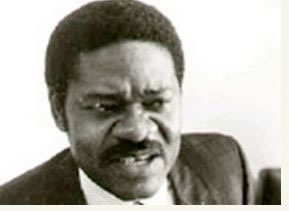
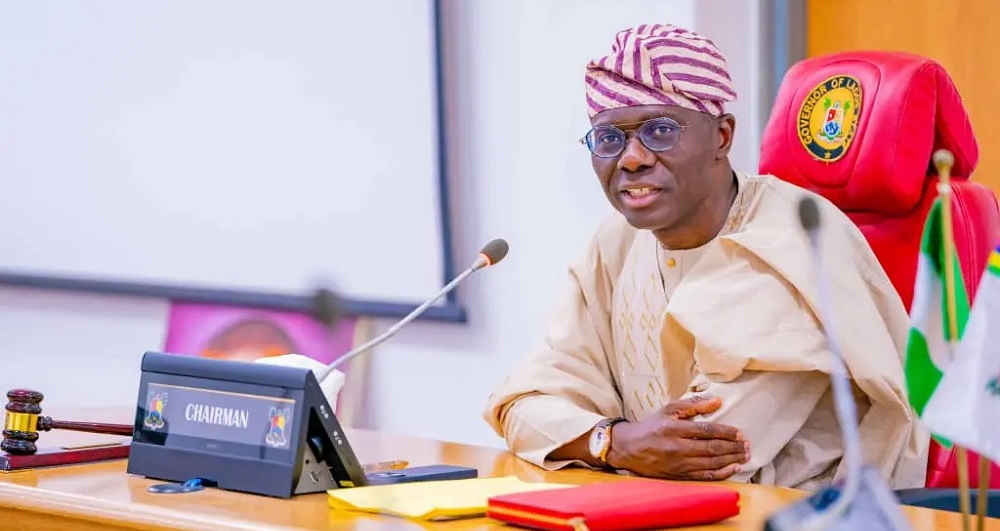
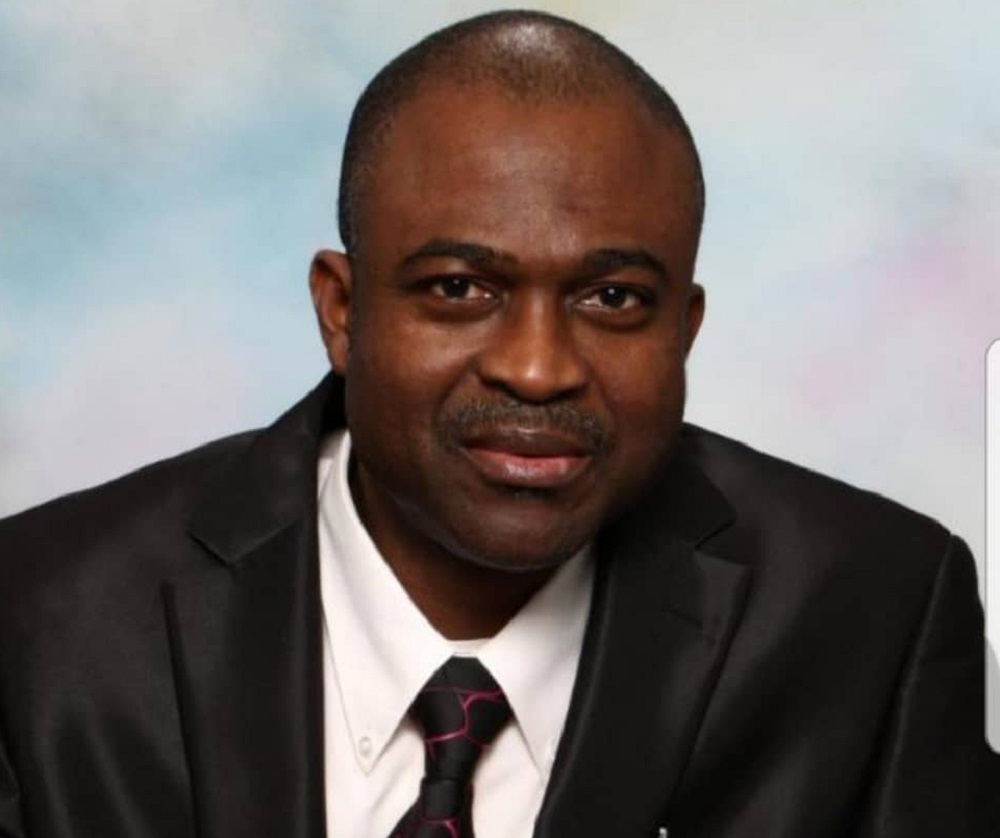
Forty years after the assassination of veteran journalist and founding Editor-in-Chief of Newswatch magazine, Dele Giwa, the Media Rights Agenda (MRA) and the Nigerian Bar Association (NBA) have renewed calls for justice and accountability over his unresolved killing.


While the MRA urged the Federal Government to obey a court order directing an investigation into Giwa’s murder, the NBA called for stronger protection of journalists and renewed commitment to freedom of expression.
The demands were made on Monday, October 19, 2026, at the Kensington Adebutu Media Centre of the Nigerian Institute of Journalism, Lagos, during the launch of Dele Giwa’s Granite Journalism, a collection commemorating the late journalist. 
Giwa was 39 when he was killed on October 19, 1986, after a parcel bomb exploded at his residence in Ikeja, Lagos, during the military regime of Ibrahim Babangida.
Four decades later, no one has been held accountable for the killing, which remains one of the most enduring unresolved cases in Nigeria’s media history.
Doctor recounts Giwa’s final moments
A medical doctor, Dotun Adedeji, who treated Giwa immediately after the explosion, gave an emotional account of the journalist’s final moments.
Adedeji said a bus conveying Giwa arrived at First Foundation Medical Centre, Opebi, Ikeja, at about 12:30pm, where he was the doctor on duty.
“I saw people running, saying, ‘they brought Dele Giwa’,” he recalled.
According to him, Giwa sustained devastating injuries but remained conscious and was able to speak.
“What I saw, I have never seen again since in my practice. He was shattered. His two limbs were open, and he was bleeding,” Adedeji said.
He recalled that Giwa asked whether he would survive the attack.
“But he was still talking. He said, ‘Dotun, se mi o ni ku sha? (I hope I will not die?)’ I said, ‘I don’t know’,” the doctor recounted.
Adedeji said Giwa died at about 1pm, adding that the injuries were so severe that survival would have been extremely unlikely.
He also recalled that Giwa repeatedly asked about his wife, Funmi, and their daughter, Aisha, who was about one year old at the time.
“How is Aisha? Do you know anything about Aisha?” he quoted Giwa as asking.
Adedeji said he kept Giwa’s blood-stained clothes and shoes in a corner of his room for five years, describing the journalist as more than a patient.
“He was not just my patient.
He was like a brother. He treated me like a brother,” he said.
Giwa had been at home with Kayode Soyinka, then London Bureau Chief of Newswatch, who narrowly escaped the blast after leaving the room to use the restroom.
Giwa killing changed young boy’s career ambition
Former Newswatch editor Ray Ekpu, who edited the commemorative publication, recalled the far-reaching impact of Giwa’s assassination on his own family.
Ekpu said his five-year-old son had wanted to become a journalist after seeing him and Giwa work in the profession, particularly because their families lived close to each other.
But the boy abandoned the ambition after witnessing the aftermath of Giwa’s killing.
“I don’t want to be a journalist again. I don’t want to be killed like Uncle Dele,” Ekpu recalled his son telling him.
Ekpu said the incident demonstrated the wider consequences of attacks on journalists, particularly the fear they create among media practitioners, their families and young people considering careers in journalism.
“The truth must be told by us, and journalists must be protected. There are no serious efforts in protecting the rights and lives of journalists, and it is sad,” he said.
He added, “Whoever said that the pen is mightier than the sword does not have Nigeria in mind.”
Osoba recalls Giwa’s security concerns
Former Ogun State governor and veteran journalist, Segun Osoba, also recalled that Giwa had expressed concern about threats to his life shortly before his death.
Osoba said he had been with Giwa and former Managing Director of the News Agency of Nigeria, Kehinde Adeosun, a day before the assassination when Giwa complained that people were after him.
“Dele Giwa had complained to all of us that they were after him. We went to visit Aikhomu and told him about this threat, and he said he would do something about it,” Osoba recalled.
He said he received a telephone call about 18 hours later informing him that Giwa had been attacked.
“Eighteen hours later, I was woken up with a phone call that Dele Giwa was attacked,” he said.
Osoba described Giwa as an exceptional journalist and urged contemporary practitioners to remain committed to the profession.
The event also featured tributes from media personalities, including TheCable publisher Simon Kolawole, Vanguard publisher Sam Amuka-Pemu, advertising executive Biodun Shobanjo, Professor Ralph Akinfeleye and Nosa Igiebor.
Kolawole, while reviewing Dele Giwa’s Granite Journalism, said the book contained 45 pieces written by Giwa and 16 contributions from other writers. He described Giwa’s writing as lucid, playful and provocative.
Amuka-Pemu said Giwa transformed Nigerian journalism and left an enduring mark through his work with Daily Times, Sunday Concord and Newswatch.
Giwa’s widow, Funmi, and daughter, Aisha, attended the event. Aisha, who was about one year old when her father was killed, said she barely knew him but was deeply moved by the tributes and accounts of his life and work.
NBA demands stronger protection for journalists
In a statement issued to mark the anniversary, NBA President, Oyinkansola Badejo-Okusanya, said the passage of time should not diminish the value of Giwa’s life or weaken the country’s commitment to fundamental freedoms.
“The passage of time must never diminish the value we place on a human life or our resolve to uphold these principles,” she said.
Badejo-Okusanya said lawyers and journalists had a shared responsibility to question the exercise of power and amplify the voices of people who might otherwise remain unheard.
“Our professions serve the public best when we discharge that responsibility with courage, integrity and care,” she said.
She described Giwa’s death as a loss to his family, journalism and the country, stressing the need to protect those who ask difficult questions and hold power to account.
“As we honour his memory, we reaffirm our commitment to freedom of expression and the dignity and safety of those who inform our society,” she said.
MRA demands implementation of court judgment
The MRA, meanwhile, urged the Federal Government to comply with a February 16, 2024, Federal High Court judgment directing an investigation into Giwa’s assassination and other unresolved killings of journalists.
In a statement issued on Monday, the organisation’s Deputy Executive Director, Ayode Longe, said the continued failure to resolve the case reflected a persistent culture of impunity surrounding attacks on journalists.
Longe said the judgment, delivered in a suit filed by MRA against the Attorney-General of the Federation, directed the government to investigate Giwa’s murder and other unresolved killings of journalists and prosecute those responsible where evidence and applicable laws permit.
He accused the government of failing to demonstrate meaningful progress or provide details of concrete steps taken to implement the judgment.
MRA described the alleged failure to comply with the order as “a contemptuous disregard for a valid and subsisting judicial order.”
The organisation called on the Attorney-General of the Federation, the Nigeria Police Force and other relevant authorities to disclose the status of the investigation, steps already taken and plans for prosecution where sufficient evidence exists.
It also urged authorities to revisit old investigation files, witness accounts, documentary evidence and previous findings that could help establish the circumstances surrounding Giwa’s death.
MRA further advocated the use of modern forensic and investigative techniques, where appropriate, to revisit the case.
Longe warned that the continued failure to hold anyone accountable for the killing could embolden those who attack journalists because of their work.
“The failure to hold anyone accountable for such a high-profile killing of a journalist as prominent as Dele Giwa sends a wrong signal to those who are inclined to attack journalists as a result of their work that they can do so without negative consequences,” he said.
The unresolved mystery
Giwa’s assassination occurred three days after he was reportedly questioned by officials of the then-State Security Service on October 16, 1986.
At the time, he had written about the Second-Tier Foreign Exchange Market, a Central Bank of Nigeria policy introduced to determine exchange rates and allocate foreign exchange through market forces.
Around the same period, Halilu Akilu of the then-Directorate of Military Intelligence reportedly questioned Giwa over an allegation that he had discussed arms importation with some individuals.
On October 19, 1986, the parcel bomb was delivered to Giwa’s residence and exploded while he was opening it.
Kayode Soyinka, who was in the house at the time, survived the blast.
The killing generated widespread outrage and has remained unresolved despite years of public calls for an investigation and accountability.
Forty years on, the MRA and NBA say honouring Giwa’s legacy must go beyond commemorative events.
They are demanding concrete action to establish the circumstances of his death, hold those responsible accountable and create stronger safeguards for journalists working to hold power to account.
For the organisations, the unresolved Giwa case remains a test of Nigeria’s commitment to justice, press freedom and the safety of media professionals.