
Eight federal highway projects with a combined estimated cost of over N594.49 billion were approved by the Federal Executive Council (FEC), chaired by President Bola Tinubu, on Wednesday.


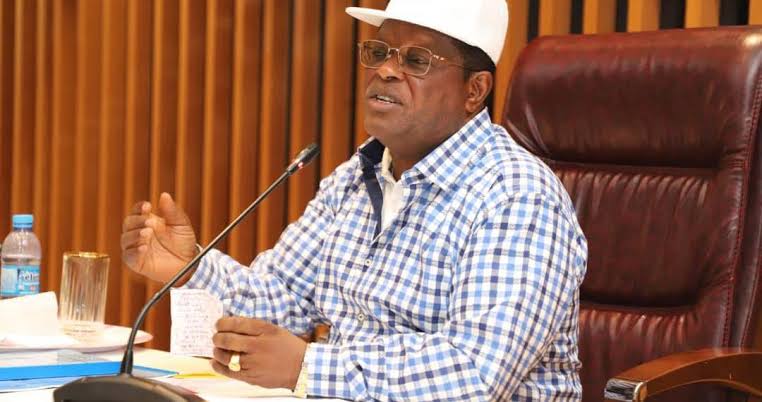
The Minister of Works, Senator Dave Umahi, disclosed this to State House correspondents after the FEC meeting.
One of the projects is the 18-kilometre Amaseri Road, from Ishagu to Otakot on the Enugu Expressway, awarded at N20.257 billion. 
The FEC also approved N11.33 billion for the third phase of the Umuahia-Bende-Afikpo Road in Abia State.
Umahi recalled that the project, which traverses Abia State, had previously been funded under the NNPC tax-credit scheme, but work stalled. He said it was subsequently rescoped, while the Abia State Government undertook to construct the remaining 43 kilometres.
The Works Minister said the FEC also approved the reconstruction of the 95-kilometre E2K-Okey-Ampa-Otopa Road in Kogi State at N160 billion.
“It also approved N209 billion for the 81.1-kilometre Ado-Ekiti-Ijan-Ilumoba-Ikole Road in Ekiti State, including a bridge. The contract was awarded to CBC.
“Other approvals include the 17-kilometre Sokoto-Illela Road, Route A1, at N28.218 billion, awarded to Kespeko Global Limited, and a 30-kilometre road linking Adamawa and Taraba states, with five bridges, at N62 billion, awarded to WeChina Nigeria Limited.”
Other approvals included N89.2 billion for the 47-kilometre Bichi Ring Road, including a flyover, and N14.486 billion for the eight-kilometre Dikko-Maje link road connecting to the Suleja-Minna Road.
Umahi also disclosed that Nigeria would partner with four other West African countries to construct the 1,028-kilometre Lagos-Abidjan Highway, with funding expected from the African Development Bank (AfDB).
The minister said he would meet with his counterparts from Benin Republic, Togo, Ghana and Côte d’Ivoire on Friday to discuss financing arrangements for the regional highway.
Explaining the proposed funding arrangement, he said the AfDB would provide financing to participating countries to develop their respective sections of the transnational corridor.
He, however, maintained that the proposed financing arrangement was subject to the outcome of the discussions and the bank’s arrangements.
Nigeria’s section, stretching from Tincan Island in Lagos to the Seme border with Benin Republic, covers 79 kilometres. The other sections comprise 89 kilometres in Togo, 576 kilometres in Ghana, 155 kilometres in Côte d’Ivoire and 128 kilometres in Benin Republic.
Umahi said the proposed highway was expected to strengthen cross-border connectivity, facilitate the movement of goods, and support trade and economic integration across West Africa.