BY BOLAJI AFOLABI


To describe Nigeria as a sports loving country is not a misnomer or skewed characterization. For decades, sports, particularly football has been the most potent instrument for national integration and cohesion. That the people are ardent followers of football is no exaggeration. Any match that involves the country; at club or national levels usually brings out the uniqueness of the average Nigerian. Passionate and committed to the success of ‘our boys, our girls’ as they say, the people display unusual ecstacy, enthusiasm, and excitement in victory, and manifest uncommon togetherness, understanding in defeat.
A few days back, a popular sit-out spot situated off 3rd Avenue – which is gradually becoming the business hub of Gwarimpa District, Abuja – witnessed the gathering of many people. Male, female, young, and old turned up in different jerseys, t-shirts, and casuals to watch the five English Premier League, (EPL) matches for the day. Ipswich versus Bournemouth; Sunderland against Chelsea; Brighton and Brentford; Crystal Palace versus Liverpool; and Manchester United against Aston Villa. As the crowd took possession of available chairs, beautifully arranged around tables, everyone looked forward to hours of football artistry by the players of all the teams. Typical of such gathering, people engaged in hearty reviews and preview of the past and expected matches. However, in the midst of interactions and arguments, there were power outages – which continued all through the first match. On each occasion, shouts of “NEPA, why now?” and “Up NEPA” whenever power is restored became the popular chorus. 
Reading the mood of people, and being pro-active, the management of the centre changed to alternative source of power shortly before the commencement of the second round of matches. This turned out to be a masterstroke, as no one bothered about power seizure anymore. At the end of the day’s matches, the Manchester United against Aston Villa tie which ended 4 goals apiece, generated hoopla. For over one hour, there was an exchange of banters between and amongst the people. For obvious reasons, the shambolic display by United – the team from the ‘red side’ of Manchester became the subject of ridicule. Supporters of Manchester City, who the previous day were decimated 3 goals to 1 by struggling Nottingham Forest taunted United faithful. Arsenal supporters – whose club had to wait for over 2 decades before winning the EPL last season, also joined the fray. Meanwhile, having returned to the national grid, everyone was treated to serial ‘on-and-off’ by the distribution company.
The frequency of power ‘up and down’ like a little child playing with the remote of a television set, led to the gradual exit of more people. That the facility which had over 100 people in joyous moods had thinned out to about one dozen; due to power outages was regrettable. While doing a panoramic review of events at the facility before, during, and after the EPL matches, the writer was literally brought back to earth by a familiar voice in ‘the house.’ Mallam Suleiman Abdulkadir, a die-hard supporter of Manchester United, and regular visitor to the relaxation center asked, “do you realize that there were far more people here, today than usual? What could be responsible for this?” Responding, Mr. Simon Eseoghene declared, “it is due to the erratic power supply that has been embarrassingly shameful in the past few weeks.” Thereafter, the pandora box was opened, as every one; including the writer contributed to the negative state of power outages across the country, its dampening effects on national economy, and other related issues.
Indeed, from the comments of many people, media reports, and empirical evidences, the power situation has been terribly awful. With the sudden change of weather which has led to unbearable heats, the erratic power supply has further compounded issues. From the North to the South, East and West, it has been complaints and criticism about the lethargic activities of the various structures in the power sector. From the Ministry to the Agencies, and major stakeholders, none has escaped the vilification and tongue-lashing of the people. It is inconceivable that the power sector, in spite the humongous investments by successive governments is still tottering – with no impactful changes. Year in, year out it has been the same circle – slight improvements during rainy season, and almost-zero output in the other seasons.
Since 1999, successive governments have invested in the power sector, yet, no substantial improvements. From Obasanjo to Yar’Adua, Jonathan, and Buhari it is the same story. Some stakeholders believe that the Tinubu administration has shown more commitment towards revamping the sector more than all his predecessors. An Industry experts, who pleaded anonymity declared that, “there is the 150 billion naira presidential power initiative to increase transmission; 700 billion naira metering initiative for the provision of over 1 million meters; 2 billion dollars reform-attracted investments; 2.7 trillion naira for the East-West Super Grid to raise transmission capacity to 19,000 MW from the present 5,000 MW; and a few others.”
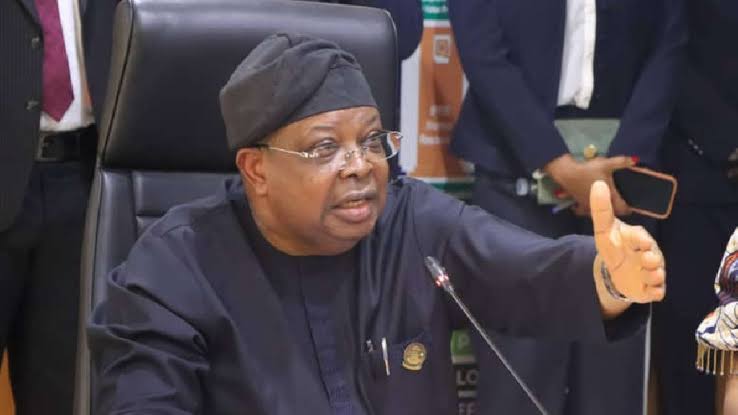
To the average Nigerian, these investments pales into insignificance as they continue to experience regular blackouts in their homes, businesses, and other environments. What Nigerians at Onitsha main-market, kory market in Kano, Balogun market in Lagos, and some other popular markets across the country desire is regular power to cushion transactions. It was not surprising that Mr. Adebayo Adelabu, the immediate past Power Minister, who assumed office with much promises had to apologize to Nigerians “for persistent, crippling outages” when he resigned in March 2026 to contest the Oyo governorship election. Many people described his apology as late and of no significance because under his watch, the outages worsened between February and March. Sadly, the Ibadan-born financial technocrat may have the record as the first power minister that had over 25 national grid collapses. In addition to this, his promise to raise generation, transmission, and distribution to 6,000 MW by the end of December 2024 fell flat – it never happened!
One wonders why public officials are quick to make promises, and talk tough before assuming office. Why make committal statements when you are not sure or have detailed information about what is on ground at the ministry or agency? Nigeria’s public service is replete with many Ministers and Heads of Agencies who made beautiful comments and painted glowing pictures of what they would do but capitulate when faced with the realities of challenges in such institutions, after days and weeks in office. Though a few have the courtesy to recalibrate their statements, but many keep straight eyes, as though nothing is amiss. Somehow, this error of shooting beyond what eyes can see is still being committed by government appointees.
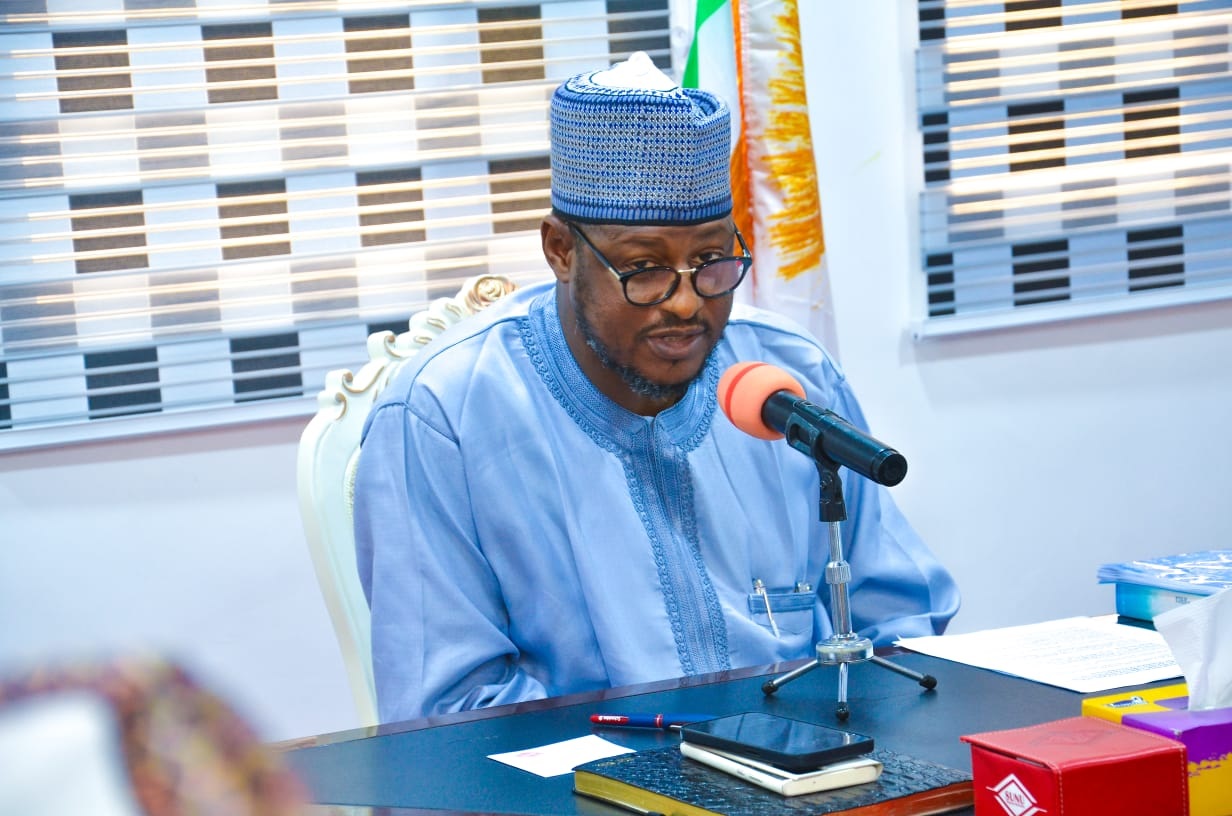
Mr. Joseph Tegbe is one. The writer recall that on May 6, at his screening by the Senate for confirmation as the Minister of Power, he made a promise that Nigerians would see visible improvement (in power supply) within 100 days. From their body languages, some of the Senators were not sure if this bold and courageous statement can be achieved. Though Tegbe’s promise generated national interest but many people did not see the practical workability and realization. To some discerning enough, it was the usual talk – making political correctness but far in reality.
For Tegbe who assumed office as Nigeria’s power minister in June, the jury is out. In the first few weeks – which is a normal and regular scenario – there were signs of improvement. Thereafter, the power situation across the country made nonsense of his ‘100 days improvement.’ By October, it got bad that on 19th, generation fell from about 3,840 MW to 476.7 MW – which was ridiculously low for a country with over 200 million population. Some experts said it was the first national grid collapse under Tegbe, but the Nigeria Independent System Operator, (NISO) differed, describing it as plant trips and system abnormalities.
Sadly, the power crisis has deepened, such that Band A customers – supposedly the elites clients – who pay the highest tarrif for purported 20 hours power supply daily – barely had 4 hrs of light. According to data, on November 5, the 11 Distribution Companies, (DISCOS) received only 2,926 MW. Fact is, DISCOS have performed worse in the last few weeks. As many people expected, Tegbe, while acknowledging worsening power disruptions in Lagos, Kwara, Ogun, Oyo, and some other parts of the country blamed it on reduced output from hydro plants; gas shortages at thermal stations; and maintenance challenges. The circus show of blames, and unnecessary buck-passing has begun with DISCOS blaming Transmission Company of Nigeria, (TCN); NISO and NNPC contradicting each other.
Perhaps, to douse public tensions and citizens backlash, Tegbe promised (again!) restoration within 72 days. Many described the statement as audacious and attempt to tinker with the sensibilities of the people. From reports, though generation has gone up to 4,020 MW from 3,500 MW by November 9, the outages has remained, no improvements in most parts of the country. The 72-hour timeline has since expired. One is not sure if the Minister has made any official statement again. By the way, the effects of the erratic power supply on different segments of the country is collosal. Manufacturers, SMEs, Informal sector, families, individuals, and other segments are counting their loses.
As it is, the vast majority of citizens and residents are not happy about the epileptic power supply across the country. Instructively, on this matter, all segmentation of the country are on the same page – the bourgeoisie, the middle class (if it still exists), and the down-below. Some people, since the expiration of Tegbe’s 72-hour promise are demanding for his resignation. This is a hard call because such practice is alien in the public service. From history, there are no records of any former Minister that has ever resigned because of failure to deliver. As plausible as it seems, it is imperative that people should look at some other initiatives that would impact on the power sector.
Since Tegbe, in a recent interview was quoted admitting that, “the truth is, there are challenges at every stage of the value chain,” he should realize that part of these challenge is no longer about clearing containers or paying GENCOS. It is about TRUST! The people were promised of experiencing improvement in 100 days, and seeing an end to the outages in 72-hour – but NONE was achieved. What can he do to re-gain public perception? What can be done to stimulate and gain public Trust? Tegbe has to be daring, deliberate, and intentional. To change the present narrative, he must consider these strategies:- apologize to Nigerians, and assuring new people-focused, all-inclusive approach; end the blame game prevalent in the sector; public resolution of the lingering gas payment disputes; publish daily, records of DISCOS supply hours to customers, and by Bands.
* BOLAJI AFOLABI, a Development Communications specialist was with the Office of Public Affairs, The Presidency, Abuja.