Reps Splits on Farm Loan Waiver as Lawmakers Demand Probe


By Gloria Ikibah
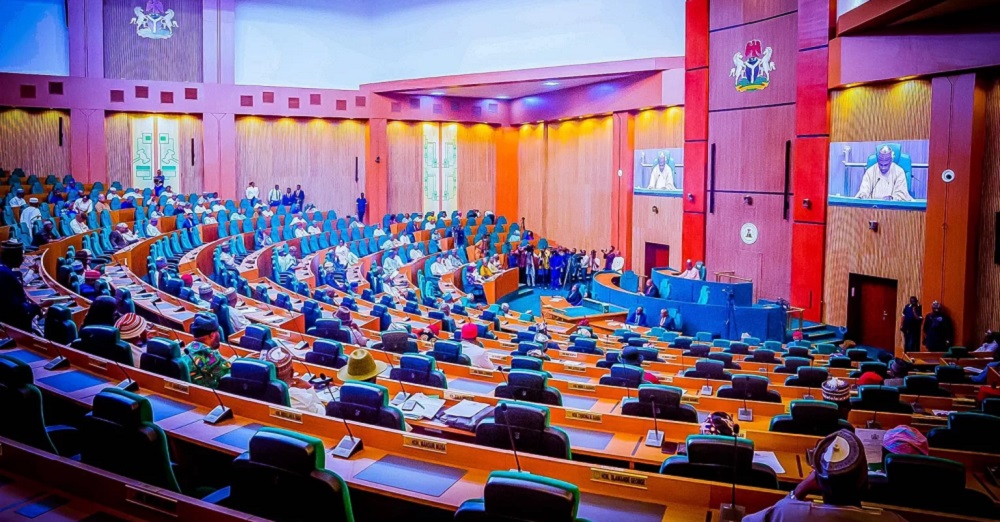
A motion seeking the cancellation of outstanding loans owed by Nigerian farmers under government-backed agricultural intervention schemes has divided members of the House of Representatives, with some lawmakers demanding a thorough investigation into how the funds were utilised before any debt waiver could be considered. 
The motion, moved on Tuesday by Rep. Inuwa Garba, member representing Yamaltu/Deba Federal Constituency of Gombe State, sought debt forgiveness for farmers whose ability to repay loans had allegedly been undermined by insecurity, natural disasters and prevailing economic challenges.
Leading the debate, Garba noted that the Federal Government had introduced several agricultural financing programmes, including the Anchor Borrowers’ Programme, Commercial Agriculture Credit Scheme and NIRSAL-supported facilities, to boost food production and strengthen national food security.
He, however, said several factors had disrupted farming activities and left many beneficiaries unable to meet their repayment obligations.
“The House is concerned that widespread insecurity, banditry, insurgency, farmer-herder conflicts, flooding, drought, climate change and other natural and human induced disasters like soil degradation, poor soil fertility, poor irrigation infrastructure and inadequate veterinary and disease control services have severely disrupted agricultural activities, resulting in substantial crop failures, food insufficiency, loss of investments and diminished farm incomes,” he said.
Garba argued that many farmers defaulted not because they were unwilling to repay their loans but because circumstances beyond their control had affected their productive capacity and financial stability.
“The House is concerned that many beneficiaries of government-sponsored agricultural loans have been unable to meet their repayment obligations, not necessarily due to unwillingness to repay, but because circumstances beyond their control have substantially undermined their productive capacity and financial stability,” he added.
He warned that continued efforts to recover the loans, including interest and penalties, could worsen the plight of struggling farmers.
“We are worried that the continued accumulation and enforcement of outstanding agricultural debts, including principal interest and penalties, could push already distressed farmers into deeper poverty, expose them to asset seizures and discourage their participation in future agricultural activities”, he noted.
The lawmaker further argued that forcing financially distressed farmers to repay under the prevailing economic conditions could defeat the purpose of the intervention schemes.
“Compelling financially distressed farmers to repay loans under prevailing economic conditions could undermine the very objectives for which the loans were established, thereby worsening food insecurity, unemployment and rural poverty”, the lawmaker said.
However, the proposal faced strong opposition from Rep. Bamidele Salam, representing Ede South/Ede North/Ejigbo/Egbedore Federal Constituency of Osun State, who cited findings in an Auditor-General for the Federation’s report before the House.
Salam, who is the chairman House Committee on Public Accounts, said more than N1 trillion released under the Anchor Borrowers’ Programme had been largely abused by some beneficiaries who allegedly diverted the funds into businesses unrelated to agriculture.
He said some individuals obtained the loans through the Central Bank of Nigeria and deposit money banks under the guise of supporting farming, only to invest the funds in real estate and other ventures.
“Over a trillion naira, given up as loans under the Anchor Borrowers Programme, a CBN intervention programme for Nigerian farmers, was largely abused by beneficiaries. People came, approached the CBN or their money deposit banks, and obtained loans for the purpose of farming, but diverted those monies into some other area of business endeavour, buying real estate in Abuja, in Lagos, and some in Dubai,” he said.
Salam also expressed worries over the state of the Bank of Agriculture, which he said had become virtually inactive following the diversion of funds borrowed through the institution.
“The Bank of Agriculture, which unfortunately was set up as that special purpose vehicle for supporting farmers, has today become virtually immobile as a result of a sum of N795bn borrowed by persons, most of whom diverted that money into other purposes,” he said.
He warned that approving a blanket waiver without establishing how the loans were spent would send the wrong signal to future beneficiaries of government intervention programmes.
“If we come as a parliament and recommend a holistic waiving of all loans given out to persons who are purportedly to be farmers, we will be setting a very, very dangerous precedent for people to come, access government facilities, some of them interest-free, some of them single-digit interest, only for them to go and use those monies for other things”, Salam added.
The Osun lawmaker called for a comprehensive investigation into the intervention schemes to establish how beneficiaries utilised the funds, suggesting that the House either set up an investigative committee or reject the motion outright.
Supporting Salam’s position, Rep. Isiaka Ibrahim, a lawmaker from Ogun State, said there had been cases of people obtaining government loans and using the money for purposes unrelated to agriculture, including marrying additional wives.
He, however, maintained that a proper investigation could identify genuine farmers whose businesses had been affected by economic hardship and who were unable to meet their repayment obligations.
Similarly, Rep. Paul Kalejaiye, an All Progressives Congress lawmaker from Lagos State, urged the House to handle the matter cautiously, emphasising the need to investigate how beneficiaries used funds accessed through the various agricultural intervention programmes.
With members divided over the proposed waiver and no resolution reached, the House adjourned further consideration of the motion until Tuesday, November 24.
The lawmakers are expected to resume deliberations on whether the outstanding loans should be waived, subjected to further investigation or handled through a targeted relief arrangement for genuinely distressed farmers.