The Federal Capital Territory Administration (FCTA), in partnership with the World Bank and the National Primary Health Care Development Agency (NPHCDA), has upgraded and equipped 20 primary healthcare centres across the six area councils to improve access to quality healthcare and reduce maternal and child mortality.

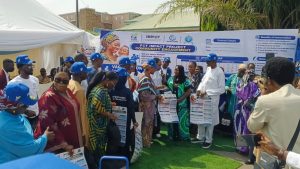
The Mandate Secretary, Health Services and Environment Secretariat, Dr Adedolapo Fasawe, disclosed this on Monday, 23 November 2026, during a community engagement at the Model Primary Health Care Centre in FCDA Owner-Occupier Estate, Kubwa, Abuja.
She said the intervention was designed to address major barriers to healthcare delivery, particularly delays in accessing medical attention, inadequate health facilities and the inability of vulnerable residents to afford treatment.
According to her, the initiative goes beyond routine medical outreach, providing improved infrastructure, free health insurance coverage and emergency transportation services to ensure that pregnant women, children and other residents receive timely medical attention.
Fasawe said the intervention aligned with President Bola Ahmed Tinubu’s Renewed Hope Agenda, which prioritises improved access to essential healthcare services.
She explained that the upgraded facilities were supported under the World Bank-funded Immunisation Plus and Malaria Progress by Accelerating Coverage and Transforming Services (IMPACT) Project.
The centres have been equipped with modern medical facilities, staff accommodation, solar-powered electricity and backup generators to support uninterrupted, round-the-clock healthcare services.
The Mandate Secretary highlighted the importance of improved road infrastructure to emergency medical response, commending the FCT Minister, Mr Nyesom Wike, for road rehabilitation projects across satellite towns and rural communities.
She said improved road networks had reduced ambulance response times, citing the journey from the city centre to Kubwa General Hospital, which she said had decreased from about one hour to 20 minutes.
To strengthen emergency response, Fasawe announced the introduction of a community ambulance transportation scheme in collaboration with the National Union of Road Transport Workers (NURTW) and commercial drivers operating cars, buses, tricycles and motorcycles.
Under the arrangement, registered drivers would receive N10,000 for each trip conveying a pregnant woman in labour to a healthcare facility.
She said the initiative complemented the toll-free 112 emergency response line, through which residents could request ambulance services.
Demonstrating the effectiveness of the emergency response system, Fasawe invited a resident to place a test call to the emergency line during the event. An ambulance assigned to Zuba reportedly arrived at the location in slightly over three minutes.
The Mandate Secretary also distributed free Mama Kits provided by the NPHCDA to pregnant women at the engagement, explaining that the kits contained essential supplies for childbirth.
She disclosed that at least 1,000 vulnerable residents attending the event were being enrolled free of charge in the FCT Health Insurance Scheme.
According to her, the initiative, supported through the Basic Health Care Provision Fund (BHCPF), would provide pregnant women with one year of free medical care in public and accredited private hospitals, including Nizamiye and Saad hospitals.
She added that beneficiaries would also have access to free Caesarean section services under the Basic and Comprehensive Emergency Obstetric and Newborn Care (BEmONC and CEmONC) programmes.
Fasawe urged community leaders and residents, including persons living with disabilities, to take ownership of the upgraded facilities and report any cases of extortion or denial of services.
She stressed that primary healthcare services covered by the initiative were free and described access to quality healthcare as a fundamental human right rather than a privilege.
Earlier, the Executive Secretary of the FCT Primary Health Care Board, Dr Dan Gadzama, said the FCT was initially excluded from the immunisation component of the IMPACT Project when it commenced in 2021.
He explained that sustained engagement by Fasawe with the World Bank eventually secured the territory’s inclusion through a Service Level Agreement signed in February 2025.
According to him, the first disbursement was made in September 2025, while the project was granted a one-year extension to December 2026.
Gadzama said the 20 healthcare centres were selected through data-driven assessments to address critical gaps in healthcare delivery across the territory.
He added that the board had trained more than 250 healthcare workers, procured over 70 laptops and tablets to strengthen health data reporting, and distributed Mama Kits across the facilities.
He also said the board had partnered with security agencies and local communities to ensure the sustainability of healthcare services in hard-to-reach areas.
Also speaking, the World Bank’s Senior Health Specialist and Task Team Leader of the IMPACT Project, Dr Onoriode Ezire, commended the FCTA for the pace and standard of its primary healthcare upgrades.
Ezire said the FCT had made significant progress compared with several states that joined the programme two years earlier.
Recalling his involvement in drafting the legislative framework that established the FCT Primary Health Care Board, he urged mothers, families and community members to patronise the upgraded facilities and use available feedback channels to promote accountability and improved healthcare delivery.
The Chairman of Bwari Area Council, Mr Joshua Ishaku, represented by his Supervisory Councillor, Mrs Fidelia Onwuachonam, thanked the FCTA and the World Bank, particularly the Mandate Secretary, for the intervention.
He pledged the council’s continued support, assuring that further efforts would be made to encourage women, mothers and children to utilise the upgraded facilities.
Similarly, the Village Head of Usuma Ward, Chief Beje Tazodayi, expressed appreciation for the intervention, describing it as a welcome development for the community.
He recalled that the facility had previously operated under poor conditions with limited facilities but said the renovation had transformed it into a modern healthcare centre.
The traditional ruler urged residents to support the facility, participate in community health initiatives and encourage volunteers working there to sustain their contributions to healthcare delivery.
About the Author