
By Gloria Ikibah
The House of Representatives has called for urgent rescue operations, relief materials and the provision of safer boats and life jackets to riverine communities in Bayelsa State following a boat mishap that claimed 29 lives, including two children.
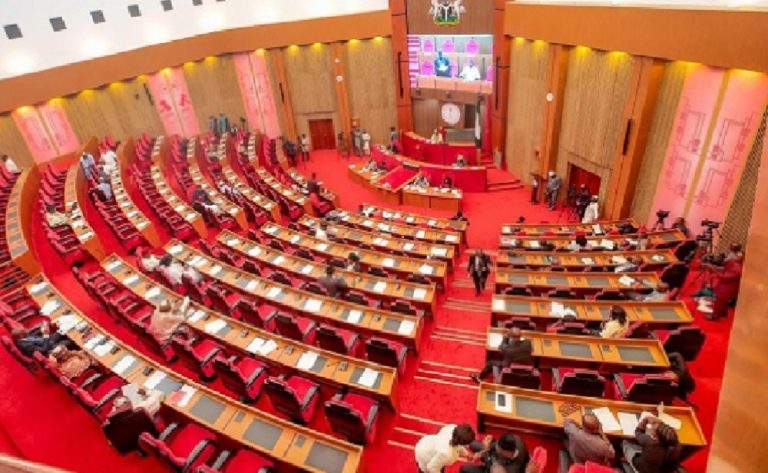
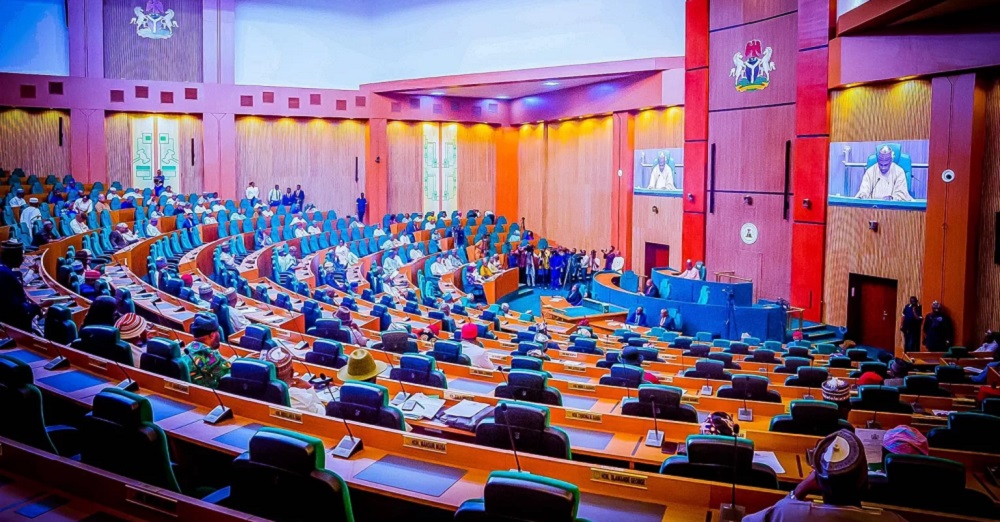
The call followed a motion of urgent public importance moved by Rep. Rodney Ebikebina Ambaiowei, representing Southern Ijaw Federal Constituency, during plenary on Tuesday.
The lawmaker said more than 150 people, mostly indigenes of Southern Ijaw, were involved in the boat accident on November 20, 2026, while travelling from Ayama Community to Ukubie for a condolence visit.
According to him, the accident occurred at the river junction between Oweikorogha and Otuan when the boat capsized, throwing all its occupants into the river.
Ambaiowei said rescue efforts began immediately, with the Bayelsa State Government, security personnel and other relevant agencies responding to the incident.
He disclosed that as of November 22, 51 persons had been rescued alive with varying degrees of injuries and discomfort, while 29 victims, including two children, had died.
The rescued victims, he said, were taken to medical facilities in Southern Ijaw Local Government Area and government hospitals in Yenagoa for treatment, while rescue operations continued in search of missing persons and possible survivors.
The lawmaker expressed concern that many victims were still missing despite the efforts of the Bayelsa State Government, warning that the scale of the tragedy required a broader search operation.
He said the incident had plunged families and residents of Southern Ijaw, particularly Ukubie and neighbouring communities, into mourning.
Ambaiowei also blamed the vulnerability of riverine communities on the condition of boats used for transportation, noting that many were old, overworked and overloaded because of the scarcity of vessels.
He further lamented the absence of life jackets, floaters and other water safety equipment, as well as the failure to enforce their use, despite water being the major means of transportation in the largely riverine constituency.
The lawmaker said the communities had limited access to motorable roads despite ongoing road construction efforts by the Bayelsa State Government, leaving residents heavily dependent on waterways for movement.
He warned that failure by the National Emergency Management Agency (NEMA) and other relevant bodies to intensify rescue operations and provide relief materials could worsen the situation.
Ambaiowei noted that the affected communities also depended on fishing for food and income, stressing that the tragedy had disrupted their livelihoods and economic activities.
He commended President Bola Tinubu for responding to the incident by sending Vice-President Kashim Shettima to the affected area, where he visited and sympathised with families of the deceased.
The lawmaker also noted the Federal Government’s donation of ₦250 million to victims of the tragedy.
Contribution to the motion centred on three major concerns: the failure to provide safe water transport, weak enforcement of safety standards, and the need to hold government agencies and community-level authorities accountable for recurring accidents.
The lawmakers argued that the tragedy, which claimed dozens of lives, should trigger a rethink of transportation policy in riverine communities, with federal support for modern boats, compulsory life jackets, proper vessel inspection and tougher penalties for safety violations.
They called for safer water transportation, stricter enforcement of maritime safety standards and government-backed boat services for riverine communities following the deadly Bayelsa boat mishap that claimed 29 lives.
House Minority Leader, Rep. Fred Agbedi said the accident had exposed the hardship faced by riverine communities, arguing that government transportation interventions had largely overlooked people who depend on waterways to travel.
Agbedi said the provision of subsidised, modern boats could help prevent such tragedies, just as the Federal Government was introducing Compressed Natural Gas (CNG) buses to make road transportation cheaper.
“Mr Speaker, this happening brings to attention what the people of the riverine communities are suffering. And I think it’s a moment that we should use to also assuage the challenges.
“I’m aware that the federal government is providing CNG buses, you know, that are more economical. But each time we talk about mass transit and all that, there is no river craft provision.
“So in this century, you see people using a dugout boat, you know, with weak roofs, that will collapse from the roof on the people who are sitting at the bottom. If government has provided, as we do mass transit and do CNG buses and all that, if vessels are provided for transportation at subsidised rates, I’m sure that this incident will have been averted”, he said.
He described the motion as an opportunity for the country to correct longstanding neglect of riverine communities, insisting that federal transportation policies should also cater for people who have little or no access to roads.
“And so this motion, as it is, is an opportunity for us to right some wrongs as a nation, so that even those who come from riverine communities from the north to the south will have the opportunity of using certain facilities that are provided by the federal government.
“And so I want to add that subsequently, even in budgetary provision, as to provisions of CNG buses and all that, the federal government should also provide for boats that are modern in nature, that will be cheaper for our people to hire in case they want to travel to the far-flung riverine areas”, Agbedi said.
Rep. Shina Oyedeji, in his contribution, urged the government to stop paying lip service to safety standards, saying the tragedy should serve as a wake-up call for authorities to properly regulate transportation operations.
He questioned the training and certification of operators, as well as the standards governing the use of boats and other transport facilities.
“I think this is an opportunity for us as a nation to start to do the right thing the way it should be done.
“The end time should be now for us to stop playing games. I mean, many of all these, we’re talking about CNG, we’re talking about these movement and so on. The CNG, if many of us can attest to this, if you look at many of these conversions, we will see that exactly what’s the manner for this conversion.
“Yes, the government meant well for us to have the CNGs to actually make things easier, make transportation cheaper, but it was called it with a manner, a manner that can make even the donors of the donors in the community to actually do the right thing. Many of all these people who do all these drivers, who do all these things, I do not know who trained them. Who got them certified? When was the last manner for their certification reviewed?”, he said.
Oyedeji said Nigeria could not continue adopting practices from other countries without establishing and enforcing standards suited to its own circumstances.
“We cannot continue to assume that they do it in America, they do it in the UK, they do it in Russia or Morocco, we want to do it here without having the right process. We must write a manner that can say this is how it must be done.
“I’m not sure, I don’t want to conclude, but how many people were supposed to be on board that boat that day? How many people were certified to be there? Please, this is the right time for us to see what we can do.
“So the committee on the safety standards can be involved in this to actually see what we can do, to actually make sure that many of the things that need to be done properly should be done properly. Safety standards must be taken seriously in Nigeria”, he added.
The Deputy Majority Whip, Rep. Isiaka Ibrahim, said the responsibility for safety on inland waterways rested with both federal and state governments, noting that creeks and offshore waters were on the concurrent legislative list.
He urged the House to investigate the incident and examine the safety practices of operators, particularly in comparison with multinational companies operating offshore.
“Mr Speaker, first and foremost, I want this entire House to note that creeks and offshore waters in the Constitution, the creeks is on the concurrent list.
“So which means the federal government takes responsibility and at the same time, the state government, where all these respective waters are, they take responsibility. Away from there, and without any gain blame, Mr Speaker, there is something we have always put aside and forget until this kind of a thing happens, and that is when we start to make complaints and apportion blames.
“Mr Speaker, in the entire offshore waters in Nigeria, being used by the multinationals, the way multinational companies that are in our deep waters, the way they use our waters, if that is the same safety measure put in place by all these multinationals, that our state and all critical stakeholders in our creeks, if they put even just 2% of the safety measure in place, we will not be having this”, he said.
Ibrahim said the tragedy underscored the dangers of disregarding basic precautions, including the use of life jackets, warning that swimming ability alone was not enough to guarantee survival in an accident.
“I know how to swim. I have been swimming for 40 years. No, you don’t even know the condition of the boat or the condition of the water or the depth or what may have happened to the boat.
“Life vests, life jackets, we ignore it. And then we are not talking about mishap. Definitely, it’s a hazard.
“And I want to appeal that this very motion should call for a learning curve and to address what may have happened. We always say in safety, something had happened.
“So, Mr Speaker, finally, before I take much of the time for this, I want to appeal that it’s not every time we start in one minute silence when we refuse to move on. Thank you very much, Mr Speaker”, he urged.
House Leader, Rep. Julius Ihonvbere, however, stressed the need to focus on responsibilities at the grassroots, arguing that communities, maritime associations, local councils and state authorities must also be held accountable for safety failures.
He said footage from the accident showed people boarding boats without life vests, describing the practice as unacceptable and calling for tougher penalties against those who flout safety regulations.
“Mr Speaker, I think that our aim of this approach, let me, through an amendment, extend the deep sympathies of the leadership to the people of Bayelsa for this unfortunate incident. But, Mr Speaker, this issue is not an issue of the federal government at this time. Let us go down to the grassroots.
“Community associations, the maritime associations, the local government council, and then the state government and the responsible agencies within the states. Even as we were seeing reports on TV, we saw people boarding boats or canoes without life vests. Even as that, we were seeing the reports of our people’s bodies being pulled.
“You see, the endless possibility and rascality that permeates the entire spectrum of agencies, of governments, at all levels in this country, if we don’t begin to check it with the appropriate laws and stiff penalties, you know, how does somebody get on a boat without a life vest?”, he stated.
Ihonvbere insisted that personal familiarity with waterways or swimming experience should not be used as an excuse for ignoring safety requirements.
“Soldiers that die in war also know how to shoot. They know how to deploy grenades. So the fact that I was born in the river side, I was thrown into the river, I was a baby, I have been swimming for 20, 35 years, is not an excuse to board a boat without the appropriate life vest.
“And the inspection of watercrafts, like the maritime leader was saying, whose responsibility is it? I go to some of these creeks and I see the kind of boats that people deploy. It’s an embarrassment”, he said.
He called for stronger enforcement and accountability at the points where passengers board boats, saying the recurring accidents would continue unless authorities took decisive action.
“So I believe that while there are limitations to what we can do from here, I know there’s a bill coming out today about reconstituting the boat for river and water safety, but I do honestly think that responsibilities at the grassroots level, at the shore, at the river line area, at the area where our people board these boats, this has happened again and again and again.
“And it’s not only the river and the rest. Even if you go to the Plateau, and we’re talking about illegal mining, we talk as if only the federal government should do everything. There’s responsibility at the local level.
“And we must begin to do our best here. And I think penalty and enforcement is the starting point. If we don’t do this, no matter what you say in this particular chamber, nobody will take this seriously and this type of thing would happen again”, the Leader said.
The House unanimously adopted the motion and mandated its Committee on Emergency and Disaster Management to work with NEMA and the Bayelsa State Government to investigate the immediate and remote causes of the accident and recommend measures to prevent future occurrences.
It also called on NEMA, the Niger Delta Development Commission (NDDC), Nigerian Inland Waterways Authority and the South-South Development Agency to provide additional relief materials to affected communities to cushion the impact of the tragedy and loss of livelihoods.
The House further urged the agencies to urgently supply safer boats, life jackets, floaters and other water transport safety equipment to riverine communities, while ensuring their mandatory use.
Lawmakers also observed a minute’s silence in honour of the victims who lost their lives in the accident.
About the Author