
News
NCDC working day and night as Ebola risk remains high in Nigeria

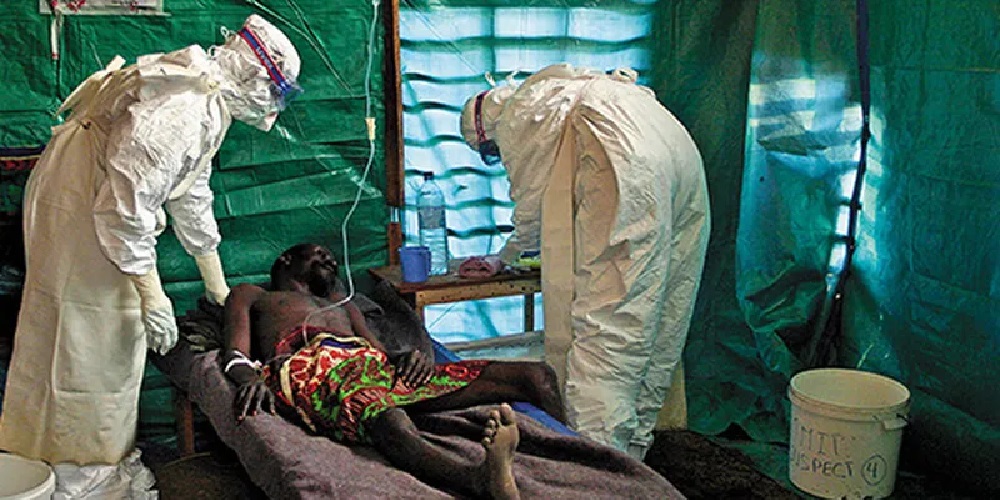


The Nigeria Centre for Disease Control and Prevention (NCDC) has classified the risk of importation of the Bundibugyo strain of the Ebola Virus Disease (EVD) into Nigeria as high, citing ongoing transmission in parts of East Africa, increased international travel, population movement, and porous borders.
The assessment was disclosed by the Director-General of the NCDC, Dr Jide Idris, during a media briefing in Lagos on the country’s level of preparedness following reported Ebola outbreaks in the Democratic Republic of Congo and Uganda.
Dr Idris said the agency’s position is based on a dynamic risk assessment conducted in response to the evolving regional public health situation.
According to him, the possibility of delayed detection remains a concern because the symptoms of Ebola often resemble those of other endemic diseases such as malaria and Lassa fever.
He noted that while Nigeria has not recorded any confirmed case of the disease, the NCDC is intensifying surveillance and preparedness measures to prevent the importation and spread of the virus.
The NCDC boss outlined several response pillars already activated by the agency, including enhanced surveillance at points of entry, laboratory readiness, risk communication, case management preparedness, and coordination with relevant stakeholders across the health sector.
Dr Idris urged state governments to activate their preparedness mechanisms and ensure that emergency response structures are fully operational.
He also called on healthcare workers and other frontline personnel across the country to maintain a high index of suspicion when attending to patients presenting symptoms that may be consistent with Ebola infection.
”Since confirmation of the outbreak in the region, NCDC has intensified the preparedness activities nationwide to ensure that Nigeria remains ready to rapidly detect, investigate, contain, and respond to any potential outbreak of disease.”
”Some of the things we’ve done so far are the completion of a national dynamic risk assessment and vulnerability analysis to guide the pregnancy,” he said.
He emphasised the importance of early detection and prompt reporting of suspected cases, stressing that vigilance at all levels of the healthcare system remains critical to preventing a potential outbreak.
The NCDC reaffirmed its commitment to working closely with state governments, healthcare institutions, and international partners to strengthen Nigeria’s preparedness and response capacity against emerging infectious disease threats.
Ebola, which is passed on through close contact and bodily fluids, has killed more than 15,000 people in Africa over the past 50 years.
The current outbreak — the 17th to hit the DRC — has to date seen 344 confirmed Ebola cases across three of the country’s provinces, including 60 deaths, said the WHO.
The UN health agency also tallied 116 suspected cases of the disease.
Fifteen cases, including one death, have also been reported in neighbouring Uganda, including a Congolese resident who had arrived there after first travelling to the United Arab Emirates, Tedros said.

…urge parliaments to demand accountability
By Gloria Ikibah
Deputy Speaker of the Nigerian House of Representatives, Rt. Hon. Benjamin Okezie Kalu, has urged the World Trade Organisation (WTO) to break the prolonged deadlock over food security and investment facilitation, warning that delays are weakening confidence in the multilateral trading system.
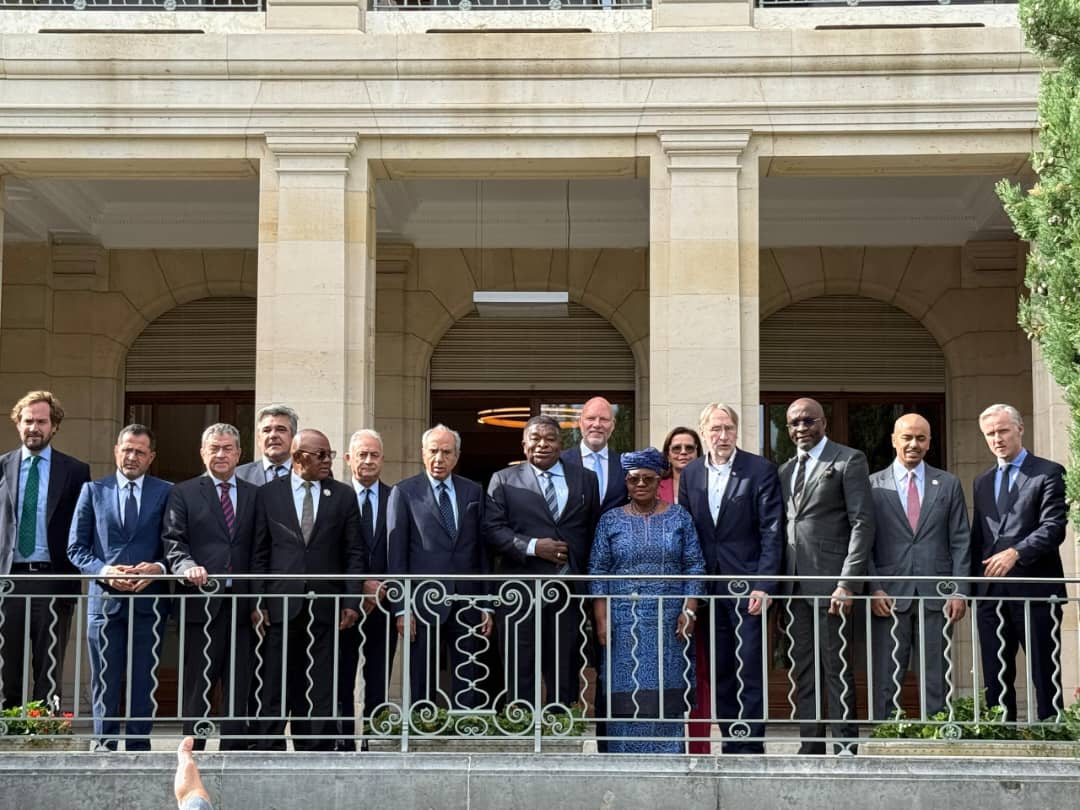
Kalu made the call on Friday in Geneva, Switzerland, while contributing to the 57th Session of the Steering Committee of the Parliamentary Conference on the WTO (PCWTO), attended by WTO Director-General, Dr Ngozi Okonjo-Iweala, as a special guest.
The session, jointly organised by the Inter-Parliamentary Union (IPU) and the European Parliament, was co-chaired by Hon. Bernd Lange of the European Parliament and IPU Secretary-General, Ms Anda Filip. It brought together parliamentarians from national and regional legislatures, representatives of the European Parliament and IPU, as well as trade policy experts.
The committee reviewed developments in multilateral trade negotiations, follow-up actions from the 14th WTO Ministerial Conference and recommendations from the PCWTO session held in Yaoundé, Cameroon.
The meeting also considered stronger engagement with parliamentary trade committees, increased participation in PCWTO activities, cooperation with business and civil society, and preparations for the 2026–2027 programme.
Kalu acknowledged progress recorded by the WTO on fisheries subsidies and development issues but said the organisation’s credibility would ultimately depend on its ability to deliver tangible outcomes, particularly for developing countries.
He expressed concern that a permanent solution had yet to be reached on public stockholding for food security, 13 years after the commitment made at the 2013 Bali Ministerial Conference.
Nigeria, he noted, had co-sponsored the demand by the African Group, the African, Caribbean and Pacific Group and the G33 for a permanent solution.
He said: “Thirteen years cannot be explained as an ordinary negotiating delay. Behind every delayed outcome are farmers, workers and families living with the consequences of decisions we defer”.
As an interim measure, Kalu proposed that WTO members consider a waiver under Article IX:3 of the Marrakesh Agreement to cover qualifying public stockholding programmes.
He argued that the absence of consensus should not make an explicit treaty mechanism permanently unusable when countries were facing pressing food security needs.
The Deputy Speaker also raised concerns over the Investment Facilitation for Development Agreement, as he said broad support for the agreement had remained stalled by a single formal objection.
He called for greater accountability from national parliaments and proposed that participating legislatures submit reports on concrete actions taken to advance PCWTO and WTO outcomes before each Steering Committee meeting.
“Yaoundé revealed problems that are already well understood. The challenge now is to create political accountability for governments to explain what they are actually doing about them. If credibility is the issue, accountability must be the response.
“I propose that before each Steering Committee meeting, participating parliaments should report on concrete steps taken within their own jurisdictions to advance the outcomes of Yaoundé and MC14, identifying the responsible authority, the action taken, the government’s stated position and the current status.
“Too often, our discussions focus on what Geneva has or has not done. We should devote equal attention to what our own governments and legislatures have done since the last meeting. Accountability must run in both directions.
“We should hold ourselves to the same standard of accountability we ask of Geneva. Nigeria commits to doing so.
“Distinguished colleagues, behind every delayed outcome are farmers, workers and families living with the consequences of decisions we defer.
“The WTO’s credibility is not measured by the sophistication of its rules. It is measured by whether the members who need it most have rational grounds to trust it.
“Nigeria is not here to add to the diagnosis. We are here to help restore that trust”, Kalu said.
He further cautioned that improving attendance at WTO-related meetings alone would not resolve the challenge of parliamentary relevance in global trade governance.
According to him, many legislatures are briefed only after negotiating positions have already been finalised.
Kalu therefore proposed that future PCWTO sessions should be built around focused economic agendas covering contentious issues such as public stockholding, investment facilitation, the e-commerce moratorium and digital trade rules.
He said this would allow parliamentarians to communicate clear conclusions and areas of disagreement to trade ministers ahead of negotiations.
Kalu, who joined the PCWTO Steering Committee in February 2025, also secured a reaffirmation from the IPU Secretary-General of the organisation’s commitment to work with him towards the successful hosting of the PCWTO event scheduled for Abuja in 2027.
He reaffirmed Nigeria’s commitment to a fair, credible and development-oriented international trading system.
Okonjo-Iweala backs deeper parliamentary role
In her address, Okonjo-Iweala presented an update on WTO reforms covering decision-making, development, special and differential treatment, fairness and dispute settlement.
She noted that while consensus was intended to guarantee an equal voice for all WTO members, its application as unanimity had allowed single objections to block outcomes enjoying broad support.
The WTO Director-General urged parliamentarians to move beyond criticism and put forward practical solutions for rebuilding confidence in the organisation.
She identified greater transparency and improved notifications as possible confidence-building measures and invited written submissions from parliamentarians on the reform process.
Okonjo-Iweala also backed deeper engagement between parliamentarians and Geneva-based actors, including national WTO representatives, the Chair of the General Council, reform facilitators and committee chairs.
Such engagement, she said, will give legislators a more direct role in the reform debate while preserving the member-driven character of the WTO.
The WTO chief acknowledged concerns that the multilateral trading system had not served many developing and poorer countries effectively.
She defended the continued relevance of special and differential treatment and called for a more credible framework that takes different levels of development among WTO members into account.
Okonjo-Iweala also underscored the importance of investment facilitation for developing economies and confirmed that restoring an effective two-tier dispute settlement system remained on the reform agenda, even if its eventual design differs from the previous arrangement.
The discussions came amid wider efforts to reform the multilateral trading system. The WTO has recently warned that global trade is at a critical juncture, with geopolitical tensions and disagreements over trade rules placing additional pressure on the organisation.
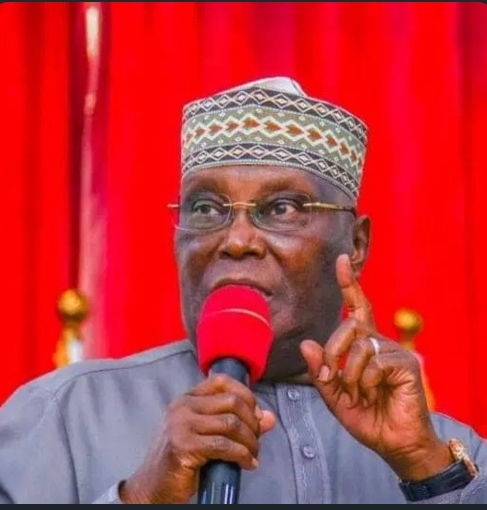
The All Progressives Congress (APC) Presidential Campaign Council has called on African Democratic Congress (ADC) presidential candidate Atiku Abubakar to withdraw from the 2027 presidential race over a controversial $500,000 payment made to his former wife, Jennifer Douglas, during negotiations surrounding the Mambilla Hydroelectric Power Project.
The demand followed revelations from a final award issued by a three-member International Chamber of Commerce (ICC) arbitration tribunal in Paris in the long-running dispute between Sunrise Power and Transmission Company Limited and the Federal Government.
The tribunal ruled in favour of Nigeria, rejecting Sunrise Power’s claims and ordering the company and its promoter, Leno Adesanya, to reimburse Nigeria for 75 per cent of its legal costs.
At the centre of the controversy is a $500,000 transfer made by Adesanya on January 30, 2003, through China Castle Investments Limited, an offshore company he controlled, into Douglas’s Citibank account in the United States.
The payment came less than four months before Sunrise was purportedly awarded a 3,960-megawatt Build-Operate-Transfer (BOT) contract for the Mambilla project in Taraba State.
Tribunal Questions $500,000 Payment
During the arbitration, Adesanya told the tribunal that the $500,000 was part of a foreign-exchange transaction carried out on behalf of Atiku.
However, the tribunal did not accept the explanation, noting the absence of documentary evidence showing the underlying naira payment, exchange rate, instructions from Atiku or his aides, correspondence relating to the transaction or records establishing its commercial purpose.
The tribunal also noted that neither Atiku nor Douglas testified or submitted witness statements to corroborate Adesanya’s account.
It further questioned the explanation because the payment was made during the period when Sunrise was pursuing the Mambilla project and months before the company was purportedly awarded the contract.
The tribunal’s findings, however, concerned the evidence and claims before it in the arbitration; they did not establish in the award that Atiku personally received a bribe.
Mambilla Contract Controversy
The Mambilla project, initially conceived in 1982 as a 3,050MW hydropower scheme, later became the subject of negotiations involving Sunrise and its Chinese partner.
Sunrise expressed interest in developing the project from 2001 and subsequently submitted proposals to the Federal Government.
A technical committee eventually recommended Sunrise for the 3,960MW project in March 2003.
Former Minister of Power Olu Agunloye later issued a letter which Sunrise relied upon as evidence that it had been awarded the project.
Former President Olusegun Obasanjo, however, maintained that the Federal Executive Council never approved the contract and that he directed the withdrawal of the relevant memorandum.
The disputed letter subsequently became central to Sunrise’s multibillion-dollar arbitration claims against Nigeria.
APC Accuses Atiku of Conflict of Interest
Reacting to the tribunal’s findings, APC Presidential Campaign Council spokesman Dele Alake accused Atiku and Agunloye of working together to facilitate the disputed Sunrise contract.
Alake described the $500,000 payment as an alleged bribe connected to the Mambilla deal and argued that its timing raised questions about a possible conflict of interest involving Atiku, who was vice-president at the time.
The APC spokesman also criticised Atiku for not appearing as a witness before the tribunal, saying his testimony could have helped clarify the circumstances surrounding the payment.
The campaign council subsequently demanded that Atiku withdraw from the 2027 presidential contest.
Long-Running Mambilla Legal Battle
The dispute over the Mambilla project has continued for years.
Sunrise previously pursued billions of dollars in claims against Nigeria, alleging breaches relating to the proposed project.

A surviving miner has alleged that an unidentified substance was sprayed inside a detention cell shortly before several suspected illegal miners began collapsing while in the custody of the Nigeria Security and Civil Defence Corps (NSCDC) in Niger State.
The survivor made the allegation while recounting his experience in detention during a visit to the state by the Minister of Interior, Olubunmi Tunji-Ojo.
According to the miner, detainees were locked inside a cell before an unidentified substance was sprayed into the facility.
He alleged that shortly after the substance was released, some of the detainees began experiencing difficulties before collapsing.
«“They sprayed something inside the cell after locking us in, and people began collapsing,” the survivor reportedly said.»
The allegation comes amid growing scrutiny over the circumstances surrounding the deaths of suspected illegal miners who were detained by security authorities in Niger State.
The survivor did not identify the substance allegedly sprayed inside the cell, nor did he state who allegedly authorised or carried out the action.
He also did not provide details on the number of detainees who were affected or establish whether the alleged spraying directly caused any of the reported deaths.
The NSCDC and other relevant authorities have yet to publicly respond to the specific allegation.
The account is likely to intensify calls for a thorough investigation into the treatment of the detainees and the circumstances surrounding the deaths.
Establishing what happened inside the cell would require further investigation, including determining the identity of the substance allegedly used, who introduced it into the facility and whether there was any link between the incident and the subsequent collapse or deaths of detainees.

WTO: Deputy Speaker Seeks Action on Food Stockpiling, Investment Deal

Just in: APC Demands Atiku Quit 2027 Race Over $500,000 Mambilla Payment

Niger Deaths: Survivor Alleges Substance Was Sprayed in Cell Before Detainees Collapsed




-
 News22 hours ago
Canada Invites Senior Managers To Apply For Permanent Residence
-
 Metro22 hours ago
Ondo Poisonous Alcohol: Death Toll Increases To 49, Cases Spread To Neighboring Local Govt
-

 Metro22 hours ago
Tragedy Hits OAU: Final-Year Engineering Student Dies In Suspected Suicide At Off-Campus Apartment
-

 News22 hours ago
Falconets Advance to quarter-finals of FIFA U-20 World Cup
-

 Sports21 hours ago
Carabao Cup Round of 16 fixtures confirmed [Full List]
-
 Opinion20 hours ago
Wike and the APC Governors’ Nightmare