…outline ambitious policies to tackle chronic electricity shortages despite vast energy reserves


By Gloria Ikibah
ECOWAS has unveiled a broad strategy aimed at closing West Africa’s persistent electricity deficit, despite the region possessing some of the world’s most significant untapped energy resources. 
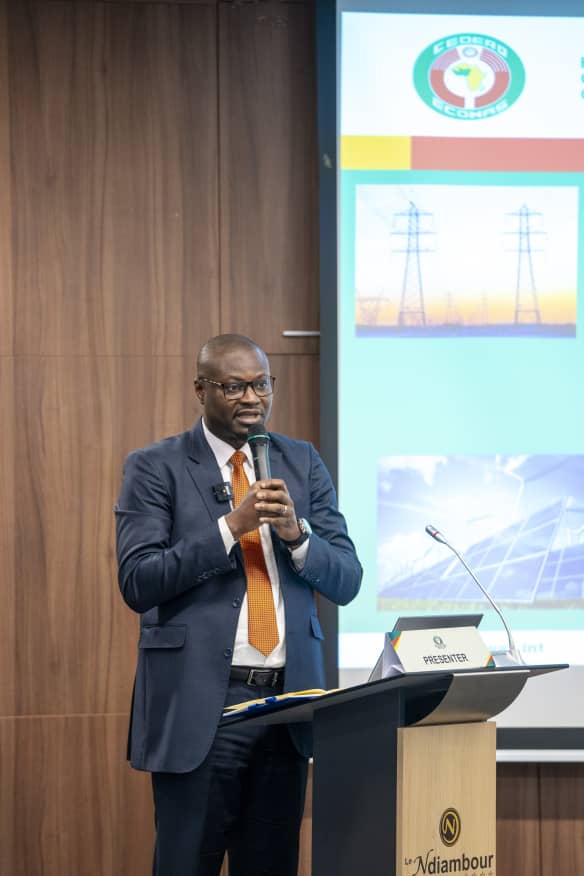
The plan was highlighted during a presentation at the ongoing delocalised joint meeting of the ECOWAS Parliament’s Committees on Energy and Mines; Infrastructure; and Agriculture, Environment and Natural Resources in Dakar, where policymakers and experts are examining pathways to accelerate energy access and rural development across the sub-region.
Delivering a presentation on “ECOWAS Regional Energy Policies and Key Energy Statistics,” the Acting Head of Conventional Energy at the ECOWAS Directorate of Energy and Mines, Mr Koumoin Arbaduis, painted a stark picture of a region blessed with abundant energy resources but still struggling to provide reliable electricity to millions of its citizens.
According to Arbaduis, West Africa possesses extensive reserves of crude oil, natural gas, biomass, uranium and coal, as well as an estimated 25,000 megawatts of hydroelectric potential. However, these advantages have yet to translate into adequate energy access and dependable power supply across the region.
He identified limited electricity generation capacity, poor access rates, costly transmission networks, significant technical and commercial losses, and heavy reliance on petroleum products as some of the key obstacles hindering progress.
Arbaduis explained that ECOWAS has developed a succession of regional policies and frameworks over the decades to address these challenges and build a more integrated and sustainable energy market.
He noted that the first ECOWAS Energy Policy, adopted in 1982 in the aftermath of the global oil crises of the 1970s, established the foundation for regional cooperation in energy production, petroleum exploration and electricity grid integration.
He said that the 2003 ECOWAS Energy Protocol subsequently provided a legal framework for investment, trade and long-term collaboration in the sector while laying the groundwork for the West African Power Pool initiative.
He also highlighted the significance of the 2006 ECOWAS/UEMOA White Paper on Access to Energy Services for Rural and Peri-urban Populations, which was designed to expand electricity access and modern energy services to underserved communities.
According to Arbaduis, major policy reforms introduced in 2013, including the ECOWAS Renewable Energy Policy and the Energy Efficiency Policy, were aimed at increasing the contribution of renewable energy to the region’s power mix, reducing energy losses and improving access to cleaner cooking technologies.
The ECOWAS official further pointed to the adoption of the ECOWAS Bioenergy Policy and the Policy for Gender Mainstreaming in Energy Access in 2017, noting that sustainable energy development must be inclusive and ensure equal opportunities for both women and men.
On emerging technologies, Arbaduis said the regional bloc had begun positioning itself for the future through the ECOWAS Green Hydrogen Policy Framework and Strategy, adopted in 2023. The initiative seeks to make West Africa one of the world’s most competitive producers and exporters of green hydrogen, with a production target of at least 500,000 tonnes by 2030.
He explained that the updated ECOWAS Energy Policy, adopted in July 2023, reflects changing economic conditions, technological advancements and climate realities. The revised framework prioritises improved governance, universal access to affordable and reliable electricity, energy diversification, efficiency improvements and wider access to clean cooking solutions.
Summarising the region’s long-term ambition, Arbaduis said the goal is to build “a community with access to modern, reliable and sustainable energy services for improved living standards and socio-economic development.”
At the end of the five-day parliamentary meeting, which started on June 15, with the theme, “Harnessing Renewable Energy for Rural Electrification and Empowerment of Rural Economies in the ECOWAS Region: The Role of the ECOWAS Parliament” , participants are expected to develop recommendations aimed at strengthening energy access, promoting investment and accelerating sustainable development throughout West Africa.