

Connect with us

News

Defence Stakeholders Resist Plan to Reserve NDA Entry for Military School Alumni

Published

on

ADVERTISEMENT
Zoom Ad
ADVERTISEMENT
Zoom Ad

By Gloria Ikibah

A proposal to grant automatic admission into the Nigerian Defence Academy (NDA) for graduates of military secondary schools has drawn strong opposition from defence stakeholders, who argue that the measure could compromise merit-based selection and conflict with constitutional provisions governing access to higher education.

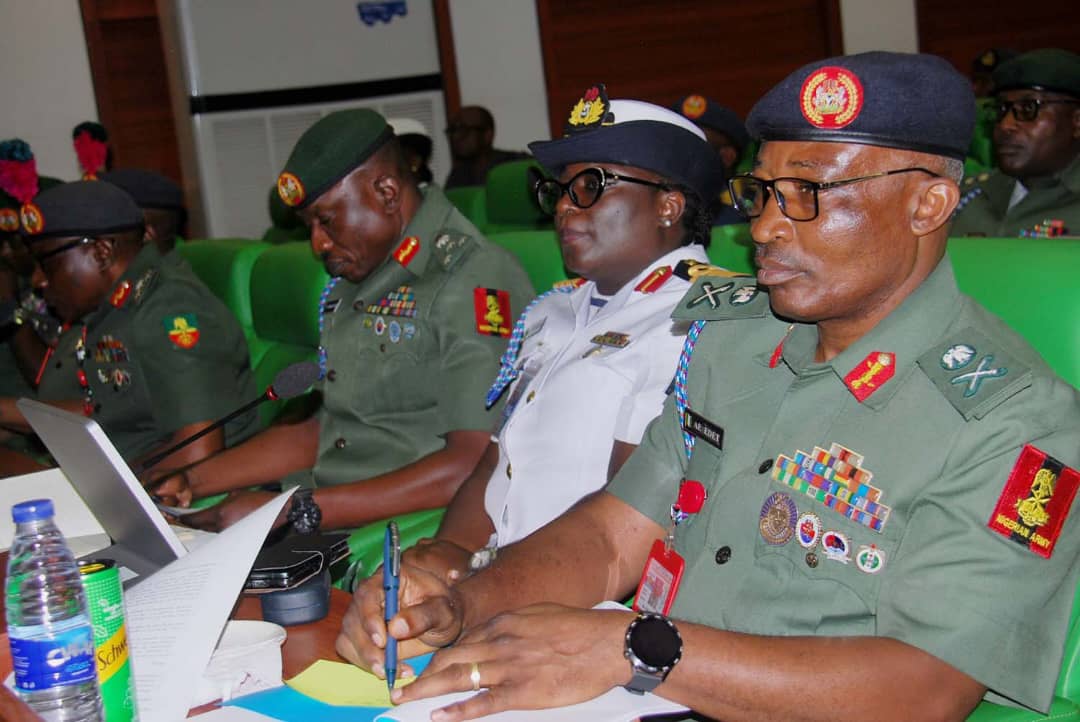
This was the concerns raised on Tuesday during the second day of a public hearing organised by the House of Representatives Committee on Defence, as lawmakers considered a series of amendments to existing military legislation.

The proposed amendment to the NDA Act seeks to create a pathway for students graduating from military secondary schools to gain direct entry into the academy without undergoing the standard competitive admission process.

Advertisement

However, participants at the hearing cautioned that such a provision could unfairly disadvantage other qualified candidates seeking admission into the country’s premier military training institution.

The hearing considered four defence-related bills, among which includes a Bill for an Act to Amend the Nigerian Defence Academy Act, 2024 and for Related Matters (HB.1709), which proposes automatic admission for graduates of Nigerian military schools into the academy.

Presenting the position of the Nigerian Defence Academy, the Director of Military Training, Brigadier General Taiye Ahmed, explained that the proposed amendment seeks to alter Section 8(2) of the Second Schedule to the NDA Act by granting what he described as “automatic admission, right of first refusal” to applicants from Nigerian military schools.

He argued that admission into the NDA should remain open to all eligible Nigerians through a transparent and competitive process, regardless of educational background or institutional affiliation.

Advertisement

Ahmed said the proposed amendment provides that: “The board shall offer automatic admission for successful graduates from Nigerian military schools.”

According to him, the justification advanced by the proponents is “to prevent the graduates of the schools from being handy tools in the hands of non state violent actors because of the graduate military background.”

He further explained that the proposal also seeks to introduce an interpretation section defining “The Board” as the Board of the Nigerian Defence Academy, “Applicant” as candidates applying to the NDA, and “Nigerian Military Schools” as military schools that provide full military and academic training, including the Nigerian Military School, Zaria; Air Force Military School; Air Force Girls Military School; and the Nigerian Navy Military School.

However, Ahmed said the academy does not support the amendment in its current form.

Advertisement

“However it was observed that if the amendment is passed as phrased, it has the potential of creating statutory bottlenecks on the constitutional principle of federal character. The NDA operates on this principle to ensure national unity and equal representation across the 36 states of the federation and the Federal Capital Territory FCT,” he said.

He added that the proposal could also face legal hurdles because it would unfairly disadvantage other Nigerians seeking admission into the academy.

“Moreover, the proposed amendment could face legal challenges for being discriminatory against applicants who did not attend the military school as it could be perceived as disenfranchising them for admission into the Nigerian Defence Academy”, he added.

Ahmed maintained that graduates of military secondary schools already enjoy equal opportunities under the existing admission process.

Advertisement

“The graduates of military schools currently have equal opportunity to seek admission into the Nigerian Defence Academy to be commissioned as regular combatant officers by competing with other interested Nigerians.

“The process has consistently ensured that the NDA selects the best candidates irrespective of the secondary school they attended.

“Moreover graduates of the military schools have the opportunity for immediate enlistment as soldiers, especially the Nigerian Military School, Zaria upon graduation from military secondary schools and thereafter proceed to higher military institutions through military sponsorship. Upon graduation from higher institutions these graduates could apply to be commissioned as officers through the short service commission or the direct short service commission when advertised by any of the three services of the Armed Forces of Nigeria”, he said.

According to him, officers who do not secure commissions through those channels still have another opportunity later in their careers.

Advertisement

“Furthermore those unable to secure admission through the short service commission or the direct short service commission could apply for the executive commission later in their career.

“It is pertinent to state that the NDA has a very strict admission criteria including minimum JAMB score as well as very high standard physical, psychological and medical standard”, he asserted.

He further disclosed that available records indicate that civilian applicants sometimes outperform graduates of military secondary schools during the selection process.

He urged lawmakers to retain the current admission framework.

Advertisement

“Available record in the Armed Forces show that civilian candidates could be better than some military school graduates based on their earlier mentioned criteria to avoid disenfranchising excellent candidates that did not have the opportunity of attending military schools from admission into NDA.

“The NDA is of the opinion that the current admission process into the NDA should be maintained”, he stated.

Stakeholders also expressed concern that automatic admission for a particular category of applicants could limit opportunities for talented candidates from civilian schools and potentially weaken the diversity of the officer corps in the long term.

Besides the proposed amendment to the Nigerian Defence Academy Act, the committee also considered bills seeking to establish a Joint Doctrine and Warfare Centre to enhance coordination and effectiveness of military operations; establish the Armed Forces Medical College, Abuja; and establish the National Defence College of Nigeria as a postgraduate degree-awarding institution and centre for strategic research and professional military education.

Advertisement

Speaking at the close of the session, Chairman of the House Committee on Defence, Hon. Babajimi Benson, commended participants for their contributions.

“This is the peoples Parliament. The contributions have been worthwhile,” Benson said.

The debate formed part of broader deliberations on defence-related legislative reforms currently before the National Assembly, with lawmakers examining proposals aimed at strengthening military institutions and improving the effectiveness of Nigeria’s security architecture.

The House Committee on Defence, chaired by Hon. Babajimi Benson, is expected to review submissions from stakeholders before making recommendations on the contentious amendment and other defence bills under consideration.

Advertisement
Continue Reading
Advertisement

News

10th Reps Boast Record Lawmaking with 2,747 Bills in Threen three years

Published

on

ADVERTISEMENT
Zoom Ad
ADVERTISEMENT
Zoom Ad

363 bills passed as lawmakers defend productivity

By Gloria Ikibah

The House of Representatives has defended the performance of the 10th National Assembly, revealing that lawmakers introduced 2,747 bills and passed 363 within the first three years of its tenure, describing the figures as proof of an active legislature focused on delivering reforms that directly affect Nigerians.

Chairman House Committee on Rules and Business, Rep. Francis Waive, disclosed the figures on Monday during a media briefing in Abuja to mark the close of the third legislative session.

Advertisement

According to Rep. Waive, the bills introduced since June 2023 comprise 57 executive bills, 95 Senate concurrence bills and 2,595 private member bills.

He said the House passed 89 bills during its first legislative session, 148 in the second and 126 in the just-concluded third session, bringing the total to 363.

Breaking down activities for the third session, the Chairman said lawmakers introduced 484 bills, made up of 31 executive bills, 391 private member bills and 62 Senate concurrence bills.

He added that the House also considered 220 motions, referring 192 to standing committees and 28 to adhoc committees, while 121 were admitted as matters of urgent public importance. Lawmakers also deliberated on 48 public petitions.

Advertisement

Among the major legislative milestones recorded during the session, Waive listed the passage of the 2026 Appropriation Bill, the Electoral Act 2026, constitutional amendment proposals to pave the way for state police, tax reform legislation and the Minimum Wage Act.

He said the measures were aimed at strengthening governance and improving the welfare of Nigerians.

“We are sharing this data with Nigerians because the House of Representatives is working. This is the scorecard for the session”, he stated.

Also speaking, the Spokesperson of the House, Rep. Akin Rotimi said the impact of several laws passed by the House was already being felt across the country.

Advertisement

He cited the Nigerian Education Loan Fund (NELFUND) as one example, noting that the scheme, which was established through legislation initiated by the House, had already supported more than 1.6 million Nigerians, with over N303 billion disbursed in student loans.

Rotimi explained that the number of bills eventually passed should not be compared directly with the number introduced because many separate proposals are often harmonised into a single piece of legislation during the legislative process.

He also revealed that more than 300 constitutional amendment bills were currently undergoing consideration.

Looking ahead, the House Spokesperson said lawmakers were already reviewing priorities for the fourth legislative session.

Advertisement

“We’ve covered a lot of ground, but there is still a lot more to do. We are reviewing our legislative agenda internally to ensure that key promises made to Nigerians are delivered before the end of this Assembly”, he added.

Responding to questions from journalists, Waive said the Committee on Rules and Business does not keep records of bills that have received presidential assent, explaining that such information is maintained by the Clerk to the National Assembly and the Presidency.

He also addressed concerns over concurrence bills awaiting action in the Senate, saying the House fulfils its responsibility once passed bills are transmitted through the Clerk of the National Assembly.

On the growing number of establishment bills creating new federal institutions, Waive defended the trend, arguing that many had translated into tangible projects, including several Federal Medical Centres now serving communities across the country.

Advertisement

The lawmakers also dismissed allegations that members paid money to have bills listed for consideration. Waive said comments previously attributed to one lawmaker had been misconstrued.

According to him, the member was referring to the political effort, consultations and lobbying required to build support for legislation rather than the payment of bribes.
Rotimi, who disclosed that he had personally sponsored more than 40 bills, also rejected the allegation.

He maintained that every bill passes through established constitutional and parliamentary procedures before it can be scheduled for first reading.

On the proposed establishment of State Police, Waive clarified that the constitutional amendment approved by the House merely provides the legal foundation for the initiative.

Advertisement

He explained that the operational structure and relationship between federal and state police formations would be addressed through separate amendments to the Police Act.

Rotimi added that the House intends to vote on about 40 constitutional amendment bills during the fourth legislative session, including proposals for reserved seats for women and other governance reforms, which he described as critical to strengthening Nigeria’s democratic institutions.

Continue Reading

News

Customs Beat 2025 Revenue Target, Seek Reps’ Nod For N11.27tn 2026 Budget

Published

on

ADVERTISEMENT
Zoom Ad
ADVERTISEMENT
Zoom Ad

By Gloria Ikibah

The Nigeria Customs Service has surpassed its 2025 revenue target by more than 10 per cent, raking in N7.277 trillion against a target of N6.584 trillion, even as it sought the approval of the House of Representatives for its proposed N11.274 trillion revenue and expenditure framework for the 2026 fiscal year.

The Comptroller-General of Customs, Bashir Adewale Adeniyi, disclosed this on Monday while defending the agency’s 2026 budget estimates before the House Committee on Customs and Excise in Abuja.

Opening the session, the Committee Chairman, Rep. Leke Abejide, said the exercise was part of the National Assembly’s constitutional oversight responsibility.

Advertisement

He said: “It is not a long speech day. It is simply a day to carry out what Sections 88 and 89 of the 1999 Constitution mandate us to do, which is to scrutinise your budget proposal.”

Reps. Abejide added that after the committee concluded its review, its recommendations will be presented to the House for consideration and approval.

Presenting the agency’s performance, Adeniyi said Customs generated N7.277 trillion between January and December 2025, exceeding its revenue target by 10.24 per cent despite a series of government fiscal incentives that reduced potential earnings.

He explained that duty waivers on healthcare products, compressed natural gas (CNG) vehicles, electric vehicles and import duty exemption certificates all affected revenue collections.

Advertisement

According to him, the suspension of excise duties on telecommunications services and other tax relief measures also impacted earnings of theService.

Adeniyi further revealed that although the National Assembly approved an expenditure budget of N1.132 trillion for Customs in 2025, the agency received only N808.86 billion, representing about 71.4 per cent of the approved amount.

He attributed the shortfall to delays in implementing the funding provisions contained in the Nigeria Customs Service Act.

“The variance between what was approved and what we received resulted from the delayed implementation of the new funding structure”, he noted.

Advertisement

He further explained that the Service continued to operate under the former seven per cent cost-of-collection model until August 2025 before transitioning to the new four per cent Free-on-Board (FOB) funding framework introduced by the Act.

The Comptroller-General also clarified that concessionary fees, previously paid through the Comprehensive Import Supervision Scheme account managed by the Federal Ministry of Finance and the Central Bank of Nigeria, are now settled directly by the Customs Service under the new legal framework.

During the budget defence, lawmakers sought explanations on the disparity between the approved budget, actual releases and expenditure, as well as details surrounding concessionary fees.

In response, the Chairman reminded the lawmakers that while the National Assembly approved N1.132 trillion, only N808.86 billion was eventually released, urging the Service to account for how the available funds were utilised.

Advertisement

Looking ahead, Adeniyi said Customs had set an ambitious revenue target of N11.274 trillion for 2026.

He explained that the projection comprises N5.542 trillion from Federation Account collections, N1.495 trillion from non-Federation revenue, N2.973 trillion from import Value Added Tax and N1.264 trillion from the four per cent FOB collection.

According to him, the Service intends to achieve the target through technology-driven reforms, including the full deployment of the Unified Customs Management System, stronger post-clearance audit processes, improved trade facilitation and closer engagement with stakeholders.

Adeniyi also announced reductions in import levies on vehicles under the 2026 fiscal policy.

Advertisement

He said the levy on used vehicles had been reduced from 15 per cent to five per cent, while that on new vehicles had been cut from 20 per cent to 10 per cent.

The announcement drew praise from lawmakers, with Abejide urging the Customs Service to publicise the development.

“I want the general public to know that the government is doing something good for them”, the Chairman said.

Adeniyi acknowledged that while the reductions would provide relief to importers and consumers, they would inevitably affect Customs revenue.

Advertisement

He said the measures formed part of broader fiscal policies coordinated by the Federal Ministry of Finance to support national priorities, including improved healthcare, transportation through the CNG initiative and other strategic government interventions.

For the 2026 fiscal year, the Customs Service proposed N421.7 billion for personnel costs, N307.77 billion for overheads and more than ₦620 billion for capital expenditure.

According to the Comptroller-General, priority would be given to completing ongoing projects, expanding infrastructure, improving staff welfare and enhancing operational efficiency.

He appealed to lawmakers to approve the proposal, expressing confidence that the budget would strengthen the Service’s capacity to boost revenue generation, facilitate legitimate trade and contribute more effectively to Nigeria’s economic growth.

Advertisement
Continue Reading

News

Just in: Tinubu Orders Probe Against Google, Facebook, X, AI Platforms Over Use of Nigerian Content

Published

on

ADVERTISEMENT
Zoom Ad
ADVERTISEMENT
Zoom Ad

Just in: Tinubu Orders Probe Against Google, Facebook, X, AI Platforms Over Use of Nigerian Content companies and Generative Artificial Intelligence (AI) platforms over allegations of anti-competitive practices and the unlawful use of content belonging to Nigerian media organisations.

The directive follows a joint petition submitted to the Presidency by the Nigerian Press Organisation (NPO), comprising the Newspaper Proprietors’ Association of Nigeria (NPAN), the Nigeria Union of Journalists (NUJ), the Broadcasting Organisations of Nigeria (BON), and the Guild of Corporate Online Publishers (GOCOP).

In a statement issued on Monday, the FCCPC’s Director of Corporate Affairs, Ondaje Ijagwu, said the investigation would cover major technology companies, including Meta, Alphabet, the parent company of Google, X (formerly Twitter), as well as Generative AI platforms operating in Nigeria.

According to the commission, the probe is aimed at examining allegations that the companies engage in anti-competitive practices, unlawfully exploit news content, and operate in ways that may undermine fair competition within Nigeria’s digital media landscape.

Advertisement

“The big technology companies have come under the radar of the Federal Competition and Consumer Protection Commission following allegations of anti-competitive practices, unlawful exploitation of news content, and other potentially unfair market conduct,” the statement said. It added that the investigation was initiated following President Tinubu’s directive in response to concerns raised by Nigerian media organisations.

The media bodies argued that the activities of some global technology firms threaten the commercial sustainability of local news organisations and undermine the rights of publishers and content creators.

According to the FCCPC, the Nigerian media industry has become increasingly concerned about the growing influence of digital platforms on the country’s news ecosystem.

The commission noted that the petition specifically accused companies such as Meta, Alphabet, X, and certain AI platforms of engaging in practices capable of weakening competition, reducing revenue opportunities for publishers, and using copyrighted news content without adequate authorisation or compensation. FCCPC Executive Vice Chairman and Chief Executive Officer, Tunji Bello, assured that the investigation would be conducted independently and based strictly on available evidence.

Advertisement

He said the commission recognises both the importance of a vibrant media industry to Nigeria’s democracy and the critical role technology plays in innovation and economic development. “Our responsibility is to objectively determine the facts and ensure that competition within the digital ecosystem remains fair, transparent, and consistent with Nigerian law,” Bello said.

He stressed that the inquiry should not be interpreted as an assumption of wrongdoing by any of the companies involved.

According to him, every organisation under investigation will be given a fair opportunity to present relevant information before any conclusions are reached.

The FCCPC said its investigation will focus on whether the conduct of the companies violates the Federal Competition and Consumer Protection Act 2018, allegations of market dominance and anti-competitive behaviour, the unauthorised extraction and commercial use of copyrighted news content for training AI models, and complaints that Nigerian publishers are being denied fair compensation for the value generated from their content.

Advertisement

The commission noted that the move aligns with similar regulatory actions in other countries. It cited South Africa, where Google agreed to pay news organisations about R688 million (approximately $40 million) annually to support the local news industry.

The investigation also comes months after the FCCPC imposed a $220 million penalty on Meta over alleged regulatory violations, a decision the technology company is currently challenging.

Through the latest probe, the Federal Government says it aims to ensure that international technology companies operating in Nigeria comply with local competition laws while guaranteeing that Nigerian media organisations receive fair value for the content they produce.

Advertisement
Continue Reading

Trending

Copyright © 2024 Naija Blitz News