Connect with us

Economy

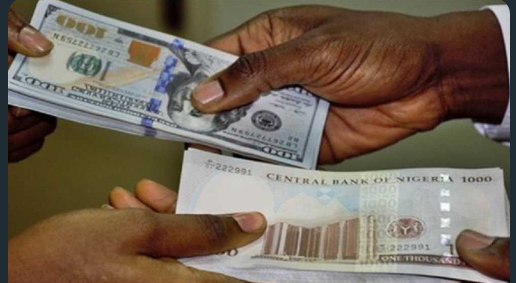
See Black Market Dollar To Naira Exchange Rate Today 10th July 2026

Published

on

ADVERTISEMENT
Zoom Ad
ADVERTISEMENT
Zoom Ad

The Black Market Dollar-to-Naira Exchange Rate for 10th July 2026 Can Be Accessed Below.
IMPORTANT NOTE: The exchange rate changes hourly. It depends on the volume of dollars available and the Demand. This means…you can buy or sell 1 dollar at a certain rate, and the price can change (high or low) within hours.


The official naira black market exchange rate in Nigeria today, including the Black Market rates, Bureau De Change (BDC), and CBN rates.

Please note that the exchange rate is subject to hourly fluctuations influenced by the supply and demand of dollars in the market.

What’s the dollar to naira black market today, 10th July 2026?

Advertisement

The exchange rate for a dollar to naira at Lagos Parallel Market (Black Market) players sell a dollar for ₦1412 and buy at ₦1400 on Friday, 10th July, 2026, according to sources at Bureau De Change (BDC).
Please note that the Central Bank of Nigeria (CBN) does not recognize the parallel market (black market), as it has directed individuals who want to engage in Forex to approach their respective banks.
Dollar to Naira Black Market Rate Today
Dollar to Naira (USD to NGN) Black Market Exchange Rate Today
Selling Rate ₦1412
Buying Rate ₦1400
Dollar to Naira CBN Rate Today
Dollar to Naira (USD to NGN) CBN Rate Today
Highest Rate ₦1380
Lowest Rate ₦1376

Continue Reading
Advertisement

Economy

Oil prices settle 2% lower as economic worries outweigh supply risks

Published

on

By

ADVERTISEMENT
Zoom Ad
ADVERTISEMENT
Zoom Ad

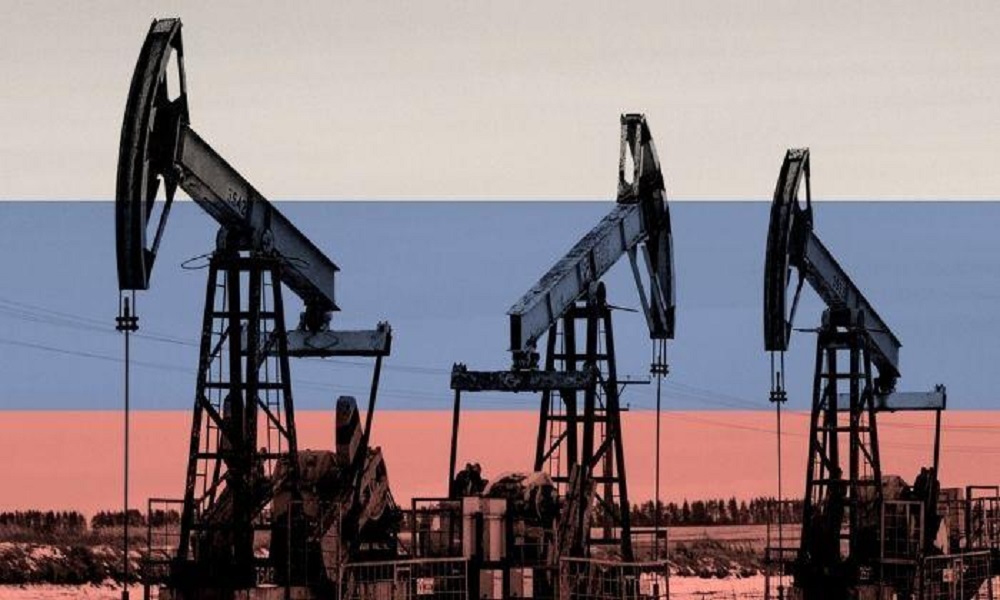
Oil prices slid about 2% on Thursday on worries that rising inflation and other economic concerns could weigh on global oil ​demand despite continuing supply constraints as the the U.S.-Iran conflict has delayed full reopening of Strait of Hormuz.

About 20% of global oil supplies passed through the strait ‌before the war.

Brent futures fell $1.72, or 2.2%, to settle at $76.30 a barrel. U.S. West Texas Intermediate (WTI) crude fell $1.44, or 2.0%, to settle at $72.08.

On Wednesday, Brent closed at its highest since June 19 and WTI closed at its highest since June 22.

Advertisement

Iranian armed forces launched attacks on U.S. military infrastructure in Gulf states on Thursday following U.S. strikes on Iran’s southern coastal and eastern provinces, further straining a three-week-old ceasefire agreement.

The attacks came on ​the day that Iran buried its slain Supreme Leader Ayatollah Ali Khamenei at the shrine of Mashhad, the culmination of a week of mass funeral processions and rallies. ​Khamenei was killed on the first day of the war on February 28. Separately, several explosions were heard in Iran including in Bushehr, where one ⁠of Iran’s nuclear plants is located.

“We expect the renewed tension in the Middle East between the U.S. and Iran to be relatively short-lived because both countries are constrained by practical economic and ​political realities,” Vikas Dwivedi, global energy strategist at Macquarie Group, said in a note.

Qatar, which has often mediated between Washington and its adversaries including Tehran, condemned attacks on commercial shipping and called ​for a return to diplomacy. Foreign ministers of Turkey and Oman also stressed the need to avoid further military escalation in calls with their Iranian counterpart, Abbas Araqchi.

Advertisement

“After two days of attacks, Iran appears to be on the phone looking to scale back hostilities and possibly return to the negotiating table,” Bob Yawger, director of energy futures at Mizuho, said in a note.

Iran’s Revolutionary Guards Navy said the U.S. attacks and intervention in ​redirecting shipping through the Strait of Hormuz were disrupting the waterway’s gradual reopening.

“Our estimated oil flows from the Persian Gulf recovered to above 80% of pre-war flows within the first 10 ​days after Hormuz reopening as trapped tankers rushed to leave the Persian Gulf, but retreated to the low-70s% of normal following recent attacks on tankers,” analysts at U.S. bank Goldman Sachs said in a report.

U.S. ‌JOBS AND ⁠INFLATION

Advertisement

In the U.S., the number of Americans filing claims for unemployment benefits fell last week, supporting economists’ views that the labor market remained in a “slow-hire, slow-fire” mode.

Minutes of the Federal Reserve’s June 16 to 17 meeting showed policymakers’ concerns about inflation mounted last month and they “generally expected labor market conditions to remain stable in the near term, with the unemployment rate staying close to current levels.”

New York Federal Reserve President John Williams said on Thursday he did not expect a sustained rise in energy prices for the rest of the year despite the of hostilities in the Middle East, and ​declined to say what decision he would ​make on interest rates at a policy ⁠meeting later this month.

When the Fed boosts interest rates to keep inflation in check, it can reduce economic growth and cut demand for oil.

Advertisement

In China, the world’s second-biggest economy behind the U.S., producer price inflation surged in June to its highest level in four years, piling pressure on manufacturers’ ​profit margins as weak domestic demand limited pricing power.

UKRAINIAN DRONES HIT RUSSIAN TANKERS

In Europe, Ukrainian drones hit a dozen more Russian tankers in ​the Sea of Azov overnight, ⁠Ukraine’s military said, the latest in a campaign aimed at disrupting fuel supplies to Russian forces and isolating Moscow-occupied Crimea.

On Wednesday, U.S. diesel futures posted their biggest daily percentage gain in four years after Russia announced a ban on exports of the industrial fuel, supercharging supply concerns in a market grappling with uncertainty about Middle Eastern oil flows.

Advertisement

Russia said the U.S. was wrong to believe deep Ukrainian strikes into ⁠Russian territory could ​help end more than four years of war, and could instead prolong it.

A settlement in the Ukraine war could result ​in the lifting of some sanctions on Russia, which could allow Moscow to export more oil. Russia was the world’s third-biggest crude oil producer behind the U.S. and Saudi Arabia in 2025, according to U.S. energy data.

Continue Reading

Economy

2024 Bid Round: NUPRC hands oil prospecting licences to 12 firms

Published

on

By

ADVERTISEMENT
Zoom Ad
ADVERTISEMENT
Zoom Ad

The Nigerian Upstream Petroleum Regulatory Commission (NUPRC) has formally presented Petroleum Prospecting Licences (PPLs) to successful bidders in the 2024 oil licensing round, issuing 19 prospecting licences to 12 companies as part of efforts to attract fresh investment into Nigeria’s upstream petroleum sector.

The concession contracts and licences were presented during the ongoing Nigeria Oil and Gas (NOG) Energy Week 2026 in Abuja, marking the commencement of exploration activities across deep offshore, shallow water and continental shelf acreages.

Among the beneficiaries are Boron Energy Limited (PPL 2009), Energy Marketing and Supply Limited (PPL 269), Sahara Deepwater Resources Limited (PPLs 270 and 271), and Tulkan Energy E&P Company Limited (PPL 2008).

The execution of the concession contracts establishes the legal, fiscal and commercial framework governing the licence holders under the Petroleum Industry Act (PIA) 2021, paving the way for the formal grant of the petroleum prospecting licences.

Advertisement

According to the Commission, the exercise marks another milestone in Nigeria’s efforts to unlock new investments in the upstream petroleum industry, accelerate exploration activities, increase hydrocarbon reserves and create long-term economic value.

NUPRC said the portfolio of assets awarded reflects the broad investment opportunities available in Nigeria’s upstream sector and is expected to stimulate exploration, boost production capacity and strengthen investor confidence in the country’s regulatory framework.

While some of the successful companies signed their concession contracts during the NOG Energy Week, the Commission said those not represented at the event would complete the process on mutually agreed dates.

Meanwhile, Nigeria recorded another significant investment commitment in the upstream sector as ESSO Exploration and Production Nigeria Offshore East Limited announced plans to invest more than $300 million in the Usan Infill Project.

Advertisement

The project is expected to add about 40,000 barrels of oil per day to Nigeria’s deepwater production and generate an estimated $1.2 billion in revenue over the next four years.

Speaking at the unveiling of the project, Chairman and Managing Director of ESSO Nigeria, Jagir Baxi, said the investment marks the company’s return to deepwater drilling after nearly a decade and aligns with the Federal Government’s objective of increasing crude oil production.

He said the project was designed as a short-cycle investment capable of delivering first oil within about six months of offshore execution, with peak production expected within 18 months.

Speaking on the development, NUPRC Chief Executive, Mrs. Oritsemeyiwa Eyesan, described the project as a strong vote of confidence in Nigeria’s upstream petroleum sector, noting that it represents ESSO’s first drilling campaign since 2016.

Advertisement

She said regulatory interventions by the Commission helped unlock the long-delayed project and reaffirmed NUPRC’s commitment to creating an investment-friendly environment that supports timely project delivery, improves operational efficiency and attracts fresh capital into the oil and gas industry.

Eyesan added that sustained investment in both new developments and existing producing assets would be critical to achieving Nigeria’s production targets, growing hydrocarbon reserves and boosting government revenue.

Continue Reading

Economy

CBN Clarifies Status Of ₦100 Notes In Nigeria

Published

on

ADVERTISEMENT
Zoom Ad
ADVERTISEMENT
Zoom Ad

The Central Bank of Nigeria (CBN) has reaffirmed that the standard ₦100 banknote remains legal tender and must be accepted for all financial transactions across the country.

The apex bank also clarified that both the standard ₦100 note and the commemorative ₦100 banknote issued to mark Nigeria’s centenary are valid legal tender and can be used interchangeably for payments nationwide.

The clarification was contained in a statement issued on Wednesday by the CBN’s Acting Director of Corporate Communications, Hakama Sidi-Ali, following reports that some individuals, businesses, and other stakeholders had begun rejecting the standard ₦100 note over doubts about its legal status.

According to the CBN, the misconception appears to have created unnecessary confusion among members of the public, prompting the bank to reassure Nigerians that there has been no directive withdrawing the standard ₦100 banknote from circulation.

Advertisement

The apex bank explained that the commemorative ₦100 note, introduced to celebrate Nigeria’s centenary, was designed to circulate alongside the existing standard note and was never intended to replace it.

It stressed that both versions remain valid and retain the same legal status under Nigerian law.

The CBN warned that refusing to accept the standard ₦100 note is a violation of the provisions of the CBN Act and could attract regulatory sanctions.

The bank urged individuals, business owners, financial institutions, traders, transport operators, and other economic participants to continue accepting both versions of the ₦100 note without discrimination.

Advertisement

According to the statement, the rejection of any valid Nigerian banknote undermines public confidence in the country’s currency and disrupts smooth commercial activities.

The statement read in part: “The attention of the Central Bank of Nigeria (CBN) has been drawn to reports of the rejection of the standard ₦100 banknote by some members of the public, businesses, and other stakeholders, apparently due to doubts about its continued legal tender status.

“For the avoidance of doubt, the CBN hereby reiterates that both the commemorative ₦100 banknote and the standard ₦100 banknote remain legal tender in Nigeria and must be accepted for all transactions nationwide.

“The commemorative ₦100 banknote, which was introduced to mark Nigeria’s centenary, did not replace the existing standard ₦100 banknote.

Advertisement

“The CBN strongly cautions individuals, businesses, financial institutions, and other economic agents against rejecting the standard ₦100 banknote.

“Such rejection constitutes a violation of the provisions of the CBN Act and undermines confidence in the national currency.”

The CBN further warned that it would not hesitate to invoke the appropriate enforcement measures against any individual or organization found to be unlawfully rejecting the standard ₦100 note.

The latest clarification is expected to dispel uncertainty surrounding the circulation of the ₦100 banknote and reinforce public confidence in the continued validity of all officially recognized Nigerian currency notes.

Advertisement
Continue Reading

Trending

Copyright © 2024 Naija Blitz News