Economy
NDIC takes financial literacy campaign to secondary schools
- /home/naijuinz/public_html/wp-content/plugins/mvp-social-buttons/mvp-social-buttons.php on line 27
https://naijablitznews.com/wp-content/uploads/2024/08/images-2024-08-29T204403.647.jpeg&description=NDIC takes financial literacy campaign to secondary schools', 'pinterestShare', 'width=750,height=350'); return false;" title="Pin This Post">
- Share
- Tweet /home/naijuinz/public_html/wp-content/plugins/mvp-social-buttons/mvp-social-buttons.php on line 72
https://naijablitznews.com/wp-content/uploads/2024/08/images-2024-08-29T204403.647.jpeg&description=NDIC takes financial literacy campaign to secondary schools', 'pinterestShare', 'width=750,height=350'); return false;" title="Pin This Post">
The Nigeria Deposit Insurance Corporation (NDIC) has intensified efforts to promote financial literacy and savings culture among young Nigerians by taking its financial education campaign to public secondary schools in Akwa Ibom State.

The NDIC, as part of activities marking the 2026 Financial Literacy Day, visited the Federal Technical College, Ukana Offot, in Uyo Local Government Area, on Friday where students were sensitised on the importance of prudent financial management and the culture of saving.
Speaking during the programme, the Controller of NDIC Port Harcourt’s Zonal Office, Mr. Adefemi Shaba, said the initiative was designed to improve financial literacy among young people and equip them with the knowledge required to make informed financial decisions in the future.

According to him, the programme, which featured discussions under the theme, “Smart Money Talks,” forms part of an annual awareness campaign jointly championed by the NDIC and the Central Bank of Nigeria (CBN).
He explained that the theme of NDIC in 2026 underscores the importance of having open conversations about money management and the need to build confidence among young people in handling financial matters.
Building a savings culture
Shaba said one of the major objectives of the campaign was to inculcate a savings culture in children and teenagers, noting that the habit of saving is best developed from an early age.
He stressed that while the lessons may not appear immediately relevant to some of the students, the knowledge acquired would become useful as they advance in their academic pursuits and eventually begin to earn and manage their own income.
“We are here to commemorate Financial Literacy Day 2026 and to introduce the students to saving habits and encourage them to cultivate the culture of saving. We do this so that as the students grow up, they already have the habit of saving embedded in them,” he said.
The NDIC official added that the sensitisation programme also provided an opportunity for the corporation to educate students on its mandates and its role in promoting stability and confidence in the Nigerian banking system.
According to him, many Nigerians, especially young people, are unaware of the functions of the NDIC and the importance of financial institutions in national development.
Empowering the younger generation
Also speaking, the Principal Manager, Communication and Public Affairs Department of the NDIC, Mrs. Sa’adatu Bowsan, described Financial Literacy Day as a global initiative aimed at promoting financial education and empowering young people with essential money management skills.
She said the programme specifically targets secondary school students because they represent the future of the country’s economy and financial system.
According to her, exposing children to financial education at an early stage would help them develop positive financial behaviours and prepare them to become responsible adults.
“We are here in Akwa Ibom State as part of the commemoration of Financial Literacy Day 2026, which is a global initiative of the Bankers’ Committee. We are here basically to teach financial literacy, targeting young people, particularly secondary school students,” she said.
Bowsan noted that the essence of the programme is to shape the mindset of young Nigerians towards prudent financial management, savings and responsible spending.
“The whole idea is to target them while they are still young. We realised that the young people of today will become the adults of tomorrow, and so we are inculcating the right habits in them so that they can become better managers of resources in the future,” she added.
Students commend initiative
Some of the students who participated in the programme expressed appreciation to the NDIC for selecting their school for the sensitisation exercise.
One of the beneficiaries, Miss Udeme Effiong, said the programme had broadened her understanding of financial literacy and the importance of developing good savings habits.
She noted that prior to the programme, she had little knowledge of financial planning and management but now understood the need to save and make informed financial decisions.
“I want to thank the NDIC for choosing our school for this important programme. I have learnt a lot about financial literacy and I can now explain to others what it means and why saving is important,” she said.
Promoting financial inclusion
Financial experts have continued to stress the need for increased financial literacy among Nigerians, especially young people, as part of efforts to deepen financial inclusion and encourage responsible financial behaviour.
The annual Financial Literacy Day campaign has become one of the key platforms through which the NDIC and the CBN seek to bridge the knowledge gap in financial education and promote a culture of savings among citizens.
Stakeholders believe that equipping young people with financial knowledge and skills will not only improve personal financial management but also contribute significantly to economic growth and national development.
The NDIC has, over the years, continued to expand its financial education campaigns across the country, targeting schools and other institutions with the aim of raising a financially informed generation capable of making sound financial decisions.
Economy
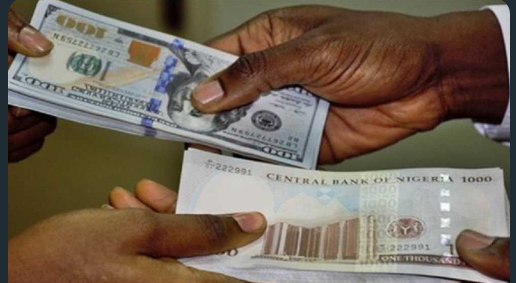
See Black Market Dollar To Naira Exchange Rate Today 10th July 2026
The Black Market Dollar-to-Naira Exchange Rate for 10th July 2026 Can Be Accessed Below.
IMPORTANT NOTE: The exchange rate changes hourly. It depends on the volume of dollars available and the Demand. This means…you can buy or sell 1 dollar at a certain rate, and the price can change (high or low) within hours.
The official naira black market exchange rate in Nigeria today, including the Black Market rates, Bureau De Change (BDC), and CBN rates.
Please note that the exchange rate is subject to hourly fluctuations influenced by the supply and demand of dollars in the market.
What’s the dollar to naira black market today, 10th July 2026?
The exchange rate for a dollar to naira at Lagos Parallel Market (Black Market) players sell a dollar for ₦1412 and buy at ₦1400 on Friday, 10th July, 2026, according to sources at Bureau De Change (BDC).
Please note that the Central Bank of Nigeria (CBN) does not recognize the parallel market (black market), as it has directed individuals who want to engage in Forex to approach their respective banks.
Dollar to Naira Black Market Rate Today
Dollar to Naira (USD to NGN) Black Market Exchange Rate Today
Selling Rate ₦1412
Buying Rate ₦1400
Dollar to Naira CBN Rate Today
Dollar to Naira (USD to NGN) CBN Rate Today
Highest Rate ₦1380
Lowest Rate ₦1376
Economy
Oil prices settle 2% lower as economic worries outweigh supply risks
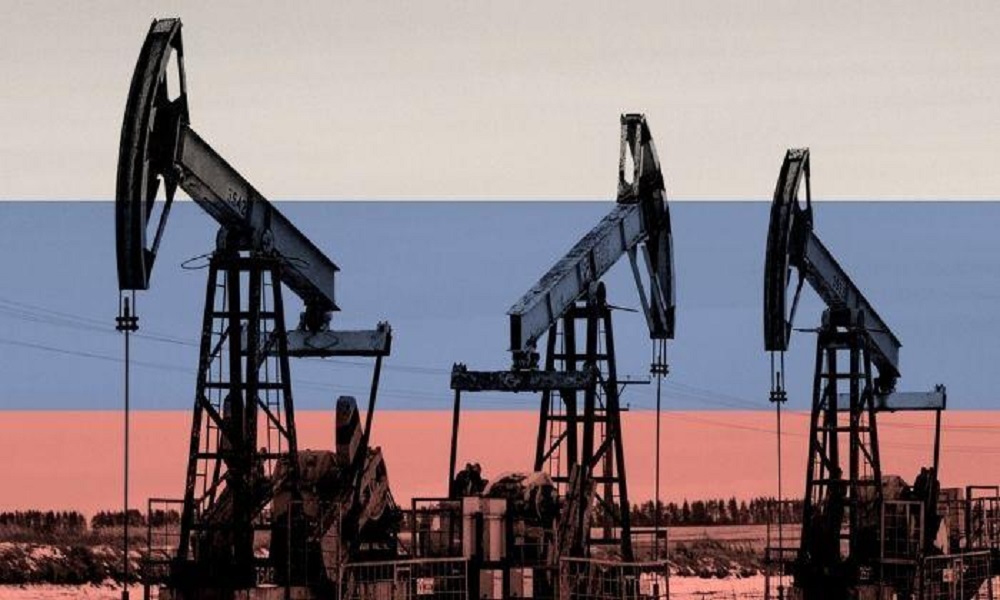
Oil prices slid about 2% on Thursday on worries that rising inflation and other economic concerns could weigh on global oil demand despite continuing supply constraints as the the U.S.-Iran conflict has delayed full reopening of Strait of Hormuz.
About 20% of global oil supplies passed through the strait before the war.
Brent futures fell $1.72, or 2.2%, to settle at $76.30 a barrel. U.S. West Texas Intermediate (WTI) crude fell $1.44, or 2.0%, to settle at $72.08.
On Wednesday, Brent closed at its highest since June 19 and WTI closed at its highest since June 22.
Iranian armed forces launched attacks on U.S. military infrastructure in Gulf states on Thursday following U.S. strikes on Iran’s southern coastal and eastern provinces, further straining a three-week-old ceasefire agreement.
The attacks came on the day that Iran buried its slain Supreme Leader Ayatollah Ali Khamenei at the shrine of Mashhad, the culmination of a week of mass funeral processions and rallies. Khamenei was killed on the first day of the war on February 28. Separately, several explosions were heard in Iran including in Bushehr, where one of Iran’s nuclear plants is located.
“We expect the renewed tension in the Middle East between the U.S. and Iran to be relatively short-lived because both countries are constrained by practical economic and political realities,” Vikas Dwivedi, global energy strategist at Macquarie Group, said in a note.
Qatar, which has often mediated between Washington and its adversaries including Tehran, condemned attacks on commercial shipping and called for a return to diplomacy. Foreign ministers of Turkey and Oman also stressed the need to avoid further military escalation in calls with their Iranian counterpart, Abbas Araqchi.
“After two days of attacks, Iran appears to be on the phone looking to scale back hostilities and possibly return to the negotiating table,” Bob Yawger, director of energy futures at Mizuho, said in a note.
Iran’s Revolutionary Guards Navy said the U.S. attacks and intervention in redirecting shipping through the Strait of Hormuz were disrupting the waterway’s gradual reopening.
“Our estimated oil flows from the Persian Gulf recovered to above 80% of pre-war flows within the first 10 days after Hormuz reopening as trapped tankers rushed to leave the Persian Gulf, but retreated to the low-70s% of normal following recent attacks on tankers,” analysts at U.S. bank Goldman Sachs said in a report.
U.S. JOBS AND INFLATION
In the U.S., the number of Americans filing claims for unemployment benefits fell last week, supporting economists’ views that the labor market remained in a “slow-hire, slow-fire” mode.
Minutes of the Federal Reserve’s June 16 to 17 meeting showed policymakers’ concerns about inflation mounted last month and they “generally expected labor market conditions to remain stable in the near term, with the unemployment rate staying close to current levels.”
New York Federal Reserve President John Williams said on Thursday he did not expect a sustained rise in energy prices for the rest of the year despite the of hostilities in the Middle East, and declined to say what decision he would make on interest rates at a policy meeting later this month.
When the Fed boosts interest rates to keep inflation in check, it can reduce economic growth and cut demand for oil.
In China, the world’s second-biggest economy behind the U.S., producer price inflation surged in June to its highest level in four years, piling pressure on manufacturers’ profit margins as weak domestic demand limited pricing power.
UKRAINIAN DRONES HIT RUSSIAN TANKERS
In Europe, Ukrainian drones hit a dozen more Russian tankers in the Sea of Azov overnight, Ukraine’s military said, the latest in a campaign aimed at disrupting fuel supplies to Russian forces and isolating Moscow-occupied Crimea.
On Wednesday, U.S. diesel futures posted their biggest daily percentage gain in four years after Russia announced a ban on exports of the industrial fuel, supercharging supply concerns in a market grappling with uncertainty about Middle Eastern oil flows.
Russia said the U.S. was wrong to believe deep Ukrainian strikes into Russian territory could help end more than four years of war, and could instead prolong it.
A settlement in the Ukraine war could result in the lifting of some sanctions on Russia, which could allow Moscow to export more oil. Russia was the world’s third-biggest crude oil producer behind the U.S. and Saudi Arabia in 2025, according to U.S. energy data.
Economy
2024 Bid Round: NUPRC hands oil prospecting licences to 12 firms
The Nigerian Upstream Petroleum Regulatory Commission (NUPRC) has formally presented Petroleum Prospecting Licences (PPLs) to successful bidders in the 2024 oil licensing round, issuing 19 prospecting licences to 12 companies as part of efforts to attract fresh investment into Nigeria’s upstream petroleum sector.
The concession contracts and licences were presented during the ongoing Nigeria Oil and Gas (NOG) Energy Week 2026 in Abuja, marking the commencement of exploration activities across deep offshore, shallow water and continental shelf acreages.
Among the beneficiaries are Boron Energy Limited (PPL 2009), Energy Marketing and Supply Limited (PPL 269), Sahara Deepwater Resources Limited (PPLs 270 and 271), and Tulkan Energy E&P Company Limited (PPL 2008).
The execution of the concession contracts establishes the legal, fiscal and commercial framework governing the licence holders under the Petroleum Industry Act (PIA) 2021, paving the way for the formal grant of the petroleum prospecting licences.
According to the Commission, the exercise marks another milestone in Nigeria’s efforts to unlock new investments in the upstream petroleum industry, accelerate exploration activities, increase hydrocarbon reserves and create long-term economic value.
NUPRC said the portfolio of assets awarded reflects the broad investment opportunities available in Nigeria’s upstream sector and is expected to stimulate exploration, boost production capacity and strengthen investor confidence in the country’s regulatory framework.
While some of the successful companies signed their concession contracts during the NOG Energy Week, the Commission said those not represented at the event would complete the process on mutually agreed dates.
Meanwhile, Nigeria recorded another significant investment commitment in the upstream sector as ESSO Exploration and Production Nigeria Offshore East Limited announced plans to invest more than $300 million in the Usan Infill Project.
The project is expected to add about 40,000 barrels of oil per day to Nigeria’s deepwater production and generate an estimated $1.2 billion in revenue over the next four years.
Speaking at the unveiling of the project, Chairman and Managing Director of ESSO Nigeria, Jagir Baxi, said the investment marks the company’s return to deepwater drilling after nearly a decade and aligns with the Federal Government’s objective of increasing crude oil production.
He said the project was designed as a short-cycle investment capable of delivering first oil within about six months of offshore execution, with peak production expected within 18 months.
Speaking on the development, NUPRC Chief Executive, Mrs. Oritsemeyiwa Eyesan, described the project as a strong vote of confidence in Nigeria’s upstream petroleum sector, noting that it represents ESSO’s first drilling campaign since 2016.
She said regulatory interventions by the Commission helped unlock the long-delayed project and reaffirmed NUPRC’s commitment to creating an investment-friendly environment that supports timely project delivery, improves operational efficiency and attracts fresh capital into the oil and gas industry.
Eyesan added that sustained investment in both new developments and existing producing assets would be critical to achieving Nigeria’s production targets, growing hydrocarbon reserves and boosting government revenue.
-
News18 hours agoDAY 23 of Projects Commissioning in the FCT
-
Sports18 hours ago2026 World Cup: Morocco Coach Ouahbi praises France’s victory
-
News17 hours agoJoint troop foil multiple ISWAP infiltration attempts in Borno
-
Metro56 minutes agoMan who slashed his manhood set it ablaze back in the street
-
News12 hours agoKidnapped Oyo Pupils, Teachers finally Regain freedom – Presidency
-
Sports18 hours agoMbappe gives reason why he missed penalty in France’s World Cup Quarter-Final Victory Over Morocco
-
News17 hours agoVice President narrowly escapes Military helicopter crash
-
News54 minutes agoTinubu overjoyed as Oyo abductees finally regain freedom