News
Oyedele Sets Up Advisory Committee to Turn Economic Reforms into Results
- /home/naijuinz/public_html/wp-content/plugins/mvp-social-buttons/mvp-social-buttons.php on line 27
https://naijablitznews.com/wp-content/uploads/2026/07/20260714_1204091-1000x600.jpg&description=Oyedele Sets Up Advisory Committee to Turn Economic Reforms into Results', 'pinterestShare', 'width=750,height=350'); return false;" title="Pin This Post">
- Share
- Tweet /home/naijuinz/public_html/wp-content/plugins/mvp-social-buttons/mvp-social-buttons.php on line 72
https://naijablitznews.com/wp-content/uploads/2026/07/20260714_1204091-1000x600.jpg&description=Oyedele Sets Up Advisory Committee to Turn Economic Reforms into Results', 'pinterestShare', 'width=750,height=350'); return false;" title="Pin This Post">
…urge members to challenge government thinking as committee pledges practical solutions over paperwork

By Gloria Ikibah
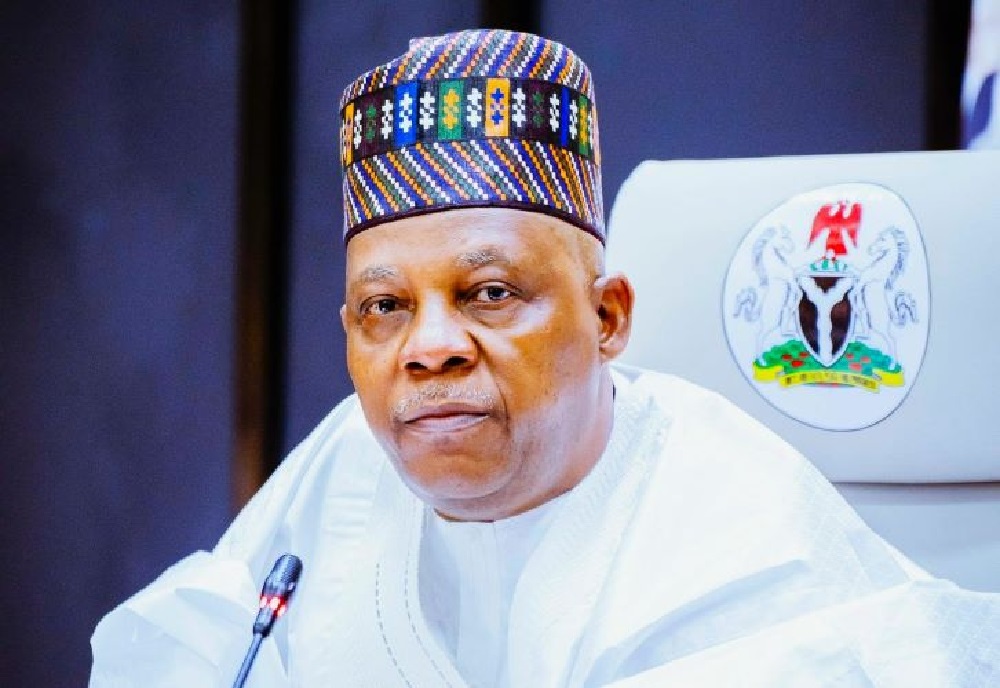
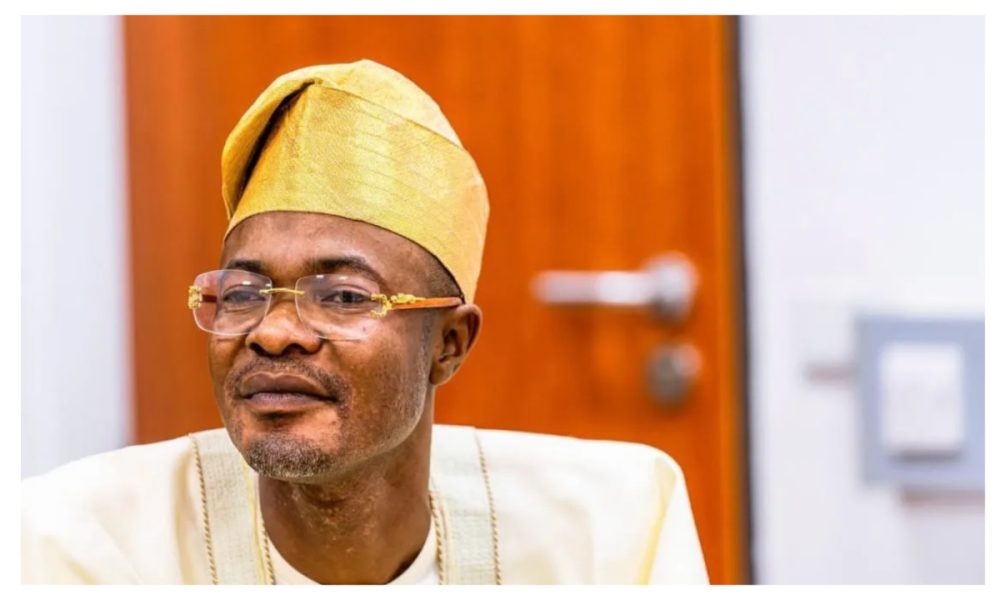
The Minister of Finance and Coordinating Minister of the Economy, Mr Taiwo Oyedele, has inaugurated a Ministerial Advisory Committee to provide independent policy advice aimed at translating the Federal Government’s economic reforms into measurable improvements in the lives of Nigerians.

Speaking at the inauguration on Tuesday in Abuja, Oyedele said the committee would serve as a bridge between policy formulation and implementation, insisting that the era of reform must now give way to tangible results.
The minister said: “Today is not simply about constituting another committee.
“It is about institutionalising a new way of thinking, a new way of solving problems, a new way of connecting ideas with implementation and strengthening the quality of economic decision making in service of the Nigerian people. This is what I call the public-policy-private partnership. The context is that we want to move from reform to results.”
Oyedele said the administration of President Bola Tinubu had embarked on some of the country’s most difficult economic reforms, including fuel subsidy removal, exchange rate unification and comprehensive tax reforms.
“These were not easy choices, but are essential because sustainable development cannot be built on fiscal illusion.
“We acknowledge that these decisions impose real, immediate costs on households, businesses and communities. So our focus now is on converting the reforms into tangible results.
“It is one thing to make or change policy. It is quite another to translate that change into outcomes ordinary Nigerians can feel. The true measure of reform is not the number of policies announced or macroeconomic indicators cited. It is the number of jobs created, inflation declining, naira stabilising, and businesses investing with confidence.
“It is about the number of lives improved. That is why this committee has been established”, stated.
The minister said government required honest and evidence-based advice capable of identifying policy risks before they become crises.
He emphasised that the advisory body will not duplicate the functions of government institutions.
“This committee exists therefore to provide independent, evidence-based, and constructive external counsel. We need you to think through the second and third order effects of our policies.
“Surface vulnerabilities and risks before they become crises. Bring international best practice into our decision-making. Relay how our reforms are actually landing in factories, shops and communities so we can adjust course dynamically where necessary”
“Let me be explicit about what this committee is not. It does not exercise executive authority, nor does it duplicate or replace the existing work of any statutory institution. Your role is to advise.
“Your independent perspective will strengthen our decisions and ensure our efforts remain relentlessly focused on outcomes”, he added.
Oyedele said the committee’s work will revolve around four key priorities: economic policy advisory, public financial management, economic coordination and ensuring reforms produce practical benefits.
“We need data-driven counsel on how to achieve our core developmental objectives of job creation, robust growth, enhanced productivity and revenue optimisation.
“The government’s aspirations remain bold. Achieving seven per cent annual real GDP growth and building a one-trillion-dollar economy by 2030 requires thinking differently, questioning assumptions, challenging long-held theories and developing strategies that stretch us while remaining deeply grounded in economic reality”, he noted.
He therefore urged members of the committee to offer frank advice, free from political considerations, and challenged them to remain connected to on the ground.
Oyedele assured members that their recommendations will not be ignored.
“Be rigorous and bold. Ground your advice in hard evidence, not intuition, populism or political convenience. Data should illuminate our choices, not merely justify predetermined outcomes.
“Do not be constrained by conventional thinking. We do not need this committee to validate what we have already decided. We need you to challenge our assumptions, point out the trade-offs we might be preparing over, and tell us the truth we may not want to hear.
“Healthy, fact-based disagreement is not a weakness, it is an advantage.
“Do not let this committee become an ivory tower exercise. Speak with manufacturers, exporters and everyday citizens. Understand where policy is creating friction and how it can open doors.
“A young entrepreneur deterred by red tape, or a factory manager struggling for a permit, they are not abstractions. They are the living metrics of whether our policies succeed or fail.”
“You have agreed to serve on a pro bono basis, sacrificing your time and energy during a critical period. For this demonstration of deep patriotism, we are immensely grateful.
“In return, I promise you that your counsel will be heard. Your advice will not languish in forgotten files. It will actively inform ministerial decisions and the guidance I provide to the President”, he said.
Earlier in his welcome address, Permanent Secretary Finance in the Ministry of Finance, Raymond Omachi, described the inauguration as an important step towards strengthening fiscal governance and improving economic policy through external expertise.
According to him, the committee comprises economists, public finance specialists, development practitioners, governance experts, business leaders and representatives of the organised private sector.
“Today’s inauguration reflects the Honourable Minister’s conviction that the complex economic challenges before our nation require not only sound public institutions, but also the collective wisdom, experience and perspective of accomplished professionals from diverse fields.
“The committee is designed to serve as an independent advisory body, providing strategic counselling on economic policy, fiscal reforms, public financial management, government efficiency, stakeholder engagement and economic coordination.
“Equally important is the role of helping us to translate ongoing reforms into measurable improvement in the lives of Nigerians,” he said.
Omachi said members were expected to provide objective, innovative and nationally focused recommendations capable of strengthening fiscal sustainability and public confidence in government reforms.
Responding chairman of the committee, Abubakar Suleiman, assured the minister that members will focus on producing practical and implementable solutions rather than academic reports.
“I promise you that’s not what we’ll give you.
“What I think you’ve asked of us is that because the job of keeping this country going is a full-time job, and those who have been mandated to do it do not have enough time to think about the new things or the different things or the things that are not yet on the table.
“Our job is to free you to keep running this ministry and keep coordinating this economy while we take time off to think about things that, if you were not on this job, you would have been able to do yourself”, he said.
Suleiman said the committee understands that its role was not to repeat ideas government officials already knew.
“It will be my commitment on behalf of my members that we’ll do everything possible not to come to you with advice on the things you already know, or the things that you’ve heard all the brilliant minds that work with you advise us to tell you.
“We understand that that is not our job”, he noted.
He pledged that the committee will remain connected to the realities facing ordinary Nigerians and relay genuine feedback to government.
He assured the minister that the committee’s recommendations will be practical, implementable and focused on delivering quick wins.
“We will serve as a bridge so that what is happening on the street, what is happening in the farms, what is happening in the factory, beyond the noise, beyond the social media noise, beyond the conversations that are held spontaneously in marketplaces and beer parlours, we will try to listen and hear what people are really saying, where Nigerians are really feeling the pain, which of the policies is really working, and then we’ll bring that back to you in an environment that you can work with.
“Our hope is that the few things that we put our effort to will be valuable things. There will be things that are executable, things that are practical, but also things that can be done very quickly”, he said.
The Committee members are:
1. Abubakar Suleiman – Chairman
2. Dr. Ayo Teriba – Member
3. Prof. Uche Uwaleke – Member
4. Chinyere Almond – Member
5. Vincent Nwani – Member
6. Segun Oloketuyi – Member
7. Jide Adeola – Member
8. Dimeji Salaudeen – Member
9. Damilola Akinbami – Member
10. Idris Bob-Osagie – Member
11. Dr. Jani Ibrahim – Member
12. Segun Ajayi-Kadri – Member
13. Prof. Joseph Nanna – Member
14. Dr. Suleiman Ndanusa – Member
15. Dr. Baba Yusuf Musa – Member
The committee, made up of economists, business leaders, governance experts and development professionals, is expected to provide strategic advice to the Ministry of Finance on fiscal reforms, public financial management, economic coordination and stakeholder engagement as the government seeks to consolidate its economic reform agenda.
News
Rainbow Coalition Moves to End Rivers Political Rift, Assures Members of No Victimisation
The Reconciliation Committee of the Rainbow Coalition has assured members of the political group that no one will be victimised or discriminated against as part of ongoing efforts to restore peace and unity in Rivers State.
The committee gave the assurance on Sunday after meeting with Rivers State Governor, Sir Siminalayi Fubara, at the Government House in Port Harcourt. The meeting was the second between the governor and members of the committee in about two weeks.
The committee said the reconciliation process was aimed at rebuilding the political family and creating a new atmosphere in which all members would be treated equally and with respect, regardless of their past political disagreements.
Speaking to journalists after the meeting, Chairman of the committee, Senator Magnus Abe, said the gathering was held to further deliberate on modalities for achieving lasting peace among the previously estranged political leaders.
The committee was constituted by the leader of the group, Nyesom Wike, Minister of the Federal Capital Territory and former governor of Rivers State.
Abe said the committee had held a series of meetings to develop a framework for bringing all members together, adding that significant progress had been made in the reconciliation process.
He said the development should reassure Rivers residents who have been concerned about the political divisions in the state.
“We are all in agreement and we have made very good progress,” Abe said.
He added that the renewed engagement marked “a significant shift in the political atmosphere of the state,” expressing optimism that the reconciliation would pave the way for greater unity, progress and prosperity in Rivers State.
Also speaking, the South-South Zonal Publicity Secretary of the All Progressives Congress, APC, Dr Samuel Nwanosike, commended Governor Fubara for receiving the delegation and providing an avenue for the stakeholders to engage in a spirit of brotherhood.
Nwanosike described the outcome of the meeting as a major step towards restoring unity within the political family.
“The family is back; sincerely back, and soon, they will see the working of the Rainbow Coalition,” he said.
He added that the coalition was committed to ensuring that Rivers residents enjoyed the dividends of democracy.
Another stakeholder, Chief Ambrose Nwuzi, said members who support Governor Fubara had embraced the reconciliation process, stressing that peace remained the best option for the state.
Nwuzi described the previous disagreements among the political actors as part of the challenges that could arise in any human society.
He said the leaders had agreed on the need to reconcile and that the process was already yielding results.
“I can tell you that we have reconciled. All that we are waiting for is for the Honourable Minister of the Federal Capital Territory to put the seal on the reconciliation process which has been going on for the past few weeks,” he said.
Other members of the delegation included the APC governorship candidate in Rivers State, Hon. Kingsley Ogundu Chinda, and Mr Tamosisi Gogo-Jaja, among others.
The latest development is expected to further strengthen the ongoing efforts to end the prolonged political differences among the stakeholders and restore unity within Rivers State’s political family.
News
FCT: Tinubu’s Govt Signs 26,272 Certificates of Occupancy To Aid Businesses, 17,575 More Than Those Signed in 13 Years
To aid the ease of doing business in the Federal Capital Territory (FCT), and in line with President Bola Ahmed Tinubu’s Renewed Hope Agenda, a total of 26,272 Certificates of Occupancy (C-of-O) have been signed by the FCT Minister, Nyesom Wike, since the President assumed office.
This is against a total of 8,697 produced and signed between 2010 and 2023.
During the five and half years administration of President Goodluck Jonathan, a total 5,500 Certificates of Occupancy were produced and signed while 3,197 were produced and signed during the eight years administration of President Muhammadu Buhari.
Many of the allottees who are beneciaries of the 26,272 Certificates of Occupancy produced and signed by the FCT Administration under Wike, got their allocations more than 10 years ago.
Certificate of Occupancy functions as trusted collateral for commercial loans, mortgages, or business expansion capital.
Inability of property owners to get Certificates of Occupancy when needed is one of the challenges facing small and medium businesses, as it restricts access to funding.
Senior Special Assistant to the FCT Minister on Public Communications and Social Media, Lere Olayinka, said in a statement on Sunday, that the FCT Administration under the present Government of President Tinubu, has streamlined the process to enable land allottees receive their documents within two weeks of completing payments.
“The moment necessary payments are made, land allottees can now get their C-of-O within two weeks.
“Also, an automated notifications has been introduced to ensure that land allottees are informed when their documents are ready for collection,” Olayinka said.
He attributed the delays under previous administrations to inefficiencies that discouraged landowners from completing payments.
Apart from producing and signing 26,272 Certificates of Occupancy, a total of 2,521 Consents to assign was granted while 177 Consents to Mortgage were granted in the last three years of President Tinubu’s administration, by the FCT Administration under Nyesom Wike.
This is against 753 Consents to assign and 180 Consents to Mortgage granted by the administration of President Jonathan as well as 684 Consents to assign and 164 Consents to Mortgage granted during the eight years government of President Buhari.
A consent to assign is a legal document required when selling a property, or shifting loan agreements while consent to mortgage is an official approval required before a property can be used as collateral for a loan.
News
3,000 Man O’War officers undergo intensive training in readiness for safe sch engagement (Photos)
In a renewed demonstration of its commitment to strengthening community safety and supporting the implementation of the Safe School framework across Nigeria, approximately 3,000 officers and men of Man O’ War Nigeria from the 36 States, Federal Capital Territory (FCT) and Railway Commands are undergoing an intensive one-week capacity-building training at the Citizenship and Leadership Training Centre (CLTC), Mountain School, Shere Hills, Jos, Plateau State.
The training forms part of the organisation’s readiness towards its proposed engagement in community-based Safe School interventions and is designed to strengthen the capacity of Man O’ War personnel to operate effectively within diverse environments and respond appropriately to emergencies and security-related challenges around schools and host communities.
The comprehensive exercise combines land-surface, waterway and hill-terrain training, exposing participants to practical situations that require physical endurance, teamwork, discipline, situational awareness and effective decision-making. The programme recognises that schools and vulnerable communities across Nigeria are situated within different geographical environments, requiring volunteers to possess adaptable skills for effective community engagement.
Participants are also undergoing physical conditioning and mental alertness exercises, aimed at improving endurance, resilience, concentration, rapid response and the ability to remain composed while managing challenging situations. The combination of physical and mental preparedness is intended to ensure that personnel are better equipped to support communities during emergencies and other situations requiring organised volunteer intervention.
The waterway component of the training provides participants with practical exposure to safety considerations in riverine and aquatic environments, particularly in recognition of the vulnerabilities faced by communities where waterways form part of the daily transportation routes for children and other residents.
Similarly, the land and hill-terrain exercises are designed to strengthen mobility, endurance, navigation, teamwork and operational awareness in difficult terrains. These exercises are particularly relevant to community-based interventions in areas where schools and settlements are located within challenging geographical environments.
Speaking on the significance of the training, the National Commander of Man O’ War Nigeria, NC Adedamola Gbenga mss, mipm, msr, fwip, stated that the organisation was strengthening its personnel because effective Safe School engagement requires volunteers who are physically prepared, mentally alert, disciplined and capable of working collaboratively with communities and relevant authorities.
He noted that the training goes beyond physical exercises, stressing that participants are being prepared to understand their communities, identify potential risks, promote preventive measures and support appropriate response mechanisms within the limits of their volunteer responsibilities.
The National Commander further explained that the nationwide structure of Man O’ War Nigeria provides an opportunity to take community-based safety awareness and resilience-building initiatives closer to schools and vulnerable communities. He emphasised that the organisation’s personnel would continue to work within established legal and institutional frameworks while supporting government agencies, security stakeholders and community structures.
The training also reinforces the importance of preparedness, early warning, community awareness, emergency response, leadership, discipline and collective responsibility in strengthening the safety of schools and their surrounding communities.
Man O’ War Nigeria recognises that school safety is a shared responsibility that requires sustained collaboration among government institutions, security agencies, educational authorities, parents, traditional institutions, community leaders, civil society organisations and responsible citizens.
The organisation therefore views the one-week training as an important step towards preparing its personnel for effective community engagement under the Safe School framework, particularly in vulnerable communities where environmental, security and emergency-response challenges may require additional preparedness.
The exercise further demonstrates Man O’ War Nigeria’s commitment to its core philosophy of building disciplined, responsible and resilient citizens capable of contributing positively to the safety and development of their communities.
At the conclusion of the training, the participants are expected to return to their respective State, FCT and Railway Commands with enhanced knowledge, physical preparedness, mental alertness and practical skills that can contribute to safer schools and more resilient communities across Nigeria.
Man O’ War Nigeria remains committed to strengthening its partnership with the Safe School Initiative, government institutions, security agencies and other relevant stakeholders in advancing a coordinated and community-based approach to school safety.
-
News16 hours agoJonathan, Oborevwori, Diri, Ibori Mourn 104-Year-Old Prince Penawou
-
News17 hours agoFerran Torres Joins PSG From Barcelona
-
News17 hours ago“U No Try President Bola Tinubu’ – Davido Accuses Tinubu Of Planning To Withdraw Police, Military From Osun
-
News17 hours agoAdeleke Maintains Lead As Collation Of Osun Governorship Results Continues
-
News16 hours agoReal reasons I left Christianity for Ifa – Ex-pastor
-
News16 hours agoAdeleke coasting to victory with 439,132 votes as Oyebanji trails behind
-
News17 hours agoINEC Plans To Declare Osun Election Inconclusive— Adeleke Camp
-
News13 hours agoBREAKING: Adeleke dismantles APC with 511,067 votes