
Economy
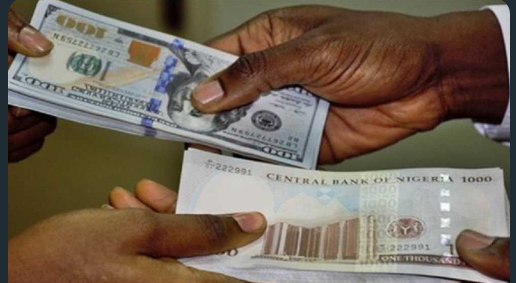
See Black Market Dollar To Naira Exchange Rate Today 21st July 2026

- /home/naijuinz/public_html/wp-content/plugins/mvp-social-buttons/mvp-social-buttons.php on line 27
https://naijablitznews.com/wp-content/uploads/2024/06/Screenshot_20240605-141212.png&description=See Black Market Dollar To Naira Exchange Rate Today 21st July 2026', 'pinterestShare', 'width=750,height=350'); return false;" title="Pin This Post">
- Share
- Tweet /home/naijuinz/public_html/wp-content/plugins/mvp-social-buttons/mvp-social-buttons.php on line 72
https://naijablitznews.com/wp-content/uploads/2024/06/Screenshot_20240605-141212.png&description=See Black Market Dollar To Naira Exchange Rate Today 21st July 2026', 'pinterestShare', 'width=750,height=350'); return false;" title="Pin This Post">


The Black Market Dollar-to-Naira Exchange Rate for 21st July 2026 Can Be Accessed Below.
NOTE: The exchange rate changes hourly. It depends on the volume of dollars available and the Demand. This means…you can buy or sell 1 dollar at a certain rate, and the price can change (high or low) within hours.
The official naira black market exchange rate in Nigeria today, including the Black Market rates, Bureau De Change (BDC), and CBN rates.
Please note that the exchange rate is subject to hourly fluctuations influenced by the supply and demand of dollars in the market.
What’s the dollar to naira black market today, 21st July 2026?
The exchange rate for a dollar to naira at Lagos Parallel Market (Black Market) players sell a dollar for ₦1425 and buy at ₦1413 on Tuesday, 21st July, 2026, according to sources at Bureau De Change (BDC).
Please note that the Central Bank of Nigeria (CBN) does not recognize the parallel market (black market), as it has directed individuals who want to engage in Forex to approach their respective banks.
Dollar to Naira Black Market Rate Today
Dollar to Naira (USD to NGN) Black Market Exchange Rate Today
Selling Rate ₦1425
Buying Rate ₦1413
Dollar to Naira CBN Rate Today
Dollar to Naira (USD to NGN) CBN Rate Today
Highest Rate ₦1382
Lowest Rate ₦1378

The Nigerian Communications Commission has said Africa’s telecommunications regulators must overhaul traditional regulatory approaches to keep pace with rapid technological changes, warning that existing frameworks were no longer adequate for an industry increasingly driven by artificial intelligence, satellite services, cloud computing and digital public infrastructure.
The Executive Commissioner for Stakeholder Management at the NCC, Rimini Makama, stated this on Tuesday in Abuja during the Head of Regulators Roundtable held on the sidelines of the ongoing 7th Ordinary Session of the Conference Preparatory Committee of the African Telecommunications Union.
Makama said the telecommunications landscape had become significantly more complex, requiring regulators to rely on data and market intelligence rather than conventional regulatory methods.
“Our discussion today turns on one question that matters to every regulator in this room. How do we use data and evidence to make decisions that are smarter, more transparent, and more focused on our consumer? Our markets are no longer simple,” she said.
She added, “Broadband is expanding, satellite services are arriving, AI, cloud computing, and digital public infrastructure are reshaping our sector. The old regulatory approaches were built for a simpler time. They are no longer enough.”
According to her, regulators across Africa now possess unprecedented volumes of technical, market and consumer data, but the real challenge lies in converting that information into better regulatory decisions.
“To stay ahead of the problem and not just react to it, we need trusted intelligence,” Makama said.
She explained that because African digital markets were becoming increasingly interconnected, regulators faced similar responsibilities in protecting consumers, promoting competition, attracting investment and strengthening network resilience.
“The challenge is not collecting it. The challenge is turning it into better decisions,” she said.
Makama said the NCC had developed a regulatory intelligence ecosystem that integrates multiple data sources, including quality of service and quality of experience indicators, consumer complaints, compliance analytics and market intelligence to support evidence-based policymaking.
“It brings several data sources into one place, so that our decisions rest on evidence, quality of service, and quality of experience data, consumer complaints, compliance analytics, and market intelligence. We will walk you through some of the recent cases where this intelligence led to real and measurable outcomes,” she said.
She urged regulators across the continent to deepen collaboration by sharing practical experiences and developing trusted approaches to data verification, advanced analytics and consumer-focused regulation.
Makama also challenged participants to examine how regulators could ensure the independence and accuracy of regulatory data, remove barriers to information sharing and measure consumer experience beyond conventional quality-of-service metrics.
Earlier, the Executive Vice-Chairman of the NCC, Dr Aminu Maida, said African regulators were increasingly confronted with common challenges despite operating under different legal and institutional frameworks.
According to him, discussions among regulators now routinely revolve around investment, infrastructure resilience, satellite communications, cybersecurity, affordability, artificial intelligence and emerging technologies.
“We may regulate markets of different sizes, operate under different legal frameworks, and respond to different national priorities. But the realities of our work are often remarkably similar,” Maida said.
He added, “Someone asks, how are things back home? Five minutes later, we are discussing investment, infrastructure resilience, satellite services, cyber security, affordability, artificial intelligence, or the latest technology that has arrived just in time to test the regulatory framework we thought had finally settled.”
Maida said such shared experiences underscored the need for stronger collaboration among African regulators to avoid addressing similar problems independently.
“The challenge that one regulator is trying to solve has already been encountered in one form or another by a colleague elsewhere on the continent. So, the question really is how we make that exchange of experience more deliberate, more systematic, and more useful to our institutions,” he said.
He described the roundtable as an opportunity to strengthen evidence-based regulation by encouraging the use of data, market intelligence and practical experience in policymaking.
Also speaking, the Executive Commissioner, Technical Services, Sunday Oshadami, said the NCC had prioritised transparency by ensuring operators clearly understood regulatory obligations and by making key performance information available to subscribers.
He said the commission had also invested in satellite monitoring capabilities to strengthen oversight of satellite communications and improve regulatory compliance.
According to Oshadami, the commission had established facilities to monitor developments in satellite communications and continued to invest in standard monitoring solutions to support effective regulation as new technologies gain prominence.
The PUNCH earlier reported that stakeholders in Nigeria’s telecommunications sector on recently backed the Nigerian Communications Commission’s draft business rules for Mobile Virtual Network Operators, while urging the regulator to strengthen enforcement to resolve persistent operational and commercial disputes between MVNOs and Mobile Network Operators.
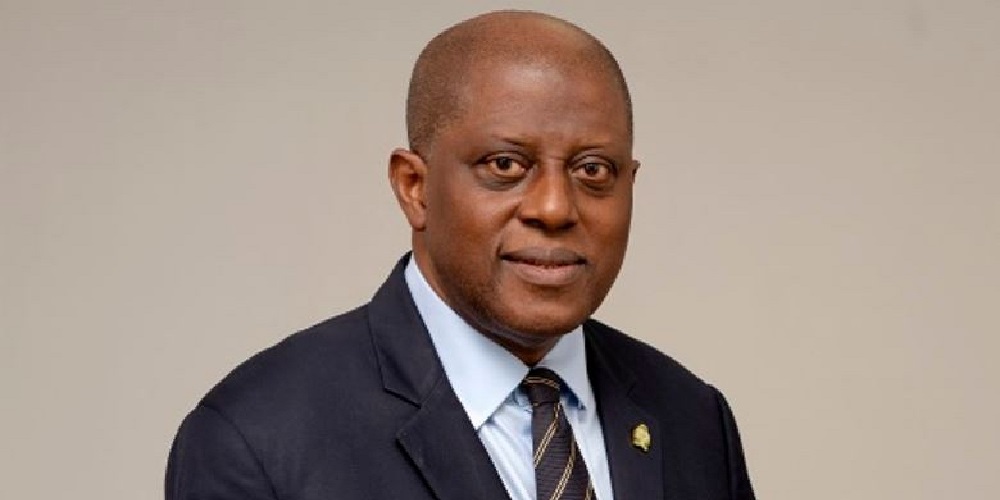
Governor of the Central Bank of Nigeria, Yemi Cardoso, says Nigeria’s foreign exchange reserves has presently risen to 52.52 billion dollars.
Cardoso said this on Tuesday in Abuja, while presenting a communique issued at the end of the 306th meeting of the apex bank’s Monetary Policy Committee (MPC).
The News Agency of Nigeria (NAN) reports that he had earlier announced the decision of the MPC to retain the Monetary Policy Rate (MPR) at 26.5 per cent.
The committee also retained the Standing Facilities Corridor around the MPR at +50/-450 basis points.
Cash Reserve Requirement (CRR) for Deposit Money Banks was retained at 45.00 per cent, Merchant Banks at 16.00 per cent, and non-TSA public sector deposits at 75.00 per cent
According to Cardoso, gross external reserves rose to 52.52 billion dollars as of July 17, from 50.47 billion dollars
as at end-May.
He said that the rise was mainly as a result of receipts from crude oil-related taxes and third-party inflows.
“This is sufficient to finance approximately 11 months of imports of goods and services, surpassing the international benchmark of three months cover,” he said.
The CBN governor said that headline inflation (year-on-year) eased marginally to 15.91 per cent in June, from
15.93 per cent in May, ending the three consecutive months of uptick in price levels.
He said that the decline resulted from a decrease in the non-food component which offset the increase
in food inflation.
“Food inflation rose to 17.52 per cent in June, from 16.96 per cent in May, reflecting supply constraints.
“However, core inflation moderated to 15.92 per cent in June, from 16.82 per cent in May, largely on the back of exchange rate stability.
“Similarly, the 12-month average inflation rate sustained its decline to 17.63 per cent in June, from 18.36 per cent in May,’ ‘ he said.
He said that it marked the sixth month of consecutive moderation and reflected a slower pace of price increases over the medium term.’
According to him, on a month-on-month basis, headline inflation declined to 1.66 per cent in June from 1.75 per cent in May, driven by a slowdown in core inflation.
He said that real Gross Domestic Product (GDP) expanded by 3.89 per cent in the first quarter of 2026, compared with 4.07 per cent in the preceding period.
“This is largely driven by the resilience of the non-oil sector, which grew by 3.94 per cent, supported by improvements in telecommunications, financial services, trade, transportation, and other services sub-sectors.
“Oil sector GDP growth rate declined to 2.57 per cent in the first quarter of 2026 from 6.79 per cent in the fourth quarter
of 2025, due to the maintenance of oil facilities and installations.
“However, recent data showed improvement in economic activities as composite Purchasing Managers Index (PMI) rose to 50.1 index points in June from 49.6 index points in May,” Cardoso said.
He said that output growth was projected to remain resilient into 2026, anchored on the recent improvement in crude oil production, expansionary PMI and the positive impact of timely policy reforms.
“Inflation is projected to moderate further in the medium term on the back of continued stability in the foreign exchange market.
“This will also be due to lagged effect of previous monetary policy tightening and improved food supply conditions as the harvest season approaches,” he said.
He, however, said that the key risk to the outlook remained the severe and prolonged escalation of the
Middle East conflict.
“In the light of these considerations, the MPC reaffirmed its commitment to preserve price and financial system stability.
“The committee remains prepared to take appropriate policy measures guided by evolving macroeconomic conditions,” he said.
NAN

The Federal Government has called for stronger African coordination in shaping global telecommunications policies, saying the continent must deepen technical cooperation and present unified positions to strengthen its influence in international digital governance.
The Executive Vice-Chairman of the Nigerian Communications Commission, Dr Aminu Maida, made the call on Monday at the opening of the 7th Ordinary Session of the Conference Preparatory Committee of the African Telecommunications Union in Abuja.
He said Africa’s influence in global telecommunications would depend on the quality of its preparation, technical expertise and coordinated engagement rather than the size of its delegations.
Speaking on behalf of the NCC, the Federal Ministry of Communications, Innovation and Digital Economy and the Federal Government, Maida said Nigeria was proud to host the gathering, describing it as a demonstration of Africa’s resolve to prepare collectively for decisions that would shape the future of telecommunications and the digital economy.
He said, “Africa’s influence in international forums does not depend simply on the size of our delegations or the number of interventions we make. It depends on the quality of our preparation, the coherence of our positions and the consistency with which we advance them.”
According to him, African countries that engage early, build consensus and develop technically sound positions are better placed to shape international decisions.
“Where our administrations engage early, we consult different perspectives and build technically sound formal positions, Africa’s voice carries weight. Where that preparation is delayed, our influence is inevitably reduced. That is why the work in this room matters,” he added.
Maida explained that the committee would prepare resolutions, recommendations and common positions for both the forthcoming Conference of Plenipotentiaries of the African Telecommunications Union and the 2026 International Telecommunication Union Plenipotentiary Conference.
He noted that while the ATU conference would determine the strategic direction of the continental telecommunications body, the ITU conference would shape the future leadership and priorities of the global telecommunications sector.
“Our work here must serve both purposes clearly, strengthening the ATU as Africa’s coordinating institution while ensuring that Africa is well prepared to participate effectively at the ITU,” he said.
The NCC boss identified cross-border spectrum harmonisation, artificial intelligence governance, data protection frameworks, universal access and cybersecurity as key issues requiring closer regulatory cooperation across the continent.
He said no African country could effectively address such challenges independently.
“Our regulatory cooperation must therefore become more continuous, more technical and more institutionalised,” he said, adding that coordination should extend beyond conferences through regular engagement, shared technical resources and structured processes for developing common African positions.
Maida also urged member states to invest in sustained technical participation, saying Africa’s contribution to global standards should begin at the drafting stage rather than after decisions had already been taken.
“Our objective as Africa is not to resist global standards. It is to help shape standards that are globally sound and sufficiently informed by African realities,” he said.
He added, “African perspectives should, therefore, not be treated as an afterthought. They should form part of the discussion from the outset. That influence will be built through consistent participation, credible evidence, technical expertise and positions that command respect for their merits.”
Reaffirming Nigeria’s commitment to the African Telecommunications Union, Maida said the country would continue to contribute technical expertise, share regulatory experience and support peer learning among African administrations.
Also speaking, the Permanent Secretary of the Federal Ministry of Communications, Innovation and Digital Economy, Nadungu Gagare, said Nigeria remained committed to working with member states of the African Telecommunications Union to advance regional digital integration, innovation and sustainable socio-economic development.
He said the committee’s recommendations would provide the basis for decisions at the forthcoming Conference of Plenipotentiaries.
“As we navigate an era of rapid technological advancement and digital innovation, the importance of collaboration among our member states has never been greater. Through constructive dialogue and consensus building, I am confident that this committee will produce recommendations that will further strengthen the African Telecommunications Union and enhance its capacity to support inclusive and sustainable digital development across the African continent,” Gagare said.
Earlier, the Secretary-General of the African Telecommunications Union, John Omo, described the preparatory committee as central to developing consensus on proposals before they are presented to the Conference of Plenipotentiaries.
He disclosed that the union’s membership had increased from 49 to 52 member states over the past four years, while associate membership rose from 50 to 56 organisations. He added that academia had also been introduced as a new membership category, with 18 institutions now participating in the union’s activities.
Omo said the ATU had expanded its work in broadband spectrum, satellite communications, internet governance, rural broadband, internet exchange points, standardisation and digital infrastructure resilience during the period.
He, however, urged member states to improve the predictability of their financial contributions to enable the secretariat to implement its programmes more effectively, noting that the forthcoming Conference of Plenipotentiaries would elect a new Secretary-General and members of the Administrative Council for the 2027-2031 term.

EU Raises Alarm Over Fake Compensation Scheme, Warns Public Against Scam

Just in: NNPC increases fuel price within 48hours

Alleged plot to use SWV for campaign: Ghost of Atiku’s sordid past haunting him, APC slams ADC’s presidential candidate




-

 News18 hours ago
Ondo Assembly Crisis Deepens As Lawmakers Reportedly Secure 21 Signatures To Impeach Speaker Over OSOPADEC Funds Scandal
-

 News18 hours ago
How Abacha Died During Intercourse With Girlfriend’s Sister – Ex-DSS Operative Amachree
-
 News9 hours ago
Just in: FG Allocates ₦780m to 130 Churches, Each to Receive ₦5m–₦6m
-

 Metro18 hours ago
Four Killed as Gunmen Attack Settlement in Anambra, Police Launch Manhunt
-

 News18 hours ago
FCTA Threatens To Sue AEDC Over Defamatory Claims
-

 News23 hours ago
PDP Rebuilding, Will Come Out Stronger, BoT Assures Party Supporters
-

 News18 hours ago
‘Drug-free certificate should become mandatory for couples’ — NDLEA boss Marwa
-

 Sports18 hours ago
World Cup: FIFA president, Infantino told to resign after Spain won trophy