
News
ECOWAS Seeks Sanctions for Member States Ignoring MSME Policies

- /home/naijuinz/public_html/wp-content/plugins/mvp-social-buttons/mvp-social-buttons.php on line 27
https://naijablitznews.com/wp-content/uploads/2024/09/download-2.png&description=ECOWAS Seeks Sanctions for Member States Ignoring MSME Policies', 'pinterestShare', 'width=750,height=350'); return false;" title="Pin This Post">
- Share
- Tweet /home/naijuinz/public_html/wp-content/plugins/mvp-social-buttons/mvp-social-buttons.php on line 72
https://naijablitznews.com/wp-content/uploads/2024/09/download-2.png&description=ECOWAS Seeks Sanctions for Member States Ignoring MSME Policies', 'pinterestShare', 'width=750,height=350'); return false;" title="Pin This Post">


By Gloria Ikibah
The ECOWAS Commission has called for tougher measures against member states that fail to implement agreed policies designed to support the growth of Micro, Small and Medium-sized Enterprises (MSMEs), warning that the region’s economic ambitions will remain out of reach without effective implementation.
The position was presented on Monday during the ongoing delocalised meeting of the ECOWAS Parliament’s Joint Committee on Industry and Private Sector, Macroeconomic Policy and Economic Research, Administration, Finance and Budget, and Public Accounts in Cotonou, Republic of Benin.
Speaking during a presentation on “Trade Facilitation, Regulatory Reforms and Formalisation,” Dr Tony Luka Elumelu of the ECOWAS Business Council Secretariat argued that the region already has sufficient policies, protocols and legal instruments to drive private sector growth, stressing that the real challenge lies in implementation rather than policy formulation.
He urged member states to shift their attention from producing new frameworks to creating a business-friendly environment that allows enterprises to flourish.
According to him, “We have very good policies, protocols, legal instruments in terms of the private sector development. We also have the MSME Charter. We have created an enabling environment in this particular document for development and growth of the MSMEs but, in summary, my recommendation is that we should implement what we adopt.
“We should make sure that we create an enabling environment for these businesses to thrive and not keep adopting policies. What we need to do is enforce those policies that we have adopted and remove every bottleneck that impedes MSMEs from thriving.”
Elumelu noted that West Africa must become more competitive, especially as the African Continental Free Trade Area (AfCFTA) opens new opportunities across the continent.
He said governments should prioritise investments in transport infrastructure and eliminate unnecessary barriers that continue to frustrate legitimate businesses operating across borders.
He also identified the proliferation of roadblocks and multiple checkpoints across the region as major obstacles to trade and economic integration.
“We need to make sure that we have the necessary infrastructure that our goods will use in terms of moving from one country to another. We also need to look at the vision that we have signed under the AfCFTA protocol.
“In fact, we already know that we are going to compete with other regions, which means that we need to make sure that we do not disturb our people who are trading legitimately, so that at the end, our region will benefit from the economic development and the benefits inherent in the AfCFTA trade.
“The multiple checkpoints, roadblocks, and also the practicality of what we are doing in the region… every legal instrument will always pass through the ECOWAS Parliament before adoption, which means that there should be strategy to put in timelines in terms of implementation. There should also be strategy to be conscious about implementation”, said.
Also speaking, the Principal Programme Officer in charge of Enterprise and Business Promotion at the ECOWAS Commission, Dr Olalekan Afolabi, stressed the importance of moving more businesses from the informal economy into the formal sector.
He said many enterprises across the region remain unregistered, limiting their ability to access finance, markets and government support, and urged parliamentarians to champion policies that encourage formalisation.
Afolabi also called for the effective implementation of the European Union-funded African Trade Competitiveness and Market Access Programme, valued at €50 million.
“How do we implement the African Trade Competitive and Market Access Program of the European Union, which is a 50 million euro project? Some of the responses we give to them include: one, going at the national level and seeing that these policies are properly domesticated. These policies are legislated at the national level and also coming to hold us accountable at the regional level, because we need to report periodically to the Parliamentarians.
“They need to monitor the implementation of some of those projects and this forum, of course, presents an opportunity for things like this”, he noted.
Discussions at the meeting centred on the need for stronger political commitment to implementing existing ECOWAS policies, with participants maintaining that sustained reforms, improved infrastructure and the removal of trade barriers are essential if MSMEs are to become key drivers of economic growth, regional integration and job creation across West Africa.

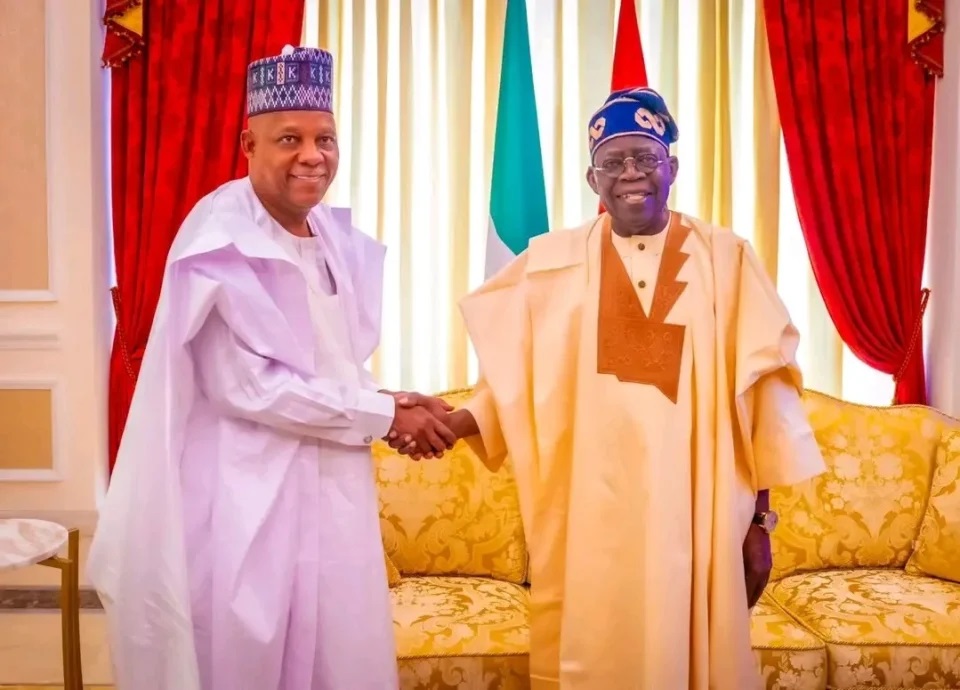
Vice President Kashim Shettima has visited President Bola Tinubu in Lagos after representing the President at the 2026 United Nations General Assembly in New York.
The visit was disclosed by the Special Assistant to the President on Social Media, Dada Olusegun, in a post on Saturday.
Shettima, who spoke with journalists after the meeting in his Lagos residence , said he had remained in regular contact with Tinubu during the President’s stay abroad.
“Well, we are quite thrilled that he is back on the seat and we have been in regular contact throughout his sojourn abroad,” Shettima said.
He said advances in science and technology had made it possible for leaders to remain engaged in governance regardless of their location.
“So we have been in regular contact, we speak almost every other day and we are updating him on developments in the nation and we are happy he is back on the seat,” he said.
Shettima also defended some of the economic decisions taken by the Tinubu administration, including the removal of fuel subsidy and the unification of multiple exchange rates.
He urged Nigerians to be patient with the administration, saying the government was introducing measures to ease the economic hardship faced by citizens.
“When we assume the mantle of leadership, our foreign reserves was a staggeringly low $3.9bn that was not enough to import fuel for one month,” he said.
He said Tinubu “had the courage and the conviction to take far-reaching decisions,” including the withdrawal of the fuel subsidy and the realignment of multiple exchange rates.
“He saved the economy. I want Nigerians to understand this fundamental truism,” Shettima said.
The Vice President acknowledged the hardship being experienced by Nigerians but said the situation would not last indefinitely.
“We appreciate the pains Nigerians are going through, but tough times do not last forever, tough people do,” he said.
Shettima said the government would roll out programmes aimed at reducing the impact of the economic hardship, including the planned launch of e-logistics in the North-East.
He said the initiative would include 10,600 electric tricycles, 300 buses and e-taxis.
He added that the government was also working on programmes to support students and other vulnerable Nigerians.
“Be rest assured that we’ll come up with programmes and projects to ease the pains of the people,” he said.
Shettima also said the administration would combine governance with politics ahead of the 2027 general elections.
“Politics is in the air, but we’ll combine politics and governance,” he said.
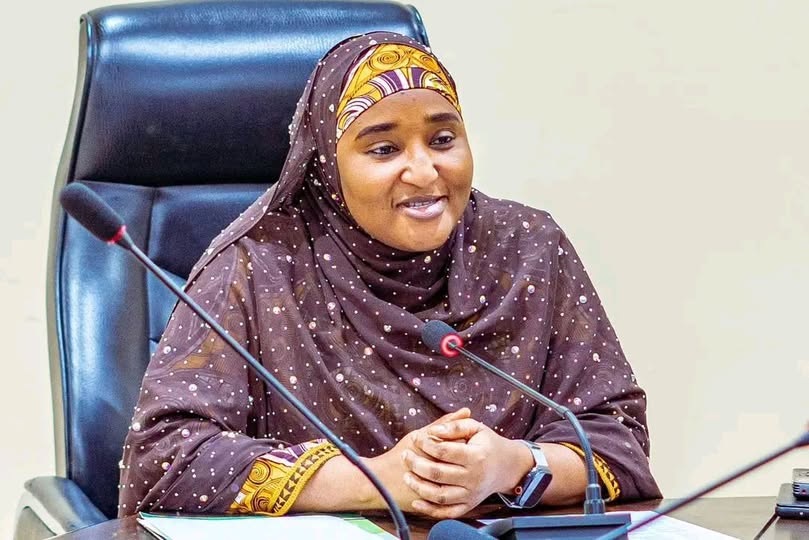
The Federal Government has digitalised the selection process for the 2026 President’s Teachers’ and Schools’ Excellence Awards (PTSEA), ending the manual process previously used to select outstanding teachers and schools.
The Minister of State for Education, Prof Suwaiba Said Ahmad, disclosed this in yesterday during a press briefing ahead of the 2026 World Teachers’ Day celebration scheduled for October 5.
She said 14 teachers, schools and other education stakeholders would be recognised under the 2026 awards, with the first, second and third-best teachers receiving prizes, while other awardees would receive laptops.
World Teachers’ Day is observed annually on October 5 and has been celebrated since 1994. The 2026 edition also marks 60 years of the 1966 ILO/UNESCO Recommendation concerning the Status of Teachers, which established international standards relating to teachers’ rights, responsibilities, preparation, recruitment, employment and working conditions.
Ahmad said the digital selection process was introduced in line with African Union guidelines to promote transparency, accountability, security and proper documentation in the selection of awardees.
“For the first time, the selection process coordinated by the Federal Ministry of Education was digitalised in line with the African Union guidelines to ensure certainty, accountability and reference,” she said.
She said the annual celebration, organised by the Federal Ministry of Education in collaboration with the Nigerian Union of Teachers (NUT), would focus on transforming the teaching profession and preparing teachers for the demands of a rapidly changing world.
According to the minister, the celebration would focus on five interconnected pillars; innovation, mobility, artificial intelligence, inclusion and professional excellence.
She said teachers from the 36 states and the Federal Capital Territory would participate in the October 5 celebration, including a march-past featuring state flags and cultural attire to showcase unity, diversity and cooperation.
Speaking on behalf of Nigeria Union of Teachers (NUT) President, Comrade Titus Amba, the union’s Deputy National President, Kizito Kalu, said the changing nature of education made it necessary to strengthen rather than diminish the professional role of teachers.
Kalu said technology and artificial intelligence were transforming education, but teachers must remain at the centre of the learning process.
“The NUT believes that a strong education system cannot be built without a strong, respected and adequately supported teaching profession,” he said.
He added that teachers needed to be equipped to navigate technological changes with confidence and competence.
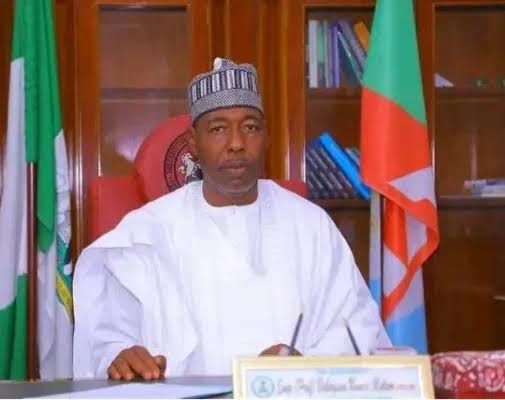
Governor Babagana Zulum of Borno on Saturday urged the federal government to resume work on oil exploration projects in Magumeri and Gubio Local Government Areas of the state.
Mr Zulum made the call while addressing the 13th regular meeting of the North-East Governors’ Forum in Maiduguri.
The governor, however, commended President Bola Tinubu for making efforts to revive oil exploration at the Kolmani oil field in Bauchi State.
The two-day meeting, which commenced on October 2 and ends on October 3, brought together leaders from the six North-Eastern states to discuss regional security, economic development and infrastructure cooperation.
The governor, who chairs the forum, described the renewed efforts to revive exploration at Kolmani in Bauchi State as a significant step towards unlocking the economic potential of the North-East.
He said the development could create employment, stimulate infrastructure growth, expand government revenue and open up new economic opportunities for communities across the region.
“We particularly welcome the renewed efforts towards reviving exploration activities at the Kolmani Oil Field in Bauchi State.
“The revival of this important project represents more than an investment in the oil and gas sector; it offers an opportunity to unlock new economic possibilities, create employment, stimulate infrastructure development and broaden the revenue base of our states and communities,” Mr Zulum said.
He urged the federal government to extend the renewed momentum to Borno State, where earlier oil exploration activities in Magumeri and Gubio Local Government Areas had stalled.
“In the same spirit, we respectfully urge the Federal Government to revisit the exploration activities earlier commenced but subsequently stalled in Magumeri and Gubio Local Government Areas of Borno State,” he said.
Mr Zulum said responsible exploration and development of the state’s natural resources would complement ongoing reconstruction efforts, strengthen local economies and restore livelihoods in communities affected by years of insurgency.
According to him, reviving oil exploration in Borno and other parts of the North-East could also support economic diversification, generate jobs and create sustainable opportunities for the region’s growing population.
He added that renewed investment in the oil and gas sector, particularly around the Lake Chad Basin, should form part of a broader regional strategy to accelerate economic recovery and development.
Also speaking, Gombe State Governor, Inuwa Yahaya, highlighted some achievements of the forum since its establishment, including the creation of the North-East Education Council and initiatives to address the challenges of Almajiri education and out-of-school children.
Mr Yahaya said the states were pursuing different approaches to expanding access to education, citing Borno’s Tsangaya Commission, Taraba’s Almajiri Model Education Centres and Gombe’s Integrated Almajiri Education Centres.
He also noted that the region’s commissioners for health established a regional health platform in 2024 to improve cooperation, strengthen responsiveness and facilitate the sharing of best practices among the states.
Governor Ahmadu Fintiri of Adamawa and attended the meeting, while Bauchi and Yobe states were represented by their deputy governors.
Other dignitaries included Borno Deputy Governor Umar Usman Kadafur; APC governorship candidate Mustapha Gubio and his deputy, Ali Isa Abdullahi; APC deputy ational chairman Ali Bukar Dalori; and the party’s state chairman, Bello Ayuba.
Traditional rulers from across the region also attended, led by the Shehu of Borno, Abubakar Umar Garbai Elkanemi.
The meeting is expected to issue a communiqué outlining the forum’s resolutions on security, economic integration, infrastructure development and other priorities for the North-East.
(NAN)

Anambra shuts market after palace burnt, five killed

Shettima visits Tinubu in Lagos after UNGA

14 To Receive National Honours As FG Automates Teachers’ Awards


-

 Metro21 hours ago
Edo APC Chairman Tenebe Sparks Outrage Over ‘AK-47 Fire’ Threat Against Tinubu Vote Opponents
-

 News19 hours ago
Amaechi: I’ll Dump Atiku, Back Tinubu If Petrol Drops to ₦600 Per Litre
-
 Metro21 hours ago
Fear grips RCCG Church members as pastor collapses, dies while preaching about sudden death
-
 News19 hours ago
Lagos University Workers Threaten Indefinite Strike Over Nine-Month Salary Arrears
-
 News18 hours ago
Nigeria at 66: TeeJay Yusuf Calls for Urgent Action to Tackle Hardship, Insecurity, Restore Hope
-

 News19 hours ago
Court Denies KC Luxury Bail, Remands Influencer Over ₦39bn Cocaine Trafficking Allegation