





…Promises Dangote, Mangal to embrace stronger corporate social responsibility
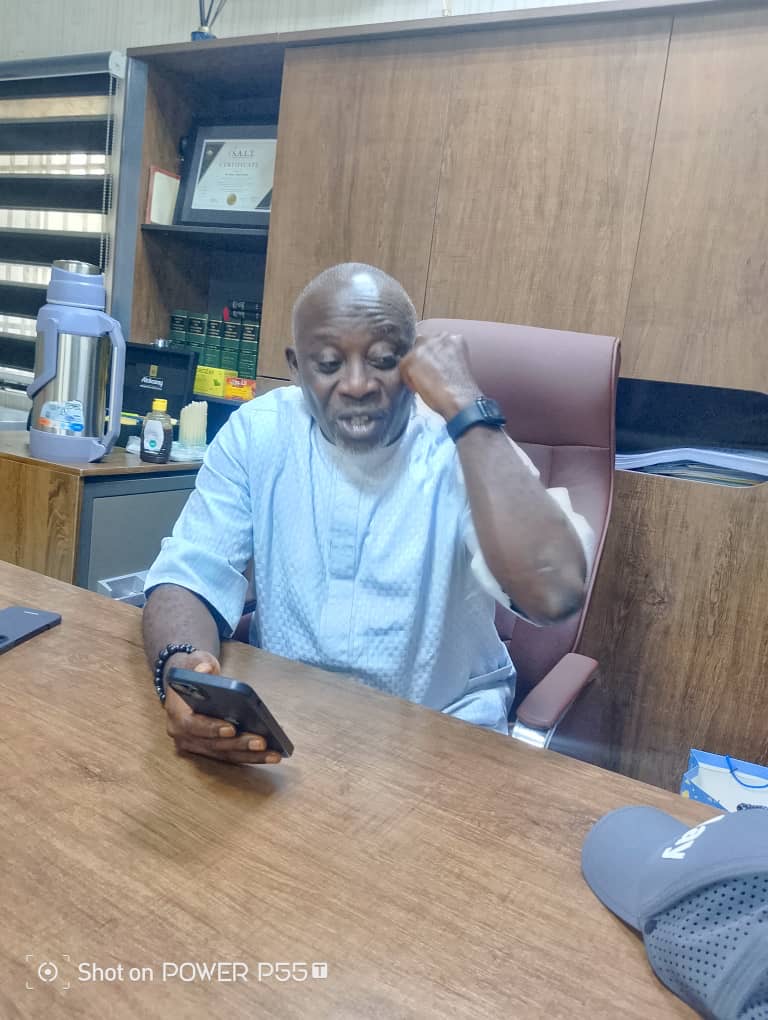
Hon. TeeJay Yusuf, an economist, grassroots politician, real estate entrepreneur and three-term member of the House of Representatives for Bunu/Kabba/Ijumu Federal Constituency, has explained why he is seeking to represent Kogi West Senatorial District in the National Assembly in 2027.
Yusuf, who is also a member of the Peoples Democratic Party (PDP) Board of Trustees (BoT), said his ambition is driven by a desire to transform Kogi West through youth empowerment, economic opportunities, improved corporate social responsibility and effective representation.
In this interview, he spoke on his plans for the youth, tackling the “Yahoo-Yahoo” mentality, engaging industries operating in the district, creating opportunities in the digital economy and replicating the developmental achievements recorded in Bunu/Kabba/Ijumu.
Excerpts:
Q: How do you intend to tackle the “Yahoo-Yahoo” mentality among young people and redirect them towards legitimate sources of income?
The first thing is to drum it into their ears that you can make money legally without engaging in illegal activities.
Unfortunately, the “Yahoo-Yahoo” mentality is also beginning to creep into politics. Some young people now see politics as a profession. They have nothing else doing, yet they spend their time waiting for politicians and election seasons. As soon as elections approach, they begin moving from one politician to another, seeking opportunities.
It will take a lot of effort to reorient our young people and restore the right values in them. My intention, by the grace of God, is to identify respected youth leaders, men and women of honour, and role models from our communities who can engage directly with young people and share their life experiences.
There is nothing more powerful than someone who grew up in the same community, faced similar challenges and eventually succeeded sitting down with young people and telling them how he or she navigated those challenges.
We must make our young people understand that there is a reward for doing the right thing. God comes first, and there are consequences to our actions. It is possible to succeed without engaging in crime or doing what is wrong.
But we must also provide alternatives. It is not enough to simply tell young people not to engage in illegal activities. We must create opportunities that enable them to earn a legitimate living.
Q: How do you intend to create those alternatives and opportunities?
That is why I intend to engage companies operating in our communities, including Dangote and Mangal, to take corporate social responsibility more seriously.
We need to ask important questions: What benefits are the people in these communities receiving? How many local people are these companies employing? How many drivers, supervisors and clerical workers are from the immediate communities?
People are losing their natural habitats and, in some cases, being displaced as industrial activities change their environment. If that is happening, what are they getting in return?
I believe that when we engage these companies constructively, they will understand why stronger community-focused corporate social responsibility is important. I intend to make that engagement a priority.
Q: Beyond corporate social responsibility, what other measures would you pursue to empower young people?
I also want to focus strongly on education and the future of our young people.
Unfortunately, our curriculum has, for a long time, been skewed towards preparing young people to look for jobs rather than creating jobs. A child goes through university believing that after graduation, the next step must be to submit applications and wait for employment.
Fortunately, some courses and programmes are now being introduced in our universities to encourage entrepreneurship and enable young people to create opportunities for themselves.