





By Gloria Ikibah
At midnight on 30 September 1960, Nigeria was still a British colony, and by the following morning, everything had changed.
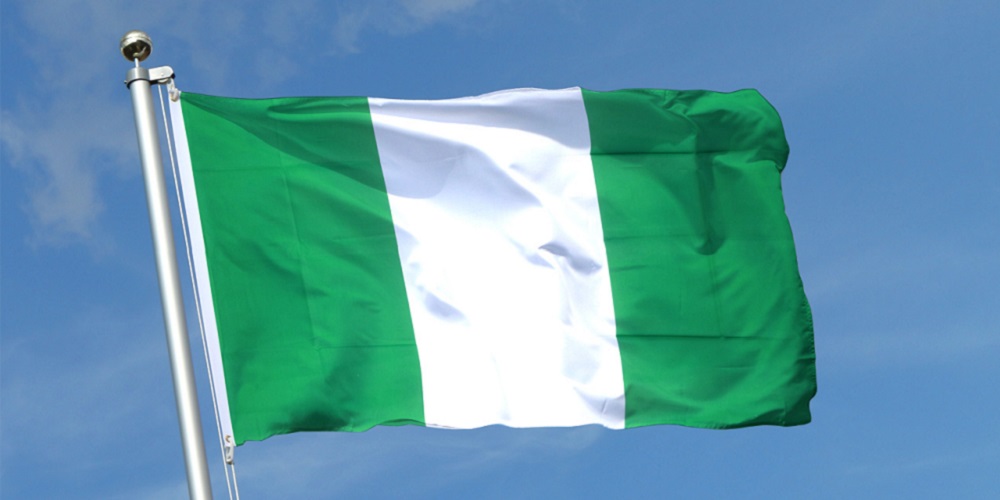
The Union Jack came down, while the green-white-green flag went up. In Lagos, crowds gathered, there were speeches, music, dancing and the excitement that comes when a people finally hear themselves described as free.
But beneath the celebration was a much bigger question.
What would Nigerians do with freedom?
Sixty-six years later, that question has not gone away. Nigeria has grown from a newly independent country into Africa’s most populous nation, one of its largest economies and a global centre of culture, entertainment, business and diplomacy.
But it has also travelled through coups and counter-coups, civil war, military rule, economic hardship, religious and ethnic conflicts, democratic disappointments, insecurity and deep political disagreements.
Yet here we are.
Still together.
Still arguing.
Still creating.
Still hoping.
Still trying.
That, perhaps, is the first part of the Nigerian story we do not tell often enough. Nigeria’s history is not simply the story of what went wrong, it is the story of a people who have repeatedly found the strength to continue.
And as the country marks its 66th Independence anniversary, perhaps the time has come to tell that story differently.
Not as a collection of dates to be memorised in school.
Not as a list of presidents and military rulers. But as the story of people — their courage, their mistakes, their sacrifices, their conflicts, their dreams and their stubborn belief that tomorrow can be better.
Before 1960, there was already a Nigeria
Long before the British colonial flag flew over Lagos, there were societies across the territory now known as Nigeria with their own governments, economies, religions, technologies and systems of social organisation.
There was the Benin Kingdom, famous for its extraordinary bronze works, here was also Oyo, one of the great political powers of West Africa, and there were the Hausa city-states and the Sokoto Caliphate.
There was Kanem-Borno, with centuries of political and intellectual history, the Igbo communities existed with their distinctive forms of local governance.
There were the Ijaw, Efik, Ibibio, Nupe, Tiv, Gbagyi, Edo, Yoruba, Fulani, Kanuri and hundreds of other peoples with their own histories.
Nigeria’s cultural inheritance is therefore much older than the country itself, that is why some of the nation’s most important monuments are not monuments to independence. They are reminders that civilisation was already here.
Take Sukur, in present-day Adamawa State, its stone structures, terraces, palace, sacred landscape and remains of iron production which tell the story of a community with a sophisticated relationship between agriculture, technology, religion and political authority.
UNESCO recognises the Sukur Cultural Landscape as an outstanding example of a traditional human settlement and cultural landscape that has retained much of its original character.
Then there is the Osun-Osogbo Sacred Grove. For generations, the grove has remained a centre of Yoruba religious and cultural life. Its sculptures, shrines, sacred spaces and river are not simply tourist attractions. They are part of a living tradition.
These places remind us of something important.
Nigeria did not begin with colonialism.
The colonial state created a political structure that brought many peoples under one administration. But it did not create the histories, cultures and memories of the people who occupied the land.
Those were already here.
Then came resistance
The road to independence was not paved by politicians alone, it was built by workers, journalists, students, traders, traditional rulers, nationalists and ordinary people who challenged colonial authority in different ways.
And some of the fiercest resistance came from women. In 1929, women in parts of south-eastern Nigeria rose against colonial policies and the warrant-chief system in what became known as the Aba Women’s War, or Aba Women’s Riot.
The colonial label of “riot” hardly captures the scale of the movement.
Thousands of women mobilised across communities, they protested taxation, the exercise of colonial authority and the power of warrant chiefs.
They sang, marched, surrounded administrative offices and challenged the men who represented the colonial system.
They were not simply angry women in a market, they were political actors who understood the power of collective action, showing that resistance to colonial rule was not exclusively a man’s affair.
That history deserves to be told loudly, especially to young Nigerian girls who may otherwise grow up believing that the country’s political history was made entirely by men.
There were other struggles.
Workers went on strike, as the 1945 general strike demonstrated the power of organised labour.
Then came the 1949 shooting of coal miners at Iva Valley in Enugu, when colonial police opened fire on protesting miners. The incident became another powerful symbol of the tensions between colonial authority and Nigerian workers.
Across the country, newspapers became platforms for nationalist politics, politicians began to demand greater representation.
The demand gradually changed from “Give us a voice” to “Let us govern ourselves.”
By the 1950s, independence was no longer a distant dream, it was becoming a political timetable.
1 October: the flag changed, but the work had just begun
Nigeria became independent on 1 October 1960.
The country did not emerge from colonial rule as a blank page.
It inherited institutions.
It inherited a federal structure.
It inherited regional political divisions.
It inherited economic arrangements designed largely under colonial priorities.
And it inherited enormous differences among its peoples.
The new Nigeria had to answer a difficult question: Could all these different peoples build one country?
For a while, the answer appeared to be yes.
Then came political instability, the coups of 1966.
The civil war from 1967 to 1970, military governments, years of authoritarian rule, the return to civilian government, then another military intervention.
And eventually, in 1999, the beginning of the current uninterrupted democratic era. The Nigerian story after independence is therefore not a simple march from victory to victory, it is a story of two steps forward and sometimes one step backwards.
But it is also a story of recovery.
After the civil war, people rebuilt.
After military rule, democracy returned.
After economic crises, Nigerians created businesses.
When institutions failed, communities often found ways to survive.
When the country struggled, its people kept producing music, literature, films, businesses, inventions and ideas.
This is why Nigeria’s history should not be told only through the people who occupied government houses.
The country was also built by those who never entered one.
Our monuments are pieces of our memory
Walk through Nigeria today and history is everywhere.
At Tafawa Balewa Square in Lagos stands one of the country’s most recognisable symbols of independence. It is not just a large public space, it is associated with the moment Nigeria’s colonial flag was lowered and the Nigerian flag raised on 1 October 1960. TBS should therefore mean something to every Nigerian child.
The same applies to the National War Museum in Umuahia, Its tanks, aircraft, military equipment and other artefacts tell a painful story of a country that once fought itself.
A child visiting the museum should not leave merely knowing the names of weapons.
The child should leave asking:
Why did Nigerians fight Nigerians?
What happened to the people who had nowhere to go?
What can we learn so that we do not repeat it?
That is what monuments should do.
They should make history visible.
The National Commission for Museums and Monuments has responsibility for many of Nigeria’s historic sites and monuments. But preservation should not end with putting a fence around an old building.
A monument that nobody understands is simply an object.
A monument that tells a story becomes a national inheritance.
The Nigeria of many peoples
One of Nigeria’s greatest challenges is also one of its greatest realities.
We are different.
More than 250 ethnic groups.
Hundreds of languages.
Different religions.
Different histories.
Different foods.
Different customs.
Different political memories.
There is the Nigeria of the north and the Nigeria of the south.
The Nigeria of the riverine communities and the Nigeria of the savannah.
The Nigeria of the city and the Nigeria of the village.
The Nigeria of the Muslim and the Nigeria of the Christian.
The Nigeria of the indigenous traditional worshipper and the Nigerian who has embraced another faith.
Sometimes these differences are exploited.
Politicians can turn identity into a weapon.
Rumours can travel faster than facts.
A disagreement over land can become an ethnic argument.
A political contest can become a religious argument.
A local dispute can acquire a national identity.
But Nigerians also demonstrate, every day, that coexistence is possible.
A Yoruba doctor treats a Hausa patient.
An Igbo businessman employs a Tiv worker.
A northern student studies in the South.
A southern trader builds a business in Kano.
People marry across ethnic and religious lines.
People celebrate one another’s festivals.
People eat one another’s food.
They listen to the same music.
They watch the same films.
They support Nigerian athletes.
They cheer for the Super Eagles.
They dance to Afrobeats without asking which ethnic group produced the beat.
That is Nigeria too.
Perhaps we need to tell more of that story.
What America gets right about telling its story
There is an interesting lesson in the way the United States preserves and presents its history.
America’s history is not without enormous contradictions.
The country speaks about liberty while having lived through slavery.
It celebrates democracy while excluding millions of people from political participation for generations.
It fought a civil war.
It struggled through segregation and racial violence.
Its history includes the displacement of Indigenous peoples.
Yet Americans have built institutions that preserve the documents, places and stories through which the country continually examines its own past.
The US National Archives keeps the Declaration of Independence, Constitution and Bill of Rights together as the country’s “Charters of Freedom”. They are not hidden away as ordinary government records; they are displayed as central objects in the national story.
In 2026, as America marks 250 years since its Declaration of Independence, the National Archives opened an exhibition built around the story behind that document — who created it, why they created it, how it survived and how generations of Americans have remembered it.
There is a lesson here for Nigeria.
America does not tell only the story of 4 July 1776.
It tells the story before independence.
It tells the story of the revolution.
It tells the story of the Constitution.
It tells the story of the Civil War.
It tells the story of slavery.
It tells the story of civil rights.
It tells the story of its failures alongside its ideals.
The National Archives describes the Declaration as expressing the ideals on which American government and national identity are based.
That is powerful because a national story is not just about what happened.
It is about what a country says it believes.
And then it is about the distance between those beliefs and reality.
Nigeria needs that kind of conversation.
We need a Nigerian story people can own
Imagine an Independence Day exhibition that begins with a simple question:
Where did Nigeria come from?
The first room would not begin in 1960.
It would begin thousands of years earlier.
It would tell the story of Nok civilisation, Benin, Ife, Kano, Oyo, Kanem-Borno, Sukur and other societies.
Then would come the difficult chapters — the slave trade, colonial conquest and the restructuring of indigenous political systems.
Then the resistance.
The Aba women.
The workers.
The nationalists.
The journalists.
The students.
Then independence.
The celebrations.
The hopes.
Then the coups.
The civil war.
The military years.
The return to democracy.
And finally, a room with no historical photographs.
Just a question on the wall:
What happens next?
That is where history becomes a living thing.
Because the Nigerian story is not finished.
From struggle to aspiration
We often tell young Nigerians that their country has problems.
They already know.
They see them.
They live them.
The better question is what we want them to do with that knowledge.
The story should move from idea to conflict, from conflict to struggle, and from struggle to aspiration.
The idea was nationhood.
The conflict was how different peoples would live together.
The struggle was the long effort to build institutions capable of holding those differences.
The aspiration is a country in which a child’s chances are not determined by where they were born, their religion, ethnicity, gender or social class.
That is a story worth owning.
It does not require us to pretend that Nigeria is perfect.
It requires us to believe that Nigeria can improve.
And it requires us to recognise that patriotism is not silence.
A patriot can love Nigeria and complain about bad roads.
A patriot can celebrate independence and demand accountability.
A patriot can honour the flag and ask why children are out of school.
A patriot can love the country and insist that public money must be properly used.
In fact, perhaps that is a more mature form of patriotism.
The country we inherited and the country we leave behind
At 66, Nigeria has accumulated enough history to fill generations of museums.
But we have not always done enough to preserve, teach and popularise it.
Too many Nigerian children know more about foreign historical figures than the people who shaped their own communities.
Too many monuments are places we pass without understanding.
Too many stories survive only in the memories of elderly people.
Too many important women remain footnotes.
Too many difficult chapters are avoided because they are uncomfortable.
We should change that.
Nigeria needs museums that tell stories in ways children understand.
We need properly maintained monuments.
We need oral histories recorded before they disappear.
We need documentaries.
We need historical novels.
We need films.
We need school trips.
We need digital archives.
We need public spaces where young Nigerians can encounter the country’s past.
And above all, we need a national story broad enough for Nigerians to see themselves inside it.
The story must include the market woman and the politician.
The soldier and the farmer.
The Muslim and the Christian.
The northerner and the southerner.
The minority and the majority.
The old and the young.
The people whose ancestors fought for independence and those whose ancestors simply survived the period.
Because a nation becomes stronger when more of its citizens can say:
“This is my story too.”
At 66, the story continues
Nigeria did not become a nation because its people stopped being different.
They became Nigerians while remaining different.
That distinction matters.
Our languages did not disappear in 1960.
Our religions did not disappear.
Our cultures did not disappear.
Our histories did not disappear.
Instead, they entered a new national experiment.
It has been difficult.
It remains difficult.
But the experiment continues.
The women of Aba could not see the Nigeria of 1960.
The nationalists could not see the Nigeria of 2026.
The soldiers who fought the civil war could not know what Nigeria would look like decades later.
The young Nigerians who demanded democracy in the streets during military rule could not know how far the country would travel.
But each generation left something behind.
Now it is our turn.
The question is not whether Nigeria has problems.
It does.
The question is whether those problems will be the final chapter.
They do not have to be.
Nigeria’s history gives us another possibility.
A country born from many histories.
A people shaped by struggle.
A society that has survived enormous disagreements.
A culture that continues to influence the world.
A young population with enormous energy.
And a future that remains unwritten.
So, on this Independence Day, perhaps we should do more than raise the flag.
We should remember the people who made it possible.
We should visit the monuments that carry our memories.
We should tell the stories that were almost forgotten.
We should confront the chapters that hurt.
And then we should ask ourselves what story we want the next generation to inherit.
Because 1 October 1960 was not the end of Nigeria’s story.
It was the beginning of a promise.
Sixty-six years later, that promise is still ours to keep.
Happy Independence Anniversary Nigeria!