News
INEC Alerts Nigerians To Fake Voter Registration Website


- /home/naijuinz/public_html/wp-content/plugins/mvp-social-buttons/mvp-social-buttons.php on line 27
https://naijablitznews.com/wp-content/uploads/2025/09/INEC.jpg&description=INEC Alerts Nigerians To Fake Voter Registration Website', 'pinterestShare', 'width=750,height=350'); return false;" title="Pin This Post">
- Share
- Tweet /home/naijuinz/public_html/wp-content/plugins/mvp-social-buttons/mvp-social-buttons.php on line 72
https://naijablitznews.com/wp-content/uploads/2025/09/INEC.jpg&description=INEC Alerts Nigerians To Fake Voter Registration Website', 'pinterestShare', 'width=750,height=350'); return false;" title="Pin This Post">


The Independent National Electoral Commission (INEC) has dismissed as fraudulent a website circulating online and claiming that the commission has announced a new date for nationwide online voter registration.
INEC, in a public notice on Saturday, said the website falsely claimed that nationwide online voter registration would hold from 28 September 2026 to 27 October 2026.
“The commission wishes to categorically inform the general public that the website below is fake and has no affiliation whatsoever with INEC: http://tinyurl.com/inecnigeria-cv,” it said.
INEC advised the public not to click on the link or submit personal information on the website, saying doing so could expose them to the risk of having sensitive personal data harvested or misused.
The commission clarified that the voter registration exercise closed on 26 July 2026, adding that any information suggesting that a new nationwide online voter registration exercise is currently ongoing through the said website is false.
It urged the public to remain vigilant and verify all electoral information through the commission’s official communication channels.
For enquiries, INEC asked the public to contact its Call Centre on 0700-CALL-INEC (0700-2255-4632), short code 4632, phones 090844444333 and 09050858629, email [email protected], website inecnigeria.org and news portal inecnews.com.
It advised the public to disregard the fraudulent website and rely only on information issued through its official channels.
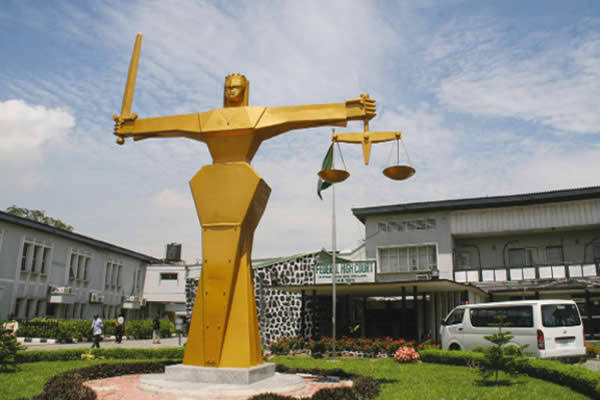
The Federal High Court in Lagos has ordered commercial banks to place a “Post No Debit” restriction on bank accounts operated by the Osun State Government over a $13.9m arbitration award in favour of Gamji Nigeria Company Limited.
Justice D.E. Osiagor issued the interim order following an application filed by Gamji through its counsel, Yunus AbdulSalam, SAN, in a suit marked FHC/L/CS/1233/2026.
A certified true copy of the ruling was obtained by Sunday PUNCH on Saturday.
The company is seeking to preserve $13,924,343.32 and N157.5m awarded to it following an arbitration proceeding arising from water infrastructure projects in the Ilesa West Local Government Area of Osun State.
Financial institutions affected by the order include Guaranty Trust Bank, Access Bank, First Bank, Zenith Bank, United Bank for Africa, Ecobank, Fidelity Bank, Stanbic IBTC, Sterling Bank, Union Bank, and Wema Bank, among others.
According to an affidavit filed in support of the motion, the dispute stemmed from two contracts awarded to Gamji by the Osun State Government in June 2017 for water infrastructure works.
The projects involved the construction of transmission mains and booster pump stations under Slot 1, alongside water reservoirs under Slot 2, as part of a water supply and sanitation project in Ilesa West.
Gamji stated that the projects were funded through an Islamic Development Bank loan facility facilitated by the Federal Ministry of Finance.
The company noted that the original contract values were $15.98m for Slot 1 and $9.70m for Slot 2.
It claimed that engineering design alterations and scope variations caused delays, leading to project cost revisions.
Subsequent amendments raised the values of Slot 1 and Slot 2 to $20.24m and $10.95m, respectively.
Gamji further claimed that 93 per cent of the contract had been completed by October 2023, with the state government issuing a Substantial Completion Certificate on November 14, 2024.
Disagreements subsequently arose over claims regarding extensions of time, price adjustments, and escalated costs of materials and labour.
Gamji stated that the state government rejected its claims, prompting failed mediation attempts and the eventual issuance of an arbitration notice on April 3, 2025.
The state government accepted the process and nominated its arbitrator, leading to preliminary proceedings in Lagos on May 15, 2025.
The arbitral panel issued its final award on July 24, 2026, directing the Osun State Government to pay $13,924,343.32 and N157.5m in reimbursable arbitration fees.
The panel also awarded 20 per cent annual interest on any outstanding balance following the expiration of the compliance period.
Gamji stated that the compliance deadline lapsed on August 24, 2026, without payment from the state government, prompting its court application.
Ruling on the application, Justice Osiagor directed the listed banks to immediately place a restriction on the state government’s accounts.
The judge ordered the preservation of funds up to $13,924,343.32 and N157.5m toward the liquidation of the arbitral award, pending the determination of the motion on notice.
“A preservation order of interim injunction is granted directing the cited financial institutions in Nigeria to immediately place a Post No Debit restriction on the Respondent’s account domiciled with them for the preservation of the funds with them in the sum of $13,924,343.32 and N157,500,000.00 towards the liquidation of the Arbitral Award dated 24th July, 2026 which has become due and enforceable, pending the hearing and determination of the motion on notice,” the order read in part.
The court adjourned the suit to October 22, 2026, for a hearing on the motion on notice.
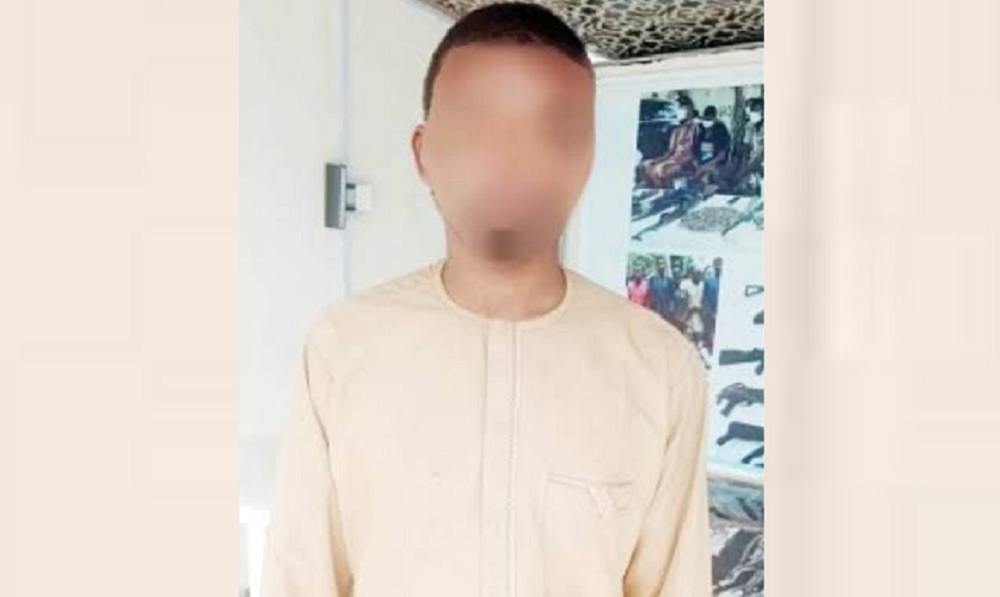
The plot by some kidnappers to get victims at all cost was recently revealed in the confessions of an arrested suspect, Idris Mohammed, who told of how he would charter a vehicle to go on a journey, only to lure the unsuspecting driver into a web already laid to kidnap, and he would need to pay a ransom before regaining freedom.
Not only that, on eventual release after the ransom payment, the driver would get to the spot where his vehicle was abandoned to discover it had disappeared, resulting in a two-way loss.
Mohammed was arrested by the operatives of a high-profile tactical unit of the Nigeria Police Force, the Force Intelligence Department – Intelligence Response Team (FID-IRT) for alleged kidnap activities.
The Force Public Relations Officer, CSP Ani Iniedu, had, in a statement, disclosed that Mohammed a.k.a. Yellow was arrested over his alleged involvement in the kidnapping of a commercial driver, Idris Zakari Baba, and other related criminal activities.
“Investigation revealed that the victim was allegedly lured under the pretext of conveying Mohammed from Abuja to Zaria, before he was intercepted by armed men, taken into the bush and held until a ransom of ₦3 million was paid. The victim’s vehicle, a 2012 Toyota Corolla, was subsequently traced to Bauchi State and recovered while Mohammed was attempting to sell it,” the FPRO said in a statement.
Further investigation, according to Iniedu, also linked the suspect to the reported kidnapping of one Pastor David Dahni and his driver, Abdullahi Abubakar, for which a ransom of ₦10.5 million was reportedly paid.
It was gathered that before his arrest, Mohammed, an indigene of Bauchi State, was allegedly operating as an informant, bandit and kidnapper who lured unsuspecting drivers to locations where armed kidnappers abducted and extorted them. Mohammed was reported to have travelled from Abuja to Zaria with a driver he had hired for ₦300,000, with the man unaware of the suspect’s criminal intention.
On their way, Mohammed reportedly made a phone call, after which six armed kidnappers on three motorcycles intercepted them. The kidnappers were said to have initially taken both Mohammed and the driver, but they were later separated. The kidnappers had told the driver that Mohammed had been killed, threatening to kill him unless he paid ₦3 million. In fear, the driver contacted his relatives who raised the ransom, after which he was released.
However, when the driver returned to look for his vehicle, it was missing. It was later discovered that Mohammed, who the kidnappers had claimed was killed, had taken the vehicle to Bauchi State. While attempting to sell it, a phone number found inside the car was used to verify its ownership, and the person contacted turned out to be the vehicle’s owner, who explained what had happened. This led to Mohammed’s arrest in Bauchi State, and he was subsequently brought to Abuja, where he reportedly confessed to the incident. The vehicle was recovered and released to its owner on bond.
It was further learnt that another driver/victim allegedly recognised Mohammed after seeing a video of his arrest. The second victim reportedly told investigators that Mohammed had used a similar method against him and when interrogated, Mohammed confessed that he had taken the victim’s vehicle to Niger State with another person to sell it. It was said that the vehicle had not yet been recovered, although arrangements were being made to retrieve it.
In an interview, Mohammed, aged 27, confessed to the allegations against him. The suspect, who is also married to two wives and has one child, said that he started mining three years ago before he began engaging in kidnapping.
How kidnap operation was planned
Mohammed told Saturday Tribune that the idea to start kidnapping was conceived with his three friends – Haruna, Yahuza and Dawah – who are currently at large. He revealed: “It was Yahuza who brought the idea. On an invitation from Yahuza, I left Bauchi for a village in Zaria where we met to plan the operation.” On how he met Yahuza, the suspect said that he saw him on Tiktok in March. “ I saw Yahuza with a rifle in a military uniform, but I could deduce that he doesn’t belong to the profession. I perceived him to be one of the criminals in the bush, so, I contacted him, and he confirmed what I suspected him to be.”
Mohammed gave his reason for deciding to go into crime: “I was in the mining business and was doing well. Along the line, I lost my capital and there was no other means of livelihood. When I met with Yahuza and saw he’s one of the bandits/kidnappers, I decided to join him. Yahuza asked if I was also a member of a bandit gang, and I told him I was not, but ready to start. Yahuza agreed to take me in and said that I should start by bringing a victim,” he explained.
The suspect said that to achieve this, he decided on his own to go for drivers, pretending to be a passenger. And on May 14, he got his first victim into the kidnappers’ net.
The first operation
“There is guy called Babandi who told me he has a master who is in New Karu, Nyanya, FCT. Babandi said his master told him he has a brother who is a serving Senator but would not give him money unless he faked his own kidnapping. Yahuza took me to the master, and we planned how to do the operation. Meanwhile, Babandi’s master has a friend who is a miner, and it was believed that he has money, so, we convinced him that there is a mining site somewhere. We got a driver who is a neighbour to Babandi’s master and deceived him into believing we were going to Tamare Village in Zaria for a condolence visit. The driver agreed, charged us an amount which I paid for, and we left Abuja. The gang members told me that they would refund my money if the plan failed.
“On the way to the village, I made a call to Yahuza and suddenly, bandits on motorcycles, with AK-47 rifles and ammunition, surrounded us. I had already told Yahuza how to identify the Senator’s brother and the miner who were in the car. I also told Yahuza that the driver is the owner of the car he was using to convey us, which showed he had money. So, he was our target too.
“The bandits who surrounded us brought me, Babandi, his master and the driver out of the car, abandoned it and put us on the motorcycles they brought, firing shots into the air. When the bandits got to a point in the bush, they told the miner that they had killed me and Babandi, asking him to pay a ransom for his survival. They said the same thing to the driver and Babandi’s master. Immediately, the victims started calling their relatives and the driver was able to raise N3 million. The miner paid N7.5 million and the man who wanted to fake his own kidnap convinced his relatives who paid N11 million.”
Saturday Tribune learnt that during the ordeal, the driver and Babandi’s master were with the kidnappers for three days while the miner remained in captive for six weeks before regaining freedom.
Meanwhile, Mohammed said that Babandi went to where the driver’s car was abandoned, and drove to Azare in Bauchi State, where he handed it over to him. From Bauchi, Mohammed drove the car to Damaturu, Yobe State, and kept it with his friend. The suspect told the IRT operatives that the car is still with the friend, and efforts are being made to recover it.
When asked about the amount he got as his share of the ransom paid, Mohammed said he was not given any money, but got the driver’s car and the N39,000 given to him for fuel purchase to take it to his friend.
Eight days after the first operation, Mohammed and his gang members struck again, precisely on May 22. This time around, he went to a motor park in Abuja alone, asking for a driver that would take him to Zaria. His dressing, Saturday Tribune learnt, depicted him as a big and comfortable man. One of the drivers reportedly, identified as Idris Zakari, agreed to take him to and from Zaria for N350,000.
Mohammed explained how the operation went: “I gave the driver N60,000 for fuel, with a promise to pay him more in Zaria. On getting to Zaria, I directed the driver to a village, but he refused, reminding me that the agreement was Zaria, and the distance from the town to the village is about 50 kilometres which would consume fuel. Based on this, I offered to pay an additional N50,000, to which the driver agreed.
“On the way, I made a call, speaking Fulfude and Fuladanci to the bandits, knowing that the driver only understood English, Nupe, and Hausa. Before the driver knew it, we were suddenly surrounded by six bandits on three motorcycles, with three AK-47 rifles. The bandits ordered me and the driver out of the car and put us on motorcycles.”
At a point, the driver was said to have noticed that he could not perceive the sound of a motorcycle again, and on getting to the spot they wanted to hold him hostage, they deceived him into believing that Mohammed had been killed and his corpse left at the spot where life was snuffed out of him. They demanded N3 million as ransom from the driver, warning him to either cooperate with them or get killed also.
The driver, who had been turned into a jelly with the threat to his life, quickly made calls to his relatives and was able to raise the money in a day, which made him regain freedom.
However, on the driver’s return to where his car was abandoned, he was shocked to see that it had disappeared, which made him return home in sadness. But surprisingly, he received a call, asking him if he was the owner of a car that was for sale.
According to information gathered by Saturday Tribune, what led to the phone call was that after Mohammed took the car for sale, the intending buyer noticed that it had been repainted from ash colour to red, which raised suspicion. The buyer decided to check the car and got the phone number of the supposed owner. The buyer and his friends were said to have told Mohammed that they would call the owner, to which he confidently gave his consent, unaware that it was preparation for the exposure of his alleged criminal act. The owner answered the call, and when he was notified of the issue at stake, he quickly told the buyer not to let go of the seller and narrated his experience to him. The intending buyer and others were reported to have quickly held on to Mohammed, and the FID-IRT operatives were informed by the victim who had initially reported the case to them.
The operatives immediately swung into action, went to Bauchi with the victim, who had yet to know that his passenger who was said to have been killed was the mastermind of everything and the seller of his car, until he got to where he was held in custody for the operatives. The driver was shocked.
When asked his feelings about all he did, the suspect said: “I regret what I have done. I pray that the Almighty God forgives me.” He said that his wives already know of his arrest but are not aware of the crime he committed, while his parents thought it was about a stolen vehicle only.
The FPRO said that the Nigeria Police Force would continue to investigate the cases to identify other persons connected to the criminal activities and establish the full extent of the suspects’ involvement.
Amnesty International Nigeria has urged Nigerian security authorities to investigate allegations of political violence threats made by politicians ahead of the 2027 general elections and ensure that those found responsible are held accountable.
The human rights organisation made the demand in a statement shared on its verified Facebook page on Saturday, following reported remarks attributed to the Edo State Chairman of the All Progressives Congress (APC), Jarret Tenebe.
Amnesty International said Tenebe was reportedly quoted as threatening to deploy the “power of AK-47” against persons allegedly attempting to frustrate the APC’s ambition of securing 2.5 million votes for President Bola Ahmed Tinubu in the 2027 presidential election.
“Tenebe made the threat during a campaign rally in Edo State, where political violence is already rampant,” Amnesty International said.
The organisation also raised questions over the response of Nigerian security agencies, particularly the Nigeria Police Force and the Department of State Services, to what it described as public threats of violence issued by politicians.
It noted that such remarks were being made “in utter disregard for the rule of law and the nation’s Electoral Act.”
Amnesty International called on the authorities to ensure that politicians and other public figures, irrespective of their political affiliations, are held responsible for actions or statements that incite, threaten or encourage politically, religiously or ethnically motivated violence.
The organisation further stressed that accountability should cover individuals involved in carrying out or promoting violence and human rights violations before, during and after the 2027 general elections.

Court places restriction on Osun bank accounts

My Penis Stopped Working When…— Commedian Julius Agwu

How I Hired Cars To Get Drivers Abducted By My Gang, Kidnap Suspect Reveals


-

 Metro17 hours ago
Edo APC Chairman Tenebe Sparks Outrage Over ‘AK-47 Fire’ Threat Against Tinubu Vote Opponents
-
 Metro17 hours ago
Fear grips RCCG Church members as pastor collapses, dies while preaching about sudden death
-
 News16 hours ago
Court Denies KC Luxury Bail, Remands Influencer Over ₦39bn Cocaine Trafficking Allegation
-
 News16 hours ago
Lagos University Workers Threaten Indefinite Strike Over Nine-Month Salary Arrears
-

 News16 hours ago
Amaechi: I’ll Dump Atiku, Back Tinubu If Petrol Drops to ₦600 Per Litre
-
 News14 hours ago
‘I Can Barely Walk Now’ — Pete Edochie Opens Up About Health Struggles, Body Swelling