*** Says Subsidy Removal Has Increased Allocations To States, LGs


The Minister of the Federal Capital Territory (FCT), Barr. Nyesom Wike, has defended President Bola Tinubu’s economic reforms, declaring that Nigeria needs courageous leadership capable of taking difficult decisions to secure the country’s long-term development.
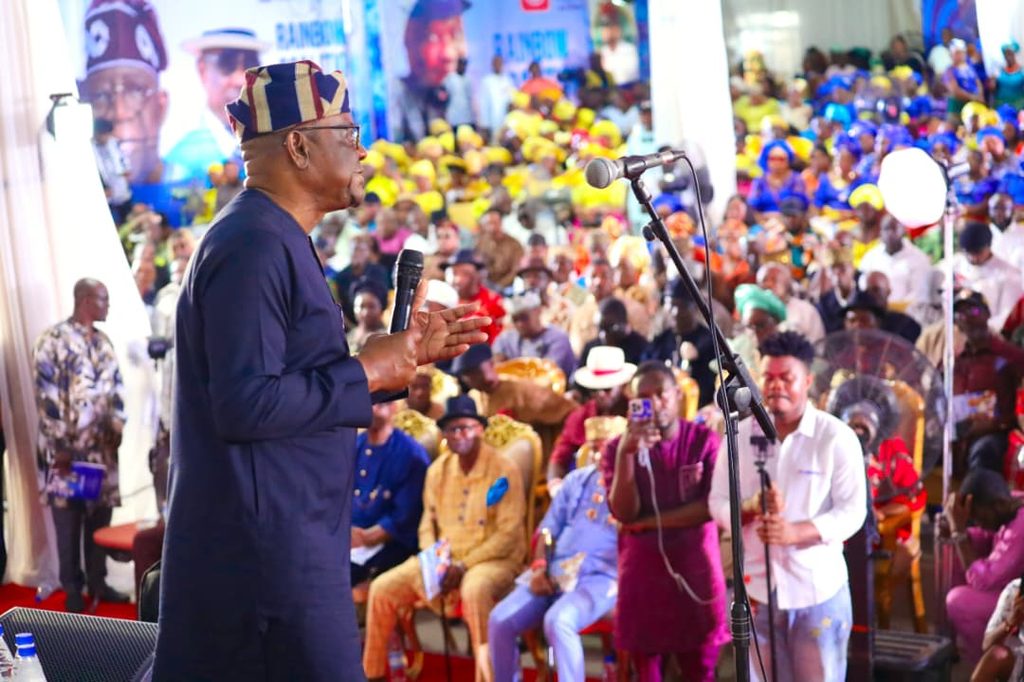
Wike, who spoke on Saturday during a Town Hall interactive meeting with the Rainbow Coalition stakeholders in Bonny Local Government, Rivers State said the removal of the petrol subsidy had increased allocations to states and local governments, giving them greater financial capacity to execute development projects. 
The minister, who is also coordinating President Tinubu’s re-election campaign in Rivers State and the FCT, urged Nigerians to support the president for a second term, arguing that his administration had demonstrated the willingness to confront economic challenges that previous governments failed to address.
According to him, successive administrations had acknowledged that the petrol subsidy regime was unsustainable but had been reluctant to abolish it because of the immediate political and economic consequences.
“Each time a president comes, fuel subsidy is a scam. What have you done with it? Another president will come, fuel subsidy is a scam. What have you done? Nobody has been able to take a courageous decision,” Wike said.
He added that Tinubu took the decision shortly after his inauguration in May 2023, despite being aware that it would impose hardship on Nigerians in the short term.
“He said, ‘I know that the decision I am taking would be strong. There are advantages and disadvantages. It will cause a lot of hardship, but this hardship is a sacrifice that would make our country move forward,’” the minister stated.
Wike acknowledged the rising cost of petrol and other essential commodities but maintained that the reforms had improved the financial position of the federating units.
He claimed that states now receive at least N15 billion in monthly allocations, excluding other revenue inflows, although he did not provide a breakdown of the figures or specify whether the amount applied uniformly to all states.
The minister contrasted the current situation with his experience as governor of Rivers State, recalling that his monthly federal allocation was significantly lower when he assumed office in 2015.
He argued that the additional resources available to subnational governments should translate into improved infrastructure, education and other public services.
Wike also linked the reforms to improved industrial harmony in the university system, claiming that public universities had not embarked on a strike in the three years preceding his remarks.
He said the financial difficulties associated with the previous subsidy regime had contributed to recurrent industrial disputes and disruptions to academic calendars.
The minister maintained that difficult economic decisions should be assessed not only by their immediate consequences but also by their long-term benefits.
“Sometimes, it requires leadership that can take decisions that are so hard and necessary for the progress of the organisation, the kingdom or the country,” he said.
Wike also cited the completion of the Bonny-Bodo Road as an example of the benefits of the current administration, noting that improved road access had reduced the difficulties previously associated with travelling to Bonny.
He recalled that residents and officials had often depended on boats and helicopters to reach the island community, with the journey sometimes accompanied by concerns about tides and rough waters.
According to him, the road project, which had remained a political promise for successive administrations, has improved connectivity and mobility.
“The advantage is that we can now go by road to Bonny. Administrations have come, and this road has become a political road. It is not today. So many governments have said, ‘We will try,’ but thank God, under the administration of the present president, this road has been completed,” he said.
The minister urged residents to assess political leaders based on their records in office rather than promises.
He also criticised unnamed opposition politicians, accusing some of repeatedly seeking higher office without demonstrating sufficient achievements to justify their ambitions.
Using a gambling analogy, Wike argued that Nigerians should be wary of politicians who continually seek public office despite previous electoral defeats.
He further cited the alleged abandonment of major projects and questioned the management of public funds under the previous Rivers State administration.
Among the projects he mentioned were a proposed 1,000-bed Justice Karibi-Whyte Hospital, a monorail project and the sale of a power plant.
Wike alleged that $39 million was paid for the proposed hospital without the project progressing to the foundation stage. He also referred to the sale of a power plant to Sahara Energy for $308 million, claiming that only $308,000 remained in the state’s account when he assumed office in 2015.
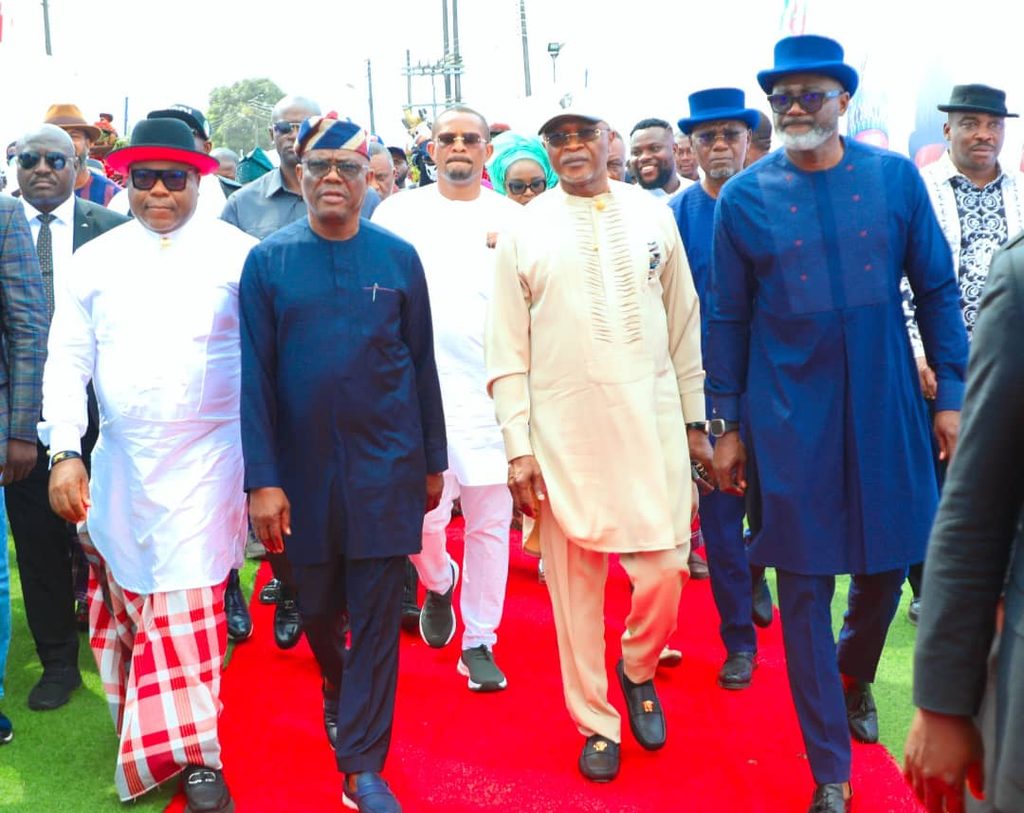
Earlier, the Minister had visited the Amanyanabo of Bonny Kingdom, King Edward Asimini William Dappa Pepple III, in his palace in Bonny.
Wike said the visit was part of an interactive engagement with residents of Bonny Local Government Area to explain developments in the country and encourage informed political decisions ahead of the 2027 general election.
He urged traditional rulers and community leaders to engage their people on governance and development, arguing that public policies should reflect the priorities of the communities they are intended to serve.
In his response, King Edward Asimini William Dappa Pepple III welcomed Wike to Bonny Kingdom, describing their relationship as longstanding and recalling the minister’s contributions to the kingdom’s development.
The monarch said Wike had supported efforts to establish the Bonny Polytechnic during his time as a minister and had also played important roles in addressing security concerns and advancing the Bonny-Bodo Road project.
“The minister has been of complementary support to us, ranging from when we tried to establish the Bonny Polytechnic. He played a major role towards having this polytechnic started at the time he was minister,” the monarch said.
He described Bonny Kingdom as strategically important to Nigeria and said its contribution to the country’s development deserved recognition.
The monarch also praised Wike’s focus on project delivery, adding that the minister had continued to support Rivers State and its people.
Meanwhile, the Chairman of the Bonny Chiefs’ Council, Se-Alabo (Amb.) Lt. Col. (Rtd.) Dagogo Soala Claude-Wilcox, invited Wike to the 30th anniversary of the monarch’s coronation, scheduled for December 21, 2026.
Claude-Wilcox said the celebration would recognise the king’s three decades of leadership and contributions to Bonny Kingdom’s unity and development.
The Chairman of the Rainbow Coalition, George Tubara Tolofari, also commended Wike for facilitating reconciliation among members of the group following a period of division.
He said reconciliation meetings had been held in Port Harcourt and Bonny, bringing together members of former opposing political camps, including those associated with the defunct Simplified Movement.
“I want to tell you that we are all one together as one big, indivisible family,” Tolofari said, expressing confidence that the renewed unity would strengthen the coalition.
In his remarks, the Chairman of Bonny Local Government Area, Abinye Blessing Pepple, highlighted government initiatives relating to infrastructure, empowerment and economic opportunities. However, details of some programmes mentioned in the supplied remarks require verification before publication.