




Connect with us

News

Nigeria missing as 11 African countries projects strong growth in 2024

Published

on

ADVERTISEMENT
Zoom Ad
ADVERTISEMENT
Zoom Ad

By Francesca Hangeior
Nigeria is missing from the list of 11 African countries expected to experience strong growth in 2024.

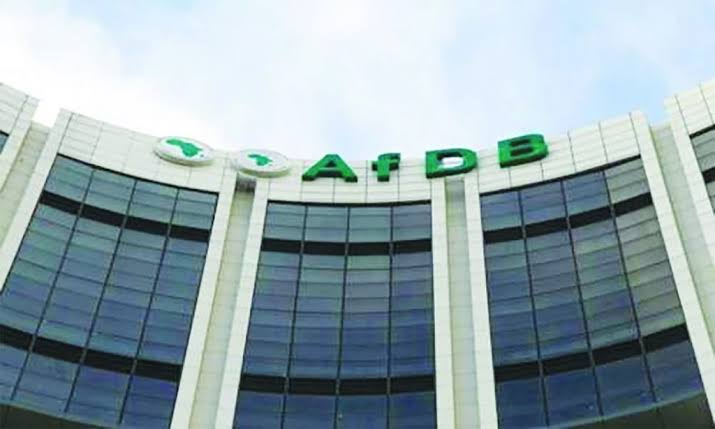
According to the African Development Bank Group, in its latest Macroeconomic Performance and Outlook of the continent, Africa will account for 11 of the world’s 20 fastest-growing economies in 2024, but Nigeria is not expected to be one of them.

AfDB said the top 11 African countries projected to experience strong economic performance are Niger (11.2 per cent), Senegal (8.2 per cent), Libya (7.9 per cent), Rwanda (7.2 per cent), Cote d’Ivoire (6.8 per cent), Ethiopia (6.7 per cent), Benin (6.4 per cent), Djibouti (6.2 per cent), Tanzania (6.1 per cent), Togo (6 per cent), and Uganda (6 per cent).

Advertisement

The International Monetary Fund reduced its forecast for Nigeria and its economic growth to 3 per cent in 2024, down from a 3.1 per cent projected in October 2023. This is contained in the Washington-based institution’s World Economic Outlook update for January 2024.

Overall, the AfDB report said that the real gross domestic product growth for the continent is expected to average 3.8 per cent and 4.2 per cent in 2024 and 2025, respectively. This is higher than projected global averages of 2.9 per cent and 3.2 per cent, the report said.

The continent is expected to remain the second-fastest-growing region behind Asia.

The President of the AfDB, Akinwumi Adesina, spoke during the launch of the report on the sidelines of the 37th Ordinary Session of the Assembly of the African Union – Addis Ababa, Ethiopia.

Advertisement

Adesina said, “Today, as we gather here, like other regions of the world, Africa continues to face multiple crises, including rising cost of living, weakening economic growth, a tightening of global financial conditions, shortage of concessional resources, increasing effects of climate change, lingering impacts of health pandemics, conflict, and geopolitical tensions.

“The interaction of these global and regional crises with existing regional structural weaknesses threatens to halt Africa’s gradual economic recovery and is hindering socioeconomic developments.”

“Despite the challenging global and regional economic environment, 15 African countries have posted output expansions of more than 5 per cent,” he added.

Adesina further called for larger pools of financing and several policy interventions to boost Africa’s growth.

Advertisement

The latest report is calling for cautious optimism given the challenges posed by global and regional risks. These risks include rising geopolitical tensions, increased regional conflicts, and political instability—all of which could disrupt trade and investment flows, and perpetuate inflationary pressures.

Presenting the key findings of the report, the African Development Bank’s Chief Economist and Vice President, Prof. Kevin Urama, said, “Growth in Africa’s top-performing economies has benefited from a range of factors, including declining commodity dependence through economic diversification, increasing strategic investment in key growth sectors, and rising both public and private consumption, as well as positive developments in key export markets.

“Africa’s economic growth is projected to regain moderate strength as long as the global economy remains resilient, disinflation continues, investment in infrastructure projects remains buoyant, and progress is sustained on debt restructuring and fiscal consolidation.”

Highlighting the importance of collaboration, the Commissioner for Economic Development, Trade, Tourism, Industry and Minerals, African Union Commission, Ambassador Albert Muchanga, said, “The future of Africa rests on economic integration. Our small economies are not competitive in the global market. A healthy internal African trade market can ensure value-added and intra-African production of manufactured goods.”


Advertisement
Continue Reading
Advertisement

News

Help us to rescue 79 school chidren still in captivity in Borno same way you rescued Oyo kids -Ndume begs military

Published

on

ADVERTISEMENT
Zoom Ad
ADVERTISEMENT
Zoom Ad


Senator Mohammed Ali Ndume, representing Borno South, has appealed to the Nigerian military and other security agencies to repeat same feat as exhibited in Oyo to rescue 79 school children in Borno.

Ndume made this demand while appearing Channels TV at the weekend, after the rescue of abducted victims from Oyo State, Senator Ndume said he had expected more details from the military about the operation but understood that some information relating to military operations and equipment could not be made public.

The senator said 42 people from Mussa in Borno South Senatorial District remain in captivity, alongside about 37 people from Lassa who were recently abducted. He added that several victims from Moushi and travellers kidnapped along the Buratai route were also yet to be rescued.

“I want to use this opportunity to appeal to the military to keep their attention on my senatorial district and help us get these people back. The parents are traumatized, especially those from Mussa because there are small children among them,” Ndume said.

According to him, those still in captivity include children, students from Lassa who were preparing for their NECO examinations, and other adults abducted in separate incidents.

Despite the security challenges, the senator expressed confidence in the capabilities of the Nigerian Armed Forces and other security agencies.

“I have confidence in the Nigerian security agencies. All they need is encouragement, training, equipment, aviation and motivation,” he said.

Ndume commended the security forces for the recent rescue operation, saying about eight suspected kidnappers were neutralized, while others were arrested, leading to the safe rescue of the abducted children.

“The children are back safely. Those responsible for the abduction lost about eight of their members during the operation, while some were captured. I believe this will provide useful intelligence on their operations and help address the security challenge,” he said.

The senator called on the military to build on the success of the operation by intensifying efforts to secure the release of the remaining captives in Mussa, Lassa, Muoshi and along the Buratai axis.

Continue Reading

News

EU Asks Meta To Change Facebook, Instagram’s ‘Addictive Design’

Published

on

ADVERTISEMENT
Zoom Ad
ADVERTISEMENT
Zoom Ad

Meta must change Facebook’s and Instagram’s “addictive design” or face a heavy fine, the EU warned on Friday.
Brussels accused the US tech giant of failing to limit the risks the platforms posed to users, especially children and vulnerable adults, because of features designed to keep them on Facebook and Instagram.
Of particular concern are those like endless scroll, highly personalised feeds and the automatic playback of videos.

“Protecting the physical and mental health of Europeans must be a priority for social media platforms,” EU tech chief Henna Virkkunen said in a statement.

The European Union has in recent months stepped up its efforts to force Big Tech to better protect users online, especially children.

In a preliminary view on Friday, the European Commission said it “considers that Meta needs to implement design changes to both Instagram and Facebook” after concluding the platforms broke EU content rules.
Changes could include “disabling key addictive features such as ‘autoplay’ and ‘infinite scroll’ by default, implementing effective ‘screen time breaks’, and adapting its recommender system to make it less engagement-oriented”, it added.

Meta said it disagreed with findings but would continue to “engage constructively” with the EU.

If the regulator’s views on Meta are confirmed, the EU can slap a fine of up to six percent of the company’s total worldwide annual turnover.

A senior EU official insisted Brussels did not want to punish companies.

“We want to bring about change, and if we can get that change via commitments then we would be most happy,” a senior EU official said.

The findings come before an expert panel tasked by EU chief Ursula von der Leyen delivers its recommendations on Monday on how the EU can better shield children online from inappropriate content.

Von der Leyen faces pressure to act, with some EU states including France pushing for bloc-wide bans on social media for minors following Australia’s groundbreaking ban for under-16s.
The EU delivered a similar warning to TikTok in February this year, telling the company to change its design or risk massive fines.

But the official said there was a “slight difference” with TikTok since “Meta has indeed always tried to address minor protection online”.

The EU began its probe into Meta in 2024 under the Digital Services Act (DSA).

The content law is a major weapon in the EU’s bolstered armoury adopted in recent years to curb what Brussels describes as Big Tech’s excesses.
In Friday’s findings, Brussels said Facebook’s and Instagram’s time management tools can be easily dismissed while parental controls are only effective if parents have some technical knowledge, the commission said.

Meta also disregarded information about the time children spend on the apps at night “and how the optimisation of its different formats — such as reels and stories — could lead to excessive or compulsive use of the services”.

But Meta said the EU’s findings “don’t accurately take into account the significant steps we’ve taken to protect teens”, pointing to a type of account launched since the probe began.

Accounts allow parents to block access to Instagram at night and cap daily screen time at 15 minutes, it said.
As part of the same investigation, the EU accused Meta in April of failing to prevent children under 13 using Facebook and Instagram, thereby potentially exposing them to inappropriate content.

The wide-ranging probe is still looking into the possible so-called “rabbit hole” effects — which occurs when users are fed related content based on an algorithm, in some cases leading to more extreme content — on the platforms.
Meta has faced similar scrutiny across the Atlantic including a US trial this year which ruled Meta’s and YouTube’s platforms were harmfully addictive.

Continue Reading

News

Intelligence-led operations greatly helped in rescue of Oyo school children – Army reveals

Published

on

ADVERTISEMENT
Zoom Ad
ADVERTISEMENT
Zoom Ad

The Nigerian Army has disclosed that the 44 pupils and teachers abducted in Oriire Local Government Area of Oyo State regained their freedom through a month-long intelligence-led joint security operation that dismantled the kidnappers’ network.

The development was revealed in a statement issued on Friday by the Acting Deputy Director, 2 Division Army Public Relations, Lieutenant Colonel Danjuma Jonah Danjuma.

According to the statement, troops of the Nigerian Army, led by the General Officer Commanding, GOC, 2 Division, Major General C.R. Nnebeife, carried out the operation in collaboration with the Office of the National Security Adviser through the National Counter Terrorism Centre, NCTC, Defence Headquarters, Special Forces from the Nigerian Army, Navy and Air Force, the Nigeria Police Force, the Department of State Services, DSS, the National Intelligence Agency, NIA, the Nigeria Security and Civil Defence Corps, NSCDC, as well as local vigilantes, hunters and Amotekun personnel.

The Army said the operation, which lasted for more than a month, focused on identifying the kingpins behind the May 15, 2026 abduction, dismantling their logistics networks and tracking their informants and hideouts within the Old Oyo National Park and other locations.

It stated that multiple arrests were made in Oyo State and other parts of the country, a development that disrupted the terrorist group’s operations and mounted sustained pressure on the abductors, ultimately leading to the unconditional release of the victims.

According to the statement, the operation was carefully planned and executed to ensure the safe rescue of the pupils and teachers while avoiding collateral damage, although some security personnel recorded casualties during the operation.

The Army added that the rescued victims are receiving medical attention at an undisclosed hospital and will be handed over to the Oyo State Government for reunification with their families.

It noted that follow-up operations were ongoing to apprehend other members of the criminal network involved in the abduction.

Continue Reading

Trending

Copyright © 2024 Naija Blitz News